Mastering Over Hard Eggs: Your Guide to Perfectly Cooked Yolks and Crispy Whites
If you appreciate a perfectly firm yolk and satisfyingly crispy egg whites, then mastering the art of cooking over hard eggs is a culinary skill worth acquiring. These versatile fried eggs are incredibly easy to prepare and burst with rich, savory flavor, making them a fantastic addition to countless meals. Forget runny yolks – over hard eggs offer a robust texture that’s ideal for everything from hearty breakfast sandwiches to fresh, vibrant salads, or even as a protein-packed topping for your favorite burger. Healthy, delicious, and incredibly satisfying, they provide a filling breakfast, a substantial snack, or even a quick and easy dinner solution.
Why You’ll Love This Easy Over Hard Eggs Recipe
These over hard eggs are more than just a simple breakfast item; they are a culinary staple that brings convenience, flavor, and nutrition to your table. Here’s why this recipe will quickly become a favorite:
- Effortlessly Delicious: This recipe is incredibly straightforward, requiring minimal effort for maximum flavor. The resulting eggs are hearty, satisfying, and packed with savory goodness that everyone will love.
- Incredibly Versatile: Over hard eggs are a blank canvas for your culinary creativity. They excel when nestled in breakfast sandwiches, adding a protein punch to salads, or providing a firm, flavorful topping for juicy burgers. Their solid structure means no messy yolks, making them perfect for on-the-go meals.
- Crispy Perfection: One of the hallmarks of a well-made over hard egg is its beautifully crispy whites. Achieved by careful cooking, these edges add a delightful textural contrast to the firm yolk.
- Nutrient-Rich: Eggs are a powerhouse of nutrition, and this preparation method keeps them healthy. This recipe is naturally high in protein, which helps keep you feeling full, and inherently low in carbohydrates and sugar, making it an excellent choice for various dietary preferences.
- Anytime Meal: Whether you need a quick morning boost, a satisfying lunch, a convenient snack, or a light dinner, over hard eggs fit the bill. Their robust nature makes them suitable for any meal throughout the day.
- No Runny Yolks: For those who prefer their egg yolks fully cooked through, this recipe is a dream come true. The yolks are completely firm, offering a consistent texture similar to a hard-boiled egg, eliminating any concerns about runny centers.
- Flavorful Cooking Options: You have the flexibility to cook these eggs in either rich butter for a classic, indulgent taste or savory bacon grease for an extra layer of smoky flavor and added crispiness.
- Diet-Friendly: This recipe is naturally compliant with several popular dietary plans, including Whole30, Paleo, and Keto. It’s also sugar-free, low carb, gluten-free, and nut-free. For those with dairy sensitivities, it can be easily made dairy-free by opting for bacon grease or a dairy-free oil.
- Expand Your Egg Repertoire: If you enjoy simple and healthy egg recipes, be sure to explore our other fantastic creations like these Keto Deviled Eggs for a delicious appetizer or these Hard Boiled Eggs in Microwave for another incredibly quick and easy method!
What Exactly is an Over Hard Egg?
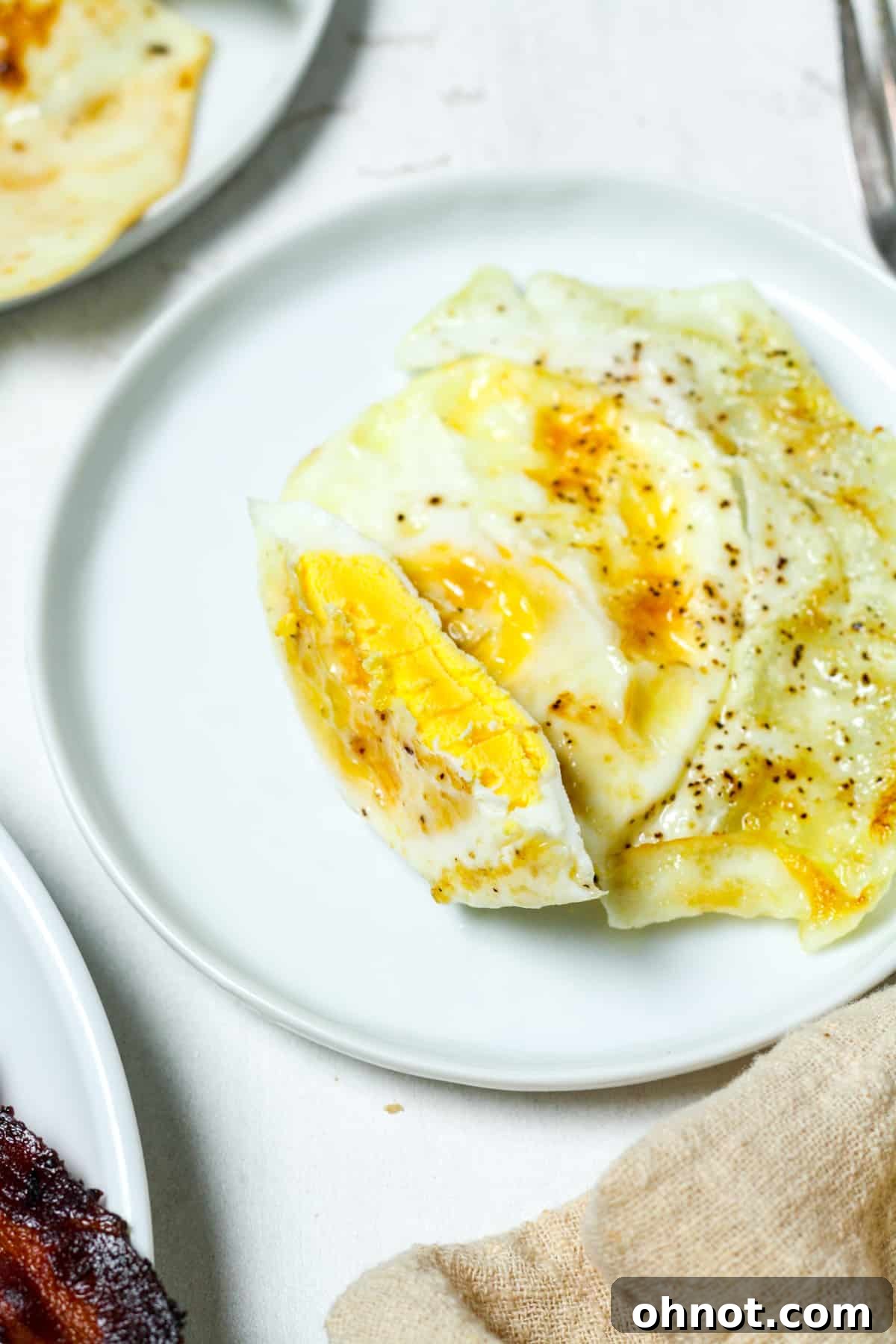
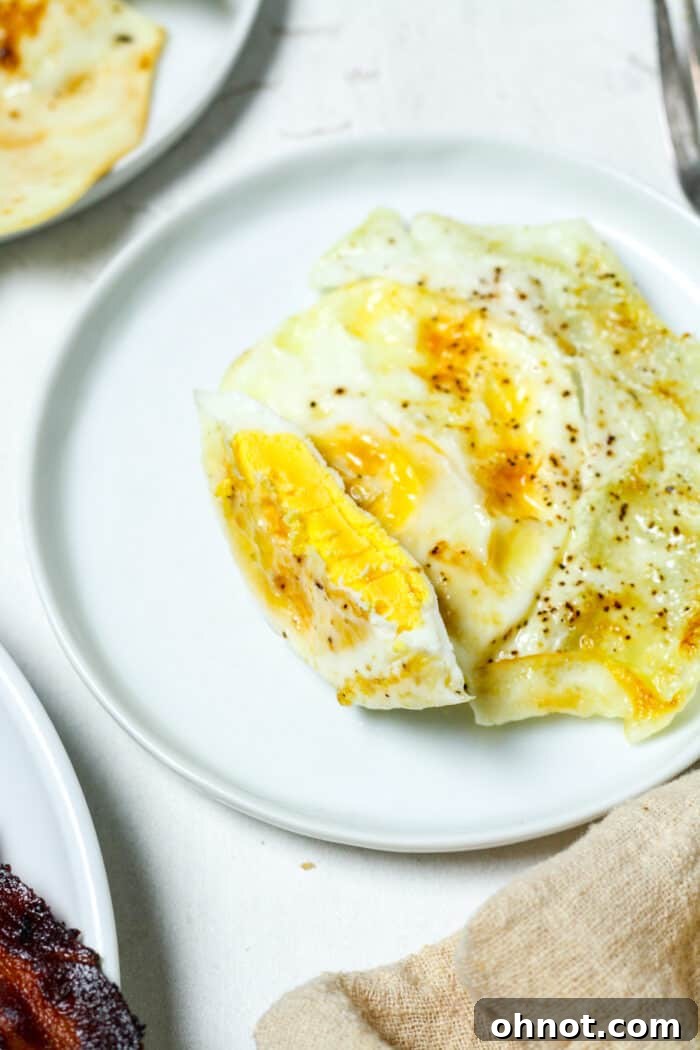
An over hard egg is a specific type of fried egg distinguished by its fully cooked yolk. Unlike its softer counterparts, the yolk of an over hard egg is cooked until it is completely firm, possessing a consistency and taste remarkably similar to that of a hard-boiled egg. Often referred to as “well-done eggs,” they are fried for an extended period compared to over easy or over medium eggs, ensuring both the yolk and the white achieve a thoroughly set and firm texture.
In an over hard egg, the yolk is solid and without any liquid center, while the egg white is fully opaque, firm, and often boasts delightfully crispy edges. This extended cooking time develops a more robust and uniform texture throughout the entire egg, which is particularly appealing to individuals who prefer to avoid the runny texture or distinct flavor of a softer yolk.
Simple Ingredients for Perfect Over Hard Eggs
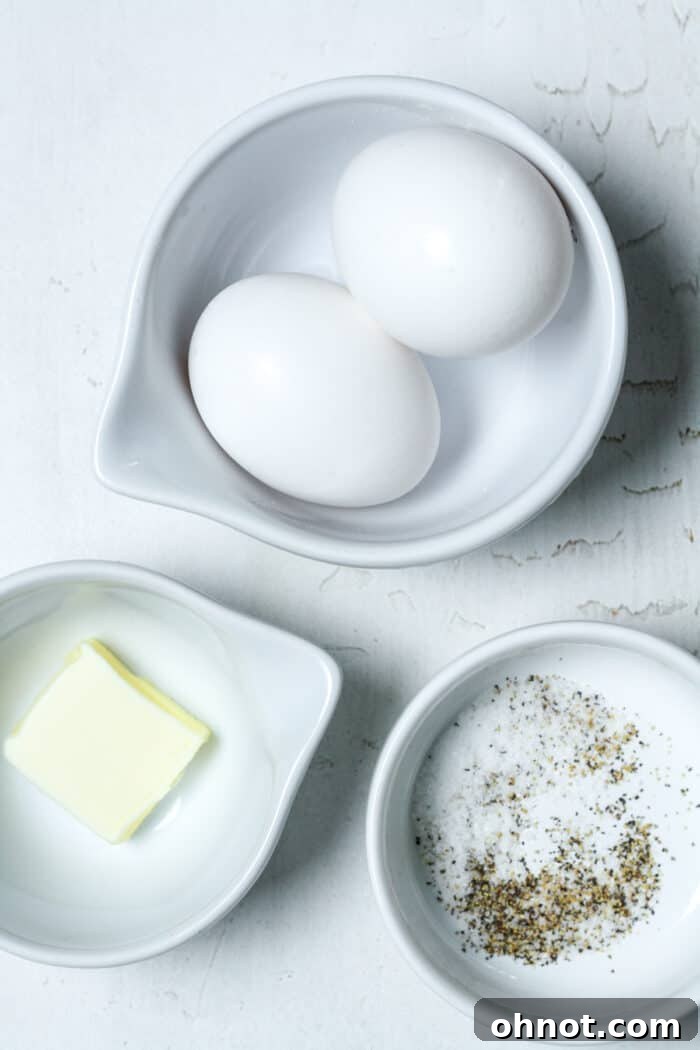
Crafting the perfect over hard egg requires just a few basic ingredients, emphasizing quality for the best results. Below are the core components and suggested substitutions. For a complete, detailed list of ingredients and step-by-step instructions, please refer to the recipe card at the bottom of this article.
Fresh Eggs are Key
The foundation of a great fried egg is, naturally, great eggs! Always opt for the freshest eggs available, as they deliver the most vibrant flavor and often possess firmer whites, which hold their shape better during frying. If possible, seek out organic, free-range eggs. These often come from chickens with richer diets, resulting in brighter, more intensely colored yellow or orange yolks that are not only visually appealing but also often more flavorful and nutritious.
Choosing Your Cooking Fat: Butter, Bacon Grease, or Oil
The fat you choose to fry your eggs in plays a crucial role in both flavor and texture. Each option brings its own unique qualities to your over hard eggs:
- Butter: A classic choice for a reason, butter imparts a signature rich, creamy flavor that complements eggs beautifully. Both unsalted and salted butter work well. If using salted butter, you may wish to slightly reduce or omit any additional sea salt sprinkled on top of the eggs to prevent over-salting. Butter ensures a delicious, golden crust on your egg whites.
- Bacon Grease: For an undeniably hearty and savory twist, bacon grease is an excellent option. It not only infuses the eggs with a wonderful smoky flavor but also contributes to achieving extra crispy whites. Similar to salted butter, bacon grease is already seasoned, so consider omitting or reducing additional salt. This is a fantastic way to utilize leftover bacon grease, adding a depth of flavor that can’t be replicated. It also offers a dairy-free alternative to butter.
- Neutral Oil (e.g., Avocado Oil): While perhaps my last choice for flavor compared to butter or bacon grease, a neutral oil like avocado oil is a reliable pantry staple. Its main advantage is its high smoke point and its dairy-free nature, making it a suitable alternative if you’re out of butter or bacon grease, or if you strictly avoid dairy.
Seasoning
A simple sprinkle of high-quality sea salt and freshly ground black pepper is all that’s needed to enhance the natural deliciousness of your over hard eggs. These seasonings add a subtle yet essential layer of flavor. Adjust amounts to your personal preference, remembering to account for salted butter or bacon grease if used.
Selecting the Best Eggs for Frying
To achieve the absolute best results for your over hard eggs, the quality and freshness of your eggs are paramount. While any egg will technically fry, opting for higher quality can significantly elevate your dish.
Fresh Free-Range Eggs: For optimal flavor and texture, I highly recommend using fresh free-range eggs. These are widely available in most grocery stores and often come from hens that have access to outdoor spaces, contributing to better yolk color and overall egg quality. The fresher the egg, the firmer its white will be, which helps prevent excessive spreading in the pan and creates those desirable crispy edges.
Farm Fresh Eggs: If you have access to local farm-fresh eggs, they are often a superior choice. Eggs collected directly from a farm tend to be exceptionally fresh and can offer unparalleled flavor. The adage “the more fresh, the better” truly applies here.
Look for eggs with intact shells and check the expiration date. A simple test for freshness involves placing an egg in a glass of water: a fresh egg will sink and lay on its side, while an older egg will stand upright or float, indicating a larger air cell. While floating eggs are still edible, very fresh eggs will yield the best fried results.
Taste & Texture of Perfectly Cooked Over Hard Eggs
The defining characteristics of a truly great over hard egg lie in its unique taste and texture profile. These eggs offer a satisfying experience that stands apart from other fried egg preparations.
Yolk Consistency: The taste and texture of the yolk in an over hard egg are most closely comparable to that of a perfectly hard-boiled egg. The yolk is entirely cooked through, firm, and crumbly, without any hint of liquid or creaminess. It presents a solid, uniform texture that’s satisfying for those who prefer a non-runny center.
Egg White Characteristics: The egg white shares the characteristics of a well-fried egg, being fully set, opaque, and cooked all the way through. Crucially, the edges of the egg white should develop a delightful crispiness. This crisp, slightly browned perimeter provides a wonderful textural contrast to the firm yolk, adding a pleasant chewiness and a subtle nutty flavor from the caramelization in the pan.
Together, the firm, hard-boiled-like yolk and the crispy, flavorful whites create a uniquely satisfying fried egg experience, beloved for its consistency and hearty appeal.
How to Make Perfect Over Hard Eggs (Butter Method)
Achieving perfectly cooked over hard eggs is simple with the right technique and a little patience. Follow these steps for golden, firm yolks and crispy whites every time:
Step 1: Prepare Your Pan and Add Eggs
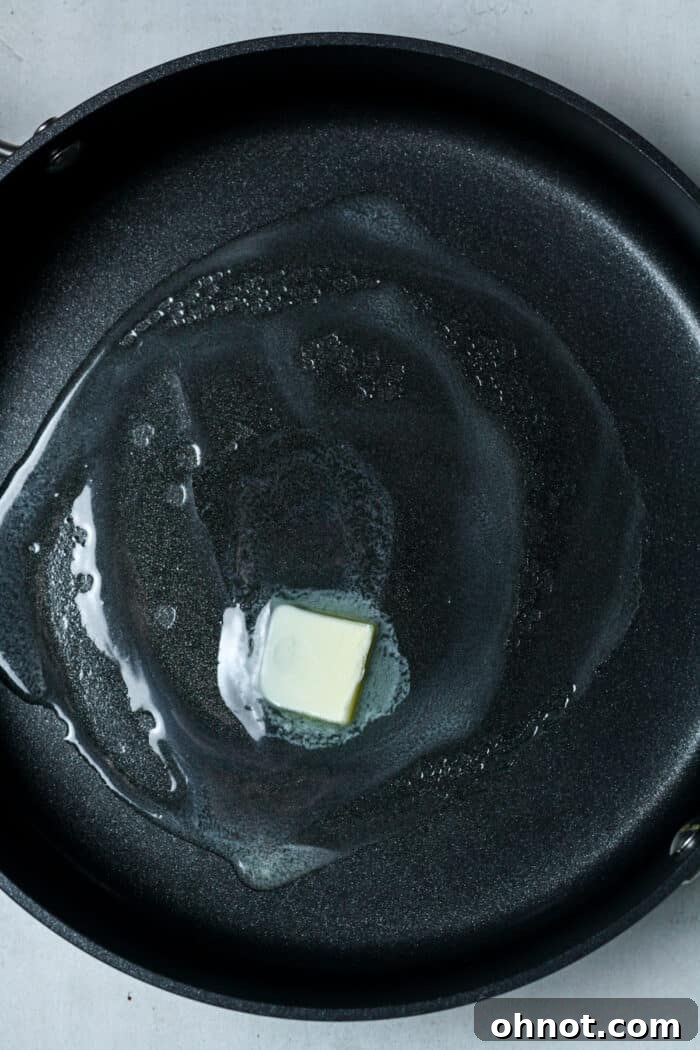
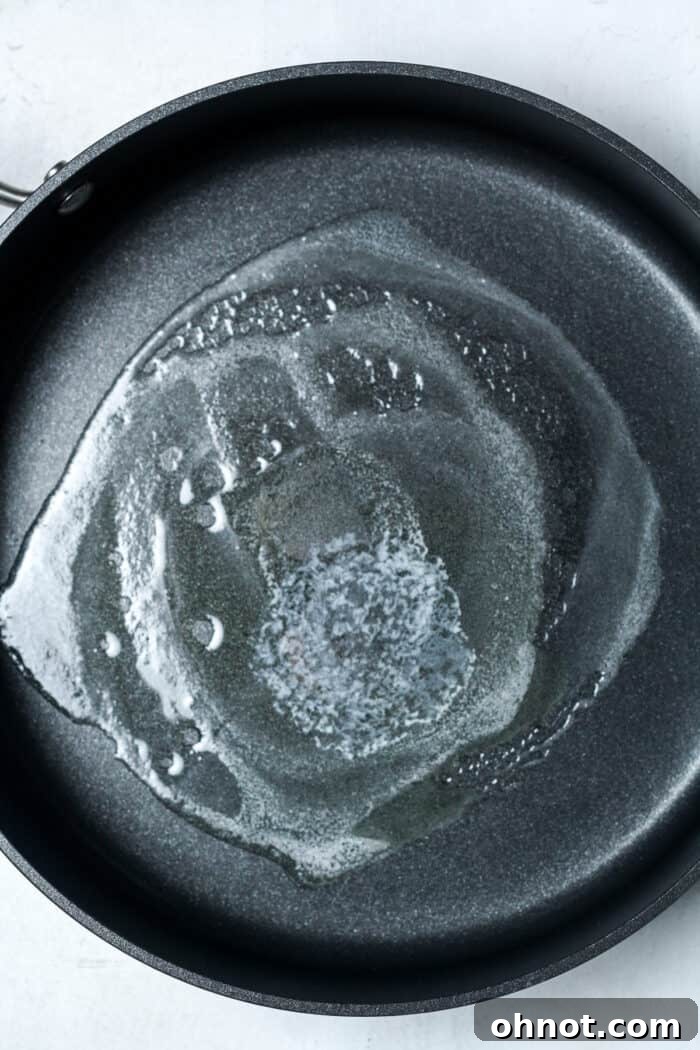
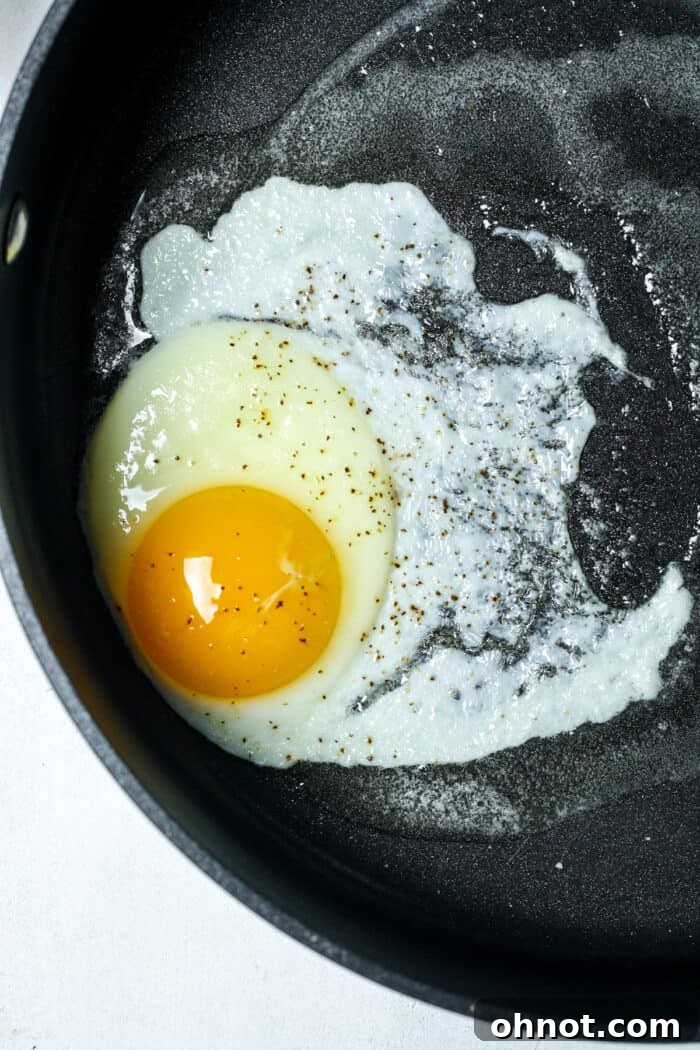
Begin by placing a large non-stick skillet over low-medium heat. Add your chosen cooking fat, typically about 1-2 teaspoons of butter per egg, or enough to generously coat the bottom of the pan. Allow the butter to melt completely, ensuring it evenly covers the cooking surface without browning too quickly. Once the butter is melted and slightly shimmering, carefully crack the eggs directly into the skillet. If desired, lightly sprinkle the eggs with a pinch of sea salt and freshly ground black pepper.
Step 2: Cook Until Whites are Set
Allow the eggs to cook undisturbed for approximately 3 minutes on medium-low heat. During this time, the egg whites will gradually transform from translucent to completely opaque and firm. The edges should start to crisp up and turn a light golden brown. Maintaining a moderate heat is crucial to ensure the whites cook through without burning, while also gently heating the yolk.
Step 3: Flip and Finish Cooking the Yolk
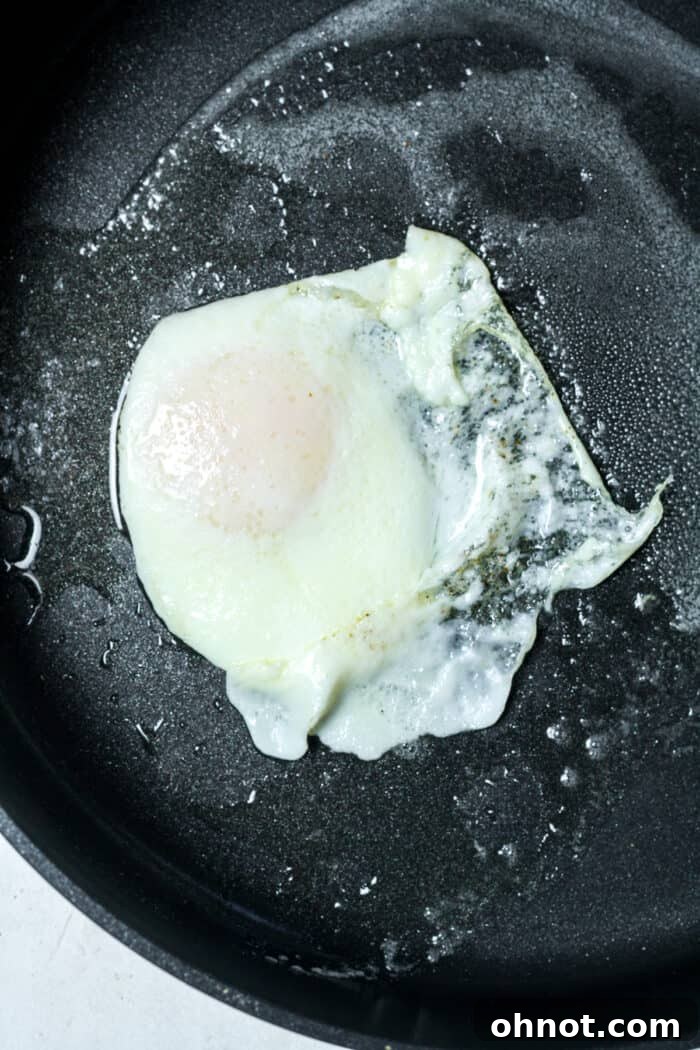
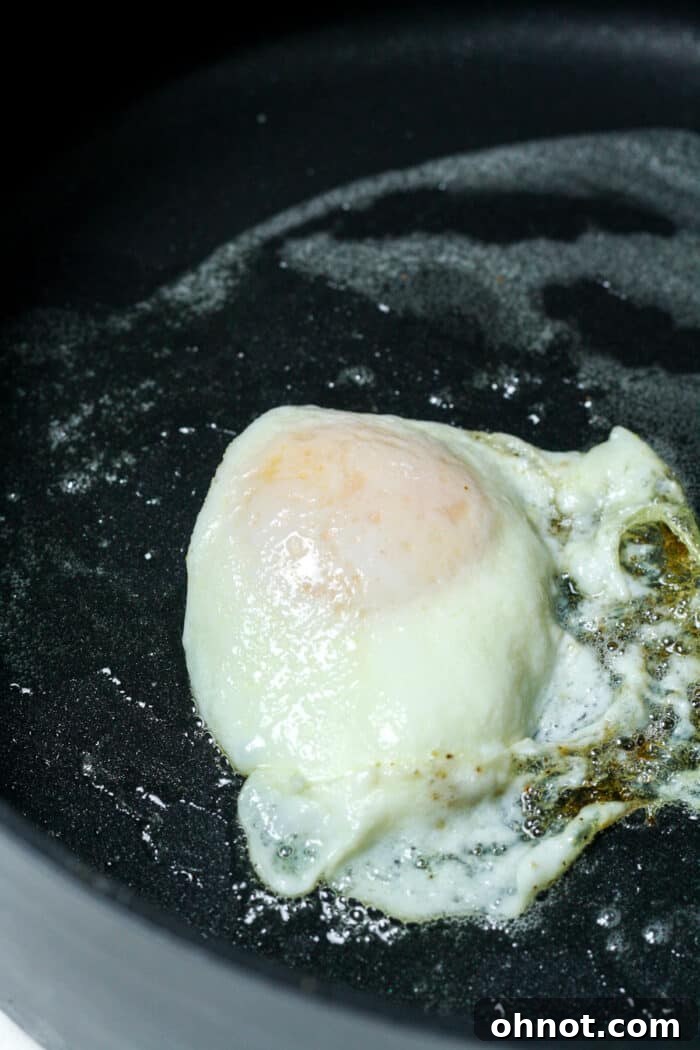
Once the whites are fully set, carefully slide a thin spatula underneath each egg and gently flip them over. Continue to cook for another 2 to 3 minutes on the second side. This step is essential for thoroughly cooking the yolk. You will notice the yolk begin to puff up, indicating that it is firming up inside. The egg whites should achieve a pleasant crispiness around the edges, and the yolk should feel solid to the touch when gently pressed.
Step 4: Serve Immediately
As soon as the yolks are cooked to your desired firmness and the whites are crispy, remove the eggs from the pan and transfer them to a plate. Serve them hot and enjoy them as is, or incorporate them into your favorite dishes!
The Bacon Grease Method for Crispier Over Hard Eggs
Cooking over hard eggs in bacon grease adds an extra layer of savory flavor and often results in exceptionally crispy egg whites. However, bacon grease heats up more quickly and retains heat differently than butter, so a little extra mindfulness is needed to prevent overcooking or burning.
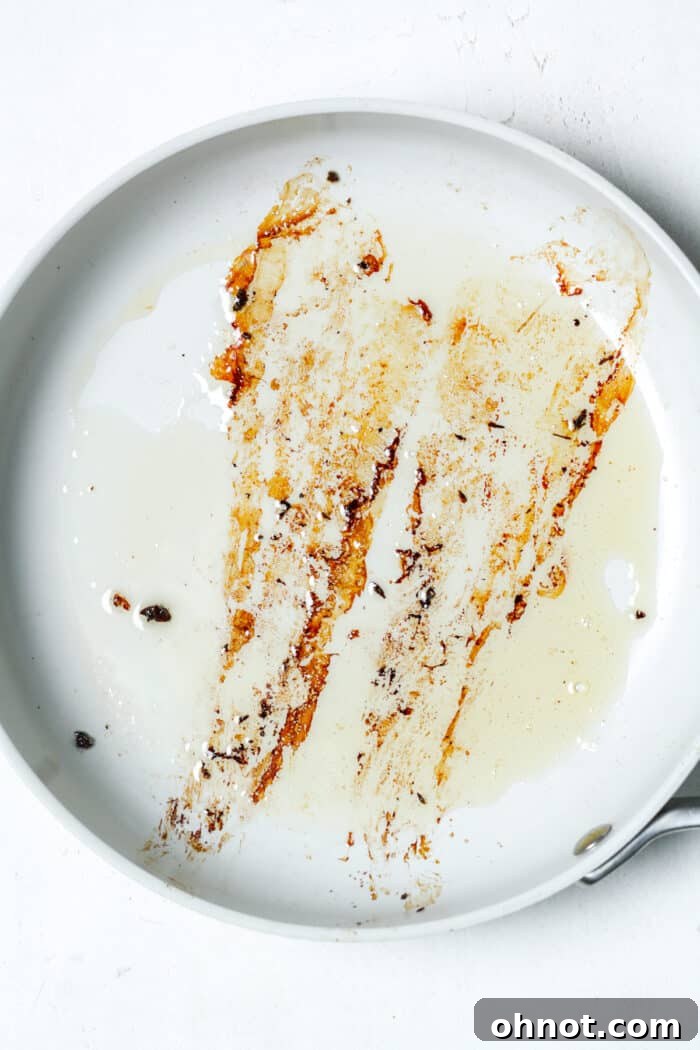
Step 1: Melt Bacon Grease and Add Eggs
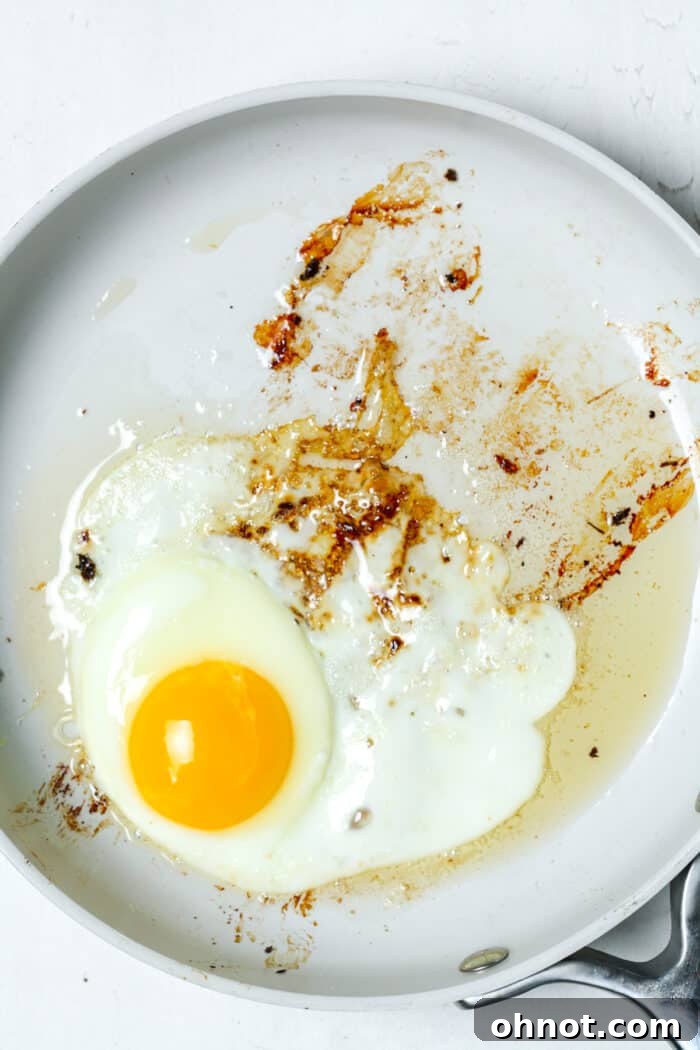
Begin by adding approximately 1-2 teaspoons of leftover bacon grease to a large non-stick skillet. Place the skillet over a gentle low-medium heat. Bacon grease, particularly when cold, can be quite solid, so allow it ample time to melt and become fully runny, evenly coating the bottom of the pan. Once the grease is hot and shimmering, carefully crack your eggs into the skillet. If using seasoned bacon grease, remember to adjust or omit the sprinkle of sea salt and pepper as desired.
Step 2: Cook Whites Until Opaque
Cook the eggs for approximately 3 minutes on medium-low heat, or until the egg whites have completely set and turned opaque. Keep a close eye on the heat, as bacon grease can cook eggs faster than butter. Adjust the heat down if you notice the edges browning too quickly.
Step 3: Flip and Cook Yolk Thoroughly
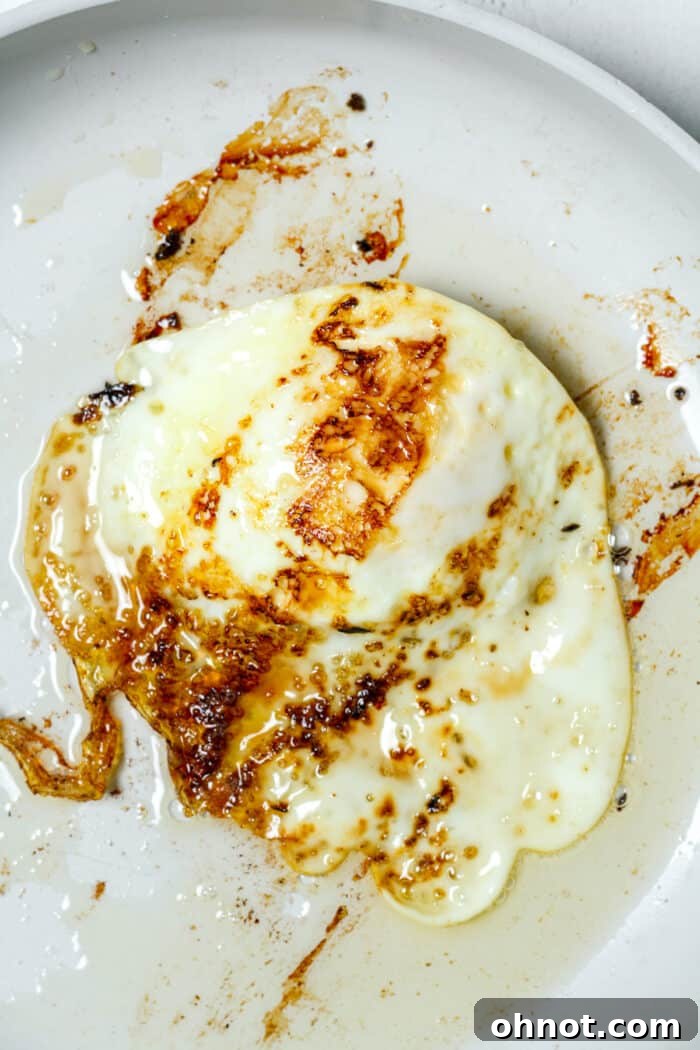
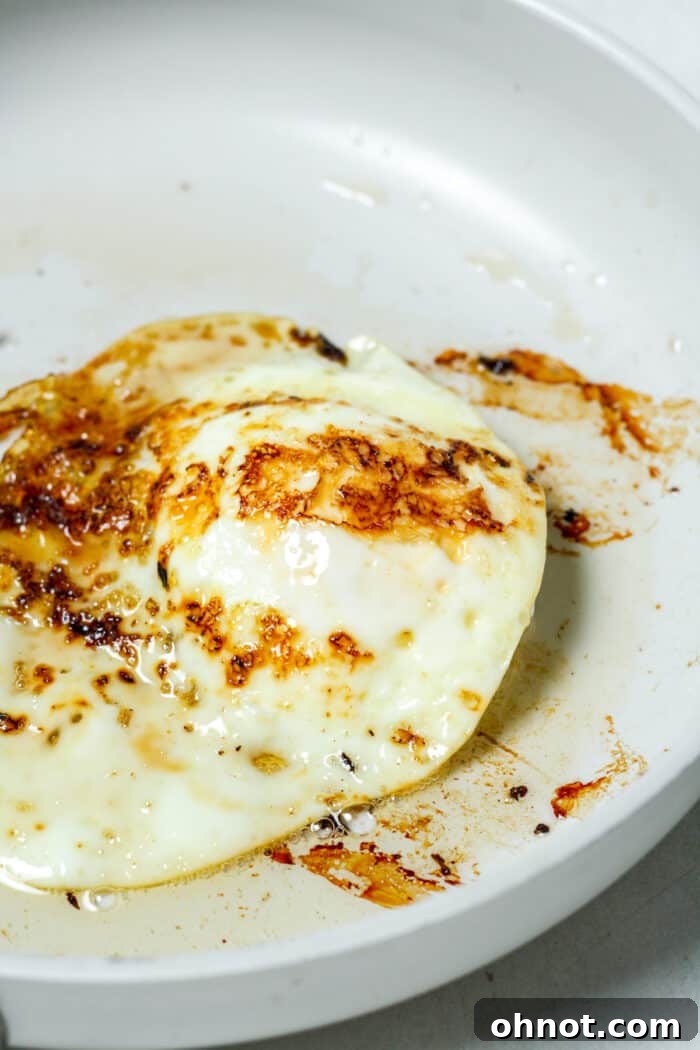
Using a gentle hand, carefully flip each egg over. Continue to cook for another 2 to 3 minutes on this side. Ensure the yolk cooks through completely until it puffs up and feels firm. The edges of the whites cooked in bacon grease should develop an even more pronounced crispiness, adding a delightful crunch.
Step 4: Remove and Serve
Once the eggs are cooked to your desired level of firmness, remove them from the pan and serve immediately. Enjoy the rich, smoky flavor and satisfying crunch!
Expert Tips & Tricks for Perfect Over Hard Eggs
Elevate your over hard egg game with these essential tips and tricks, ensuring consistently perfect results every time:
- Patience is a Virtue: Cook Low and Slow! The single most crucial tip for achieving truly perfect over hard eggs is to resist the urge to rush the process. Frying eggs too quickly over high heat will result in burnt whites and undercooked yolks. Instead, embrace a low to medium-low heat setting. This allows the egg whites to cook evenly and crisp up beautifully without scorching, while giving the yolk ample time to cook through to a firm consistency.
- Don’t Skimp on the Fat: A generous amount of butter, bacon grease, or oil is essential for proper frying and to prevent sticking. The fat helps conduct heat evenly, browns the whites, and contributes significantly to flavor. If you notice your pan drying out during the cooking process, don’t hesitate to add a small pat more of butter or a tiny drizzle of grease.
- Master the Flip: Flipping a fried egg can be tricky, but practice makes perfect. Use a thin, wide spatula and be gentle but confident. Slide the spatula completely under the egg, then quickly and smoothly turn it over. If you struggle, consider cooking one egg at a time or using a slightly larger pan for more space.
- The “Puff Up” Indicator: A great visual cue that your over hard egg yolk is fully cooked through is when it begins to “puff up” after flipping. This means the internal moisture is heating and expanding, signaling that the yolk is firming up nicely. If it doesn’t puff, it might need another minute or two.
- Use a Non-Stick Pan: While a well-seasoned cast iron skillet can also work, a good quality non-stick pan is highly recommended for frying eggs. It minimizes sticking, making flipping much easier and ensuring your eggs come out perfectly intact. Even with a non-stick pan, still use butter or bacon grease for flavor and crispy texture.
- Cracked Eggs: For cleaner edges and to avoid breaking the yolk when cracking directly into a hot pan, consider cracking each egg into a small bowl or ramekin first. This allows you to gently slide the egg into the pan, maintaining its shape.
Understanding the World of Fried Eggs: Over Hard, Over Medium, Over Easy, & Sunny Side Up
The culinary world offers a delightful spectrum of fried egg preparations, each distinguished by the doneness of its yolk. Understanding these differences allows you to cook your eggs exactly how you like them and appreciate the subtle nuances in texture and flavor.
Over Hard Eggs: The Firm Favorite
As explored in this guide, an over hard egg is a fried egg where the yolk is cooked completely through. After flipping, the egg is cooked until the yolk is firm and solid, resembling the texture of a hard-boiled egg. There is absolutely no runny or even slightly soft yolk in an over hard egg. The whites are fully set and typically develop crispy edges.
Over Medium Eggs: The Slightly Soft Center
An over medium egg is a fried egg where the yolk is partially cooked but still retains a jammy, slightly runny, or creamy consistency in the center. After being flipped, it’s cooked for a shorter duration than an over hard egg, allowing the whites to set fully while leaving the yolk soft enough to ooze when cut, but not liquid like an over easy egg. It offers a balance between firmness and richness.
Over Easy Eggs: The Runny Classic
Over easy eggs are fried eggs with a distinctly runny yolk. The egg is cooked on one side until the whites are mostly set, then briefly flipped for just a few seconds (often 15-30 seconds) on the second side. This quick flip ensures the top of the white is cooked, but the yolk remains warm, liquid, and ready to burst when pierced, perfect for dipping toast.
Sunny Side Up Eggs: Unflipped Golden Goodness
Lastly, sunny side up eggs are fried without being flipped at all. They are cooked until the whites are fully set and opaque, but the yolk remains completely liquid and vibrant yellow, sitting prominently on top like a “sun.” The bottom of the egg white typically develops a slight crispness, while the top remains tender. These are served with the yolk side up, hence the name, and are often finished with a lid over the pan or a splash of water to steam-cook the top white layer without flipping.
Each style offers a unique culinary experience, catering to different preferences for yolk texture. Understanding these distinctions allows you to effortlessly prepare any fried egg to perfection.
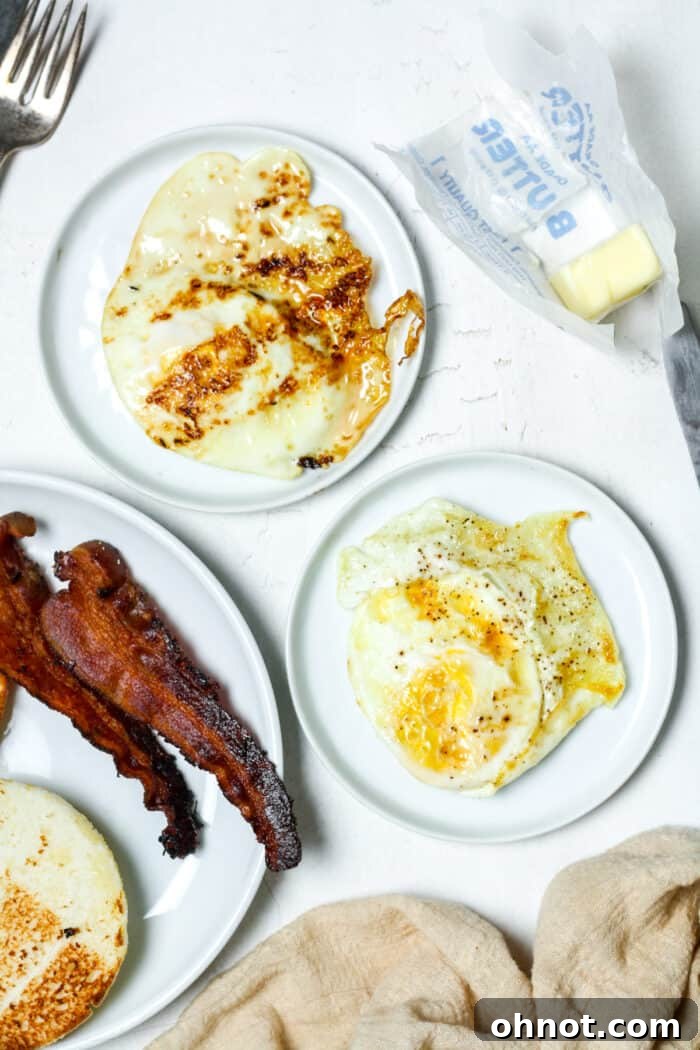
The egg at the top of the image was cooked in savory bacon grease, while the one at the bottom was prepared in rich butter, showcasing the subtle differences in their finishes.
How to Serve & Store Over Hard Eggs
Over hard eggs are incredibly versatile and can be incorporated into a wide variety of meals. Here’s how to best enjoy and preserve them:
Serving Suggestions:
For the best experience, serve your over hard eggs hot and fresh directly from the pan. Their robust texture makes them an excellent companion to classic breakfast sides such as crispy bacon, flavorful sausage, and fresh fruit. They pair wonderfully with a slice of golden Air Fryer Toast, or alongside a refreshing side salad for a lighter meal.
Beyond traditional breakfast, over hard eggs shine in other applications:
- Breakfast Sandwiches: Their firm yolks are perfect for building sturdy, non-messy breakfast sandwiches.
- Salad Topping: Dice them or simply place them whole on top of any salad for a substantial protein boost.
- Burger Topping: Add an over hard egg to your favorite burger for an extra layer of savory flavor and satisfying texture.
- Standalone Snack: Enjoy them simply by themselves for a quick, high-protein snack.
- Hearty Sides: They are especially delicious when served with these savory Air Fryer Home Fries.
- Breakfast Burritos: Use them as a key ingredient in delicious and wholesome Healthy Breakfast Burritos for a portable and filling meal.
Storage and Reheating:
If you have any leftover over hard eggs, they can be stored in an airtight container in the refrigerator for up to 24 hours. For optimal freshness and texture, it’s best to consume them within this timeframe.
To reheat, gently place the eggs back into a lightly buttered (or greased) pan over low heat. Warm them through until they are heated evenly, being careful not to overcook them further. While freshly made eggs are always ideal, reheating them this way helps retain some of their original texture and crispness.
Frequently Asked Questions About Over Hard Eggs
For achieving the best results and ensuring easy flipping, a high-quality non-stick pan is highly recommended. While it’s non-stick, remember to still use butter, bacon grease, or oil. This not only aids in easy release but also adds significant flavor and helps create those desirable crispy edges on your egg whites.
Absolutely! “Over hard” is a distinct and very popular way to prepare fried eggs, indicating that both the egg whites and the yolk are cooked completely through until firm. It’s a fantastic option for those who prefer no runny yolk whatsoever.
Not necessarily. A “fried egg” is a broad term that encompasses any egg cooked in a skillet with fat, which includes various styles like sunny side up, over easy, over medium, and over hard. An “over hard egg” is a specific type of fried egg where the cooking process is extended to ensure the yolk is fully cooked through and completely solid. So, while an over hard egg is a fried egg, not all fried eggs are over hard.
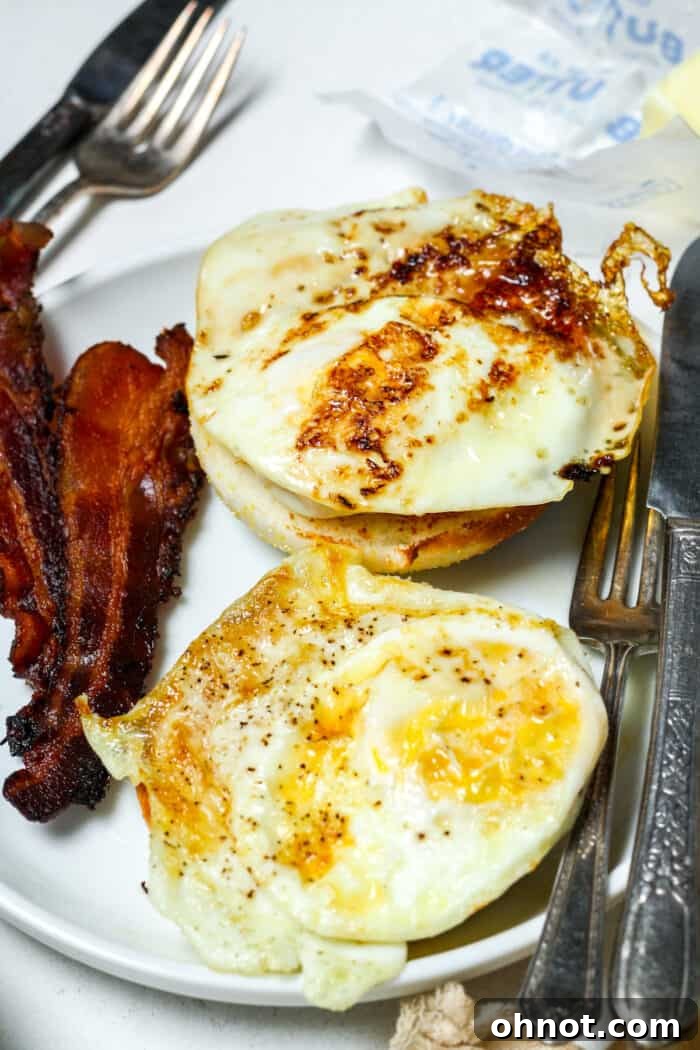
Notice the top egg, with its slightly darker, crispier edges, was cooked in rich bacon grease, imparting a smoky depth. The bottom egg, featuring a softer golden hue, was lovingly prepared in butter, offering a classic, creamy flavor.
You May Also Like These Delicious & Healthy Recipes
If you loved this simple and satisfying recipe for over hard eggs, you’ll surely enjoy these other wholesome and easy-to-make dishes from our collection:
- Air Fryer Toast: The perfect crispy companion to your fried eggs, made effortlessly in the air fryer.
- Almond Flour Banana Muffins: A naturally gluten-free and delicious treat for breakfast or snack time.
- Instant Pot Bacon: Cook perfectly crispy bacon with minimal mess, an ideal pairing for any egg dish.
- Paleo Frittata with Spinach: A flavorful and healthy frittata packed with protein and greens, suitable for any meal.
- Gluten Free Chocolate Chip Muffins: Indulge in these delightful muffins, perfect for a sweet breakfast or dessert.
We hope this comprehensive guide inspires you to create perfectly cooked over hard eggs every time! If you make this recipe, we would truly appreciate it if you could leave a review and share your experience. You can also connect with us on Instagram, Facebook, and Pinterest. We’d love for you to follow along for more healthy eating inspiration and recipe updates! For a wide array of other breakfast ideas, explore our full collection of Breakfast Recipes.

Get the Recipe:
Over Hard Eggs
Pin Recipe
Save RecipeRecipe Saved!
Ingredients
- 2 large eggs
- 2 tsp butter, or bacon grease / avocado oil
- sprinkle sea salt
- sprinkle ground pepper
Instructions
-
First, add butter (or your chosen fat) to a large non-stick skillet over low-medium heat. Once the fat has melted and coats the pan, carefully add the eggs to the skillet. Sprinkle with sea salt and pepper if desired, adjusting for salted fat.
-
Cook for approximately 3 minutes on medium-low heat, or until the egg whites have become completely opaque and the edges begin to crisp and brown slightly.
-
Carefully flip the eggs over using a thin spatula. Continue to cook for another 2 to 3 minutes, or until the yolk has cooked through completely and puffed up (refer to photos above for a visual cue). The egg whites should have satisfyingly crispy edges.
-
Finally, remove the perfectly cooked over hard eggs from the pan and serve immediately while hot!
Notes
- Both butter and bacon grease are excellent choices for frying these eggs, each imparting a unique flavor. See the detailed sections above for guidance on using bacon grease for extra crispiness.
- The key to perfectly cooked over hard eggs is patience. Cooking them “low and slow” prevents burning and ensures the yolk has ample time to firm up. Do not try to rush this process with high heat!
- A reliable indicator that the yolk is fully cooked is when it begins to visibly “puff up” after the egg has been flipped. This means it’s firming up inside. Refer to the photos in the article for visual reference.
- Feel free to omit or adjust the amount of sea salt and/or pepper according to your taste, especially if using salted butter or bacon grease.
Don’t miss out on more delicious recipes and healthy meal plans! You can sign up for our newsletter here to receive exclusive new recipes and updates directly to your inbox!