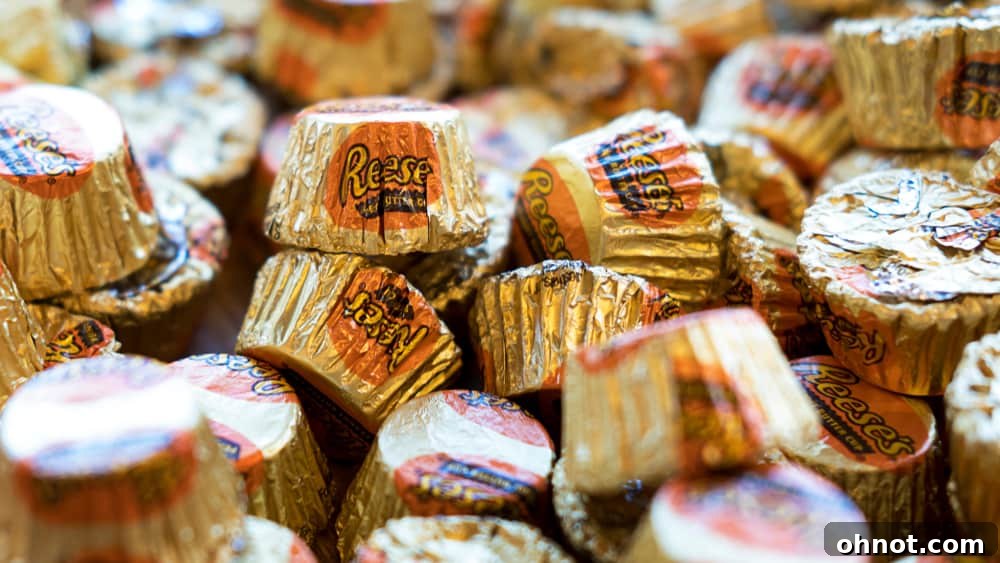
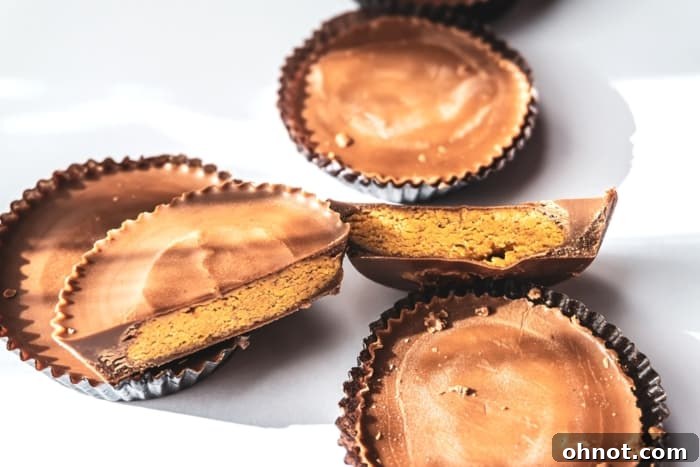
For many, especially those managing dietary restrictions, the simple pleasure of a sweet treat can come with a crucial question: are Reese’s gluten free? Reese’s Peanut Butter Cups stand as an iconic American candy, beloved by generations for their irresistible combination of chocolate and creamy peanut butter. Whether you’re planning for a birthday, a holiday gathering, or stocking up for Halloween, understanding the gluten status of these popular candies is essential for safe consumption. For those seeking a guaranteed gluten-free and vegan option, consider exploring these delicious Homemade Peanut Butter Cups.
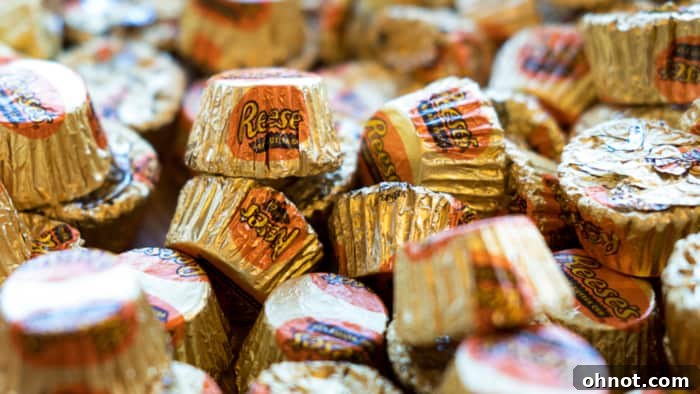
The short answer to whether Reese’s Peanut Butter Cups are gluten free is generally yes, with important caveats. The vast majority of classic Reese’s Peanut Butter Cups varieties are made without gluten-containing ingredients. However, seasonal items, such as certain holiday-shaped Reese’s Peanut Butter Eggs or other specialized products, may deviate from this standard. The manufacturer, Hershey’s, publicly states that the standard Reese’s Peanut Butter Cups are gluten free, and their ingredient lists typically reflect this by not including wheat, barley, or rye.
Understanding Gluten and Gluten-Free Standards
Before diving deeper into Reese’s specific products, it’s crucial to understand what “gluten-free” truly means, especially for individuals with celiac disease or non-celiac gluten sensitivity. Gluten is a protein found in wheat, barley, and rye. For those with celiac disease, even tiny amounts of gluten can trigger an autoimmune response that damages the small intestine. For individuals with non-celiac gluten sensitivity, gluten can cause a range of uncomfortable symptoms without the intestinal damage.
In the United States, the Food and Drug Administration (FDA) defines “gluten-free” as a product that contains less than 20 parts per million (ppm) of gluten. This threshold is widely accepted as safe for most individuals with celiac disease. When a product is labeled “gluten-free,” manufacturers must ensure it meets this strict standard. However, it’s important to note that a product can be made without gluten-containing ingredients but not be officially “certified gluten-free.” Certification often involves rigorous third-party testing and auditing of manufacturing facilities to ensure adherence to even stricter standards and to minimize cross-contamination risks.
The Truth About Classic Reese’s Peanut Butter Cups
The beloved original Reese’s Peanut Butter Cups, including the standard-sized and miniature versions, are formulated without gluten-containing ingredients. This means their primary components – milk chocolate, peanut butter, and sugar – do not naturally contain gluten. Hershey’s maintains that these classic variations are gluten free based on their recipes. However, a significant distinction lies in the lack of official third-party gluten-free certification. While the ingredients themselves are generally considered safe, the manufacturing process introduces a potential risk.
Hershey’s, like many large food manufacturers, uses shared equipment across various product lines. This means that while Reese’s Peanut Butter Cups might be produced from gluten-free ingredients, they may be processed on the same machinery that also handles products containing wheat or other gluten sources. This scenario creates a risk of cross-contamination, where trace amounts of gluten can inadvertently transfer to the Reese’s products. For most individuals with mild gluten sensitivity, these trace amounts might not be problematic. However, for those with celiac disease or severe gluten allergies, even minuscule levels of gluten can trigger adverse reactions. This is why you will often see a disclaimer on packaging stating “may contain traces of gluten” or “processed in a facility that also processes wheat.”
Which Reese’s Products Are Gluten-Free? A Detailed Breakdown
Reese’s offers an extensive product line, and understanding the gluten status of each item is crucial. While the classic peanut butter cups are generally safe, many other products may or may not be suitable for a gluten-free diet. Here’s a comprehensive look at some common Reese’s products:
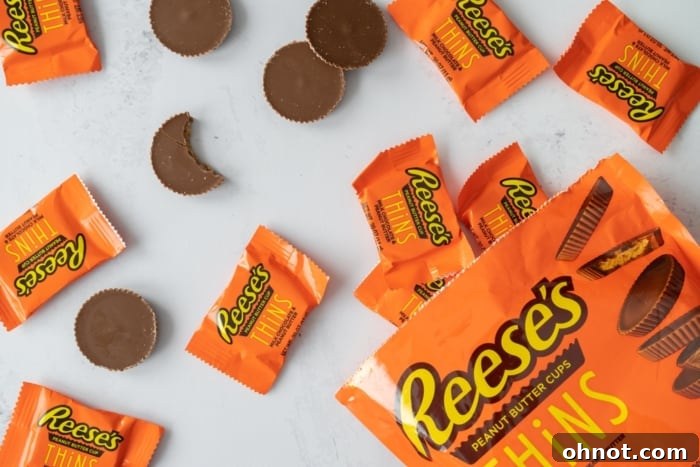
Classic Reese’s Peanut Butter Cups (Regular, Miniatures, and Thins)
These foundational Reese’s products are widely considered to be made with gluten-free ingredients. Their simple recipe of milk chocolate and peanut butter avoids wheat, barley, and rye. While not certified gluten-free, they are generally accepted by many following a gluten-free diet. Always be mindful of the “may contain traces of gluten” disclaimer on packaging, which acknowledges the potential for cross-contamination during manufacturing. For the majority of people with a mild gluten sensitivity, these products are often consumed without issue. However, individuals with celiac disease or highly sensitive gluten intolerance should exercise extreme caution or choose certified gluten-free alternatives.
Reese’s Pieces
The colorful, candy-coated peanut butter morsels, Reese’s Pieces, are also typically considered gluten free in terms of their ingredient composition. The crispy shell and peanut butter filling do not contain any gluten-derived ingredients. Similar to the peanut butter cups, these products may also carry a cross-contamination warning due to shared production lines. If you have a severe gluten allergy, checking the label diligently and contacting the manufacturer for the most current information is always advisable.
Reese’s Peanut Butter Cups (White Chocolate and Dark Chocolate Varieties)
These delicious variations on the classic cup, substituting milk chocolate for white or dark chocolate, generally follow the same gluten-free ingredient profile as the original. The core components remain gluten-free. However, as with all non-certified Reese’s products, the potential for cross-contamination from shared equipment should be considered, and these varieties may also feature the standard “may contain traces of gluten” disclaimer on their packaging.
Other Potentially Gluten-Free Reese’s Products
Beyond the main candy varieties, Reese’s extends to other products. Some items like Reese’s Peanut Butter Spreads or baking chips might also be inherently gluten-free by ingredients. Always double-check the ingredient list and allergen statement on any specific product you intend to consume, as formulations can change, and new products are frequently introduced. It is vital to look for specific “gluten-free” labeling if you require strict adherence to a gluten-free diet.
Reese’s Products NOT Gluten-Free
It is crucial to be aware that not all Reese’s branded products are gluten free. Several candy bars and other items explicitly contain gluten-containing ingredients and must be avoided by anyone on a gluten-free diet:
- Reese’s Fast Break: This candy bar typically includes a nougat layer, which is often made with wheat flour. Therefore, Reese’s Fast Break is NOT gluten free and should be avoided by individuals with gluten sensitivities or celiac disease.
- Reese’s NutRageous: Similar to the Fast Break, the NutRageous bar contains wheat flour in its nougat, rendering it unsafe for those following a gluten-free regimen.
- Reese’s Outrageous! Bar: While its core components like peanut butter, caramel, and milk chocolate might be gluten-free, this bar famously incorporates pretzels. Since pretzels are made from wheat flour, the Reese’s Outrageous! Bar is a definite NO for gluten-free diets.
- Reese’s Puffs Cereal: Breakfast cereals almost always contain wheat, barley, or malt, and Reese’s Puffs is no exception. It is made with whole grain corn, but also contains whole grain oat flour and other ingredients that may not be certified gluten-free, and definitely is not suitable for a strict gluten-free diet.
Always scrutinize the ingredient list and allergen information on the packaging of any Reese’s product, especially for less common or newer items. The presence of ingredients like “wheat flour,” “malted barley syrup,” or “pretzels” indicates it is not gluten free.
Are Reese’s Celiac-Friendly? Navigating Gluten for Sensitive Individuals
The term “Celiac-friendly” is distinct from simply “gluten free.” While many Reese’s products are made without gluten-containing ingredients, their suitability for individuals with celiac disease or extreme gluten sensitivity is a more nuanced discussion. Here’s what those with celiac disease need to consider:
- Ingredient Composition: As established, classic Reese’s Peanut Butter Cups and Reese’s Pieces do not list gluten-containing ingredients. However, certain candy bars and seasonal items explicitly contain wheat or other gluten sources (e.g., nougat, pretzels) and are strictly off-limits for celiacs.
- The Risk of Cross-Contamination: This is the paramount concern for celiac sufferers. Hershey’s often includes a “may contain traces of gluten” disclaimer on products that are not officially certified gluten-free. This warning indicates that while gluten is not an intentional ingredient, the product is manufactured on shared equipment or in facilities that also process gluten-containing foods. For someone with celiac disease, even trace amounts below the FDA’s 20 ppm threshold can sometimes trigger an immune response, although 20 ppm is generally considered safe for the majority. Without official certification, there is no guarantee of rigorous testing and stringent controls specifically designed to prevent cross-contamination to the lowest possible levels.
- Severity of Celiac Disease and Individual Tolerance: Celiac disease presents differently in individuals. Some people are highly sensitive and react to extremely low levels of gluten, while others may tolerate trace amounts without overt symptoms. However, even if symptoms are not apparent, intestinal damage can still occur. Therefore, strict avoidance of all potential gluten sources, including those with cross-contamination warnings, is generally recommended for celiacs.
- Direct Communication with the Manufacturer: For the most up-to-date and specific information, individuals with celiac disease should consider contacting Hershey’s consumer relations directly. Inquire about their gluten-free protocols, specific testing procedures, and measures taken to prevent cross-contamination for particular products. Manufacturing policies can evolve, so current information is always best.
- Seeking Certified Gluten-Free Options: The safest route for individuals with celiac disease is to choose products that are explicitly labeled and, ideally, certified “gluten-free.” While regular Reese’s may not have this certification, there are many certified gluten-free candy options available on the market, including various brands of peanut butter cups designed specifically for strict gluten-free diets.
In summary, while many Reese’s products are formulated without gluten ingredients, the risk of cross-contamination makes them generally NOT considered safe or “celiac-friendly” for those with diagnosed celiac disease or severe gluten intolerance. Caution and informed decision-making are paramount.
Why Are Seasonal Reese’s Not Gluten Free?
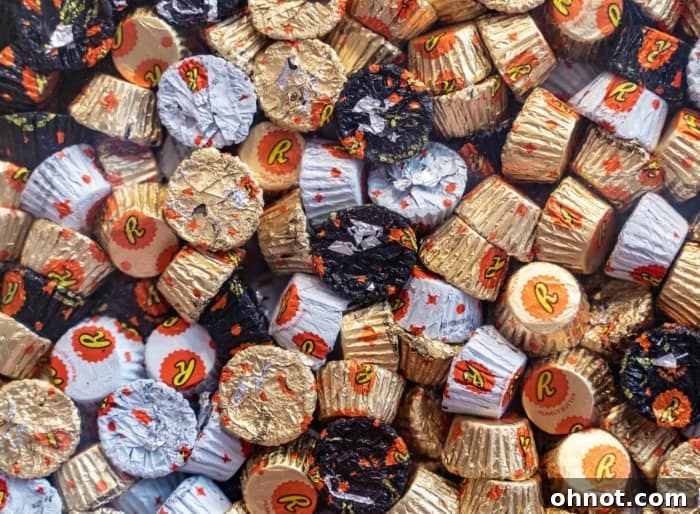
It can be confusing when a beloved candy like Reese’s Peanut Butter Cups is generally gluten-free, but its seasonal counterparts (like eggs, trees, or pumpkins) are sometimes not. There are several compelling reasons behind this inconsistency:
- Specialized Manufacturing Lines: Seasonal candies often require different molds, shaping equipment, or specialized packaging lines. These lines may also be used for other holiday-themed treats that *do* contain gluten. Setting up dedicated gluten-free lines for short-run seasonal products can be economically unfeasible or logistically complex for manufacturers.
- Unique Ingredients and Decorations: Seasonal items sometimes feature additional ingredients, colors, sprinkles, or coatings that are not present in the regular versions. These additions could introduce gluten. For instance, a festive sprinkle mix might contain wheat starch, or a special filling could include malt or other gluten-derived components.
- Production Volume and Efficiency: During peak holiday seasons, candy manufacturers operate at maximum capacity. To meet high demand, they might prioritize production efficiency over maintaining strict gluten-free segregation for all items, especially if the seasonal product is not a primary focus for gluten-free consumers.
- Labeling Regulations and Risk Management: Companies are extremely cautious about labeling products “gluten-free” to avoid potential health risks to consumers and legal liabilities. If they cannot definitively guarantee that a seasonal product consistently meets the FDA’s gluten-free definition due to shared equipment or ingredient sourcing, they will err on the side of caution and not label it as such. This is a protective measure for both the consumer and the company.
- Market Demand and Cost: The demand for specifically gluten-free seasonal versions of every candy might not be high enough to justify the additional costs and complexities involved in dedicated production. Manufacturers often focus their gluten-free efforts on their core, year-round products.
Therefore, while a seasonal Reese’s product might theoretically contain similar base ingredients to its year-round counterpart, the increased risk of cross-contamination and potential for differing ingredients means you should always check the label carefully. Never assume a seasonal version has the same gluten status as the regular product.
Tips for Enjoying Reese’s Safely on a Gluten-Free Diet
Navigating the world of candy on a gluten-free diet requires vigilance. Here are some practical tips to help you make informed choices regarding Reese’s and other treats:
- Always Read the Label: This is the golden rule. Ingredient lists and allergen statements can change without notice. Check every package, every time, for ingredients like wheat, barley, rye, malt, or “natural flavors” that might hide gluten. Look for explicit “gluten-free” certifications.
- Understand “May Contain” Disclaimers: For those with celiac disease or severe sensitivities, “may contain traces of gluten” should generally be interpreted as “not safe.” For milder sensitivities, you might choose to take the risk, but be aware of the potential consequences.
- Prioritize Certified Gluten-Free Products: Whenever possible, opt for candies and snacks that carry a recognized third-party gluten-free certification. This offers the highest level of assurance regarding gluten content and cross-contamination prevention.
- Contact Manufacturers: If you have specific questions or concerns about a product’s gluten status, especially for seasonal or new items, reach out to the manufacturer’s customer service. They can provide the most current and detailed information.
- Be Wary of Bulk Bins: Avoid candies from bulk bins, as cross-contamination is almost guaranteed in such environments.
- Educate Others: When attending parties or receiving gifts, politely inform friends and family about your dietary needs to prevent accidental exposure to gluten.
By following these guidelines, you can enjoy your favorite treats, including select Reese’s products, while maintaining your gluten-free diet with confidence.
Frequently Asked Questions (FAQs)
Yes, most standard Reese’s Peanut Butter Cups are made without gluten-containing ingredients. However, they are not certified gluten-free and may contain traces of gluten due to manufacturing on shared equipment. Always check the label for specific warnings, especially if you have celiac disease.
Hershey’s offers several gluten-free candies. These often include the classic Reese’s Peanut Butter Cups, most varieties of Hershey’s Kisses, Jolly Rancher hard candies, and many Hershey’s milk chocolate bars (always verify specific ingredient lists and allergen warnings for all products).
No, Snickers are generally not gluten free. They contain wheat-based ingredients, specifically in their nougat layer, making them unsuitable for a gluten-free diet.
Most plain M&M’s (Milk Chocolate and Peanut) are considered gluten free by ingredients. However, specialty varieties, seasonal M&M’s, or those with added ingredients (like pretzel or crispy M&M’s) are NOT gluten free. Always check the label for any variations or cross-contamination risks, especially the allergen statement.
For individuals with celiac disease, Reese’s products are generally NOT considered safe. While many Reese’s are made without gluten-containing ingredients, Hershey’s often processes them on shared equipment that also handles wheat. Due to the significant risk of cross-contamination, even small traces of gluten can be harmful to celiacs.
“Made with gluten-free ingredients” means the recipe does not intentionally include gluten. However, there’s no guarantee regarding cross-contamination. “Certified gluten-free” means the product has been verified by a third party to meet strict standards (typically <20 ppm gluten) throughout production, offering a higher level of safety.
It is generally not recommended to assume seasonal Reese’s products are gluten-free, even if their regular counterparts are. Seasonal items often have different manufacturing processes, shared equipment, or unique ingredients that can introduce gluten. Always check the specific packaging and ingredient list for seasonal items.
Explore More Gluten-Free Delights
If you’re a fan of the classic chocolate and peanut butter combination and looking for more gluten-free options, explore these delectable dessert recipes that cater to your dietary needs. I love these Chocolate Peanut Butter Brownies and this rich Chocolate Peanut Butter Pie. They offer all the flavor without the gluten concerns!
For more inspiration and a variety of delicious treats, don’t forget to learn more about Rice Krispies and their gluten-free status, which can be another common query for snack lovers.
You May Also Like
- Chocolate Peanut Butter Pie
- Peanut Butter Cheesecake
- Healthy Peanut Butter Balls
- Peanut Butter Energy Balls
- Peanut Butter Chocolate Chip Cookies
If you found this post helpful in understanding the gluten status of Reese’s products, I would really appreciate a review! You can connect with Organically Addison on Instagram, Facebook, and Pinterest. Join my exclusive Facebook Group for a behind-the-scenes look and community engagement. I would love for you to follow along! For more delightful culinary ideas, be sure to check out these Dessert Recipes.