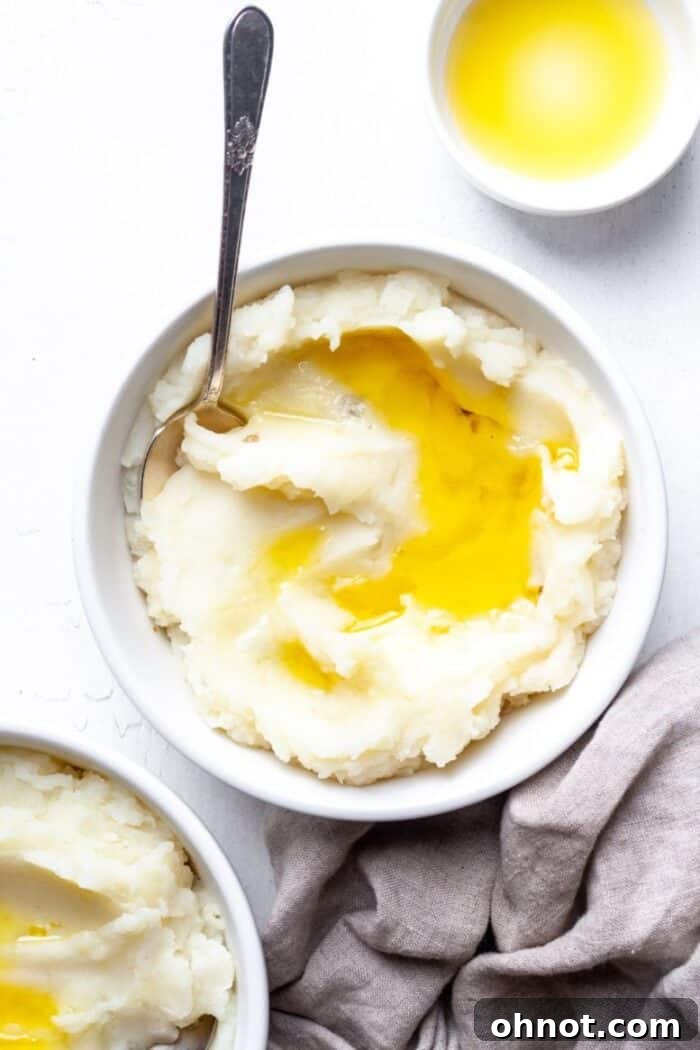
Indulge in Creamy Whole30 Mashed Potatoes: Your Ultimate Guide (Stovetop & Instant Pot)
Discover the secret to making the most irresistibly creamy, smooth, and thick Whole30 Mashed Potatoes. This comprehensive guide provides two easy methods – traditional stovetop and time-saving Instant Pot – ensuring you can whip up this versatile side dish for any occasion. Whether you’re adhering to a Whole30, Paleo, or dairy-free lifestyle, or simply seeking a healthier alternative, these mashed potatoes are a delightful addition to countless main courses.
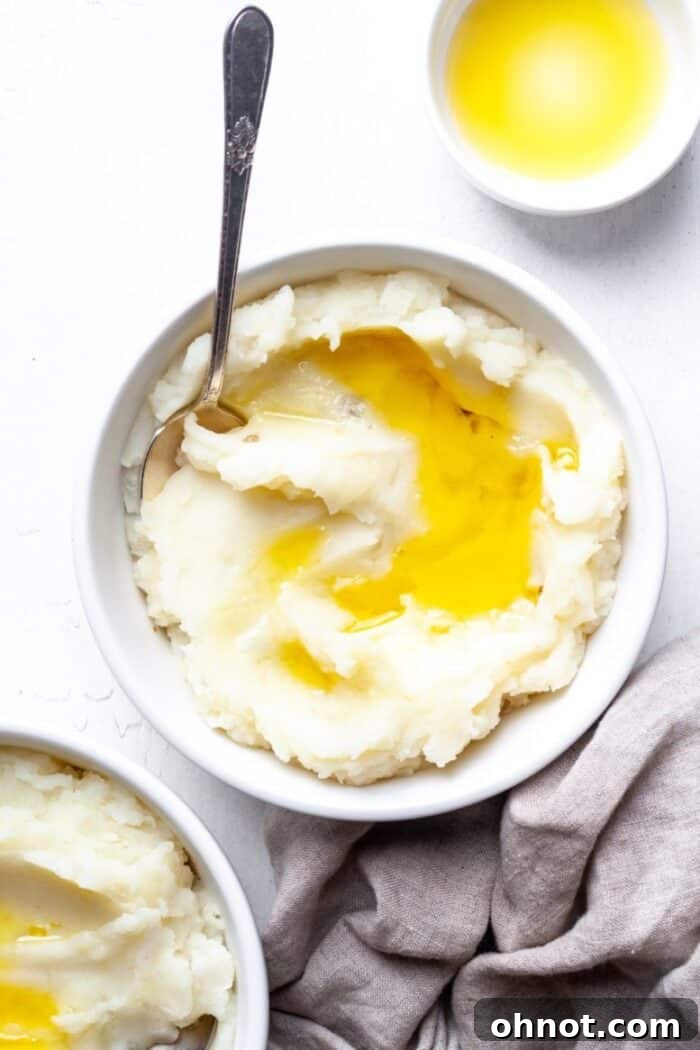
Why These Whole30 Mashed Potatoes Will Become Your Favorite
These Whole30 compliant mashed potatoes aren’t just a side; they’re a revelation. Here’s why you’ll fall in love with this recipe:
- Effortless Preparation: Choose between the classic stovetop method for a hands-on approach or the convenient Instant Pot for a quicker, set-it-and-forget-it option. Both methods yield consistently perfect results with minimal fuss.
- Speed and Simplicity: Designed for busy schedules, this recipe ensures you can have a delicious, nutritious side dish ready in no time, making weeknight dinners or holiday feasts stress-free.
- Perfect Pairing: These mashed potatoes are incredibly versatile. They are a fantastic canvas for rich gluten-free gravy, complementing everything from roasted chicken to tender beef and savory pork dishes.
- Ideal for Every Occasion: From festive Thanksgiving gatherings and holiday dinners to simple family meals and potlucks, these mashed potatoes fit seamlessly into any menu.
- Luxuriously Smooth Texture: Experience the velvety, buttery texture that defines truly great mashed potatoes. This Paleo-friendly recipe guarantees a consistency that will melt in your mouth.
- Dietary Inclusivity: This recipe is a superstar for special diets. It’s naturally Whole30 compliant, Paleo, grain-free, gluten-free, and sugar-free. With simple adjustments (like using olive oil instead of ghee), it can also be easily made dairy-free and Vegan. It’s also nut-free, catering to a wide range of dietary needs without sacrificing flavor.
- Explore More Whole30 Delights: If you enjoy these, be sure to try our Whole30 Mashed Sweet Potatoes for a sweeter alternative or our Whole30 French Fries for a fun, crispy treat.
Choosing the Perfect Potatoes for Mashing
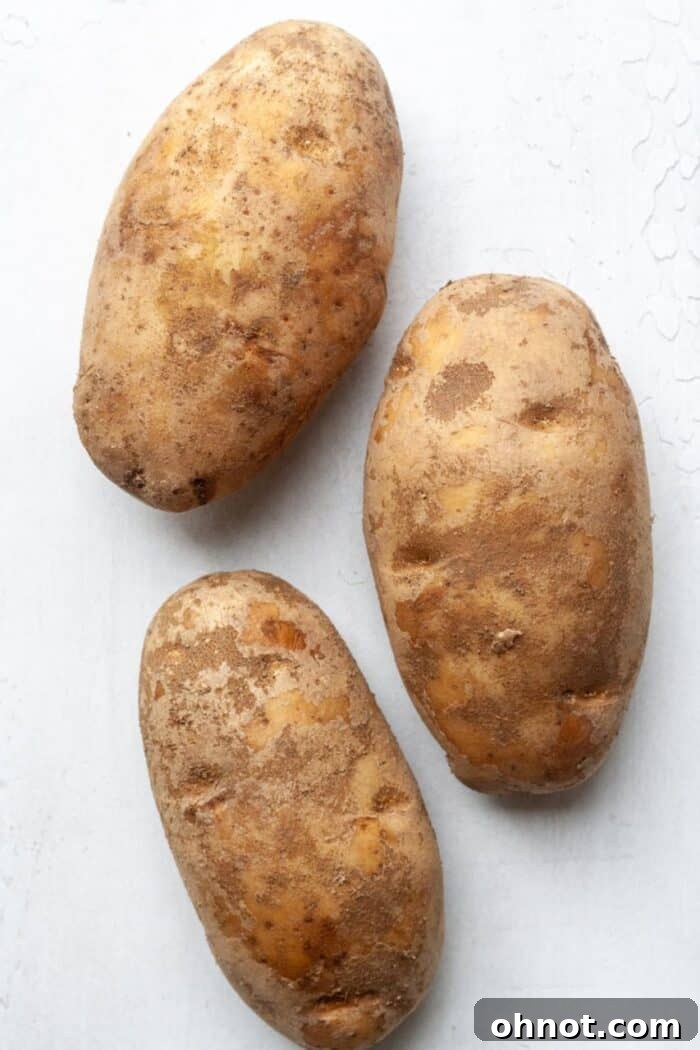
The foundation of outstanding mashed potatoes lies in selecting the right type of potato. While many varieties exist, two stand out as champions for their mashing qualities: Russet and Yukon Gold.
Russet Potatoes: The Starchy Superstar
Russet potatoes, often recognized by their rough, brown skin, are celebrated for their high starch content. This characteristic is crucial for achieving a light, fluffy, and smooth texture once mashed. When cooked, the starch granules swell and separate, making them incredibly easy to break down into a creamy consistency. Russets have a mild flavor profile, which allows them to readily absorb the flavors of any added seasonings, herbs, or spices. This makes them highly adaptable, giving you the freedom to customize your mashed potatoes to suit your exact taste preferences.
Yukon Gold Potatoes: The Buttery Choice
Yukon Gold potatoes, with their thinner, yellowish skin and golden flesh, offer a dense, uniform consistency that mashes beautifully. Unlike Russets, they have a naturally creamy texture and a slightly sweet, buttery flavor, even before any fat is added. This inherent richness can enhance the overall taste of your mashed potatoes, providing a delectable depth that many find appealing. Their waxy-starchy balance means they hold their shape well enough when cooked but still yield to a masher with ease, resulting in a consistently smooth product.
For those exploring other dairy-free options, Russet potatoes are also my top recommendation for these delicious Dairy Free Mashed Potatoes, proving their versatility in various dietary applications.
Essential Ingredients & Smart Substitutions
Crafting the perfect Whole30 mashed potatoes requires a few key ingredients, each playing a vital role in achieving that desirable creamy texture and rich flavor. The good news is that these ingredients are readily available and often have excellent substitutions for different dietary needs.
The Potatoes: Russet or Yukon Gold
As discussed, both Russet and Yukon Gold potatoes are exceptional choices for mashing. Russets offer a fluffy texture and absorb flavors beautifully, while Yukon Golds bring a natural creaminess and subtle sweetness. Feel free to use whichever you prefer or have on hand. For the best results, aim for firm potatoes without any green spots or excessive sprouting.
Canned Coconut Milk: The Dairy-Free Creaminess
Canned full-fat coconut milk is the hero of these dairy-free mashed potatoes. It acts as an incredible replacement for traditional milk or cream, lending an unparalleled richness, thickness, and smoothness to the dish. Its high-fat content mimics the mouthfeel of dairy, creating a truly luxurious texture without any dairy ingredients. For optimal creaminess, remember to shake or stir the canned coconut milk thoroughly before use, as the fat and liquid can separate. I personally recommend the Thai brand for its consistent quality and superb creaminess, ensuring your coconut milk mashed potatoes achieve the best possible texture.
Ghee: The Buttery Flavor Booster
Ghee, or clarified butter, is a fantastic alternative to traditional butter, especially for those on a Whole30 or Paleo diet. Ghee is made by simmering butter until the milk solids separate and can be removed, leaving behind pure butterfat. This process makes it lactose-free and casein-free, and therefore Whole30 compliant. It boasts a beautiful yellow hue and a distinctively strong, nutty, and intensely buttery flavor that elevates the mashed potatoes. For Vegan or strictly dairy-free diets, a high-quality olive oil can be used as a simple and effective substitute, providing a fruity richness and contributing to a smooth consistency.
Seasonings: Sea Salt and Ground Pepper
A simple pinch of sea salt and ground black pepper is all you need to enhance the natural flavors of the potatoes and fats. Always add these to taste, adjusting as you mash to achieve your desired level of seasoning. Don’t be shy about tasting and adjusting!
Optional Flavor Enhancers: Garlic
For a delightful twist, consider adding some minced garlic to your potatoes as they cook or while mashing. This is how you create truly irresistible Paleo garlic mashed potatoes, adding an aromatic depth that is simply divine.
How to Make Whole30 Mashed Potatoes – Stovetop Method
The classic stovetop method for mashed potatoes is straightforward and reliable, perfect for achieving that perfectly tender and mashable potato base.
Step 1: Prepare the Potatoes
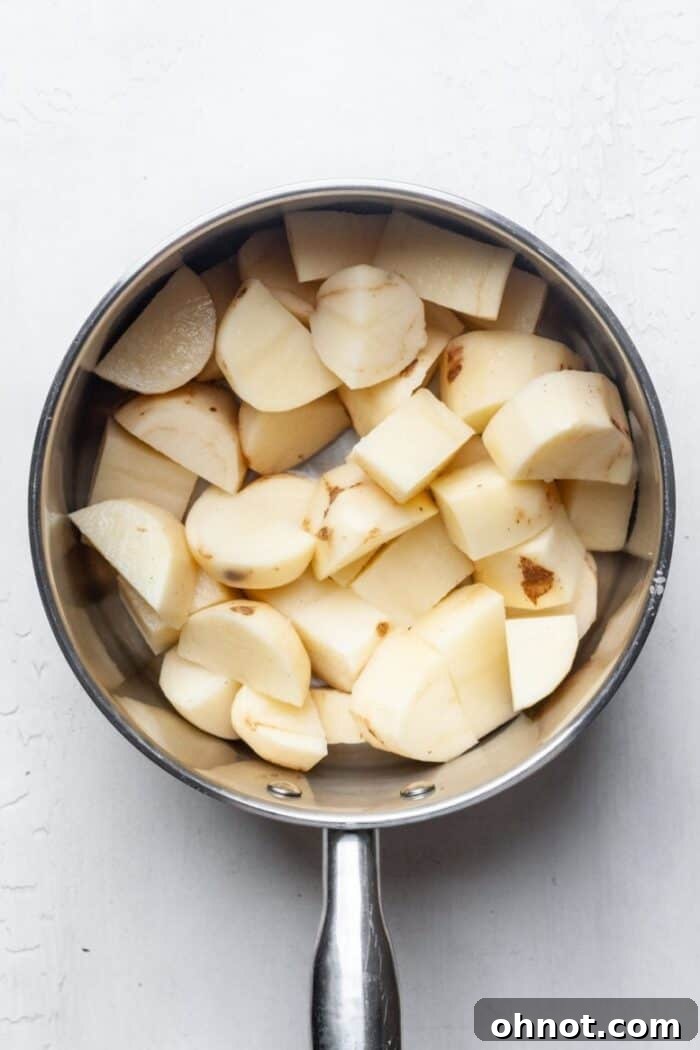
Begin by thoroughly peeling your chosen potatoes (Russet or Yukon Gold). Once peeled, cut them into uniform 1-inch cubes. This ensures even cooking, which is crucial for a consistent texture. Place the cubed potatoes into a large pot.
Step 2: Cover with Water
Add enough cold water to the pot to fully cover the potatoes by at least an inch. Starting with cold water helps the potatoes cook more evenly from the outside in, preventing the outsides from becoming mushy before the centers are tender.
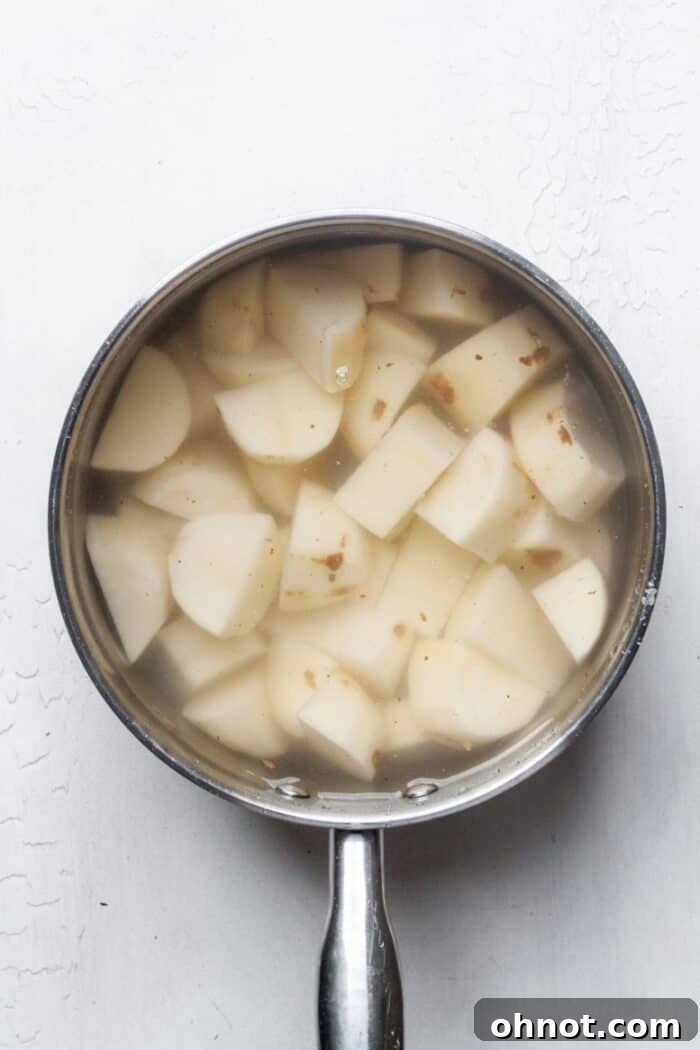
Step 3: Boil Until Tender
Bring the water to a rolling boil over high heat, then reduce the heat to maintain a steady simmer. Cook for approximately 20 minutes, or until the potatoes are fork-tender. You should be able to easily pierce a potato cube with a fork without resistance. Be careful not to overcook, as this can lead to watery, gluey mashed potatoes.
Step 4: Drain and Add Flavor
Once tender, carefully drain all the water from the pot. Return the hot, drained potatoes to the dry pot. Immediately add in the remaining ingredients: canned coconut milk, ghee (or olive oil), sea salt, and ground pepper. The residual heat from the potatoes will help melt the ghee and warm the coconut milk.
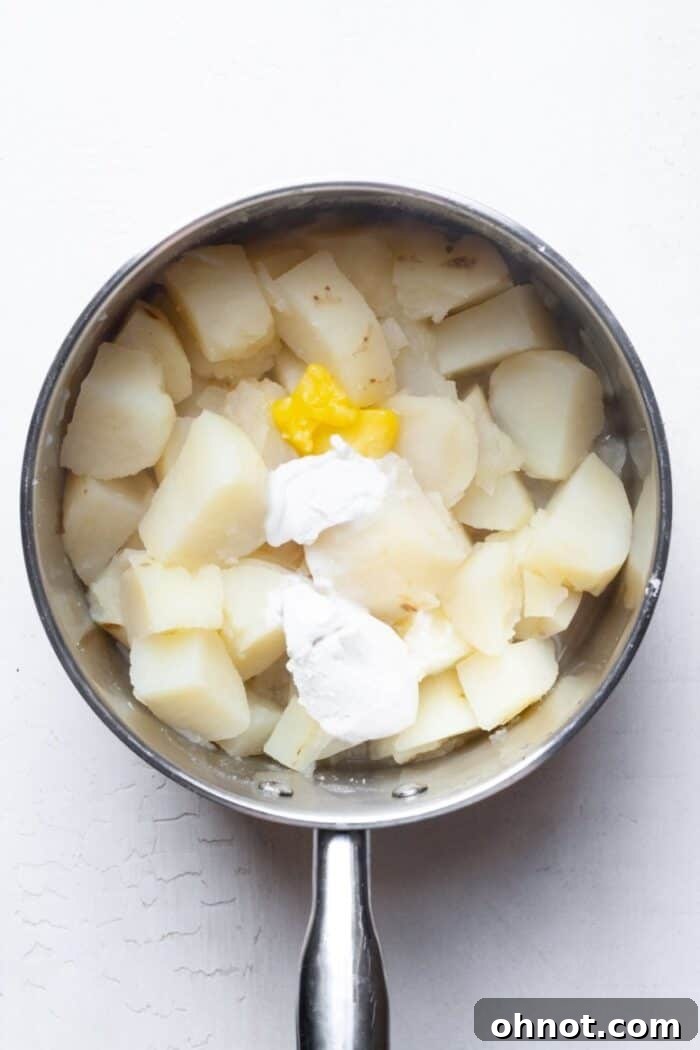
Step 5: Mash to Perfection
Using a sturdy potato masher, begin to mash the potatoes directly in the pot. Continue mashing until they reach your desired level of creaminess and smoothness. For an even silkier texture, you can opt to use a hand mixer or a potato ricer. If using a ricer, press the potatoes through first, then stir in the other ingredients. Avoid over-mashing, which can activate too much starch and make the potatoes gummy.
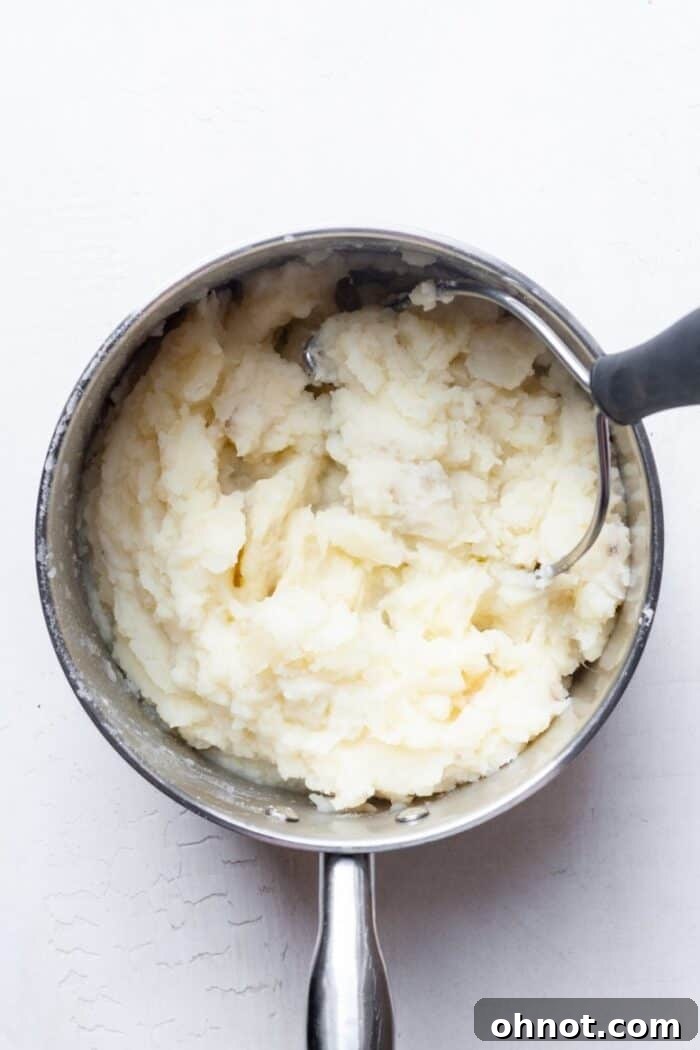
Step 6: Serve Warm
Your creamy Whole30 mashed potatoes are now ready! Serve them immediately while hot to enjoy their optimal texture and flavor.
Instant Pot Method for Quick Mashed Potatoes
For those looking to save time and streamline the cooking process, the Instant Pot is an excellent tool for making these Whole30 mashed potatoes. It significantly cuts down on active cooking time.
Step 1: Prepare the Potatoes
Just like the stovetop method, start by peeling your potatoes and cutting them into uniform 1-inch cubes. Transfer the cubed potatoes directly into the inner pot of your Instant Pot.
Step 2: Add Water
Pour enough water into the Instant Pot to just barely cover the potatoes. The exact amount isn’t critical, as long as the potatoes are submerged for pressure cooking. Typically, about 3-4 cups for 2 pounds of potatoes is sufficient.
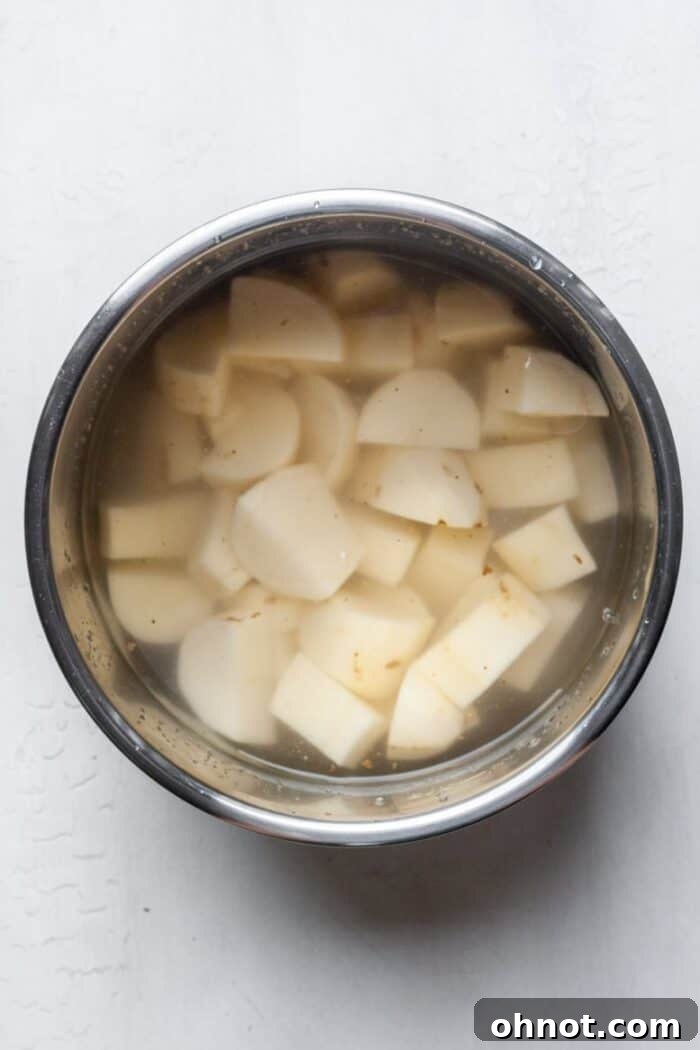
Step 3: Pressure Cook
Secure the lid on your Instant Pot and ensure the sealing valve is set to the “Sealing” position. Select the “Manual” or “Pressure Cook” setting and set the cooking time to 9 minutes on high pressure. The Instant Pot will take a few minutes to come to pressure before the cooking time begins.
Step 4: Quick Release Pressure
Once the 9-minute cooking cycle is complete, carefully perform a quick pressure release. Using an oven mitt or a long spoon, turn the sealing valve to the “Venting” position. Stand clear of the valve as steam will rapidly escape. Wait until the floating valve drops down, indicating that all pressure has been released, before opening the lid.
Step 5: Drain and Flavor
Carefully drain any remaining water from the cooked potatoes. Return the hot, tender potatoes to the Instant Pot or a large mixing bowl. Add in the coconut milk, ghee (or olive oil), sea salt, and ground pepper, just as you would with the stovetop method.
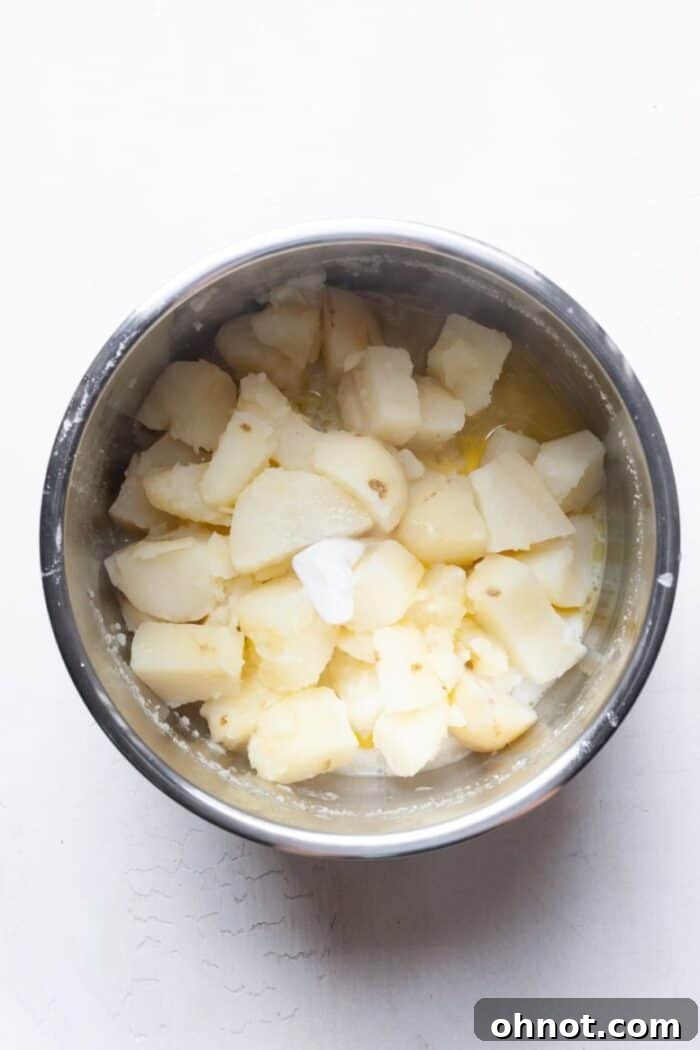
Step 6: Mash Creamy
Use a potato masher to mash the potatoes to your desired consistency. For extra smoothness, you can transfer them to a blender or food processor, adding the liquid and fat gradually, and blend until velvety smooth. Be cautious not to over-process if using a blender, as this can result in a gluey texture.
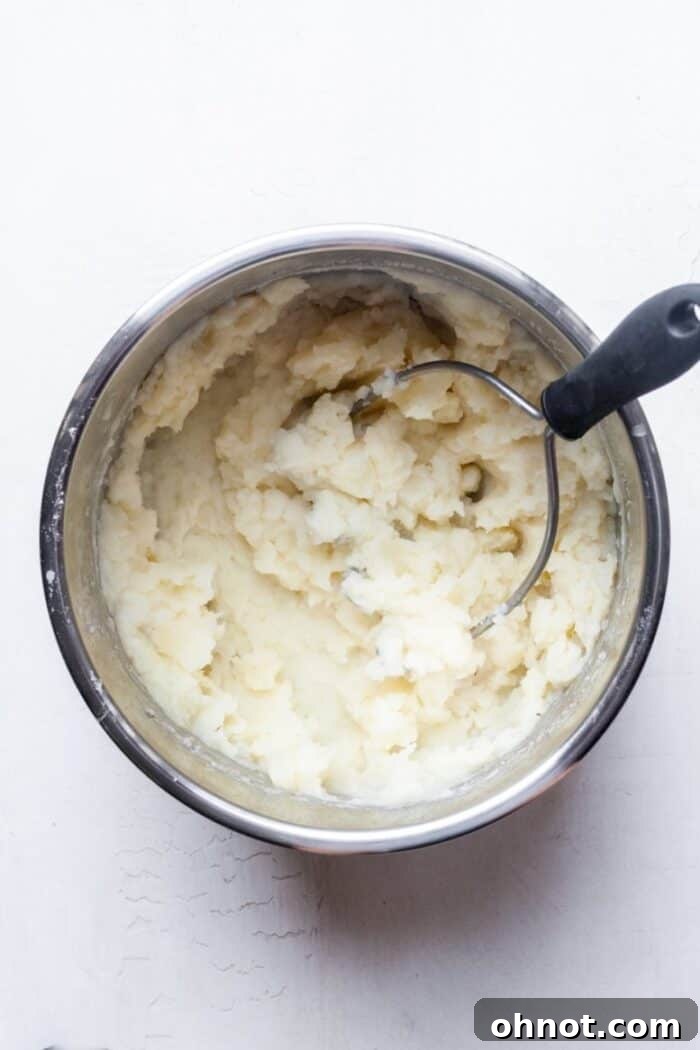
Step 7: Serve Immediately
Serve your hot and fluffy Instant Pot Whole30 mashed potatoes alongside your favorite main dishes.
Expert Tips & Tricks for Perfect Mashed Potatoes
- Potato Choice Matters: For the ultimate creamy and smooth texture, always opt for high-starch potatoes like Russet or a balanced variety like Yukon Gold. They break down beautifully and absorb flavors well.
- The Secret to Creamy Coconut Milk: Canned full-fat coconut milk is essential for dairy-free creaminess. Before opening the can, shake or stir it well to re-incorporate the separated coconut cream and water, ensuring a uniform, rich liquid.
- Mashing Tools: A simple potato masher is effective for a slightly rustic yet creamy texture. For exceptionally smooth mashed potatoes, consider using a potato ricer or a food mill. If using a blender or food processor, pulse cautiously to avoid overworking the potatoes, which can turn them gummy.
- Season to Taste: Always add sea salt and freshly ground black pepper gradually, tasting as you go. Potatoes can handle a good amount of seasoning, and proper salting brings out their natural deliciousness.
- Don’t Overcook: Overcooked potatoes absorb too much water, leading to a watery, less flavorful mash. Cook just until fork-tender.
- Mash While Hot: Potatoes are easiest to mash when they are hot. As they cool, they become firmer and harder to break down smoothly.
What is Ghee? Unlocking this Whole30 Super-Fat
Ghee, often referred to as clarified butter, is a staple in many cuisines, particularly Indian, and has gained significant popularity in the health and wellness community, especially among those following Whole30 and Paleo diets. But what exactly is it?
At its core, ghee is made from cow’s milk butter. The process involves gently melting butter over low heat. As the butter melts, it separates into three layers: foam on top (whey proteins), liquid butterfat in the middle, and milk solids (casein and lactose) that sink to the bottom. By carefully simmering the butter and skimming off the foam, then straining the clear liquid butterfat from the settled milk solids, you are left with pure ghee.
This meticulous separation means that ghee is essentially butter without the milk solids. Consequently, it is much lower in lactose and casein than regular butter, making it a suitable option for many who are sensitive to dairy. While not completely dairy-free (as it originates from milk), it’s often tolerated by individuals who react to the lactose and casein found in whole butter.
Ghee is distinctively characterized by its bright yellow hue and a deep, rich, nutty, and highly concentrated buttery flavor. It has a higher smoke point than butter, making it an excellent choice for cooking and sautéing savory dishes without burning. Its unique flavor profile adds a luxurious depth to any recipe it’s incorporated into, from cooking vegetables to enriching mashed potatoes.
You can easily make clarified butter at home by adding butter to a skillet and cooking it low and slow. Skim off the foam that rises to the surface and continue to cook until all milk solids have settled to the bottom of the skillet, turning a golden brown. These browned solids contribute a wonderful, toasted flavor to the finished ghee.
Is ghee Whole30 compliant? According to the official Whole30 website, yes, ghee is a permitted fat on the Whole30 program due to the removal of milk solids. It’s a fantastic way to enjoy buttery richness while staying compliant.
You have the option to either make this versatile product at home or purchase it in stores. Look for it in the Asian aisle of most grocery stores, as well as in health food stores like Whole Foods, and even major retailers such as Target and Walmart.
Delicious Variations & Flavorful Add-Ins
While these Whole30 mashed potatoes are incredibly satisfying on their own, they also serve as a perfect base for creativity. Feel free to customize them with these delicious additions to elevate their flavor profile:
- Garlic Powder or Minced Garlic: For an aromatic kick, stir in garlic powder (½ to 1 teaspoon) or sauté a few cloves of minced garlic in the ghee before adding it to the potatoes. This creates a deeply flavorful garlic mashed potato experience.
- Onion Powder: A subtle addition of onion powder (½ teaspoon) can add a savory depth without overwhelming the dish.
- Fresh Herbs: Finely chopped fresh herbs like chives, parsley, rosemary, or thyme stirred in at the end provide a burst of freshness and color.
- Crispy Bacon Bits: For an irresistible savory crunch, crumble some crispy, Whole30-compliant bacon over the top just before serving.
- Caramelized Onions: Slow-cooked caramelized onions folded into the mashed potatoes add a wonderful sweetness and umami depth.
- Toasted Nuts: For a unique texture and flavor, sprinkle toasted slivered almonds or chopped pecans on top. Ensure they are Whole30 compliant if strictly adhering to the program.
- Roasted Garlic: For a sweeter, milder garlic flavor, roast a head of garlic until soft, then squeeze the cloves into the mashed potatoes.
- Broth: If you find your mashed potatoes a bit too thick, a splash of Whole30 compliant chicken or vegetable broth can help achieve a looser consistency without sacrificing flavor.
Serving Suggestions & Storage Tips
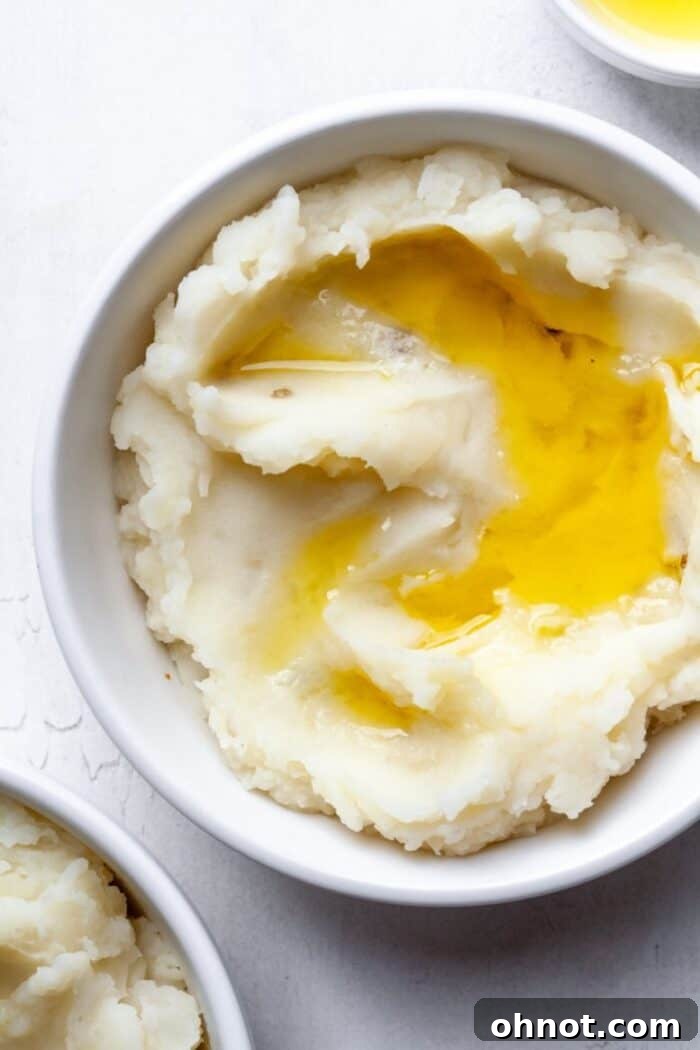
These creamy Paleo mashed potatoes are best served hot, allowing their rich, smooth texture and robust flavors to truly shine. They are an incredibly versatile side dish that pairs wonderfully with a wide array of main courses, making them a staple for any meal.
Serving Suggestions:
- Classic Protein Pairings: Serve them alongside roasted chicken, pan-seared steak, slow-cooked beef roasts, or savory pork chops. The creaminess of the potatoes perfectly balances the richness of the meats.
- Holiday Feast Essential: No holiday table is complete without a generous bowl of mashed potatoes. They are a beloved component of Thanksgiving, Christmas, and other festive meals.
- Hearty Weeknight Dinners: Elevate a simple meatloaf or a quick baked fish with a comforting scoop of these potatoes.
- With Gravy: Don’t forget the gravy! A delicious Whole30-compliant gravy poured over these mashed potatoes is pure comfort food.
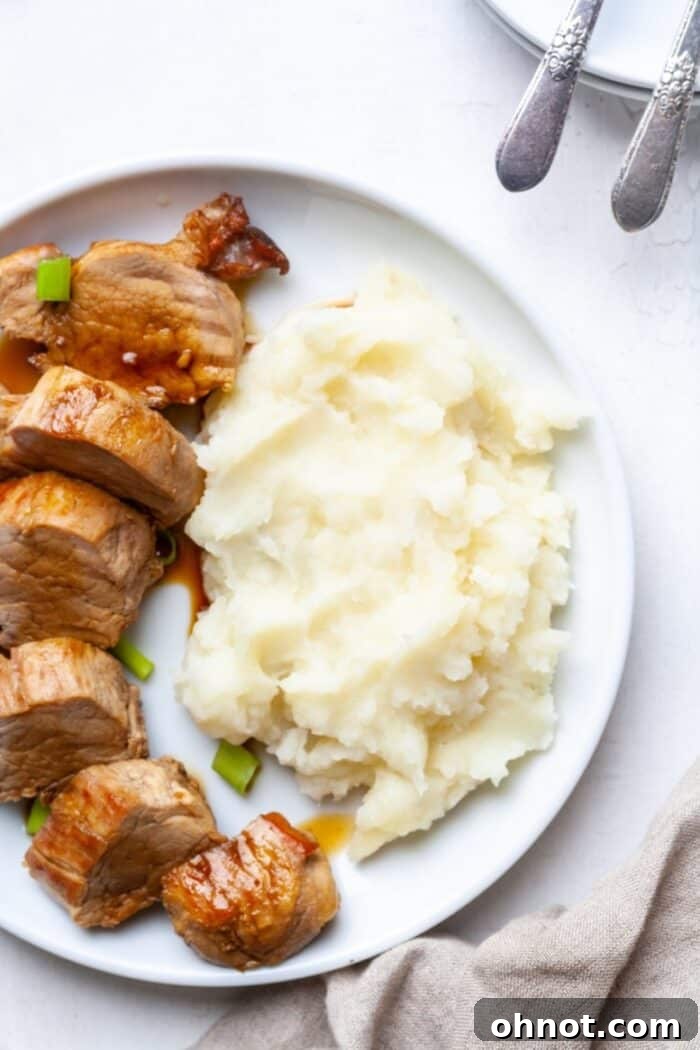
For a specific pairing, try these mashed potatoes with our flavorful Whole30 Pork Tenderloin for a complete and satisfying meal.
Storage and Reheating:
- Refrigeration: Store any leftover Paleo mashed potatoes in an airtight container in the refrigerator for up to 4 days. This ensures they remain fresh and delicious for future meals.
- Freezing: These Whole30 mashed potatoes can absolutely be frozen! Allow them to cool completely, then transfer them to freezer-safe bags or containers. Press out as much air as possible to prevent freezer burn. They can be stored in the freezer for up to 2-3 months. Thaw overnight in the refrigerator before reheating.
- Reheating Tips: To reheat, gently warm the mashed potatoes on the stovetop over low heat, stirring occasionally, or in the microwave. If they appear too thick or dry, add a splash of extra coconut milk or broth to restore their creamy consistency.
Frequently Asked Questions About Whole30 Mashed Potatoes
Canned full-fat coconut milk is an excellent dairy-free and Vegan replacement for traditional milk or cream in mashed potatoes. Its rich and creamy texture mimics dairy perfectly, providing a smooth and delicious result.
Instant mashed potatoes typically contain dairy products, preservatives, and other non-compliant ingredients. Therefore, they are generally not suitable for the Whole30 program. Homemade mashed potatoes, like this recipe, are the best way to ensure compliance.
Yes, white potatoes were re-introduced into the Whole30 program guidelines in 2014. They are allowed on Whole30, as long as they are prepared without non-compliant ingredients like dairy or added sugars. Sweet potatoes are also compliant.
This is entirely up to personal preference! Leaving the skin on will result in a more rustic texture with a slight chew and added fiber. Peeling the potatoes, as recommended in this recipe, will yield a super creamy and velvety smooth mashed potato dish.
While you can microwave potatoes to cook them, the stovetop and Instant Pot methods are generally preferred for mashed potatoes. Cooking potatoes in water, whether boiling or pressure cooking, helps them absorb moisture and become more uniformly tender, which leads to a superior, more easily mashable and creamy texture. Microwaving can sometimes result in dry or unevenly cooked potatoes.
You May Also Like These Whole30 Recipes
- Creamy Whole30 Mashed Cauliflower
- Whole30 Sweet Potato Breakfast Bowls
- Whole30 Mashed Sweet Potatoes
- Crispy Paleo Chicken Tenders
- Whole30 Scalloped Potatoes
If you try this delightful Whole30 mashed potatoes recipe, I would absolutely love to see your creations! Share your culinary success on Instagram, Facebook, and Pinterest. Don’t forget to follow along for more healthy eating inspiration! For even more fantastic recipes that align with your dietary goals, explore our dedicated Whole30 Recipes page.

Get the Recipe: Whole30 Mashed Potatoes
These incredibly creamy Whole30 Mashed Potatoes are thick, smooth, and wonderfully hearty! They make the perfect side dish for any meal, from holiday celebrations to casual family dinners, offering a delicious and compliant option.
Prep Time: 10 mins
Cook Time: 20 mins
Total Time: 30 mins
Ingredients
Yields: 4 servings
- 2 pounds potatoes, Russet or Yukon Gold recommended
- ½ cup canned full-fat coconut milk (Thai brand recommended for best creaminess)
- ¼ cup ghee, grass-fed butter (if not strictly dairy-free), or olive oil (for Vegan/dairy-free)
- Pinch of sea salt, to taste
- Pinch of ground black pepper, to taste
Instructions
Stovetop Method
- Peel the potatoes and cut them into uniform 1-inch cubes.
- Place the cubed potatoes in a large pot. Add enough cold water to fully cover the potatoes.
- Bring to a boil, then reduce heat and simmer for about 20 minutes, or until potatoes are fork-tender.
- Drain the potatoes thoroughly. Return them to the dry pot. Add in the coconut milk, ghee (or olive oil), sea salt, and ground pepper.
- Use a potato masher to mash the potatoes until they are creamy and smooth. For an extra silky texture, you can transfer to a blender or food processor and blend until desired consistency is reached.
- Serve immediately while hot.
Instant Pot Method
- Peel the potatoes and cut them into uniform 1-inch cubes.
- Add the cubed potatoes to the Instant Pot. Pour in enough water to just cover the potatoes.
- Secure the lid and set the valve to “Sealing.” Pressure cook on high for 9 minutes.
- Once cooking is complete, perform a quick pressure release by turning the valve to “Venting” (use caution for steam).
- Drain the potatoes completely. Return them to the Instant Pot or a mixing bowl. Add in the coconut milk, ghee (or olive oil), sea salt, and ground pepper.
- Use a potato masher to mash the potatoes until creamy. Alternatively, use a blender or food processor for a silkier finish, blending gently.
- Serve hot and enjoy!
Notes
- Russet and Yukon Gold potatoes are highly recommended for their ability to achieve the creamiest texture and mash easily.
- Always use full-fat canned coconut milk. Shake or stir the can well before measuring and using to ensure consistent creaminess. The Thai brand is often a good choice.
- For Whole30 compliance, use ghee or grass-fed butter. For a completely dairy-free and Vegan version, olive oil is an excellent alternative.
- A sturdy potato masher simplifies the mashing process considerably.
- Alternatively, for super smooth results, a food processor or blender can be used, but be careful not to over-process.
- Adjust sea salt and ground pepper to your personal taste preference.
- Store any leftover mashed potatoes in an airtight container in the refrigerator for up to 4 days. These mashed potatoes can also be frozen for longer storage.
Nutrition Information
Serving Size: 1 of 4 servings
- Calories: 342 kcal
- Carbohydrates: 41g
- Protein: 5g
- Fat: 19g
- Saturated Fat: 13g
- Polyunsaturated Fat: 1g
- Monounsaturated Fat: 4g
- Cholesterol: 29mg
- Sodium: 18mg
- Potassium: 1034mg
- Fiber: 6g
- Sugar: 3g
- Vitamin A: 5 IU
- Vitamin C: 46mg
- Calcium: 32mg
- Iron: 2mg
Author: Addison LaBonte
Course: Side Dish
Cuisine: American
Love these Paleo mashed potatoes? Don’t miss out on more healthy meal plans and new recipes – you can sign up here to receive them directly in your inbox!