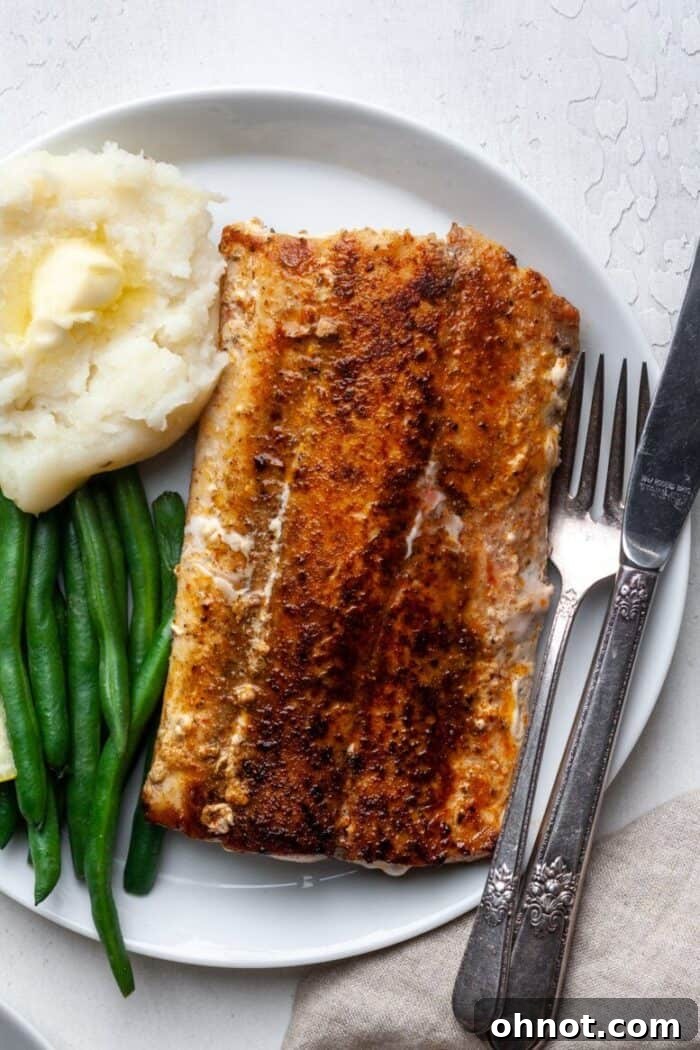
Embark on a culinary journey with this irresistible Blackened Mahi Mahi recipe! Perfectly seared to achieve a crispy, flavor-packed crust while remaining incredibly juicy and flaky within, this dish is a true testament to simple yet sophisticated cooking. Our easy-to-follow guide, featuring a vibrant homemade Cajun seasoning, transforms fresh mahi mahi fillets into an exceptional meal that’s ready in under 20 minutes. Forget complicated techniques; this recipe proves that gourmet results are achievable right in your home kitchen, making it ideal for busy weeknights or impressive entertaining.
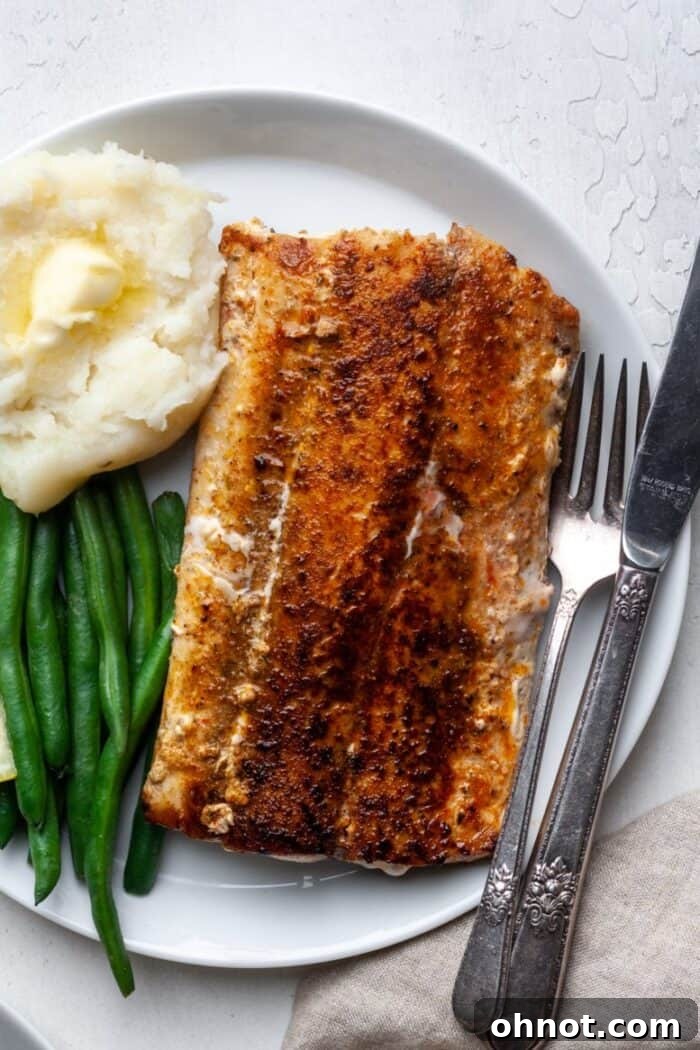
Why This Blackened Mahi Mahi Recipe Will Be Your New Favorite
Discover multiple reasons why this Blackened Mahi Mahi recipe stands out as a must-try in your cooking repertoire:
- Unforgettable Flavor Profile: The star of this dish is its homemade Cajun seasoning, which delivers a delightful blend of smoky, savory, and spicy notes. Each bite offers a robust flavor that’s incredibly satisfying without being overwhelming.
- Lightning-Fast Preparation: From prep to plate, this entire recipe takes merely 20 minutes. It’s the perfect solution for a quick, healthy, and flavorful meal on even the busiest of evenings.
- Master the Art of Cooking Mahi Mahi: This comprehensive guide demystifies cooking mahi mahi, ensuring you achieve perfect results every time – a beautifully seared exterior and a tender, flaky interior.
- Customizable Spice Level: Our homemade Cajun seasoning allows you full control over the heat. Whether you prefer a mild whisper of spice or a fiery kick, you can easily adjust the cayenne pepper to match your taste.
- A Naturally Healthy Choice: Mahi mahi is an excellent source of lean protein, essential vitamins, and minerals. This recipe provides a nutritious and wholesome meal option that fits a variety of dietary preferences.
- Dietary Inclusivity: This recipe is thoughtfully crafted to be Whole30 compliant, Paleo, gluten-free, dairy-free, Keto, low-carb, and sugar-free, making it accessible for almost everyone.
- Elevated Dining Experience: Despite its simplicity and speed, this blackened mahi mahi feels incredibly fancy and sophisticated, making it ideal for impressing guests or simply treating yourself to a restaurant-quality meal at home.
- Explore More Seafood Delights: If you love this recipe, be sure to check out our other delicious seafood creations like Pan Seared Chilean Sea Bass and Candied Salmon for more inspiration!
Essential Ingredients & Smart Substitutions
Crafting gourmet blackened mahi mahi begins with selecting quality ingredients. Here’s a detailed look at what you’ll need and how to adapt if necessary. For the precise measurements, please refer to the complete recipe card below.
The Heart of the Flavor: Homemade Cajun Seasoning
Our signature homemade Cajun seasoning is what truly elevates this dish. Each spice plays a vital role in creating a complex and incredibly delicious flavor profile. You’ll find a balance of smoky paprika, aromatic oregano and thyme, pungent garlic and onion powder, and a spicy kick from cayenne pepper, all harmonized with sea salt and black pepper.
- Paprika: Provides a rich, smoky depth and a beautiful reddish hue to the fish. For a deeper flavor, use smoked paprika.
- Cayenne Pepper: This is where the heat comes from. If you prefer a milder seasoning, simply reduce the amount of cayenne. For extra spice, feel free to add more!
- Oregano & Thyme: These classic herbs contribute an earthy, aromatic foundation that is characteristic of Cajun cuisine.
- Garlic Powder & Onion Powder: Essential for building savory layers, these powders offer a consistent flavor that penetrates the fish during cooking.
- Sea Salt & Black Pepper: Fundamental seasonings that enhance all other flavors and bring them into balance.
While pre-made Cajun seasonings are available, making your own at home guarantees freshness, allows for complete customization of spice levels, and ensures no unwanted sugars, preservatives, or anti-caking agents are included. For more details on crafting the perfect spice blend, see our Gluten Free Cajun Seasoning guide.
The Star: Fresh Mahi Mahi Fillets
Fresh mahi mahi fillets are highly recommended for their superior flavor and texture. Look for fillets with bright, pinkish-hued meat and firm texture. The name “mahi mahi” is Hawaiian, translating to “strong strong,” which perfectly describes this robust fish. Its lean, slightly sweet flavor pairs beautifully with bold seasonings.
- Fresh vs. Frozen: Whenever possible, opt for fresh mahi mahi. If using frozen, ensure it is completely thawed before proceeding with the recipe. Proper thawing (preferably overnight in the refrigerator) is key to preventing a watery outcome. Many grocery stores and warehouse clubs, like Costco (Kirkland brand), offer quality frozen mahi mahi.
The Cooking Fat: Olive Oil
Olive oil is a heart-healthy choice that helps achieve that perfect sear and crispy exterior crucial for blackened fish. Its moderate smoke point is suitable for pan-searing over medium to medium-high heat.
- Alternatives: For different flavor profiles or higher smoke points, you can substitute with avocado oil, clarified butter (ghee), or even regular butter for a richer taste. Keep in mind that butter can brown quickly, so monitor carefully.
The Bright Finish: Lemon Juice
A final squeeze of fresh lemon juice after cooking adds a burst of tartness and brightness that beautifully cuts through the rich flavors of the seasoning, offering a refreshing contrast.
Understanding Mahi Mahi: A Culinary Gem
Mahi mahi, also known as dolphinfish (though unrelated to marine mammals), is a truly remarkable and visually stunning fish. Renowned for its vibrant, iridescent blue, green, and gold coloring, this pelagic fish inhabits tropical and subtropical waters worldwide. Its Hawaiian name, “Mahi Mahi,” meaning “very strong,” reflects its powerful presence in the ocean.
Typically, mahi mahi caught for consumption range from 4 to 6 pounds, though they can grow much larger. Beyond its striking appearance, mahi mahi is celebrated in kitchens around the globe for its distinct culinary qualities:
- Taste and Texture: Mahi mahi boasts a firm, lean, and moderately flaky white flesh with a wonderfully mild, slightly sweet flavor. It’s not overly “fishy,” making it a versatile choice even for those who are hesitant about seafood. Its texture holds up well to various cooking methods.
- Versatility in Cooking: This fish is incredibly adaptable. While pan-searing is a fantastic method for achieving a blackened crust, mahi mahi also shines when grilled, baked, or broiled. It’s a popular choice for vibrant dishes like mahi mahi tacos, flavorful sandwiches, or served simply as a stand-alone fillet.
- Nutritional Powerhouse: Beyond its delicious taste, mahi mahi is packed with vital nutrients, making it an excellent addition to a healthy diet. It is:
- High in Lean Protein: Crucial for muscle repair, growth, and overall body function.
- Rich in B Vitamins: Particularly Vitamin B12, essential for nerve function and red blood cell formation.
- Relatively Low in Mercury: Compared to larger, longer-lived predatory fish, mahi mahi generally has lower mercury levels, making it a safer choice for regular consumption.
- Source of Selenium: A powerful antioxidant that helps protect cells from damage and supports immune health.
- Contains Potassium: Important for maintaining fluid balance, nerve signals, and muscle contractions.
Choosing mahi mahi is not just a choice for flavor but also for a nutrient-dense meal that supports your well-being.
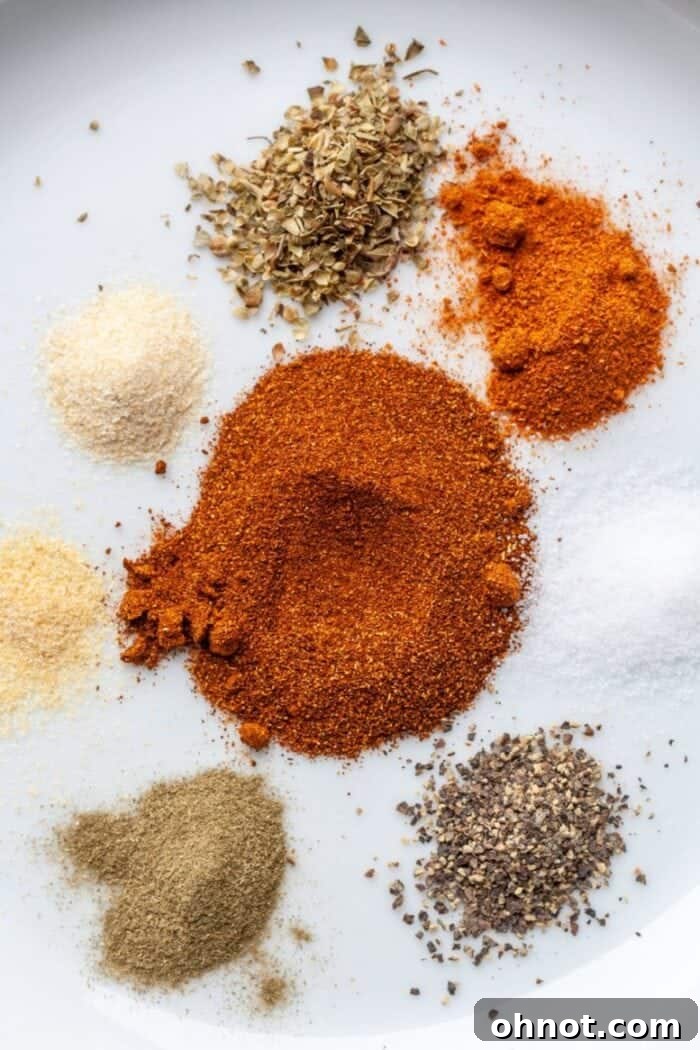
Crafting the Perfect Blackened Seasoning at Home
The secret to truly spectacular blackened mahi mahi lies in a well-balanced, fresh Cajun seasoning. While store-bought options are convenient, crafting your own blend at home offers unparalleled flavor and benefits:
- Superior Freshness: Freshly ground and mixed spices deliver a more potent and aromatic flavor than those that have been sitting on a shelf for months.
- Customization: You have complete control over the ingredients, allowing you to tailor the spice level and flavor notes precisely to your preference. Want it spicier? Add more cayenne. Prefer it milder? Reduce it. You can also experiment with other herbs like bay leaf powder or a touch of smoked paprika for extra depth.
- Healthier Option: Homemade seasoning means no hidden sugars, anti-caking agents, or preservatives often found in commercial blends, making it ideal for Whole30, Paleo, Keto, and other clean eating lifestyles.
Understanding the “Blackening” Technique
The term “blackened” refers to a cooking technique, rather than the fish being literally burnt. It involves coating meat or fish in a generous layer of seasoning and then searing it in a screaming hot cast-iron skillet, often with a significant amount of butter or oil. The intense heat quickly chars the spices and fats, creating a dark, crusty, and intensely flavorful exterior that locks in the moisture of the fish. This process gives the dish its characteristic “blackened” appearance and unique, robust taste.
Our Cajun seasoning, a harmonious blend of paprika, cayenne, oregano, thyme, garlic powder, onion powder, salt, and pepper, is specifically designed to achieve this iconic blackened crust. The combination of these spices caramelizes beautifully, forming a delicious, savory coating that is the hallmark of this cooking style.
For a deep dive into creating this versatile spice blend, explore our dedicated post on Gluten Free Cajun Seasoning (Whole30 & Paleo).
Taste & Texture: What to Expect
Prepare your palate for a truly satisfying experience. This blackened mahi mahi delivers a bold, delicious Cajun flavor that is distinctly savory with a pleasant, earthy undertone from the herbs and a gentle smokiness from the paprika. While the seasoning is robust, it’s not overpowering, allowing the natural sweetness of the mahi mahi to shine through. Remember, you can easily adjust the cayenne for your preferred level of spiciness.
The texture is equally remarkable: a beautifully crispy, slightly charred crust on the outside, giving way to an incredibly juicy, tender, and flaky interior. The fish cooks perfectly, avoiding any dryness or dense chewiness, resulting in a melt-in-your-mouth sensation with every bite.
Step-by-Step Guide: How to Make Blackened Mahi Mahi
Achieving restaurant-quality blackened mahi mahi at home is simpler than you think. Follow these detailed steps for a perfect sear and maximum flavor.
Step 1: Prepare Your Cajun Seasoning
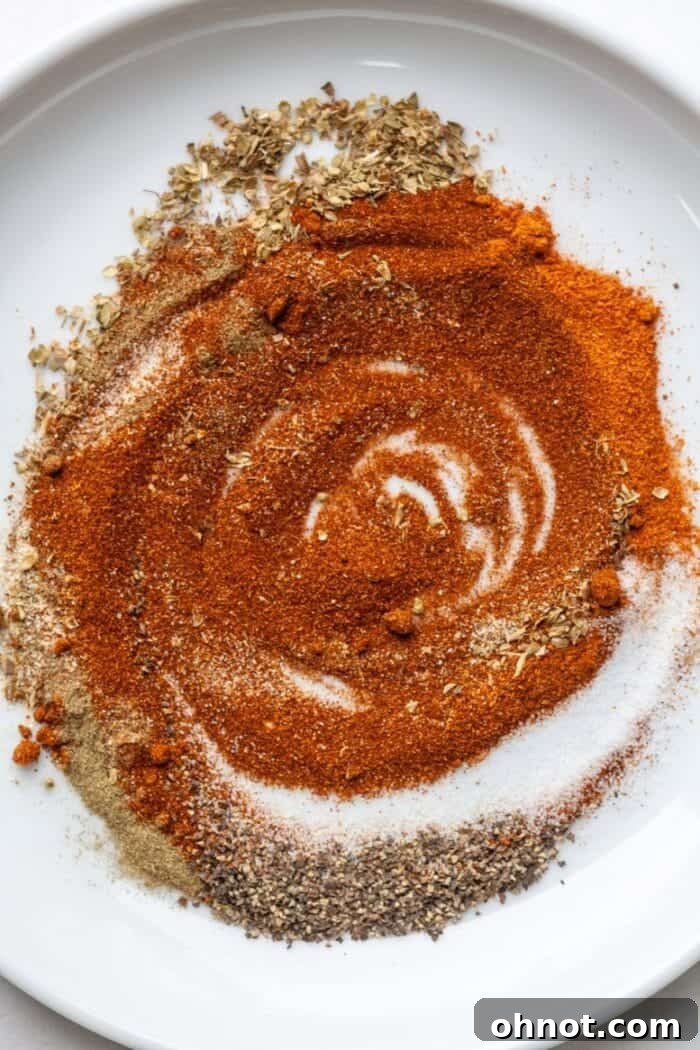
In a small bowl, combine all the dry ingredients for your Cajun seasoning: paprika, oregano, ground cayenne pepper, sea salt, ground pepper, ground thyme, garlic powder, and onion powder. Stir thoroughly with a spoon or whisk until all the spices are evenly blended. This ensures every part of your fish gets the same burst of flavor.
Step 2: Prepare the Mahi Mahi Fillets
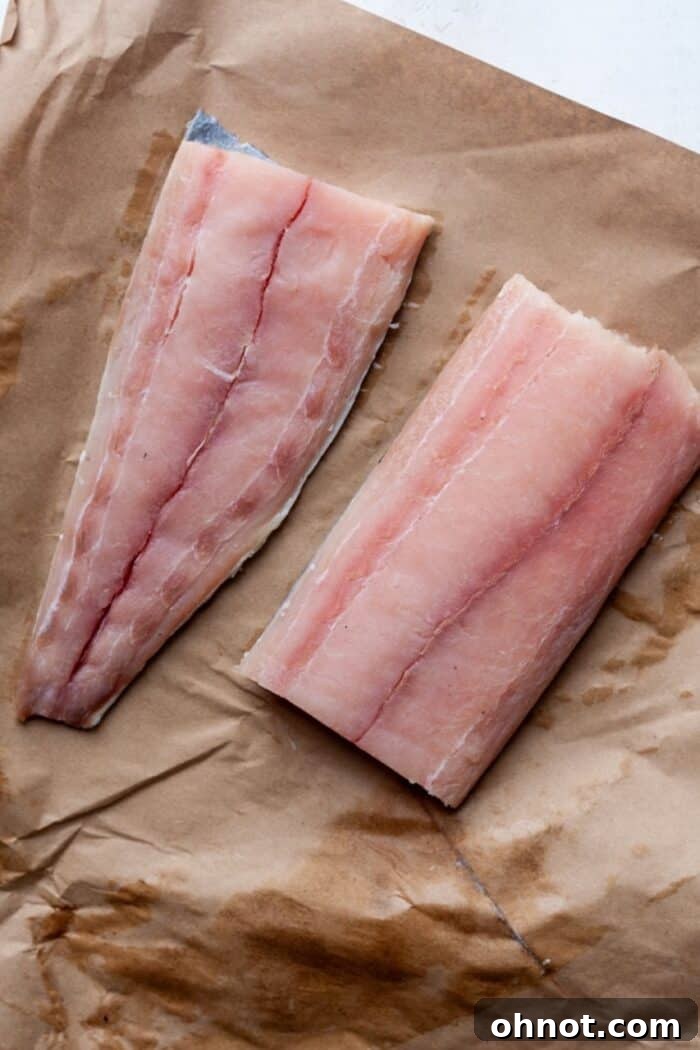
Carefully remove the skin from your mahi mahi fillets if they still have it. Next, and this is a crucial step for achieving a proper sear, pat the fish fillets completely dry with paper towels. Removing excess moisture allows the fish to develop a beautiful crust rather than steaming in the pan.
Step 3: Season Generously
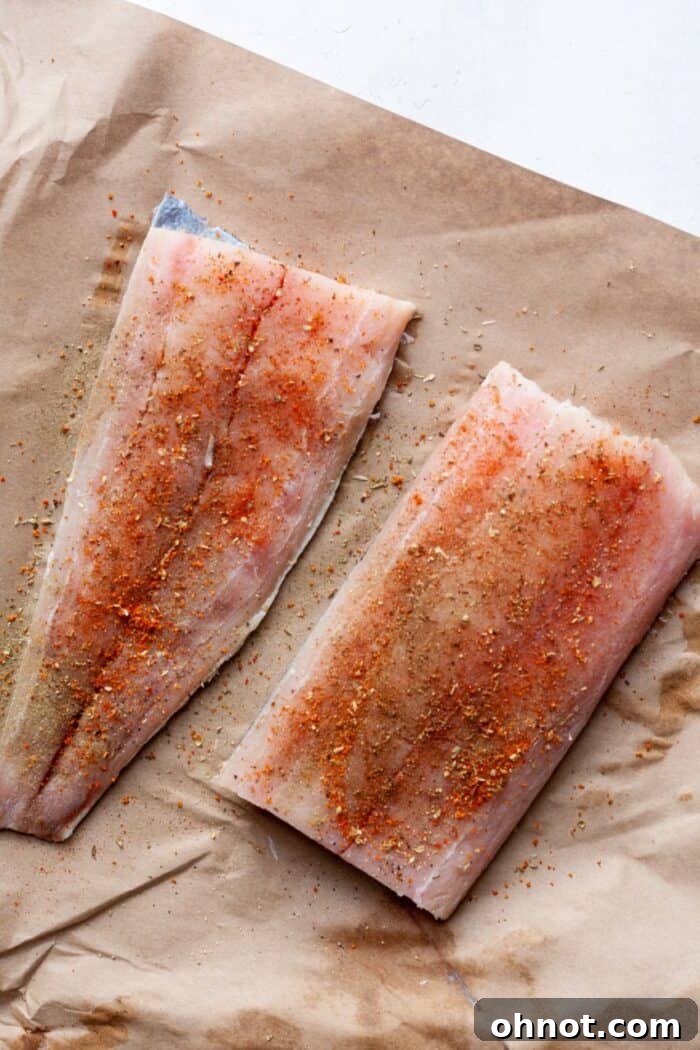
Take your prepared Cajun seasoning and generously rub it all over both sides of each mahi mahi fillet. Don’t be shy here – a thick, even coating of seasoning is key to developing that signature blackened crust and rich flavor. Use your hands to really press the seasoning into the fish.
Step 4: Heat the Skillet
Place a large, heavy-bottomed skillet (cast iron works best for blackening due to its heat retention) over medium-high heat. Add the olive oil. Allow the oil to heat thoroughly until it just begins to shimmer and is almost smoking. This high heat is essential for achieving a quick, dark crust.
Step 5: Pan-Sear to Perfection
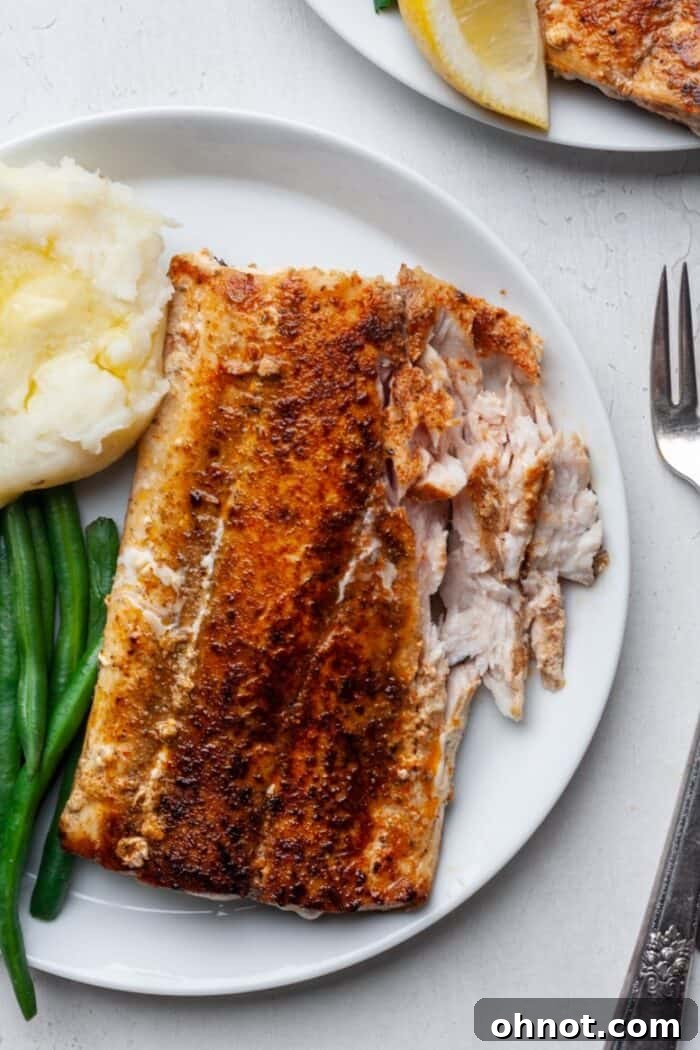
Carefully place the seasoned mahi mahi fillets into the hot skillet. Cook undisturbed for approximately 5 minutes on the first side. This initial sear is critical for developing the blackened crust. Then, using a thin, sturdy spatula, carefully flip the fish. Continue cooking for another 4 to 5 minutes, or until the fish is opaque throughout, easily flakes with a fork, and has reached an internal temperature of 137 degrees Fahrenheit (60 degrees Celsius) when measured at its thickest part with an instant-read meat thermometer.
Step 6: Serve and Enjoy!
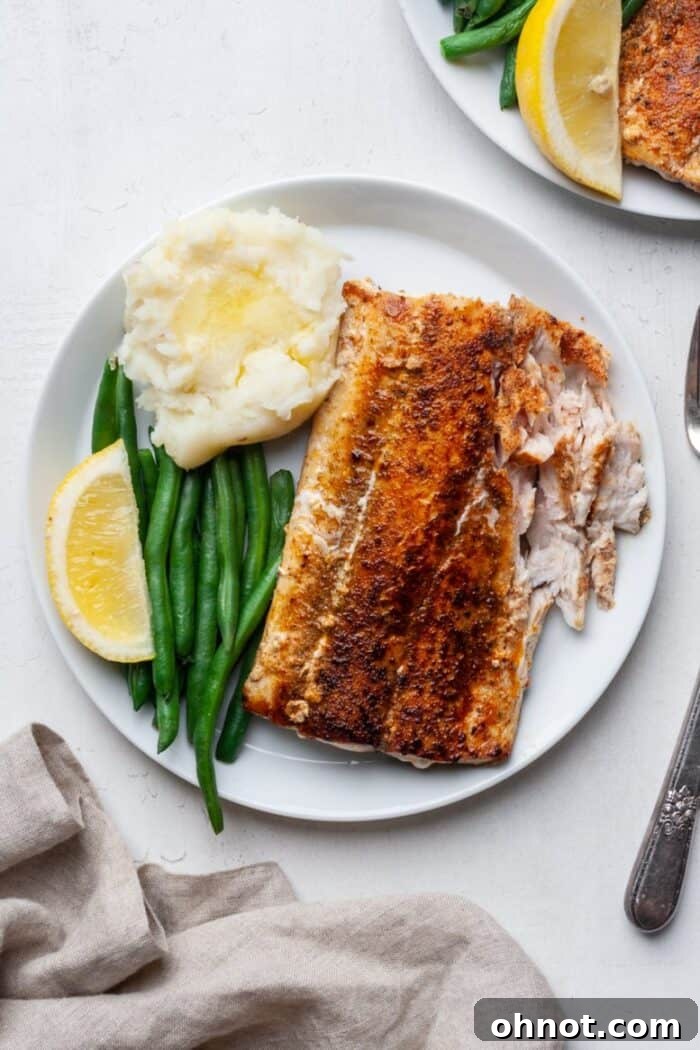
Once cooked, immediately remove the mahi mahi from the pan to prevent overcooking. Transfer it to serving plates. For a vibrant finish and to add a touch of brightness that complements the rich seasoning, squeeze fresh lemon juice over the top of each fillet, if desired. Serve your incredible blackened mahi mahi hot and savor every delicious bite!
Alternate Cooking Method: Baking Mahi Mahi
While pan-searing delivers the classic blackened crust, baking is an excellent alternative if you prefer a hands-off approach or want to minimize kitchen smoke. Here’s how to achieve delicious mahi mahi in your oven:
- Preheat Your Oven: Start by preheating your oven to 400 degrees Fahrenheit (200 degrees Celsius). As the oven heats, lightly grease a baking sheet or oven-safe dish with 1 tablespoon of olive oil, or line it with parchment paper for easy cleanup.
- Prepare Seasoning and Fish: Follow the same steps as the pan-searing method: combine your homemade Cajun seasoning ingredients, then remove the skin from your mahi mahi fillets and pat them thoroughly dry with paper towels.
- Season Generously: Rub both sides of each mahi mahi fillet generously with the Cajun seasoning, ensuring an even and thick coating.
- Arrange on Pan: Place the seasoned fish fillets onto the prepared oiled baking sheet, ensuring they are in a single layer and not overcrowded.
- Bake to Perfection: Bake for approximately 11 to 14 minutes. The exact cooking time will depend on the thickness of your fillets. The fish is done when it’s opaque throughout, flakes easily with a fork, and registers an internal temperature of 137 degrees Fahrenheit (60 degrees Celsius) at its thickest point when checked with a meat thermometer.
- Serve: Remove from the oven and serve immediately, with a squeeze of fresh lemon juice if desired.
Expert Tips & Tricks for Flawless Blackened Mahi Mahi
To ensure your blackened mahi mahi turns out perfectly every time, keep these expert tips in mind:
- Pat Dry, Always: This cannot be stressed enough. Excess moisture on the fish surface will steam rather than sear, preventing the formation of that desirable crispy, blackened crust. Use paper towels to pat the fillets until they are completely dry.
- Freshness Matters: While frozen mahi mahi can be used, fresh fish generally yields the best flavor and texture. If using frozen, always thaw it properly before beginning the recipe.
- Don’t Skimp on Seasoning: Be generous with the Cajun seasoning! A thick, even coating is essential for that signature blackened flavor and crust. Press the seasoning into the fish to ensure it adheres well.
- Heat is Your Friend (and Foe): For true “blackening,” you need a hot skillet. Medium-high heat is ideal. The oil should shimmer, almost to the point of smoking. However, keep an eye on it to prevent burning. A cast-iron skillet is highly recommended as it retains heat exceptionally well and promotes an even sear.
- Use a Meat Thermometer: The most accurate way to determine doneness for fish is by internal temperature. Cook your mahi mahi until it reaches 137 degrees Fahrenheit (60 degrees Celsius). This ensures it’s perfectly cooked, juicy, and safe to eat without being overcooked and dry.
- Ventilation is Key: Blackening can create some smoke due to the high heat and searing of spices. Ensure good ventilation in your kitchen by turning on your exhaust fan or opening a window.
- Resist the Urge to Peek: Once the fish is in the hot pan, let it cook undisturbed for the recommended time on each side. Lifting it too early will prevent a proper crust from forming.
Selecting the Best Mahi Mahi
The quality of your mahi mahi can significantly impact the final dish. Here’s a guide to help you pick the freshest and best fillets at the market:
- Examine the Skin (if present): While we remove the skin for this recipe, if you’re buying a whole fillet with skin on, look for vibrant, brightly colored skin with an iridescent sheen. Avoid fish with dull, discolored, or brown/gray patches, as these are signs of older fish.
- Color of the Meat: Fresh mahi mahi meat should have a distinct pinkish hue, sometimes with a slightly reddish tint. Avoid fillets that appear brown, yellow, or overly pale, as these can indicate poor quality or age.
- Firmness to the Touch: Gently press the fish with your finger. The flesh should be firm and spring back immediately. If it leaves an indentation or feels mushy, the fish is past its prime.
- Smell Test: Fresh fish should have a mild, oceanic scent, reminiscent of clean seawater, or almost no smell at all. A strong, pungent, or “fishy” odor is a clear indication that the fish is old and should be avoided.
- Source and Sustainability: Whenever possible, inquire about the source of the fish and opt for sustainably caught mahi mahi. Look for certifications from organizations like the Marine Stewardship Council (MSC) or consult local seafood guides for responsible choices.
Serving & Storage Suggestions
Once your blackened mahi mahi is cooked to perfection, it’s best enjoyed fresh from the pan!
- Ideal Side Dishes: Mahi mahi pairs wonderfully with a variety of sides. Complement its robust flavor with starchy options like our Whole30 French Fries or Whole30 Mashed Potatoes. For lighter fare, consider fresh salads, steamed or roasted vegetables. Our Roasted Cauliflower and Asparagus makes an excellent and healthy companion. Other great ideas include a simple rice pilaf, quinoa, sweet potato fries, or a vibrant corn and black bean salsa.
- Creative Presentations: Turn leftovers into delicious mahi mahi tacos with a fresh slaw, or flake the fish into a hearty salad for a protein-packed lunch.
- Storing Leftovers: Any leftover blackened mahi mahi fillets should be stored promptly. Place them in an airtight container and refrigerate for up to 2 to 3 days.
- Reheating: To reheat, gently warm the fish in a skillet over low heat with a tiny bit of olive oil or butter, or in an oven set to a low temperature (around 275°F/135°C) until just warmed through. Be careful not to overcook, as this can dry out the fish.
Frequently Asked Questions About Blackened Mahi Mahi
What does blackened mahi mahi taste like?
Blackened mahi mahi offers a bold and savory Cajun flavor, characterized by a mix of smoky, earthy, and spicy notes from the seasoning. This rich flavor is beautifully balanced by the natural, slightly sweet, and mild taste of the mahi mahi itself. The exterior has a delightful crispy crust, while the interior remains juicy and flaky.
What is meant by blackened fish?
The term “blackened fish” refers to a cooking technique, not necessarily a burned product. It involves coating a fish fillet (or other protein) generously with a dry spice rub, typically a Cajun or Creole blend, then searing it quickly in a very hot cast-iron skillet, often with butter. This process rapidly chars the spices and fats, forming a dark, flavorful crust that locks in moisture and creates a distinctive, intense flavor.
Is mahi mahi healthy?
Yes, mahi mahi is a very healthy choice! It’s a lean source of high-quality protein and packed with numerous vitamins and nutrients. It’s rich in B vitamins (especially B12), selenium (a powerful antioxidant), and potassium. Furthermore, mahi mahi is generally considered to have relatively low mercury levels compared to many other large predatory fish, making it a nutritious and safe option for regular consumption.
Should I take off the skin?
For blackened mahi mahi, it is highly recommended to remove the skin from the fillets before seasoning and cooking. The skin can become rubbery or tough during the blackening process and can interfere with the formation of the crispy spice crust.
How do I know when mahi mahi is done cooking?
The best way to determine if mahi mahi is perfectly cooked is by using an instant-read meat thermometer. Insert the thermometer into the thickest part of the fillet; it should reach an internal temperature of 137 degrees Fahrenheit (60 degrees Celsius). Additionally, visually the fish should be opaque throughout and flake easily with a fork.
How long does it take to cook mahi mahi?
Mahi mahi cooks quite quickly. Depending on the thickness of your fillets and the cooking method (pan-searing or baking), it typically takes about 9 to 14 minutes in total. Pan-searing usually takes about 4-5 minutes per side, while baking can take 11-14 minutes.
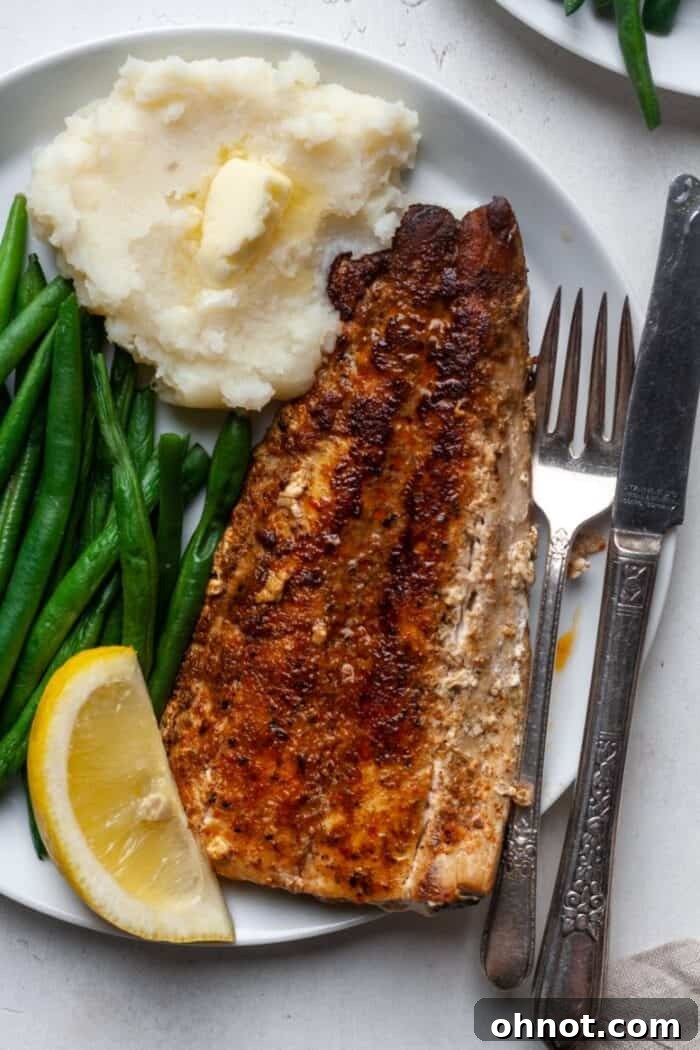
More Delicious Recipes You May Also Like
- Gluten Free Cajun Seasoning (Whole30 & Paleo)
- Easy Sugar Free Stir Fry Sauce (Paleo, Whole30, Gluten Free)
- Cajun Smothered Pork Chops (Whole30 & Paleo)
- Pan Seared Chilean Sea Bass Recipe
- Whole30 Pork Chops with Garlic Ghee Sauce
Blackened Mahi Mahi Recipe
This Blackened Mahi Mahi is incredibly flavorful! A homemade Cajun seasoning elevates this fish, pan-seared to achieve the perfect texture. This recipe is quick, easy, healthy, and absolutely delicious!
At a Glance:
- Prep Time: 10 minutes
- Cook Time: 10 minutes
- Total Time: 20 minutes
- Servings: 2 servings
Ingredients
Cajun Seasoning
- 1 tbsp paprika
- 1 tsp oregano
- 2 tsp ground cayenne pepper, use less for less heat
- ½ tsp sea salt
- 1 tsp ground pepper
- ¾ tsp ground thyme
- ½ tsp garlic powder
- 1 tsp onion powder
Mahi Mahi
- 2 fillets mahi mahi, fresh or thawed
- 2 tbsp olive oil, or butter/ghee
- Squeeze of lemon juice, optional, for serving
Instructions
- First, combine all Cajun seasoning ingredients (paprika, oregano, cayenne pepper, sea salt, ground pepper, ground thyme, garlic powder, onion powder) in a small bowl. Stir well to combine, ensuring all spices are evenly distributed.
- Carefully remove any skin from the mahi mahi fillets. Pat the fillets thoroughly dry with paper towels. This crucial step helps achieve a beautiful sear and crispy crust. Use your hands to generously coat both sides of each fish fillet with the homemade Cajun seasoning, pressing it firmly onto the surface.
- In a large, heavy-bottomed skillet (cast iron works wonderfully for this technique) set over medium-high heat, add the olive oil. Allow the oil to heat until it shimmers and is just about to smoke, indicating it’s ready for searing.
- Carefully place the seasoned mahi mahi fillets into the hot skillet. Cook undisturbed for approximately 5 minutes on the first side to allow a robust crust to form.
- Using a thin, sturdy spatula, carefully flip the fish to the other side. Continue cooking for another 4 to 5 minutes, or until the fish is opaque throughout, easily flakes with a fork, and has reached an internal temperature of 137 degrees Fahrenheit (60 degrees Celsius) when measured with an instant-read meat thermometer at its thickest part.
- Once cooked to perfection, immediately remove the fish from the pan to prevent overcooking. Serve hot, and if desired, add a fresh squeeze of lemon juice over the top for a bright, tangy finish that complements the rich seasoning.
Notes
- This Cajun seasoning has a delightful kick. Feel free to adjust the amount of cayenne pepper to suit your personal preference for heat.
- Thoroughly coat both sides of the fish with seasoning. Don’t be shy – this generous coating is key to the fantastic blackened flavor.
- If using frozen mahi mahi, ensure it is completely thawed before use. Patting it extra dry after thawing is crucial.
- Always remove skins from the fish fillets for the best texture and seasoning adherence.
- Fish is done when it has reached an internal temperature of 137 degrees Fahrenheit (60 degrees Celsius) and easily flakes with a fork.
- Store any leftover blackened mahi mahi in an airtight container in the fridge for up to 3 days.
Nutrition Information (per serving)
Calories: 288kcal | Carbohydrates: 4g | Protein: 32g | Fat: 16g | Saturated Fat: 2g | Polyunsaturated Fat: 2g | Monounsaturated Fat: 10g | Cholesterol: 124mg | Sodium: 734mg | Potassium: 805mg | Fiber: 2g | Sugar: 1g | Vitamin A: 1321IU | Vitamin C: 8mg | Calcium: 61mg | Iron: 3mg
Author: Addison LaBonte
Course: Main Course
Cuisine: American
If you try this incredible blackened pan-fried mahi mahi recipe, we would absolutely love to hear from you! Please consider leaving a review. You can also connect with us on Instagram, Facebook, and Pinterest. Follow along for more healthy meal ideas and culinary inspiration! For more delicious options, explore our Dinner Recipes collection.
Love this blackened mahi mahi and want more healthy meal inspiration? You can sign up here to receive exclusive healthy meal plans, new recipe updates, and behind-the-scenes insights directly to your inbox!