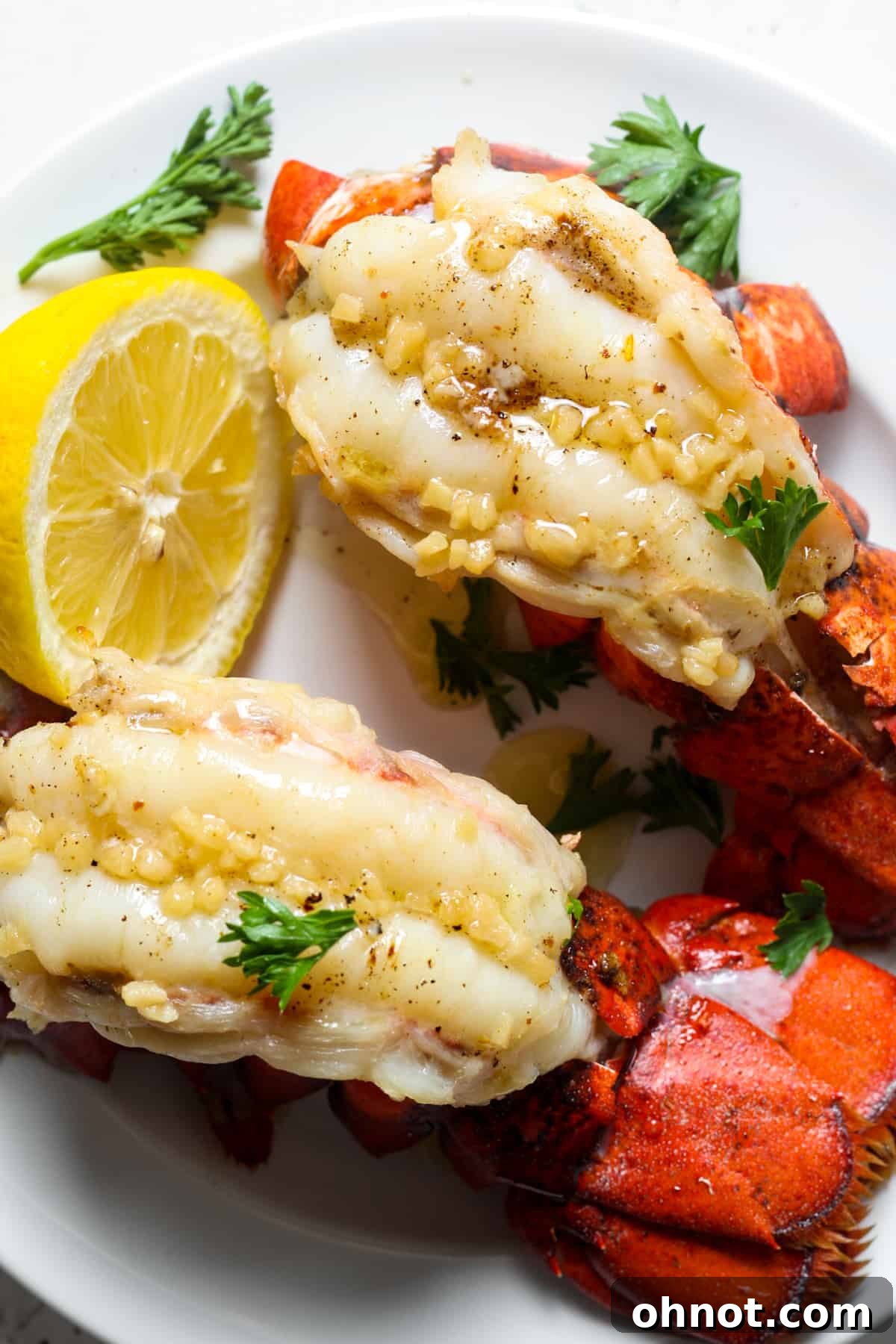
Easy Baked Lobster Tail Recipe: A 20-Minute Gourmet Delight
Elevate your dinner table with this incredibly flavorful and surprisingly simple baked lobster tail recipe. Ready in just 20 minutes from start to finish, this dish transforms ordinary weeknights and special occasions into luxurious culinary experiences. Each bite delivers juicy, tender, and intensely buttery lobster meat, making it perfect for impressing guests or treating yourself to a restaurant-quality meal at home. Ideal for holidays like Christmas or Valentine’s Day, birthdays, or any gathering where you want to serve something truly special without spending hours in the kitchen.
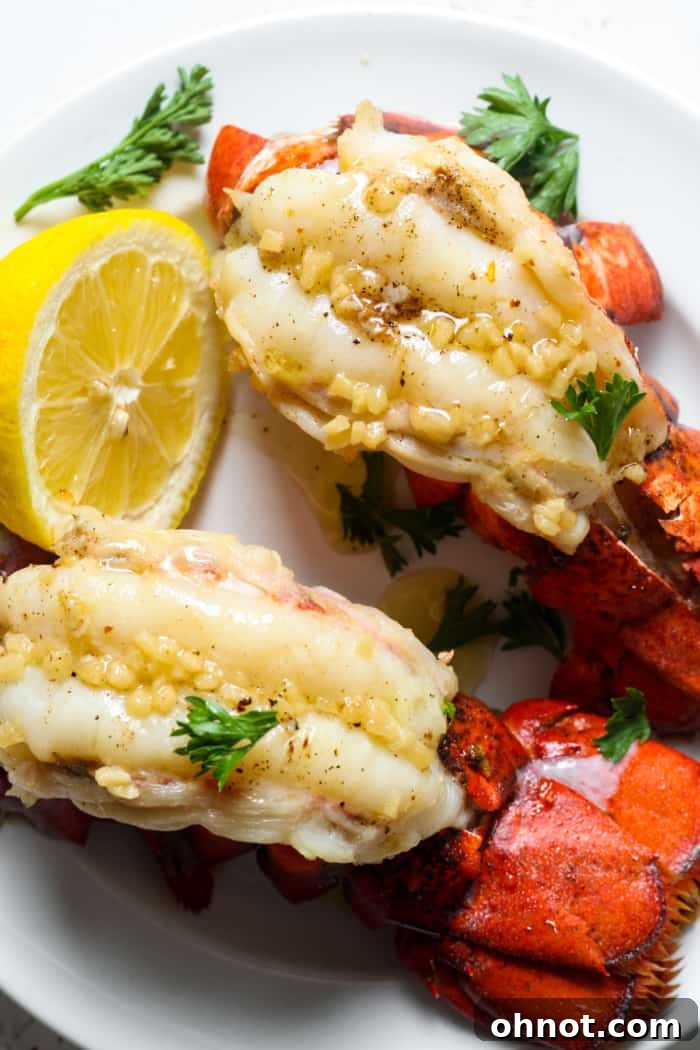
Why This Garlic Butter Lobster Tail Recipe Will Be Your New Favorite
There are countless reasons why this baked lobster tail recipe stands out as a must-try for seafood enthusiasts and novice cooks alike. Its simplicity paired with a gourmet outcome makes it truly exceptional:
- Effortlessly Quick & Easy: Forget complicated techniques. This recipe is designed for maximum flavor with minimal effort, making it ideal for busy schedules.
- Unrivaled Flavor & Texture: Experience the best way to cook lobster tails at home. The meat emerges incredibly juicy, tender, and infused with rich buttery garlic goodness.
- Minimal Ingredients, Maximum Impact: You only need a handful of fresh ingredients to create a dish that tastes complex and sophisticated.
- Rapid Preparation: From prep to plate, your delicious lobster tails will be ready in just 20 minutes, proving that gourmet doesn’t have to mean time-consuming.
- Versatile Serving Options: Enjoy the succulent lobster meat as a standalone delicacy, or elegantly present it atop fresh salads for a lighter meal.
- Diet-Friendly Indulgence: This quick lobster recipe is thoughtfully crafted to be Whole30 friendly, Paleo, Keto, gluten-free, nut-free, low-carb, and sugar-free, accommodating a wide range of dietary needs and lifestyles without compromising on taste.
- Impressive Presentation: Achieve a fancy, Food Network-worthy presentation that will captivate your diners, making every meal feel like a special occasion.
Looking to explore more seafood delights? Don’t miss our Halibut recipe, this delightful Cod Fish Recipe, or for ultimate comfort, our Lobster Mac and Cheese.
Essential Ingredients for Perfect Lobster Tails & Smart Substitutions
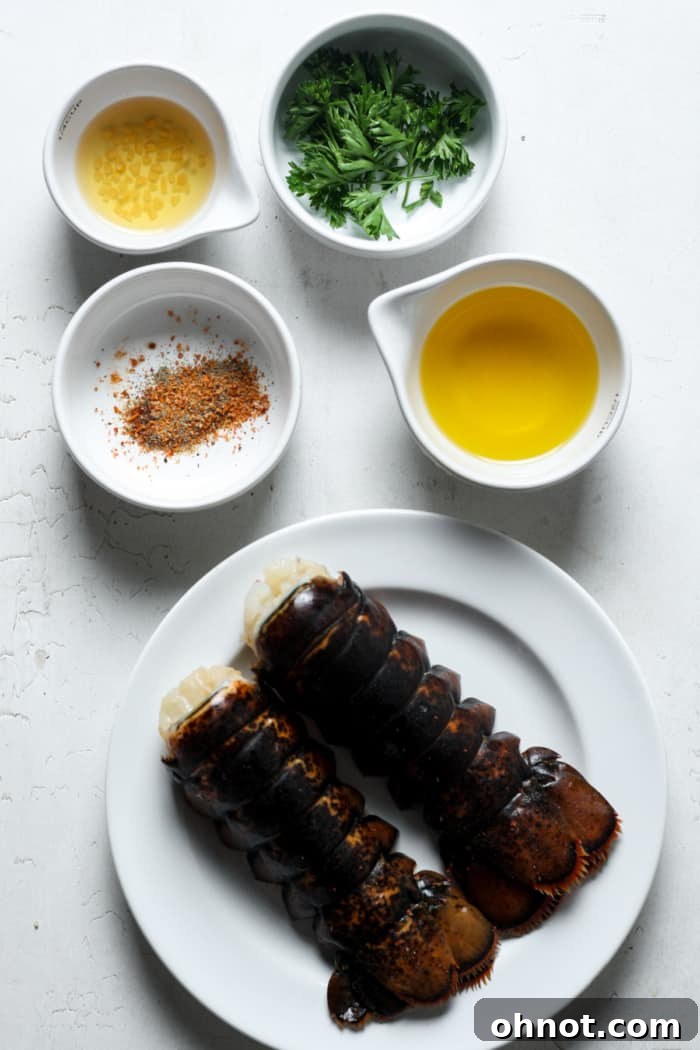
Crafting the perfect baked lobster tail begins with selecting high-quality ingredients. Here’s what you’ll need and how to make smart substitutions:
- Lobster Tails: Always start with thawed lobster tails. If you’re using frozen, ensure they are completely thawed before cooking. Attempting to broil or bake from frozen will result in uneven cooking and a tough texture. Fresh lobster, when available, will always yield the best results for superior flavor and tenderness.
- Melted Butter: Butter is the secret to rich, luxurious lobster. It infuses the meat with moisture and a decadent flavor. For those with dairy sensitivities or following a dairy-free diet, dairy-free butter or melted ghee are excellent substitutes that maintain the desired richness.
- Minced Garlic: Garlic and butter are a match made in culinary heaven. Freshly minced garlic provides an aromatic depth that complements the sweetness of the lobster. If fresh garlic isn’t handy, a good quality garlic powder can be used in a pinch, typically about 1/4 teaspoon for every clove of fresh garlic.
- Paprika: A touch of paprika adds a subtle warmth and beautiful color to the lobster tails without making them spicy. For a milder flavor profile, you can certainly omit it. Lobster meat is naturally flavorful, so only a little seasoning is needed to enhance its natural taste.
- Fresh Parsley (Garnish): Optional but highly recommended, a sprinkle of fresh chopped parsley after cooking brightens the dish with a pop of color, a hint of freshness, and an additional layer of herbaceous flavor.
How to Select the Freshest Lobster Tails
Choosing the right lobster tails is crucial for an exquisite dining experience. Understanding the nuances of lobster types and signs of freshness can make all the difference:
Soft Shell vs. Hard Shell Lobster
Lobsters come in two primary shell types: soft shell and hard shell. This distinction largely depends on whether the lobster has recently shed its old shell (molted). Soft shell lobsters, having recently molted, are generally considered sweeter and more tender, though their delicate shells make them harder to transport and store. Hard shell lobsters, on the other hand, have firmer meat with a more savory, robust flavor, and are easier to handle due to their strong shells. This particular lobster tail recipe works beautifully with either type of shell, so choose based on availability and personal preference.
Sourcing the Best Lobster
Geographic proximity to the ocean often correlates with freshness. Lobsters procured closer to coastal regions, like Maine or Florida, are typically fresher than those found in landlocked areas. While not always feasible for everyone, if you have the option, prioritize sourcing from reputable seafood markets with high turnover. Ask your fishmonger about the origin and delivery date of their lobster.
Signs of a Quality Lobster (or Tail)
When selecting whole live lobsters or even just the tails, look for these indicators of freshness and quality:
- Liveliness (for whole lobsters): A healthy lobster is a feisty lobster. When lifted from the water, it should be active and energetic. Lobsters are graded based on their firmness and vitality; softer shells and sluggish behavior indicate a lower quality.
- Tail Curl: For tails, gently press on the underside. A fresh, high-quality lobster tail will naturally curl inward, indicating good muscle tone and freshness. If it remains straight or limp, it’s likely not as fresh.
- Antennae Intact: Fresh lobsters typically have two fully intact antennae. If the antennae are missing or broken, it could suggest the lobster has been stored for an extended period or handled poorly.
- Clean Claws & Shell: Examine the claw bands and the shell itself. They should be clean and intact. Missing or stained claw bands, as well as cracked or damaged shells, can be signs of age or rough handling.
By keeping these tips in mind, you can confidently select the finest lobster tails for your culinary masterpiece.
Exploring Cooking Methods: Why Broiling Reigns Supreme for Lobster Tails
While there are several ways to prepare lobster, each method offers a unique experience. For lobster tails, however, broiling often stands out as the easiest and most effective way to achieve perfectly cooked, tender meat.
Broiling: The Easiest & Most Flavorful Method
Broiling lobster tails involves cooking them under high heat in your oven, usually with a simple pan. This method is incredibly quick, typically taking under 10 minutes, and ensures the lobster meat cooks through evenly while retaining its natural juices and developing a slightly caramelized top. It’s truly the best way to prepare tender lobster tails at home, resulting in a rich, flavorful, and succulent dish.
Baking: A Gentle Alternative
Lobster can also be baked at a slightly lower temperature for a longer duration. This method is equally easy and straightforward, offering a gentler cooking process that still yields tender results. While baking might take a bit more time than broiling, it’s a reliable option if you prefer a less intense heat application.
Boiling: Less Recommended for Tails
A common method for whole lobsters, boiling is simple but generally not recommended for just the tails. When boiled, the delicate flavor of the lobster can be diluted by the water, leading to less flavorful meat compared to broiling or baking, where the natural juices and applied butter/seasonings are concentrated.
Grilling: For a Smoky Twist
For those who love a smoky flavor, grilling lobster tails is an excellent choice. This method imparts a hearty, char-grilled essence to the sweet meat, perfect for summer cookouts. Ensure the tails are butterflied and brushed with butter to keep them moist over the direct heat.
The Irresistible Taste and Texture of Our Baked Lobster Tails
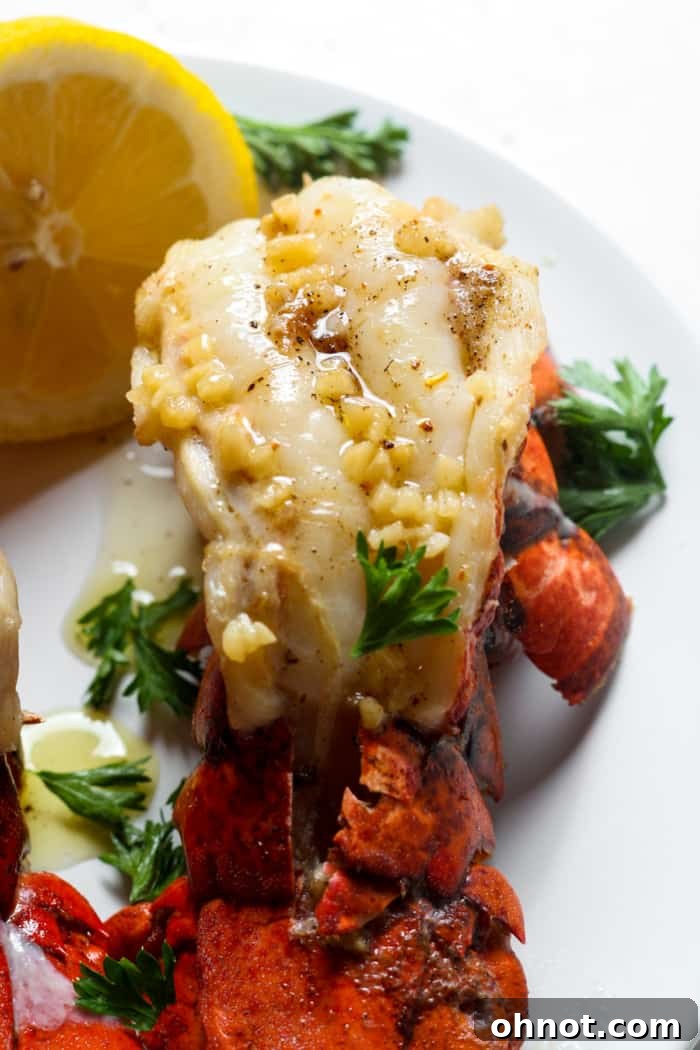
Prepare your palate for a truly gourmet experience. This baked lobster tail recipe delivers a symphony of classic flavors: the inherent sweetness of the fresh lobster meat, perfectly complemented by the rich, savory notes of melted butter and aromatic minced garlic. The subtle hint of paprika adds a gentle warmth, enhancing the overall profile without overwhelming the delicate seafood.
Beyond the taste, the texture is what truly elevates this dish. The meat is incredibly juicy, yielding with delightful tenderness, and exquisitely buttery. Each strand of lobster is moist and succulent, never rubbery, promising a fresh and flavorful bite that feels both fancy and deeply satisfying. It’s a testament to how simple ingredients, when prepared correctly, can create an unforgettable culinary sensation.
Step-by-Step Guide: How to Bake Lobster Tails to Perfection
Follow these simple steps to create exquisite baked lobster tails that are sure to impress.
Step 1: Preheat Your Oven
Begin by preheating your oven to a high temperature of 500 degrees Fahrenheit (260 degrees Celsius). This high heat is key to achieving that perfect broiled texture – tender and juicy on the inside with a slightly crisp exterior.
Step 2: Prepare the Lobster Tails for Butterflying
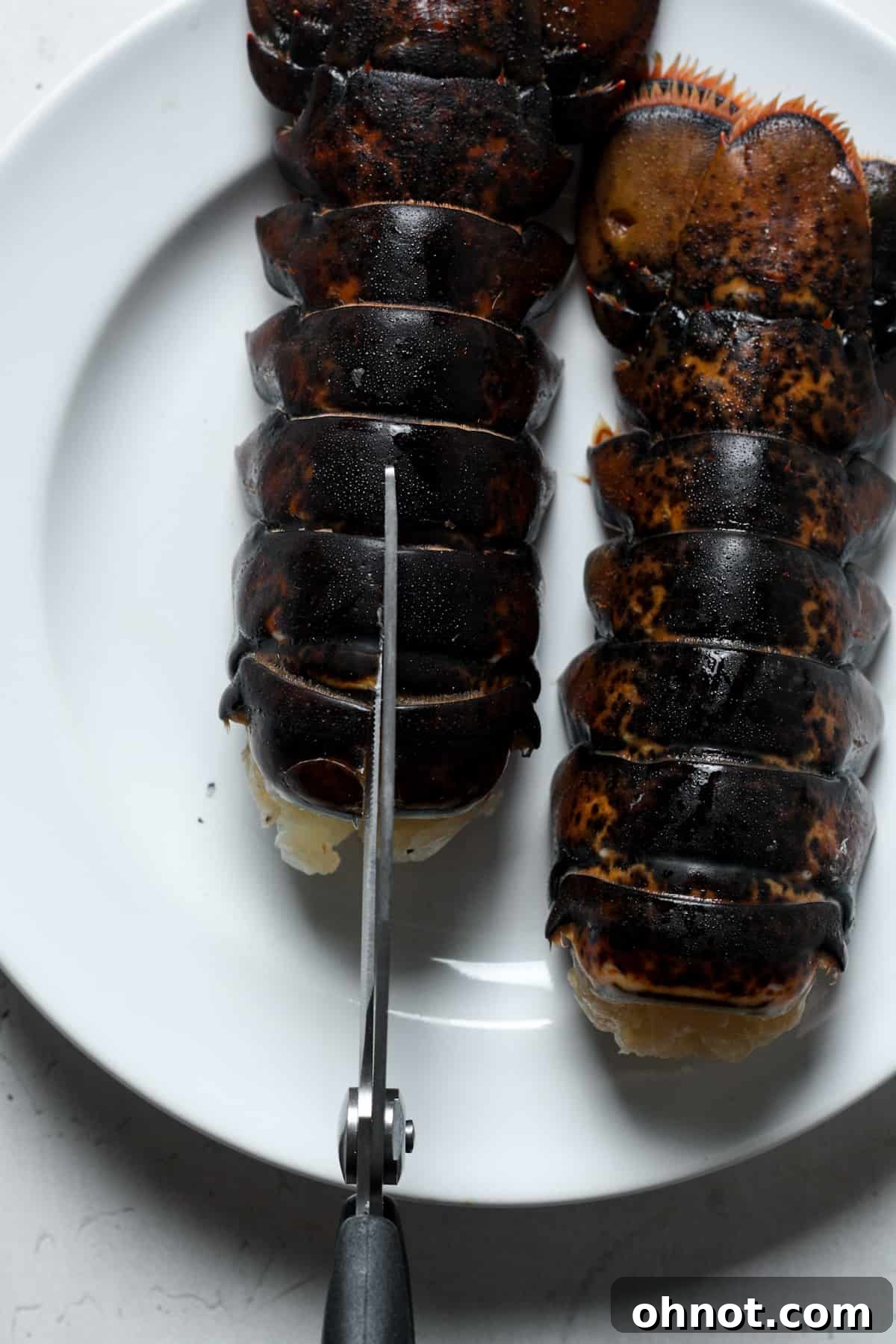
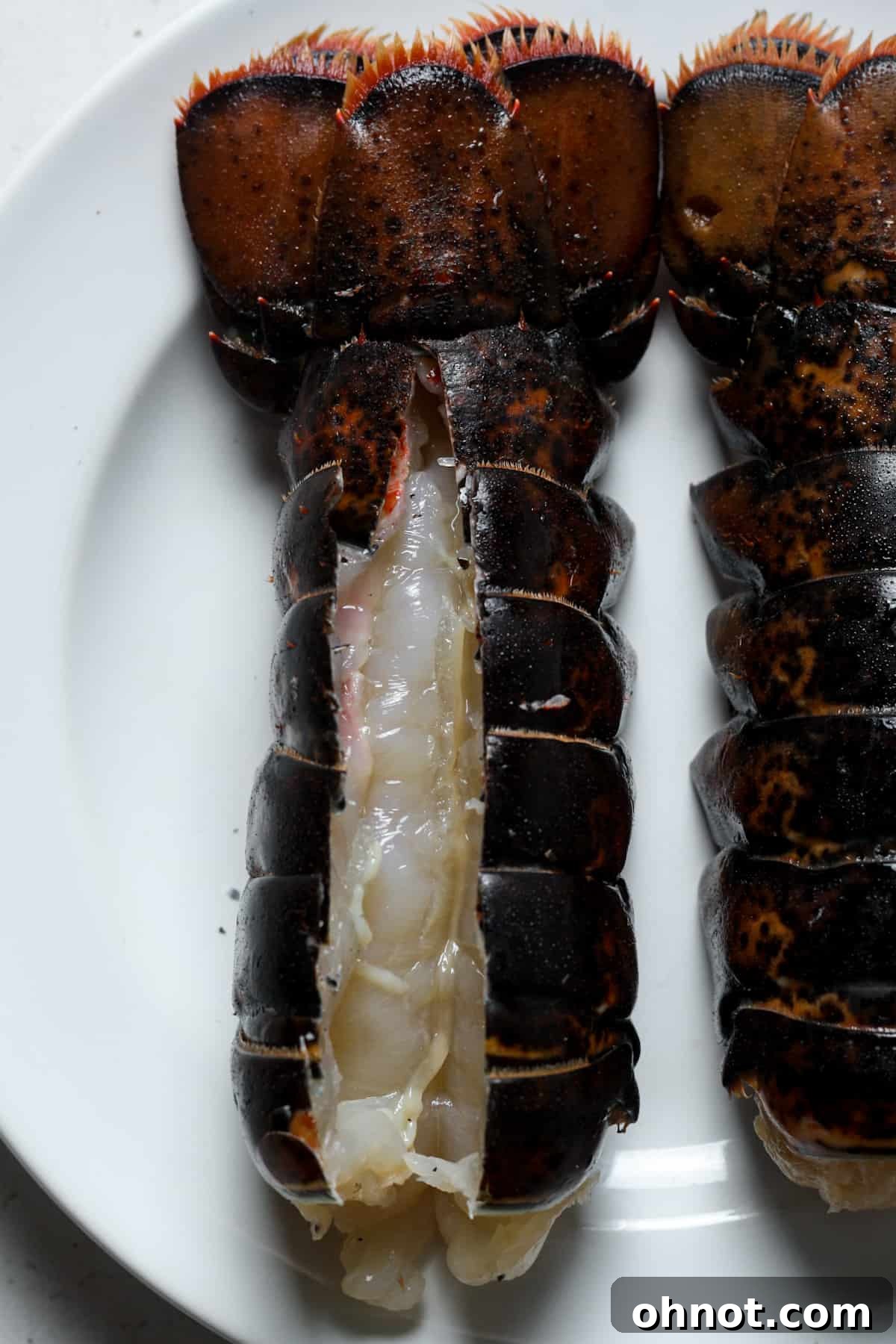
Using sharp kitchen shears, carefully slice down the center of the top shell of each lobster tail, from the wide end down to the base of the tail, being careful not to cut through the meat itself. Stop just before the tail fin.
Step 3: Butterfly the Lobster Meat
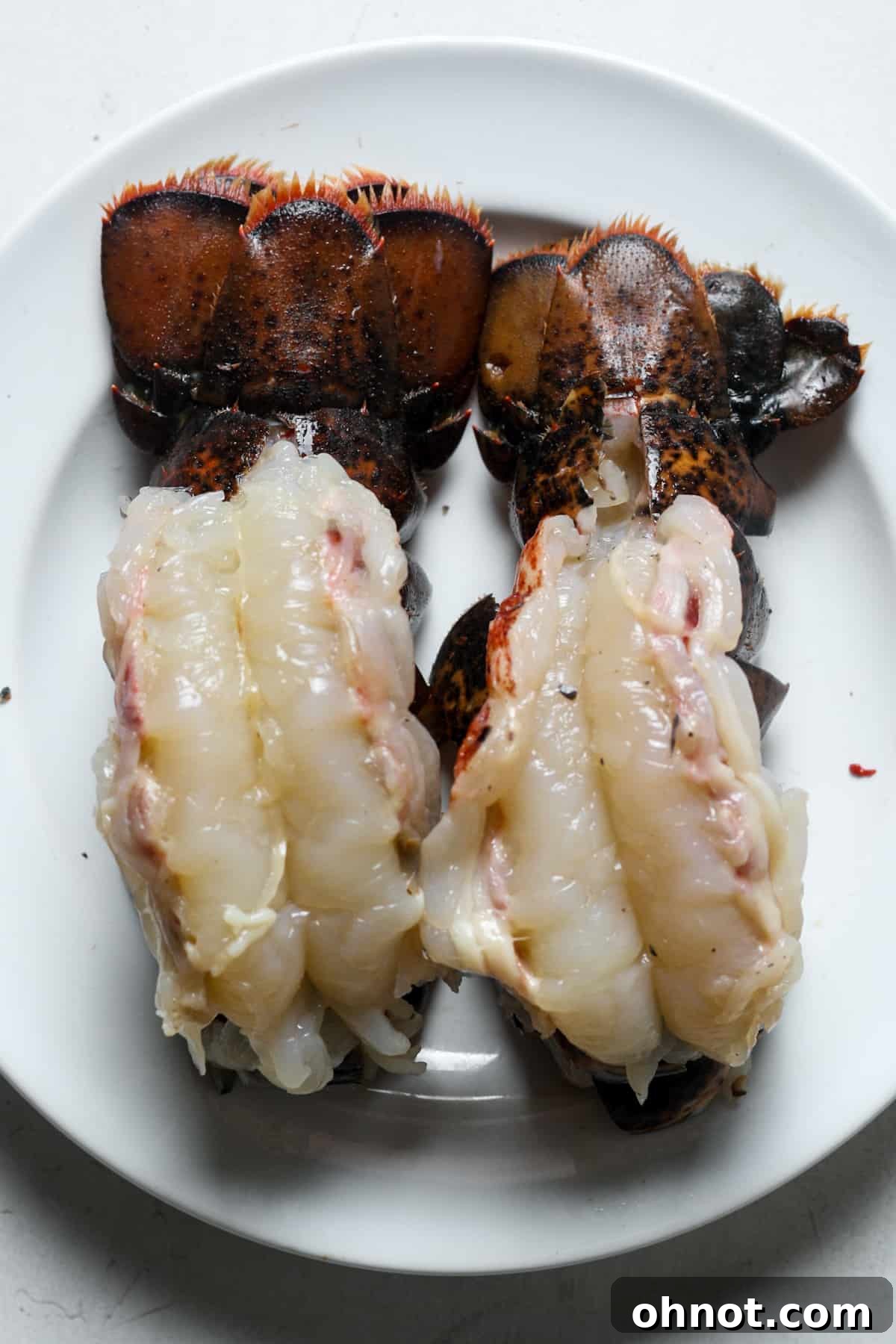
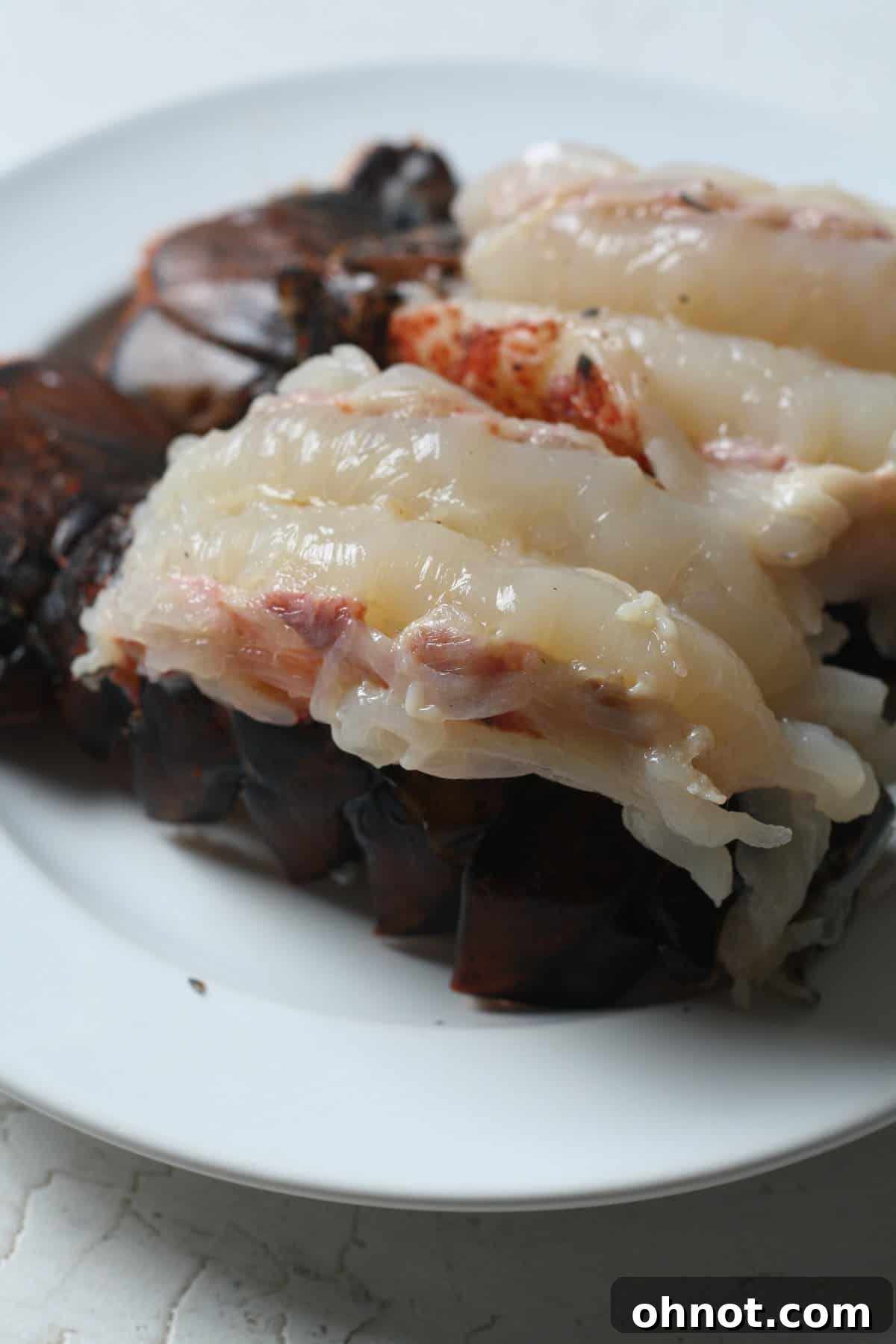
Gently use your hands to open the sliced shell and carefully loosen the lobster meat from the bottom shell. Pull the entire piece of lobster meat upwards, settling it on top of the opened shell. The meat should remain attached at the very end of the tail, creating a beautiful “butterflied” presentation. Refer to the photos above for visual guidance.
Step 4: Arrange on a Baking Sheet
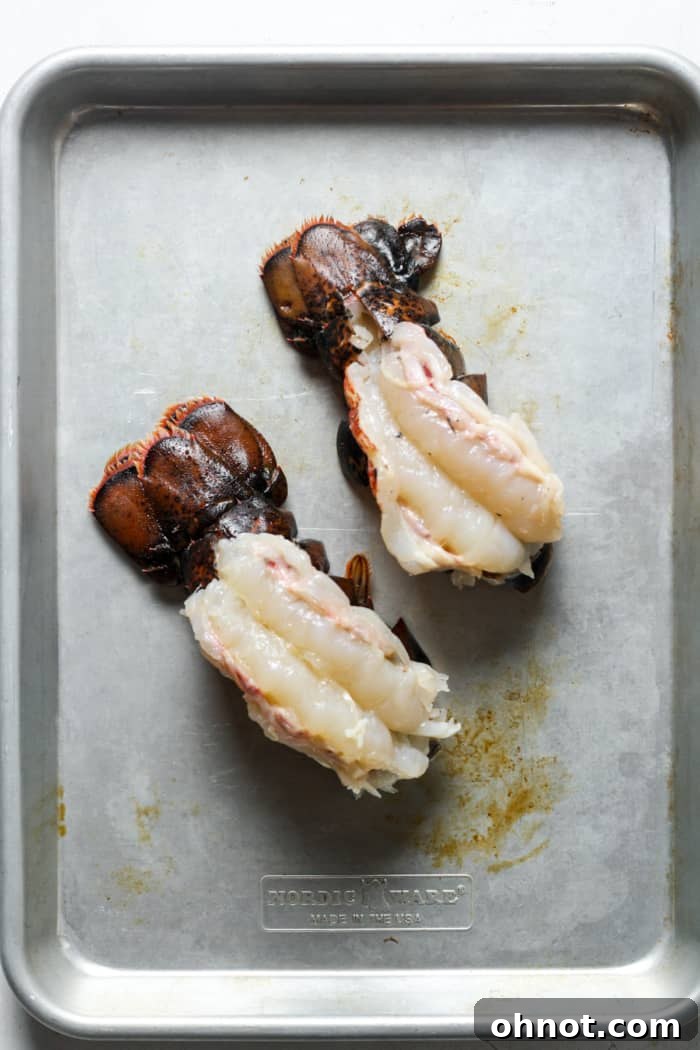
Place the butterflied lobster tails onto a baking sheet, ensuring they are not overcrowded. A single layer allows for even cooking and browning.
Step 5: Prepare the Garlic Butter Sauce
In a small bowl, combine the melted butter, finely minced garlic, and a dash of paprika. Stir until all ingredients are well incorporated, creating an aromatic and flavorful sauce.
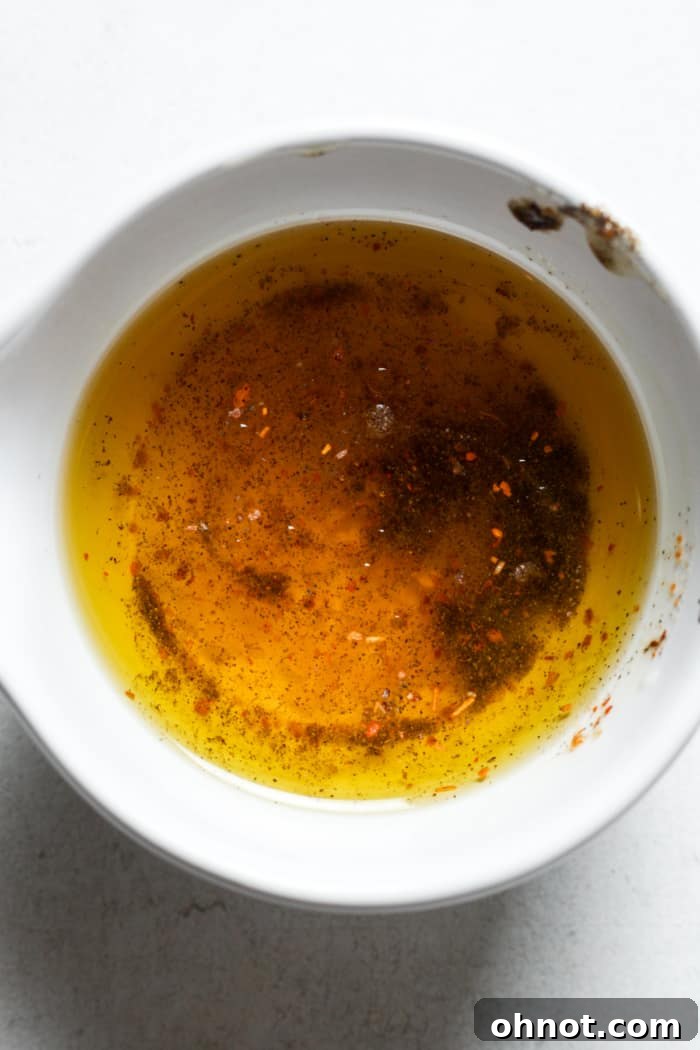
Step 6: Brush Lobster with Flavorful Sauce
Generously pour or brush the melted butter mixture all over the exposed lobster meat. Ensure each tail is thoroughly coated to maximize flavor and moisture during cooking.
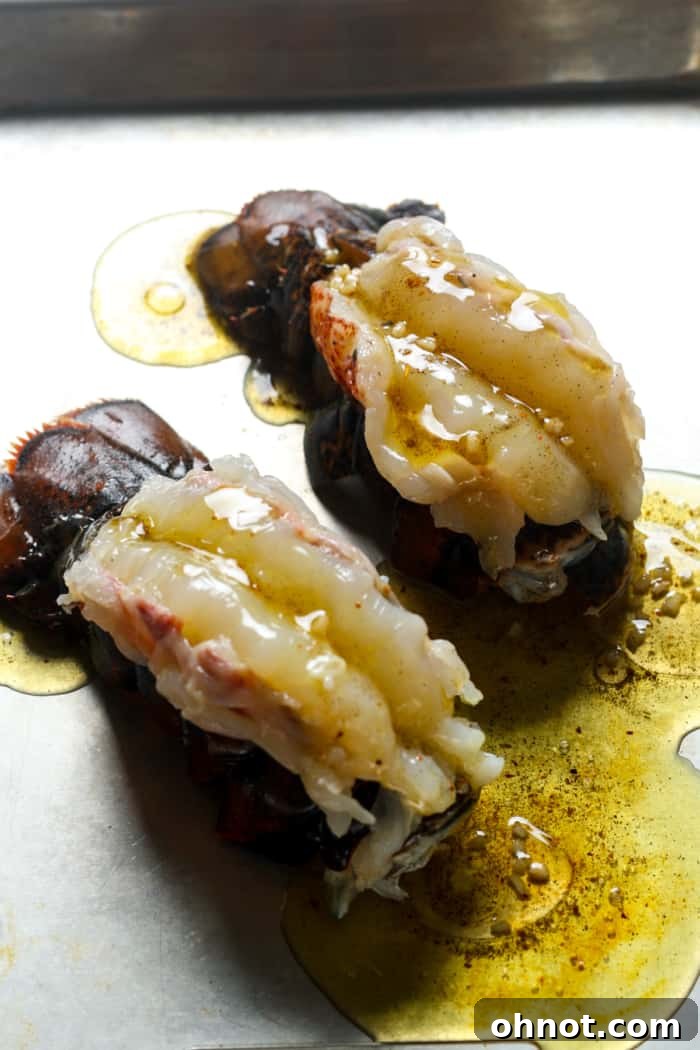
Step 7: Bake to Perfection
Carefully place the baking sheet into the preheated 500°F oven. Cook for approximately 9 to 10 minutes, or until the lobster meat becomes opaque throughout and is no longer translucent. Be mindful not to overcook, as this can lead to rubbery lobster.
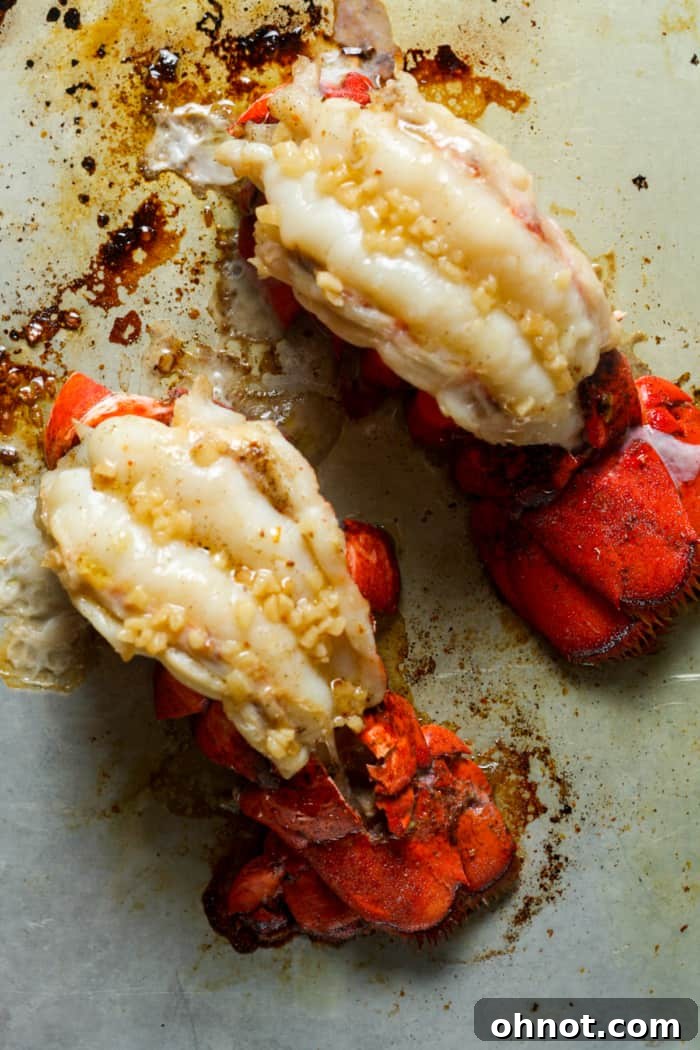
Step 8: Garnish and Serve
Once cooked, carefully remove the baking sheet from the hot oven. Garnish the baked lobster tails with fresh parsley and an extra drizzle of melted butter or a squeeze of lemon juice, if desired, for an added touch of freshness and flavor. Serve immediately and enjoy!
Chef’s Secrets for Flawless Lobster Tail Preparation
Achieving perfectly tender and flavorful lobster tails every time is simpler than you think with these expert tips:
- Thawing is Non-Negotiable: Always use completely thawed lobster tails. Cooking from frozen will drastically alter cooking times, leading to unevenly cooked or tough meat. The best way to thaw lobster tails is slowly in the refrigerator overnight. For a quicker method, place them in a sealed bag under cold running water for 30-60 minutes.
- Master the Butterfly Technique: The butterflying method, as detailed in the steps and photos above, is crucial for even cooking and an elegant presentation. It allows the butter and seasonings to fully penetrate the meat, resulting in maximum flavor and a beautifully cooked texture.
- Handle with Care: When butterflying and lifting the lobster meat, be very gentle. The goal is to loosen the meat from the bottom shell and rest it on top, leaving it semi-attached at the very end near the tail fin. Ripping it completely away can make it harder to cook evenly and present beautifully.
- Don’t Skimp on the Butter: Butter isn’t just for flavor; it also helps the delicate lobster meat retain its moisture during the high-heat cooking process. A generous coating of garlic butter ensures a succulent, tender result that is traditionally expected with lobster.
- Avoid Overcooking at All Costs: This is arguably the most important tip. Lobster cooks very quickly under high heat. Overcooked lobster becomes rubbery and loses its sweet flavor. Lobster is perfectly done when its meat is opaque white and firm, but still tender, with an internal temperature of 140-145°F (60-63°C). Begin checking for doneness around the 8-minute mark.
- Mind the Oven Rack: For broiling, place your baking sheet on the rack positioned about 6-8 inches from the broiler element to ensure even cooking without burning the delicate meat.
- Resting Period (Optional but Recommended): Like other meats, letting the lobster tails rest for a minute or two after removing them from the oven allows the juices to redistribute, leading to an even more tender result.
Mastering the Art of Butterflying Lobster Tails
Butterflying lobster tails creates a stunning presentation and ensures the meat cooks evenly and absorbs maximum flavor. Here’s a detailed guide:
- Thaw Completely: Before beginning, ensure your lobster tails are completely thawed. This is essential for safe and successful butterflying.
- Initial Shell Cut: Lay the lobster tail flat on a cutting board, belly side down. Using sharp kitchen shears, carefully cut down the middle of the top shell, starting from the thickest part near the base and moving towards the fan of the tail. Be precise and avoid cutting into the bulk of the lobster meat; you’re only cutting the shell.
- Pry Open the Shell: Gently pry open the two halves of the cut shell with your hands. Work slowly and carefully, as the edges of the shell can be quite sharp. Wearing kitchen gloves can provide extra protection. Ensure you do not completely rip the shells away from the meat; they should remain somewhat attached.
- Loosen the Meat: Slide your fingers underneath the meat to gently loosen it from the bottom shell. This prepares it for lifting without detaching it entirely.
- Lift and Position the Meat: Carefully pull the lobster meat upward, out of the shell, and settle it on top of the opened shell halves. The meat should be exposed and resting prominently on the shell, still connected at the very end of the tail (where the tail fin begins). This creates the classic butterflied look.
- Prepare for Cooking: Once butterflied, your lobster tails are ready for seasoning and cooking as per the recipe instructions.
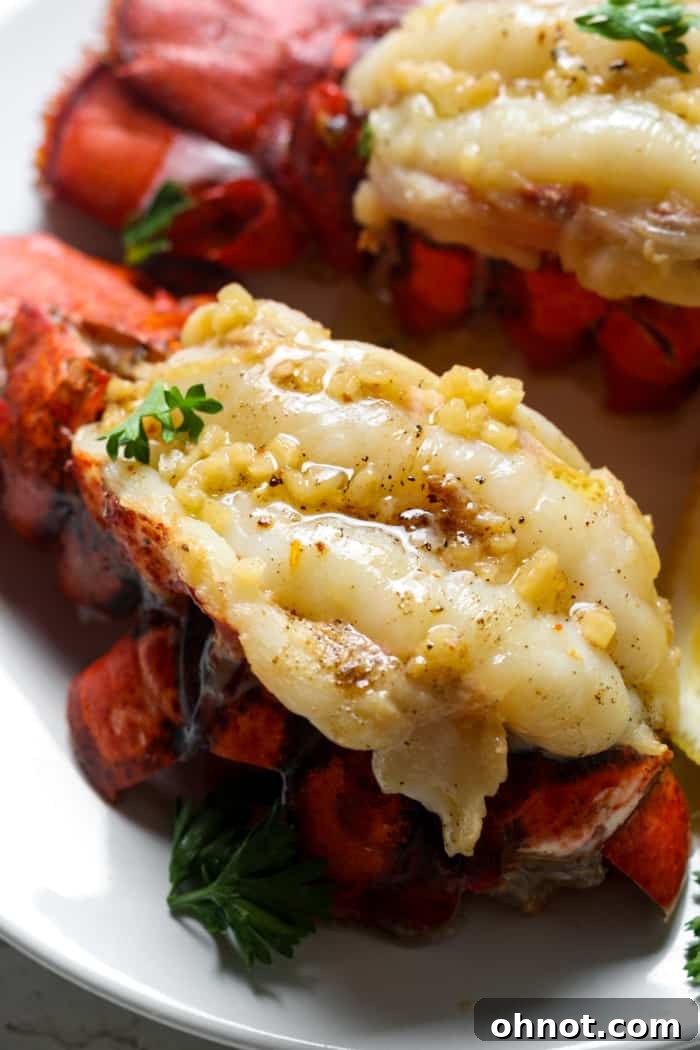
Serving Suggestions & Storage Tips for Your Lobster Feast
How to Serve Your Delicious Lobster Tails
These baked lobster tails are a showstopper on their own, but they also pair beautifully with a variety of accompaniments:
- Classic Enhancements: Serve with extra melted butter, a fresh lemon wedge or a squeeze of lemon juice to brighten the flavors, and a sprinkle of fresh chopped herbs like parsley or chives.
- Perfect Side Dishes: For a complete meal, pair with a crisp green side salad, steamed asparagus, roasted vegetables, or a classic rice pilaf. For a delightful “fish and chips” twist, serve alongside our Whole30 French fries or creamy dairy-free mashed potatoes.
- Creative Culinary Uses: The cooked lobster meat can be removed from the shell and added to the top of gourmet salads, used for decadent lobster tacos, or folded into a luxurious lobster mac and cheese. It’s also fantastic baked into a seafood casserole, used in a rich Lobster Newburg, or added to a comforting lobster bisque or seafood chowder.
- Wine Pairing: Complement the rich flavor of lobster with a crisp, dry white wine such as Chardonnay (unoaked), Sauvignon Blanc, or Pinot Grigio.
Storing Leftovers
Proper storage is key to enjoying your lobster leftovers safely:
- Refrigeration: Any leftover cooked lobster meat should be stored in an airtight container in the refrigerator for up to 2 days.
- Reheating: Gently reheat lobster to prevent it from becoming rubbery. A quick sauté in butter or a short stint in a warm oven (covered) are good methods.
- Freezing: I do not recommend freezing cooked lobster meat, as it tends to lose its tender texture and can become tough upon thawing and reheating.
Frequently Asked Questions About Cooking Lobster Tails
While various methods exist, I highly recommend broiling lobster tails at a high temperature, as outlined in this recipe. This method ensures the meat remains exceptionally tender and juicy, making it the best lobster tail recipe for achieving restaurant-quality results in your home kitchen.
Both baking and broiling are excellent options, but for most lobster tail recipes, broiling offers a quicker cooking time and can achieve a slightly more caramelized exterior while keeping the inside perfectly tender due to the intense direct heat. Baking is also great if you prefer a slightly gentler, slower cook.
Lobster tails cook remarkably fast! In a hot oven (like 500°F), lobster tails typically only require about 9 to 10 minutes. The key is to watch for the meat to turn opaque white and firm, but not rubbery. Overcooking will dry out the delicate meat. This quick cooking time makes it ideal for busy weeknights.
Absolutely! To make this a delicious dairy-free lobster tail recipe, simply substitute regular butter with your favorite dairy-free butter alternative or use ghee, which is clarified butter and often well-tolerated by those with dairy sensitivities.
Yes, this baked garlic butter lobster tail recipe is naturally gluten-free, making it suitable for those with celiac disease or gluten sensitivity.
Perfectly cooked lobster tails will have opaque, firm, white meat with no translucent spots. The shells will turn a vibrant red. You can also use an instant-read thermometer; the internal temperature should reach 140-145°F (60-63°C) at its thickest part.
Certainly! While butter, garlic, and paprika are a classic combination, feel free to experiment. A pinch of cayenne pepper for a subtle kick, a squeeze of fresh lime juice, or finely chopped fresh dill can all add wonderful dimensions of flavor.
Essential Kitchen Equipment for Lobster Tail Success
Having the right tools can make preparing this gourmet dish even easier:
- Baking Pan: A sturdy, reliable baking pan is essential for even heat distribution, ensuring your lobster tails cook beautifully without sticking. This set is versatile for all your cooking needs.
- Kitchen Shears: Sharp kitchen scissors are indispensable for easily and safely slicing through the tough lobster tail shells, allowing for perfect butterflying and presentation.
- Small Bowl: For mixing your garlic butter sauce.
- Pastry Brush: While optional, a pastry brush helps to evenly distribute the garlic butter mixture over the lobster meat for maximum flavor.
More Seafood Recipes You’ll Love
- Fried Lobster Tails
- Blackened Mahi Mahi
- Baked Tilapia Recipe
- Royal Red Shrimp Recipe
- Pan Seared Chilean Sea Bass
Prep Time: 10 mins
Cook Time: 10 mins
Total Time: 20 mins
Get the Recipe: Lobster Tail Recipe
This lobster tail recipe is incredibly flavorful and ready in just 20 minutes. The lobster meat comes out juicy, buttery, and absolutely delicious. It’s perfect for family dinners, holidays, and any special occasion!
Average rating: 5 from 62 votes
Pin Recipe
Ingredients
Serves: 2 servings
- 2 lobster tails
- 2 tbsp melted butter
- 1 tsp minced garlic
- ½ tsp paprika
- fresh parsley, to garnish
Instructions
- First, preheat oven to 500 degrees Fahrenheit.
- Prepare the lobster tails. Use kitchen scissors to slice down the center of each lobster tail shell.
- Then, use your hands to loosen up the lobster meat. Pull the meat upward and settle it on top of the lobster shell. See photos above for reference.
- Place these butterflied lobster tails on a pan.
- In a small bowl, combine melted butter, minced garlic and paprika.
- Pour the melted butter mixture all over lobster meat.
- Cook for 9 to 10 minutes or until meat is opaque and no longer translucent.
- Finally, carefully remove from oven. Top with fresh parsley and more butter if desired.
Notes
- Use thawed lobster tails. If you only have frozen, thaw completely before making this recipe.
- See above in the blog post for step-by-step photos for how to butterfly the tails.
- Feel free to season with salt and pepper if desired.
- Do not cook too long; overcooked lobster becomes rubbery.
- Be very careful when opening the oven door; the temperature is extremely hot!
- Serve with a slice of lemon for an added fresh tang, if desired.
Nutrition Information (per serving):
Calories: 152kcal, Carbohydrates: 1g, Protein: 11g, Fat: 12g, Saturated Fat: 7g, Polyunsaturated Fat: 1g, Monounsaturated Fat: 3g, Trans Fat: 0.5g, Cholesterol: 110mg, Sodium: 358mg, Potassium: 139mg, Fiber: 0.1g, Sugar: 0.1g, Vitamin A: 391IU, Vitamin C: 2mg, Calcium: 59mg, Iron: 0.2mg
Author: Addison LaBonte
Course: Main Course
Cuisine: American