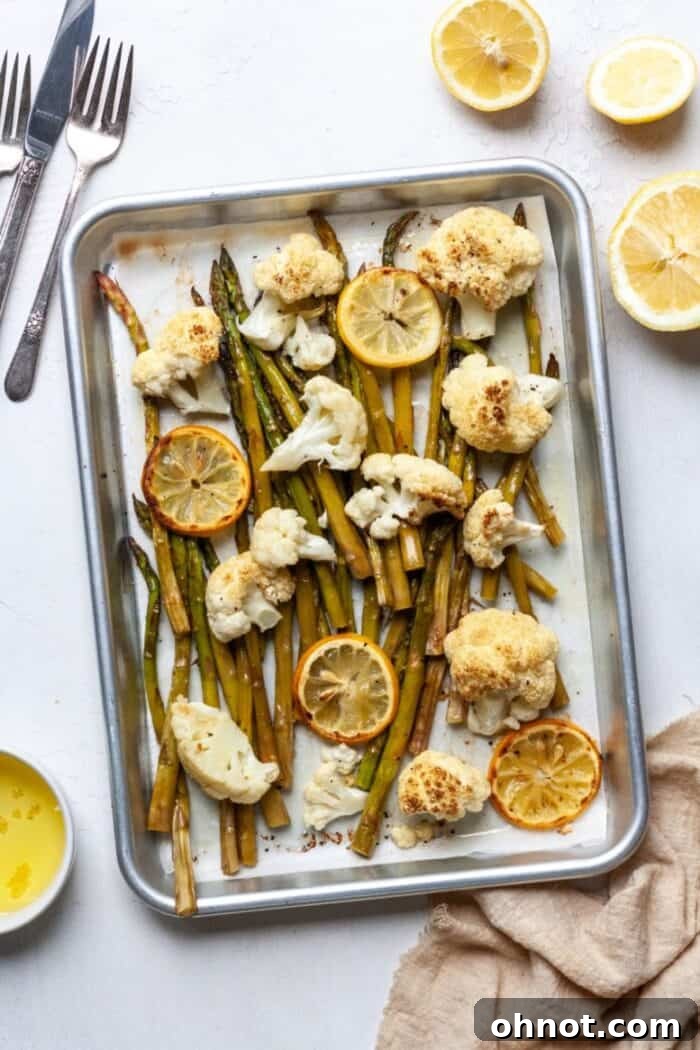
Welcome to the ultimate guide for creating the most flavorful and tender Roasted Cauliflower and Asparagus. This incredibly simple yet sophisticated side dish transforms everyday vegetables into a culinary delight, perfect for any meal. Infused with bright lemon and pungent garlic, these roasted veggies achieve a perfect fork-tender texture and burst with natural, savory-sweet flavors. Whether you're planning a weeknight dinner or a special gathering, this recipe promises to be a vibrant and healthy addition that everyone will love.
Say goodbye to bland vegetables and hello to a dish that will quickly become a staple in your kitchen. Roasting brings out the best in cauliflower and asparagus, caramelizing their natural sugars and deepening their flavor profile. The addition of fresh lemon not only brightens the dish but also complements the earthy notes of the vegetables and the aromatic garlic, creating a harmonious balance that is truly irresistible. Get ready to impress your taste buds with this effortlessly delicious recipe!
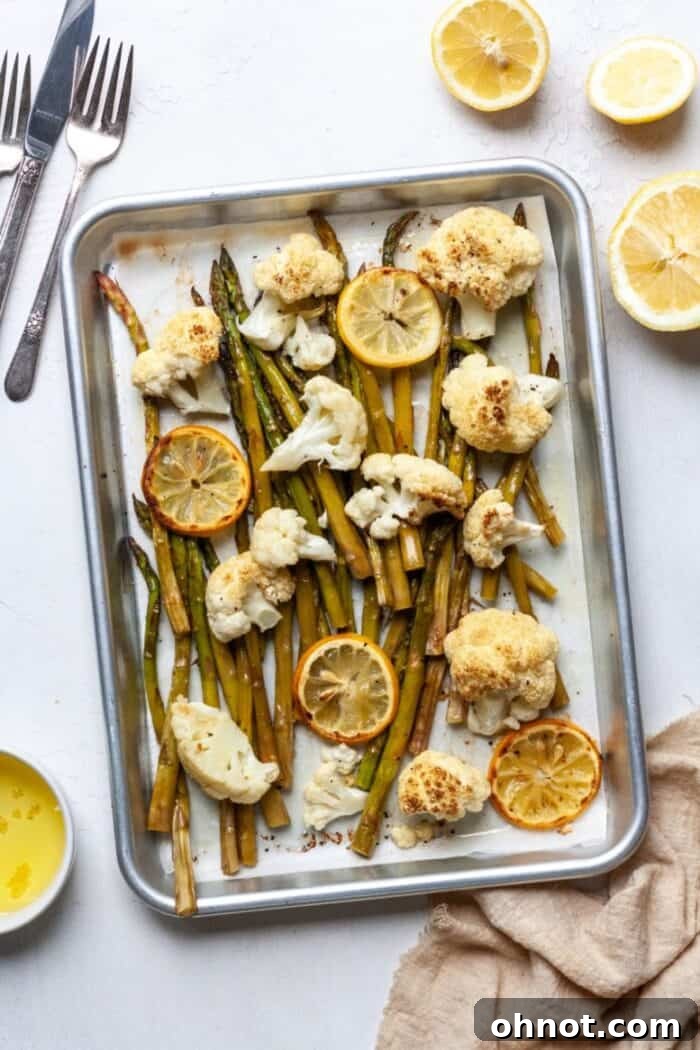
Why You’ll Love This Recipe
- Effortlessly Simple: This recipe requires minimal prep and straightforward steps, making it perfect for busy weeknights or when you need a quick yet impressive side. Even novice cooks can achieve perfect results.
- Nutritionally Packed: Both asparagus and cauliflower are powerhouses of essential vitamins and minerals, offering a significant health boost with every bite. This dish is as good for your body as it is for your taste buds.
- Versatile and Adaptable: While delicious on its own, this recipe is incredibly flexible. Feel free to add other vegetables like broccoli florets, chopped carrots, cubed butternut squash, or Brussels sprouts to customize it to your liking.
- Diet-Friendly: This roasted vegetable dish is designed to fit a variety of dietary needs. It's Whole30 approved, Paleo, Low Carb, Gluten-Free, Dairy-Free, Vegan, and Sugar-Free, ensuring almost everyone can enjoy it.
- Pairs Perfectly with Any Meal: From a simple grilled chicken to a fancy steak, these lemon garlic roasted vegetables complement a wide range of main courses, enhancing your overall dining experience. Try it with this Pan Seared Chilean Sea Bass for an elegant dinner!
What is Asparagus?
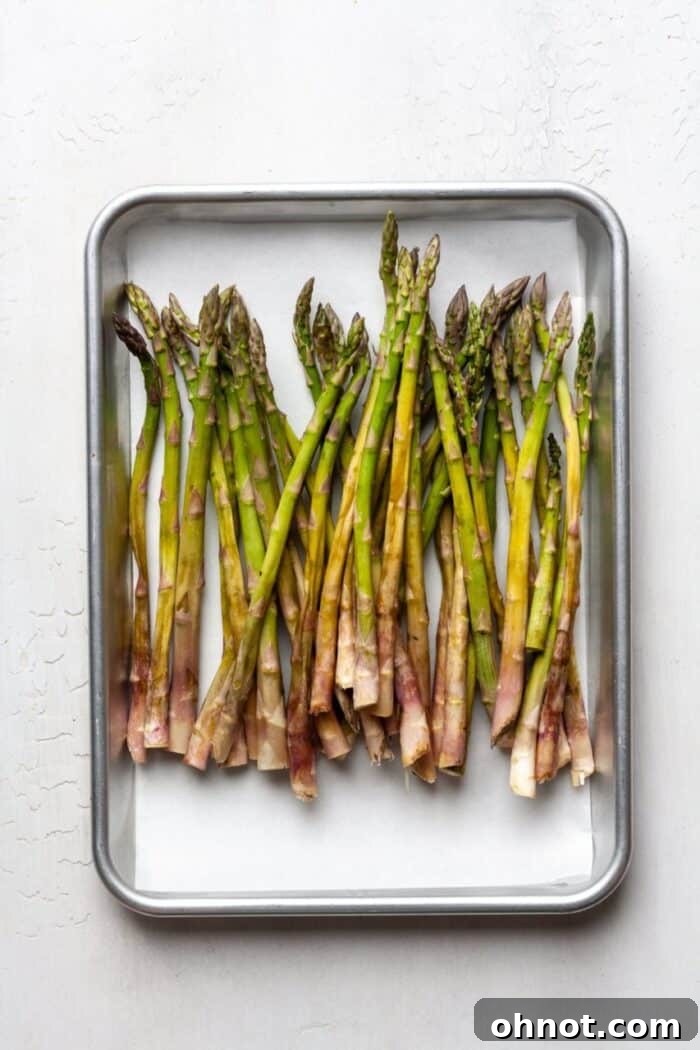
Asparagus, scientifically known as Asparagus officinalis, is a highly prized perennial vegetable from the lily family, renowned for its distinct tender spears. It boasts an earthy, slightly grassy, and naturally sweet flavor that becomes more pronounced and delightful when roasted. This ancient vegetable has been enjoyed for centuries, originating from the Mediterranean region and grown in temperate to subtropical climates around the globe.
Beyond its delicious taste, asparagus is a nutritional powerhouse. It is naturally fat-free and sodium-free, making it an excellent choice for heart-healthy diets. Each serving is packed with essential nutrients, including a significant amount of folate, crucial for cell growth and DNA formation; Vitamin C, a powerful antioxidant; Vitamin K, vital for blood clotting and bone health; Vitamin A, important for vision and immune function; and potassium, an electrolyte that helps maintain fluid balance and blood pressure. Its high fiber content also aids in healthy digestion.
Asparagus is incredibly versatile in the kitchen and can be prepared in numerous ways. While roasting brings out its best flavor and tenderness, other popular cooking methods include broiling, boiling, sautéing, steaming, and grilling. When selecting asparagus, look for firm, bright green spears with tight, closed tips. Store them upright in a glass with a little water in the refrigerator, loosely covered, to maintain freshness for up to a week.
What is Cauliflower?
Cauliflower, a member of the diverse Brassica oleracea species (which also includes broccoli, kale, and cabbage), is a remarkably versatile and nutritious vegetable. While it closely resembles broccoli in structure, its signature characteristic is its dense, white 'curd' or head, which is the primary part eaten. However, lesser-known varieties can come in vibrant hues like purple, orange, and green, each offering subtle differences in flavor and nutritional profiles.
This cruciferous vegetable is celebrated for its impressive health benefits. It is an excellent source of Vitamin C, a crucial antioxidant, and Vitamin K, which supports bone health and blood coagulation. Cauliflower also provides smaller but valuable amounts of manganese and a host of other beneficial phytonutrients. Furthermore, its high fiber and water content make it exceptional for supporting healthy digestion and promoting satiety, contributing to overall wellness. Its low calorie count and mild flavor make it a fantastic alternative to grains and starches in many dishes.
Cauliflower's mild flavor and ability to absorb other seasonings make it incredibly adaptable to various cooking methods. Beyond roasting, it can be steamed, boiled, sautéed, mashed (as a low-carb potato alternative), grated (for "rice"), or even turned into pizza crusts. When cooked, it develops a slightly nutty and creamy texture that pairs wonderfully with a wide array of spices and herbs. When choosing cauliflower, look for a firm, compact head with white, clean florets and fresh, green leaves. Store it whole in the refrigerator for up to a week.
The Magic of Roasting Vegetables
Roasting is arguably one of the best ways to cook vegetables, transforming them from simple ingredients into deeply flavored, tender delights. The high heat of the oven not only cooks the vegetables through but also caramelizes their natural sugars, leading to a richer, sweeter, and slightly nutty taste. This process, known as the Maillard reaction, creates a beautiful golden-brown exterior and a remarkably tender interior that steaming or boiling simply cannot achieve.
The key to perfect roasted vegetables lies in a few simple principles. First, a hot oven (typically 400-425°F or 200-220°C) is essential to ensure quick cooking and proper browning without making the vegetables soggy. Second, a generous coating of olive oil (or your preferred healthy fat) helps conduct the heat, prevent sticking, and creates a delicious crisp texture. Third, and perhaps most crucially, avoid overcrowding the baking sheet. Giving your vegetables enough space ensures they roast rather than steam. When crowded, they release moisture, lowering the pan temperature and resulting in soft, rather than crisp, results. A single layer allows for even heat distribution and maximum caramelization, guaranteeing that satisfying fork-tender texture every time.
How to Make Roasted Cauliflower and Asparagus
Creating this delicious and healthy side dish is incredibly simple. Follow these straightforward steps to achieve perfectly roasted lemon garlic cauliflower and asparagus.
Step 1: Preheat and Prepare
Begin by preheating your oven to 425 degrees Fahrenheit (220 degrees Celsius). While the oven heats, line a large, rimmed baking pan with parchment paper. This crucial step prevents sticking and makes cleanup a breeze, ensuring your vegetables lift off easily once roasted.
Step 2: Prepare Your Veggies
Carefully wash your asparagus and cauliflower under cool running water. For the asparagus, snap off the woody ends – they will naturally break at their tender point. Cut the head of cauliflower into uniform 1-inch florets. Consistent sizing is important to ensure all vegetables cook evenly at the same rate.
Step 3: Season and Toss
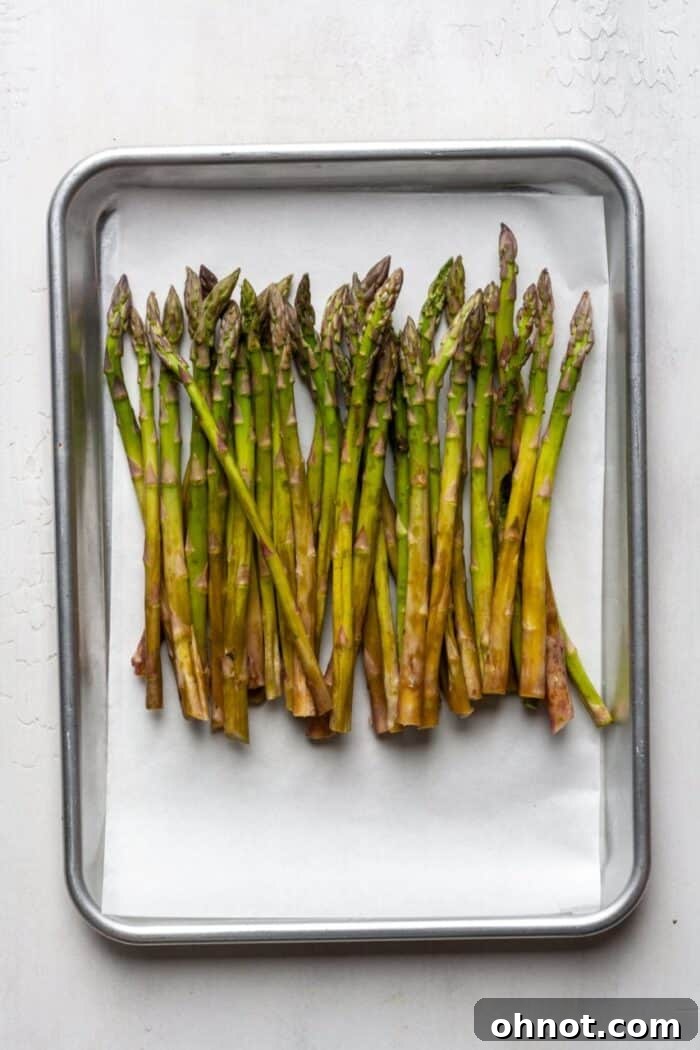
Place the trimmed asparagus and cauliflower florets onto the prepared baking pan. Drizzle generously with olive oil, then add the minced garlic, sea salt, and freshly ground pepper. Using your clean hands, gently toss the vegetables until they are thoroughly coated with the oil and seasonings. Ensure every floret and spear gets an even layer for maximum flavor.
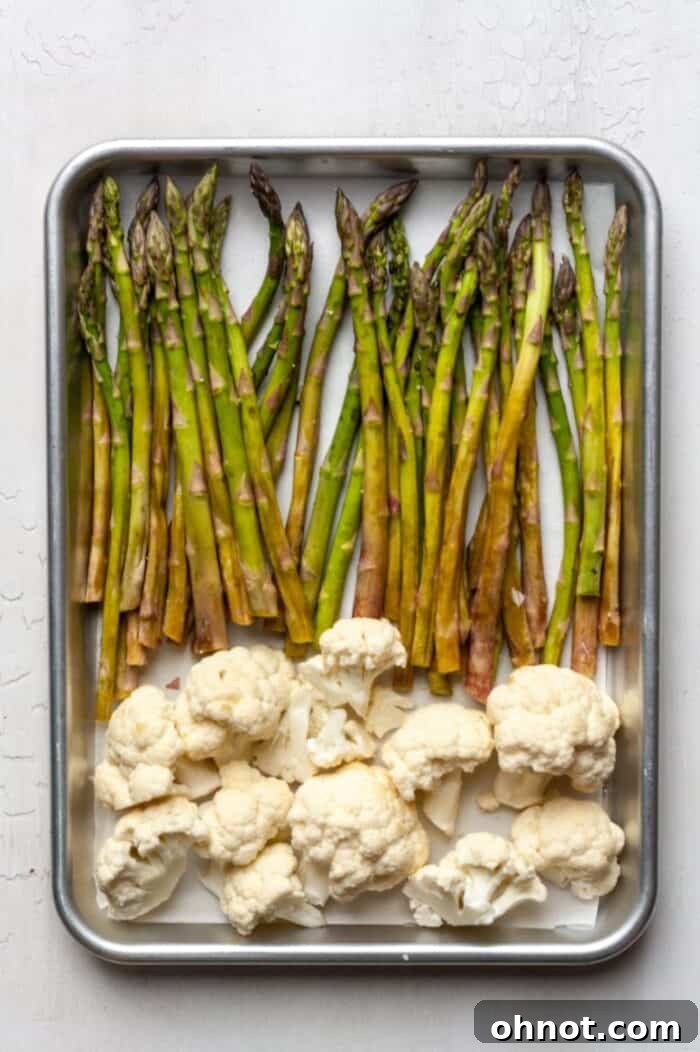
Step 4: Arrange and Garnish
Once seasoned, arrange the vegetables in a single, even layer on the baking sheet. It's important not to overcrowd the pan, as this can lead to steaming rather than roasting, preventing proper browning. Space them out as much as possible. Finally, arrange thin slices of fresh lemon over the vegetables for added zest and aroma during cooking.
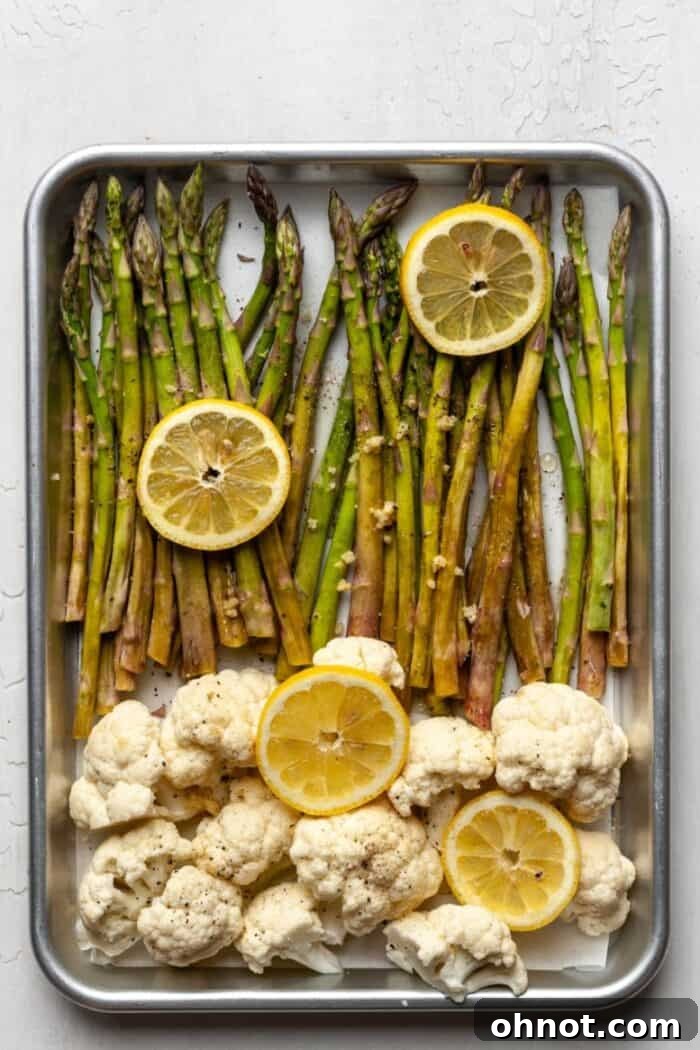
Step 5: Roast to Perfection
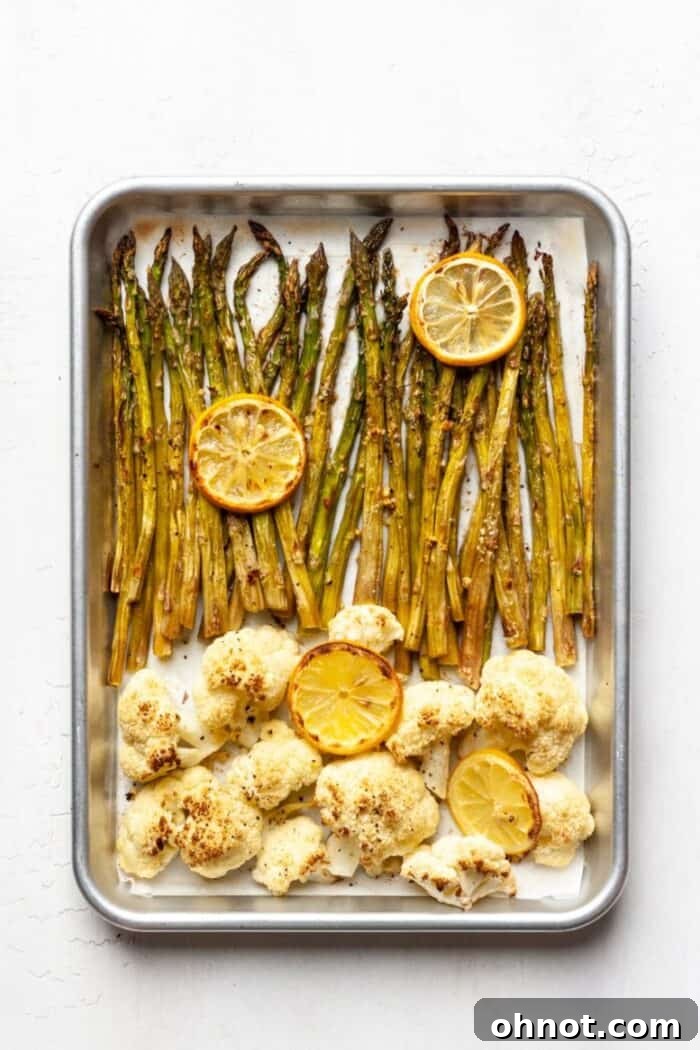
Place the baking pan in the preheated oven. Bake for an initial 15 minutes. After this time, carefully remove the pan, flip the vegetables with a spatula to ensure even cooking and browning, and return to the oven for another 10 minutes. Continue to cook until the vegetables are beautifully golden-brown and fork-tender. The total cooking time should be around 25 minutes, but keep an eye on them as oven temperatures can vary.
Step 6: Serve and Enjoy
Once the vegetables have reached your desired tenderness and color, remove the pan from the oven. Let them cool slightly before serving. These roasted lemon garlic cauliflower and asparagus are best enjoyed immediately, while they are still warm and vibrant.
Expert Tips & Tricks
- Thorough Seasoning: Ensure your vegetables are completely coated with olive oil, minced garlic, sea salt, and pepper. This even coating is essential for maximum flavor absorption and even caramelization. Don't be shy – use your hands for the best results!
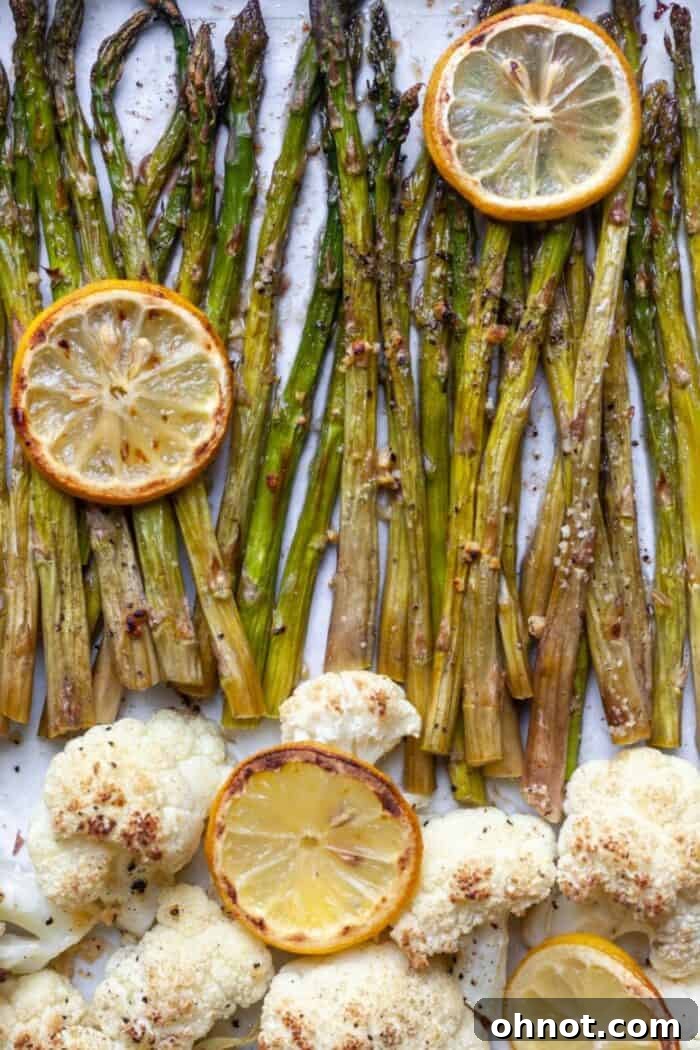
- Achieve Fork-Tender Perfection: The goal is vegetables that are tender but not mushy. To check for doneness, simply insert a fork into a cauliflower floret or an asparagus spear. If it slides in easily with minimal resistance, they're ready. If they still feel firm, return them to the oven for a few more minutes, checking periodically.
- Freshness Matters: For the most vibrant flavor and optimal texture, always opt for fresh asparagus and cauliflower. While frozen vegetables can be used in a pinch, they might have a slightly softer texture and less intense flavor compared to their fresh counterparts. If using frozen, ensure they are thawed to room temperature and patted very dry before roasting to prevent excess moisture from steaming them.
- Don't Overcrowd the Pan: This is perhaps the most crucial tip for perfect roasting. Vegetables release moisture as they cook. If too many are packed onto one sheet, the moisture won't evaporate quickly enough, causing the vegetables to steam instead of roast and become soggy. Use two baking sheets if necessary to ensure a single, even layer.
- Consistent Cut Size: Cut your cauliflower florets into roughly the same 1-inch size. This ensures that all pieces cook uniformly, preventing some from being undercooked while others are overcooked.
Variations and Additions
This recipe is a fantastic base for culinary experimentation. Here are some ideas to add variety and personalize your roasted vegetables:
- Additional Vegetables: Feel free to mix and match! Great additions include broccoli florets, sliced bell peppers, chopped carrots, Brussels sprouts (halved), cubed butternut squash, or even cherry tomatoes added in the last 10 minutes of roasting.
- Herb Infusion: Elevate the flavor with fresh herbs. Toss with chopped fresh rosemary, thyme, or oregano along with the garlic for an aromatic twist. A sprinkle of fresh parsley or chives after roasting adds a lovely finishing touch.
- Spice It Up: For a little kick, add a pinch of red pepper flakes to your seasoning mix. Smoked paprika can also add a wonderful depth and smoky flavor. Curry powder offers an entirely different, exotic profile.
- Citrus Zest: Beyond lemon slices, try adding some lemon zest along with the juice for an even more intense citrus punch. Lime or orange slices could also provide an interesting flavor variation.
- Nutty Crunch: For added texture, sprinkle some chopped almonds, walnuts, or pecans over the vegetables during the last 5-10 minutes of roasting.
- Cheesy Finish (Not Whole30/Paleo/Vegan): If your diet allows, a sprinkle of grated Parmesan cheese in the last few minutes of baking, or after removing from the oven, adds a delicious savory note.
What to Serve With
Roasted cauliflower and asparagus is a wonderfully versatile side dish that complements an extensive range of main courses. Its bright, savory flavor profile pairs beautifully with various proteins and meals. Here are some specific ideas to inspire your menu:
- Poultry: Excellent alongside roasted chicken, grilled turkey, or pan-seared duck breast. This Whole30 Lemon Chicken would be a perfect match.
- Beef: A classic pairing with steak, prime rib, or even simple ground beef dishes. Consider serving it with Whole30 Steak with Gravy.
- Pork: Pairs wonderfully with pork chops, tenderloin, or slow-cooked ribs. Don't miss out on these Dutch Oven Ribs or AIP Pork Chops.
- Fish and Seafood: The lemon-garlic notes perfectly complement flaky white fish like cod, salmon, or shrimp.
- Vegetarian/Vegan Mains: Serve alongside a hearty lentil loaf, black bean burgers, quinoa bowls, or as part of a larger vegetable platter.
- Brunch: A delicious addition to an egg scramble, frittata, or as a flavorful component of a brunch spread.
Frequently Asked Questions
Yes, it is always recommended to thoroughly wash cauliflower, along with any other fresh produce, under cool running water before preparing it for roasting or any other cooking method. This helps to remove any dirt, pesticides, or other residues.
Roasted cauliflower is incredibly versatile and pairs well with a wide variety of main courses. It's excellent alongside roasted chicken, grilled fish, pan-seared steak, or even as a flavorful addition to grain bowls and salads. Its mild flavor makes it a perfect complement to almost any protein.
Absolutely! Cauliflower is a highly nutritious vegetable, rich in vitamins C and K, fiber, and various antioxidants. It's known for its anti-inflammatory properties and its role in supporting digestion and overall health. It's also low in calories and carbohydrates, making it a popular choice for many dietary plans.
Many vegetables shine when roasted! Root vegetables like potatoes, carrots, parsnips, and sweet potatoes are fantastic. Cruciferous vegetables such as broccoli, Brussels sprouts, and, of course, cauliflower are excellent. Other great options include bell peppers, onions, zucchini, and green beans. The high heat brings out their natural sweetness and creates a lovely caramelized texture.
For cauliflower, cut it into approximately 1-inch florets. This size ensures even cooking and allows for good surface area for browning. Asparagus spears should have their woody ends snapped off, leaving the tender green portion.
Roasted vegetables are done when they are "fork-tender" and have achieved a light golden-brown color with some caramelized edges. To test, simply poke a piece with a fork – it should pierce through easily with minimal resistance. The cooking time can vary depending on your oven and the size of your vegetable pieces.
Yes, it's essential to trim or snap off the tough, woody ends of asparagus before roasting and eating. The easiest way to do this is to hold a spear at both ends and bend it; it will naturally break where the tender part begins. Discard the woody ends as they are fibrous and unpleasant to eat.
You May Also Like
- Air Fryer Bacon Wrapped Asparagus (Keto)
- Whole30 Roasted Butternut Squash
- Air Fryer Carrots
- Pad Pak Thai (Stir Fried Vegetables)
- Whole30 Vegetable Pork Soup

Get the Recipe:
Roasted Cauliflower and Asparagus (Whole30)
This roasted cauliflower and asparagus is such an easy, healthy and delicious side dish! These veggies are cooked until they are tender and bursting with flavor. Add them to any meal for instant flavor!
Average rating: 4.50 from 2 votes
Pin Recipe
Ingredients
- ½ pound asparagus spears
- 1 large head of cauliflower
- 2 tbsp olive oil
- 1 tbsp minced garlic
- pinch sea salt
- pinch ground pepper
- 1 lemon, sliced
Instructions
- First, preheat oven to 425 degrees Fahrenheit. Line a rimmed baking pan with parchment paper.
- Slice white ends off asparagus. Cut cauliflower into 1 inch florets.
- Lay veggies on lined baking pan. Drizzle with olive oil and garlic. Sprinkle sea salt and pepper on top. Use your hands to mix everything together.
- Arrange veggies in one even layer. Garnish with sliced lemon.
- Bake for 25 minutes total. After 15 minutes, flip veggies over and continue cooking another 10 minutes. Cook until veggies are fork tender.
- Finally, remove from oven and serve!
Notes
- Asparagus size varies greatly. If using thin asparagus, the 25-minute cooking time is great. If using extra thick, add 5 to 10 minutes of baking time.
- Frozen veggies can be used. Thaw to room temperature before arranging on baking pan.
- Cook until veggies are fork tender.
- Store leftovers in an airtight container in the fridge for up to 3 days.
Nutrition Information (per serving, approximate):
- Calories: 120 kcal
- Carbohydrates: 13g
- Protein: 4g
- Fat: 8g
- Saturated Fat: 1g
- Polyunsaturated Fat: 1g
- Monounsaturated Fat: 5g
- Sodium: 45mg
- Potassium: 590mg
- Fiber: 5g
- Sugar: 5g
- Vitamin A: 435 IU
- Vitamin C: 87mg
- Calcium: 56mg
- Iron: 2mg
If you make this irresistible recipe, I would truly appreciate your feedback! Please leave a review and share your experience. You can also find me on Instagram, Facebook, and Pinterest. I love connecting with you and seeing your delicious creations! For more healthy recipes and lifestyle tips, don't forget to check out my Ultimate Guide to Whole30.
Have you signed up for my free newsletter yet? Sign up here to receive exclusive healthy meal plans, new recipe alerts, and much more directly to your inbox!