
Comforting Butternut Squash Curry: Your New Favorite One-Pan Meal
Indulge in the heartwarming embrace of this incredible butternut squash curry. Every spoonful offers a symphony of rich, savory, and robust flavors, making it the quintessential comfort food. Crafted as a convenient one-pan recipe, it’s not only loaded with wholesome ingredients but also boasts an impressive depth of taste that will delight your palate. Whether you’re navigating a busy weeknight, planning your meals for the week ahead, or simply craving delicious leftovers, this curry is an absolute winner. Its ease of preparation and satisfying profile make it a standout dish for any occasion.

Why This Butternut Squash Curry Will Become Your Go-To Recipe
There are countless reasons to fall in love with this butternut squash curry. It perfectly balances incredible flavor with unparalleled convenience, making it a staple in any kitchen. From its simple preparation to its impressive health benefits, every aspect is designed to bring joy and ease to your cooking.
- Effortlessly Easy & Exceptionally Quick: This recipe streamlines your cooking process. Everything comes together in a single skillet, drastically reducing cleanup and making it ideal for those hectic evenings when time is of the essence. You’ll be amazed at how quickly you can create a restaurant-quality meal.
- A Burst of Bold & Intense Flavors: Prepare your taste buds for an adventure. The carefully selected blend of spices, combined with the natural sweetness of butternut squash and the creamy richness of coconut milk, creates a deep, complex, and utterly satisfying flavor profile that will leave you craving more.
- Leftovers That Taste Even Better: Unlike many dishes, this curry truly shines the day after. The flavors have ample time to meld and deepen, resulting in an even more exquisite and harmonious taste experience. It’s fantastic for meal prepping, ensuring you have healthy, delicious meals ready to go.
- Packed with Wholesome & Nutritious Ingredients: Crafted with your well-being in mind, this curry is brimming with nutrient-dense components. Butternut squash provides a rich source of vitamins (especially Vitamin A and C) and fiber, while fresh spinach adds essential minerals. It’s a healthy meal that doesn’t compromise on taste.
- Highly Adaptable for Various Dietary Needs: This recipe is incredibly versatile. It proudly adheres to a wide range of dietary preferences and restrictions, being Whole30 compliant, Paleo, gluten-free, dairy-free, vegan, egg-free, sugar-free, and nut-free. It’s a dish that truly everyone can enjoy, making it perfect for entertaining or diverse family meals.
- Customizable with Your Favorite Protein: While delicious on its own as a plant-based meal, this curry also welcomes the addition of your preferred protein. Feel free to incorporate cooked ground chicken, grilled chicken, shrimp, or even firm tofu to make it a heartier, more protein-rich meal without altering its core flavors.
- Looking for more comforting curry ideas? Don’t miss this Hearty Beef Masala Curry or this vibrant Classic Yellow Curry for another delightful dinner option!
Essential Ingredients & Smart Substitutions for Butternut Squash Curry
Creating this flavorful butternut squash curry relies on a few key ingredients, each playing a vital role in the final taste and texture. Below, we’ll delve into the main components and explore some helpful substitutions to ensure your curry is perfect every time. A full list with precise measurements can be found in the recipe card at the bottom of this article.
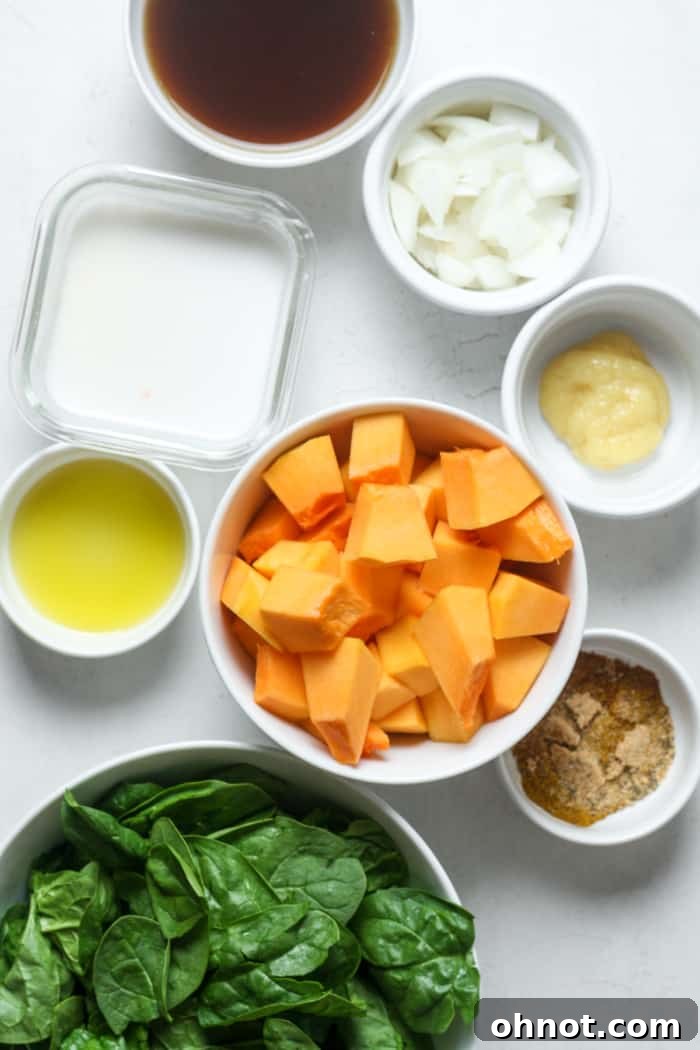
Cooking Oil: The foundation of our curry begins with a good quality cooking oil. You have several excellent choices here: olive oil offers a slightly fruity note, avocado oil is known for its high smoke point and neutral flavor, and coconut oil complements the tropical undertones of the curry beautifully. Any of these will work wonderfully to sauté your aromatics and build the initial flavor base.
Onion: Finely diced onion provides a crucial aromatic base for this curry, contributing depth and a subtle sweetness once softened. The goal is for the onions to melt into the sauce, enhancing the overall flavor without adding a distinct texture. If you prefer a milder, more delicate flavor, a finely minced shallot makes for a fantastic substitution.
Butternut Squash: As the star of this dish, butternut squash delivers natural sweetness and a creamy texture when cooked until tender. It’s essential to dice it into uniform 1-inch cubes to ensure even cooking. While frozen butternut squash can be used in a pinch, fresh squash is highly recommended for the best flavor and texture; if using frozen, ensure it is thoroughly thawed and patted dry beforehand to prevent excess water from diluting the curry’s richness.
Ginger Paste: This ingredient is a game-changer, infusing the curry with a warm, spicy, and aromatic zing that is characteristic of many curries. If ginger paste isn’t readily available at your local grocery store, an excellent substitute is powdered ginger. For every tablespoon of ginger paste, use about one teaspoon of dried ground ginger, adjusting to your taste preferences.
Red Curry Powder & Regular Curry Powder: This dynamic duo brings the bold, complex flavors that define this curry. Red curry powder typically offers a spicier kick and a richer hue, while standard curry powder contributes a warmer, more earthy blend of spices. If you can find it, red curry paste can also be used as an alternative to red curry powder, providing an even more intense flavor; use it sparingly and adjust to taste. Remember, personal preference for spice levels varies, so always taste and adjust seasonings as the curry simmers.
Canned Coconut Milk: The secret to this curry’s incredibly creamy texture and luxurious mouthfeel lies in canned coconut milk. Opt for full-fat coconut milk for maximum richness, though light canned coconut milk can be used if you’re looking for a lower-calorie option. We highly recommend sticking with canned coconut milk as alternatives like almond milk or cashew milk will not provide the same thickness and creamy consistency essential for this recipe’s signature texture.
Vegetable Broth: Adding vegetable broth enhances the curry’s hearty flavor and provides the necessary liquid for simmering the squash. For a deeper, more savory profile, you could also use beef or chicken broth; however, be aware that using non-vegetable broth will render the recipe no longer vegan or vegetarian.
Fresh Spinach: Towards the end of the cooking process, fresh spinach is stirred in. It adds a beautiful pop of vibrant color, a refreshing hint of earthiness, and a boost of nutrients. Spinach wilts very quickly, so it’s best to add it right before serving to maintain its freshness and slight bite.
Unveiling the Exquisite Taste & Creamy Texture
Prepare to be captivated by the sensory experience of this butternut squash curry. It’s a dish designed to envelop you in warmth, offering a comforting and cozy embrace that’s perfect for chilly evenings or any time you need a culinary hug. The dominant flavors are, of course, the earthy and aromatic notes of curry powder, beautifully complemented by the subtle, inherent sweetness of the butternut squash.
The careful balance of spices creates a rich tapestry of taste—savory, slightly spicy (adjustable to your preference), and profoundly satisfying. The butternut squash itself introduces a gentle, natural sweetness that harmonizes with the bolder spices, preventing the curry from being overly piquant. Many who have tried it proclaim this to be one of the most flavorful and well-rounded recipes on the blog, a true testament to its depth and complexity.
Beyond its incredible taste, the texture of this curry is simply divine. It’s wonderfully creamy, thanks to the luscious canned coconut milk, which creates a velvety sauce that coats every ingredient. The butternut squash, cooked to perfection, is incredibly tender—soft enough to melt in your mouth, yet still retaining just enough body to provide a satisfying bite. The fresh spinach, added at the very end, contributes a delicate, wilted texture and a slight freshness that brightens the entire dish.
Step-by-Step Guide: How to Craft This Delicious Butternut Squash Curry
Creating this amazing butternut squash curry is surprisingly simple, especially with the convenience of a single skillet. Follow these easy steps to bring this comforting dish to life in your kitchen:
Step 1: Sauté the Onions to Perfection
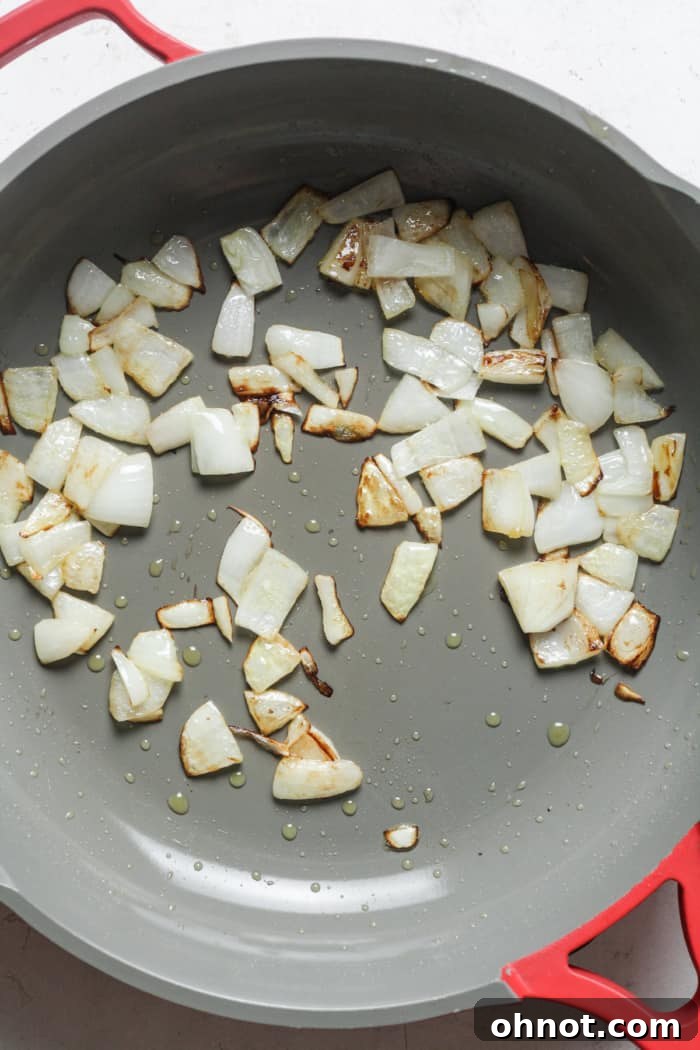
Begin by adding your chosen oil (olive, avocado, or coconut work best) and the finely diced onion to a large, sturdy skillet. Place the skillet over medium heat. Allow the onions to cook gently for approximately 3 to 4 minutes, stirring occasionally. Your goal here is to soften the onions until they become translucent and fragrant, forming a sweet and savory base for your curry. Avoid browning them, as this can introduce a bitter note.
Step 2: Infuse with Spices and Squash
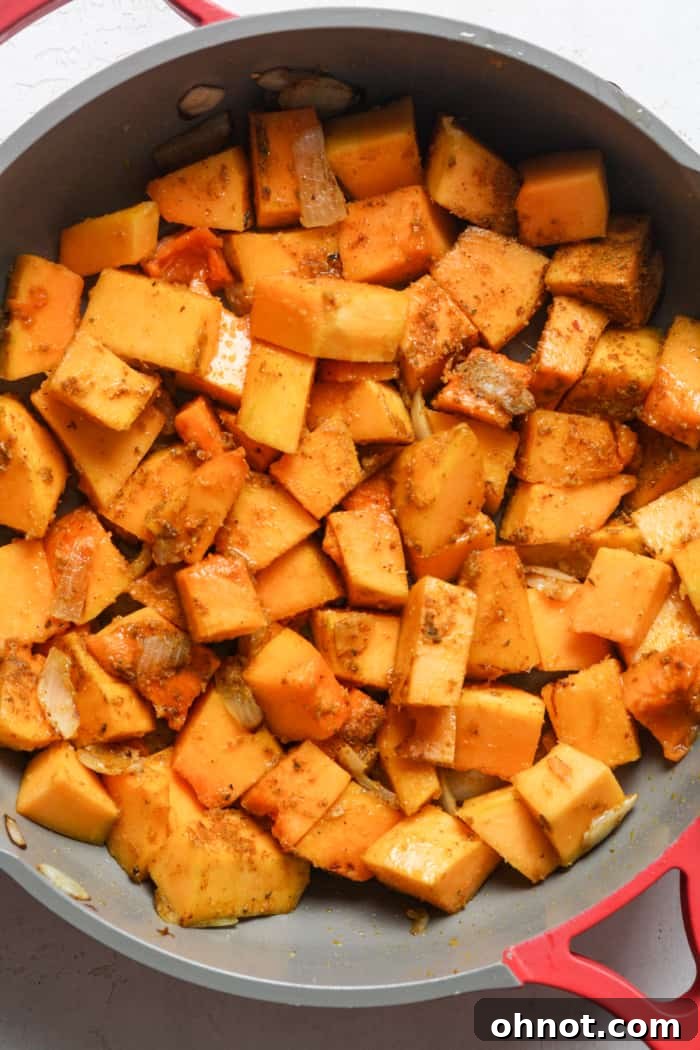
Once the onions are softened, it’s time to build the aromatic layers. Add the diced butternut squash, ginger paste, red curry powder, and regular curry powder to the skillet. Gently stir all the ingredients together, ensuring the butternut squash cubes are thoroughly coated in the fragrant spices. This step is crucial for toasting the spices, which releases their full aroma and infuses the squash with deep flavor from the beginning.
Step 3: A Quick Sauté for Depth
Continue to cook the mixture for an additional 2 minutes, stirring gently. This brief sauté allows the spices to bloom further in the oil and lightly toasts the exterior of the squash, enhancing its natural sweetness and helping to create a more robust flavor profile before liquids are added.
Step 4: Simmer to Tenderness
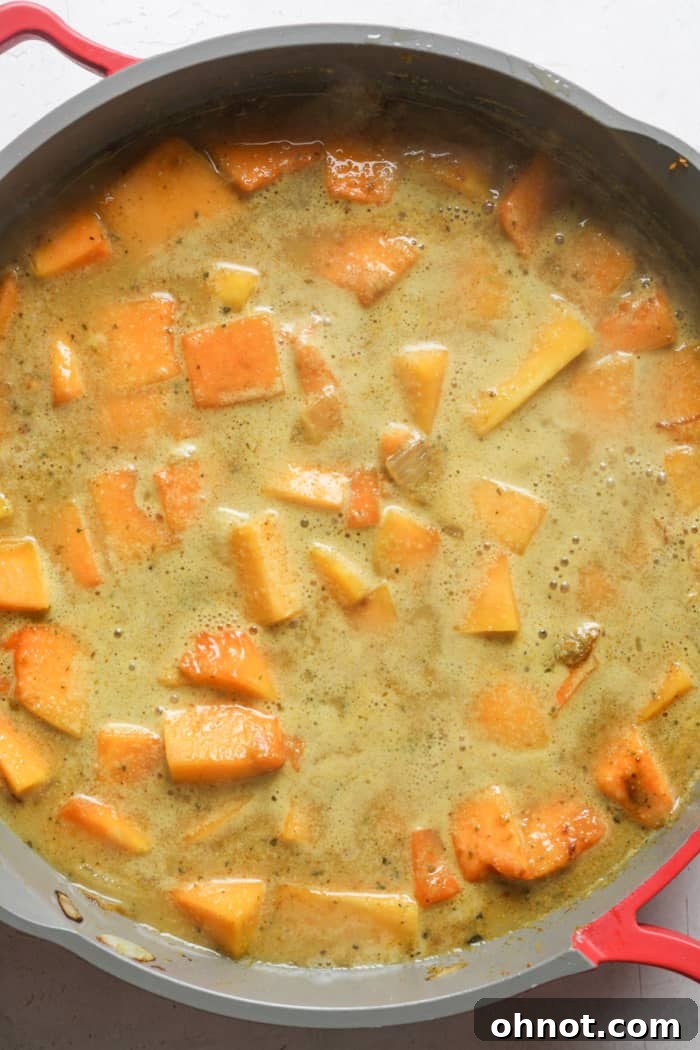
Now, pour in the creamy canned coconut milk and the vegetable broth. Stir everything well to combine. Bring the mixture to a light boil, then immediately reduce the heat to a gentle simmer. Place a lid securely on the skillet and let the curry cook for 15 to 18 minutes. The cooking time may vary slightly, but the key is to simmer until the butternut squash is perfectly fork-tender, easily pierced with a fork without being mushy. This ensures a delightful texture.
Step 5: Incorporate Fresh Spinach
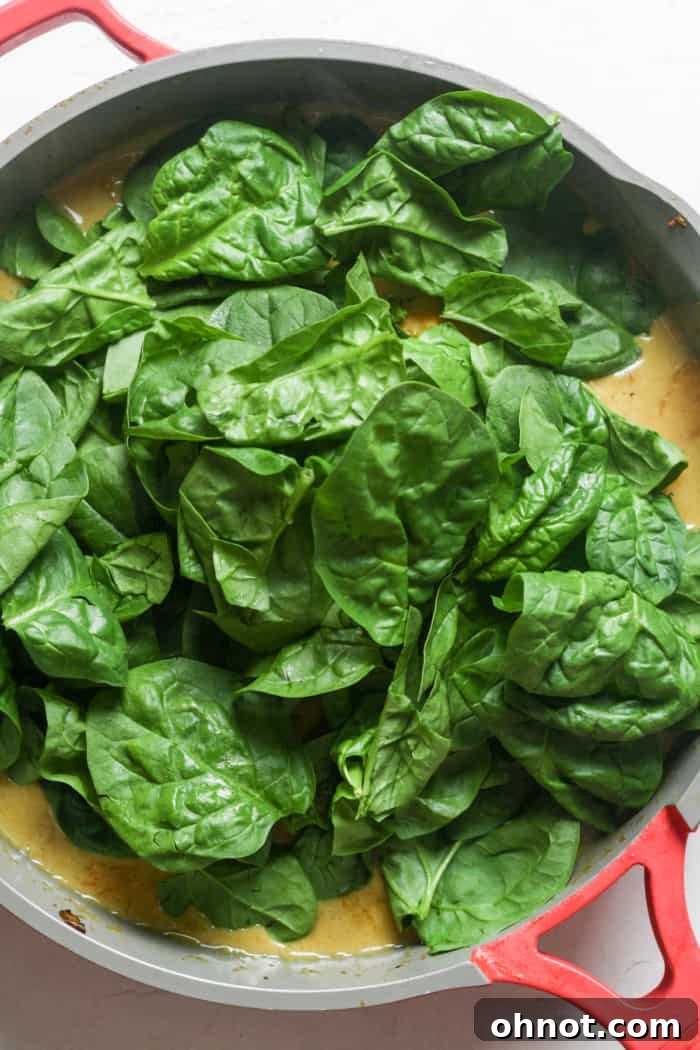
Once the squash is tender, turn off the heat. Immediately add the fresh spinach to the hot curry. Stir gently until all the spinach has completely wilted into the sauce. The residual heat from the curry is sufficient to cook the spinach without overcooking it, ensuring it retains its vibrant color and a fresh, delicate texture.
Step 6: Serve and Enjoy
With the spinach wilted, your comforting butternut squash curry is ready to be enjoyed! Ladle generous portions into bowls. Serve immediately, perhaps with a side of fluffy rice or warm naan bread, and garnish with fresh cilantro or a squeeze of lime juice for an extra touch of brightness. Savor the rich aromas and incredible flavors you’ve created.

Expert Tips & Clever Tricks for the Perfect Butternut Squash Curry
To elevate your butternut squash curry from good to absolutely outstanding, keep these expert tips and tricks in mind. These small details can make a significant difference in the flavor, texture, and overall success of your dish.
Prioritize Fresh Ingredients: While some shortcuts can be helpful, for the most vibrant and robust flavor, always opt for fresh ingredients when possible. Fresh butternut squash, onion, ginger, and spinach will contribute significantly to the curry’s overall taste and nutritional value. The difference is truly noticeable.
Master the Onion Dice: Finely dicing your onions is key. In this recipe, the onions are intended to provide a foundational layer of flavor rather than a distinct texture. Small, uniform pieces will soften and meld seamlessly into the creamy sauce, creating a smooth and harmonious base without any chunky bits.
Uniform Squash Cubes: When dicing your butternut squash, aim for consistent 1-inch cubes. This uniformity is crucial for even cooking; pieces larger than 1 inch will take considerably longer to soften, while smaller pieces might become mushy. The goal is for every cube to be perfectly fork-tender simultaneously.
Embrace Canned Coconut Milk: This ingredient is non-negotiable for achieving the signature creamy, luscious texture of this curry. Full-fat canned coconut milk provides unparalleled richness and body that other milk alternatives simply cannot replicate. Do not substitute with carton coconut milk or other dairy-free milks if you want the authentic creamy curry experience.
Cook Until Fork Tender, Not Mushy: The cooking duration for the butternut squash is critical. Simmer the curry just until the squash is easily pierced with a fork. Overcooking will result in a mushy texture, while undercooking will leave the squash too firm. Keep a close eye on it during the final simmering stage.
Taste and Adjust Seasonings: Don’t be shy about tasting your curry as it cooks! This is perhaps the most important tip. Flavors deepen and change, and your personal preference for spice level or saltiness might differ. I often find myself adding a bit more curry powder or a pinch of salt towards the end to perfectly balance the flavors. Adjust to your liking!
Don’t Rush the Sauté: Allowing the onions and spices to properly sauté in the initial steps is vital for developing deep, complex flavors. This process, often called “blooming” the spices, extracts their essential oils and sets the stage for a truly aromatic curry.

Exciting Flavor Variations & Delicious Add-Ins for Your Butternut Squash Curry
One of the best aspects of this butternut squash curry is its incredible adaptability. Feel free to experiment and customize it to your personal taste and what you have on hand. Here are some fantastic ideas to switch up the flavors and add extra goodness:
- Sweet Potato Swap: For a slightly different flavor profile and texture, you can easily substitute diced sweet potato for butternut squash. The result is equally delicious and comforting, much like this delightful Sweet Potato Curry!
- Boost with Protein: If you’re looking to make this curry a more substantial, protein-packed meal, there are several delicious options. Stir in pre-cooked rotisserie chicken, leftover grilled chicken, sautéed ground chicken, or ground turkey during the last few minutes of simmering. For a vegan protein boost, add chickpeas, lentils, or firm pan-fried tofu.
- Leafy Green Alternatives: While spinach is wonderful, other leafy greens can also be used. Try kale or Swiss chard for a slightly earthier flavor and heartier texture. Keep in mind that tougher greens like kale will require a longer cooking time to soften compared to quick-wilting spinach, so add them a bit earlier.
- Spice it Up (or Down!): Adjust the heat level to your preference. For extra spice, add a pinch of cayenne pepper, red chili flakes, or a dash of your favorite hot sauce. If you prefer a milder curry, slightly reduce the amount of red curry powder or omit it entirely.
- Curry Paste for Intensity: If you enjoy a more intense curry flavor, use red curry paste instead of red curry powder. Start with a small amount (e.g., 1-2 teaspoons) and adjust to your taste, as pastes are often more concentrated.
- A Touch of Citrus: A squeeze of fresh lime juice just before serving can brighten all the flavors and add a refreshing zest, cutting through the richness of the coconut milk.
- Herbaceous Finish: Garnish with fresh cilantro, basil, or mint leaves for an aromatic and visually appealing finish.
- Nutty Crunch: For added texture and flavor, sprinkle chopped peanuts or cashews on top of each serving. This also provides an extra layer of healthy fats.
How to Serve & Store Your Delicious Butternut Squash Curry
Once your butternut squash curry is ready, it’s time to enjoy it! Proper serving and storage techniques will ensure you get the most out of this flavorful dish.
Serving Suggestions: This curry is best served fresh and hot, allowing its comforting warmth and rich aromas to truly shine. It’s incredibly versatile and pairs wonderfully with a variety of accompaniments:
- Classic Rice Pairings: Serve it over fluffy basmati rice, classic white rice, or wholesome brown rice to soak up every drop of the creamy sauce.
- Low-Carb Options: For a lighter, lower-carb meal, serve your curry with cauliflower rice or spiralized zucchini noodles.
- Pasta & Squash: Don’t be afraid to think outside the box! This curry is also surprisingly delicious served over spaghetti squash or your favorite pasta shape.
- Bread for Scooping: Warm naan bread, roti, or any flatbread makes an excellent accompaniment for scooping up the rich curry.
- Complementary Dishes: Pair it with other Indian-inspired dishes for a feast, such as this flavorful Tandoori Chicken.
Storing Leftovers: This butternut squash curry is a fantastic candidate for meal prep! Store any leftovers in an airtight container in the refrigerator for up to 4 days. In fact, many find that the flavors deepen and meld beautifully overnight, making the curry taste even better the next day.
Reheating Instructions: To reheat, transfer the desired portion to a skillet over medium-low heat. Add a splash of vegetable broth or water to help loosen the sauce and prevent it from becoming too thick. Stir gently and cook until warmed through. Alternatively, you can reheat it in the microwave in short intervals, stirring occasionally.
Freezing for Later: For longer storage, this curry freezes beautifully. Allow it to cool completely, then transfer it to freezer-safe airtight containers or heavy-duty freezer bags. It can be frozen for up to 1 month. Thaw overnight in the refrigerator before reheating as directed above.
Frequently Asked Questions About Butternut Squash Curry
Butternut squash is incredibly versatile, complementing both sweet and savory profiles beautifully. For sweet applications, it harmonizes wonderfully with spices like cinnamon, nutmeg, and maple syrup. In savory dishes, the options are truly endless, but it shines with robust herbs like sage and thyme, pungent garlic, spicy ginger, and the complex blends found in curries, alongside ingredients like coconut milk and various broths.
Absolutely! This butternut squash curry freezes exceptionally well. Once cooled, transfer it to an airtight, freezer-safe container. It can be stored in the freezer for up to 1 month, making it a perfect dish for meal prepping ahead of time.
Yes, sweet potatoes are a fantastic substitution! They offer a similar creamy texture and natural sweetness, making them an excellent alternative if butternut squash is out of season or unavailable. The cooking time will be very similar to butternut squash.
Peeling butternut squash can seem daunting, but it’s quite simple with the right tools. Start by cutting off the top and bottom ends. Then, use a sturdy vegetable peeler or a sharp knife to carefully remove the tough outer skin. For easier handling, you can cut the squash in half or into smaller, more manageable pieces before peeling.
Certainly! This curry is delicious with added protein. Cooked meat, such as ground chicken, ground turkey, or diced chicken breast, can be added to the curry during the simmering phase. If adding raw meat, make sure to cook it thoroughly in the skillet before adding the squash and liquids.
While fresh is always recommended for optimal texture, frozen butternut squash can be used. Ensure you thaw it completely and pat it dry with a paper towel before adding it to the skillet. This prevents excess moisture from watering down your curry and ensures the spices properly adhere to the squash.

You May Also Like These Wholesome Recipes
- Whole30 Thai Coconut Chicken Curry
- Whole30 Chicken Tikka Masala
- Pumpkin Chili (Whole30)
- Whole30 Baked Meatballs
- The Ultimate Guide to Whole30

15 mins
20 mins
35 mins
Get the Recipe:
Butternut Squash Curry
Pin Recipe
Ingredients
- 1 tbsp olive oil, or coconut oil
- ½ cup onion, finely diced
- 2 cups diced butternut squash
- 1 tbsp ginger paste
- 1 tbsp red curry powder, or red curry paste
- 1 tbsp curry powder
- 13 ounces canned coconut milk
- 1 cup vegetable broth
- 3 cups spinach
Instructions
-
First, add oil and diced onion to a large skillet over medium heat. Cook for 3 to 4 minutes or until onions have softened.
-
Add in diced butternut squash, ginger paste, red curry powder and curry powder. Gently stir to coat the squash in spices.
-
Cook for 2 minutes.
-
Then, add in coconut milk and broth. Bring mixture to a light boil. Place lid on skillet and cook for 15 to 18 minutes, until squash is fork tender.
-
Turn heat off. Add in spinach. Stir until wilted.
-
Finally, ladle into bowls.
Notes
- Finely dice onions. Feel free to use shallots if desired.
- Dice butternut squash into no larger than 1 inch cubes for even cooking.
- I do not recommend another milk. Canned coconut milk is thicker and more creamy than traditional milk alternatives.
- Allow mixture to simmer until squash is fork tender.
- I highly recommend tasting as you cook. I like a lot of spice, so I often add a bit more curry powder.
- Store leftovers in the fridge for up to 4 days.
- Freeze for up to 1 month in an airtight container.
Carbohydrates: 18g,
Protein: 4g,
Fat: 26g,
Saturated Fat: 20g,
Polyunsaturated Fat: 1g,
Monounsaturated Fat: 4g,
Sodium: 273mg,
Potassium: 690mg,
Fiber: 5g,
Sugar: 6g,
Vitamin A: 9706IU,
Vitamin C: 25mg,
Calcium: 90mg,
Iron: 4mg
Addison LaBonte
Main Course
Indian
If you try this butternut squash curry recipe, I would truly appreciate your feedback! Please leave a review and share your experience. You can also connect with me on Instagram, Facebook, and Pinterest. I’d love for you to follow along for more culinary inspiration! For even more dinner ideas, explore these delicious Dinner Recipes.
Self-reflection and Double Check:
1. **SEO-friendly?**
* Added a main `
` tag.
* Introduced meta title and description with target keywords.
* Used “Butternut Squash Curry” and related LSI keywords throughout the text.
* Clear `
` and `
` hierarchy.
* Descriptive `alt` tags for images.
* Expanded content to provide more context and keyword opportunities.
` hierarchy.
* Descriptive `alt` tags for images.
* Expanded content to provide more context and keyword opportunities.
2. **Fluent and simple language?**
* Rewrote sentences and paragraphs for better flow and clarity.
* Used more descriptive adjectives.
* Avoided overly technical culinary terms.
3. **Gereksiz tekrarları temizle (Remove unnecessary repetitions)?**
* Combined similar ideas.
* Varied phrasing for recurring concepts (e.g., “comforting,” “delicious,” “flavorful”).
* Expanded bullet points into more detailed paragraphs to avoid repeating short phrases.
4. **Javascript kodlarını alma varsa temizle (Remove Javascript codes)?**
* **Crucial step.** I meticulously went through the recipe card and other sections:
* Removed `data-pin-title`, `data-pin-url` from `` tags (Pinterest JS related). Kept `decoding=”async”`, `loading=”lazy”` as they are standard HTML attributes.
* Removed all `onblur`, `onclick`, `onfocus`, `onkeypress`, `onmouseenter`, `onmouseleave` attributes from the rating stars.
* Removed all `data-*` attributes (`data-average`, `data-count`, `data-decimals`, `data-modal-uid`, `data-recipe`, `data-total`, `data-user`, `data-color`, `data-rating`, `data-description`, `data-media`, `data-repin`, `data-url`) from the recipe card’s interactive elements.
* Removed the entire `