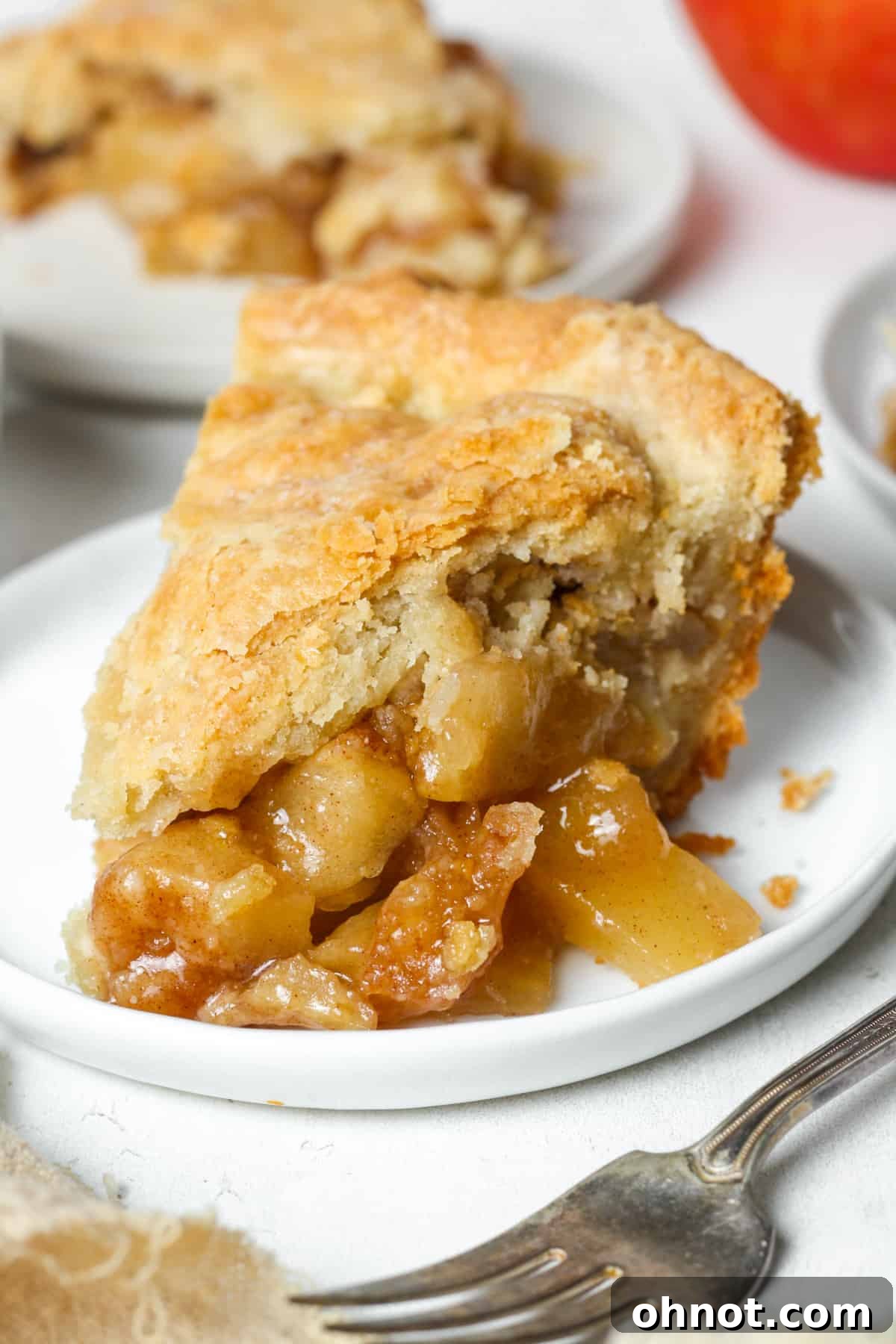
The Best Gluten-Free Apple Pie: A Classic Holiday Dessert for Everyone
Discover the ultimate gluten-free apple pie recipe that promises a perfectly buttery, flaky homemade crust and a gloriously sweet, gooey apple filling. This classic holiday dessert is entirely gluten-free, yet it tastes exactly like the traditional apple pie you know and love. In fact, this cherished recipe comes straight from my grandmother’s kitchen, a testament to its timeless appeal and authentic flavor. Ideal for Thanksgiving, Christmas, other festive holidays, or simply as a comforting dessert for any family dinner, this pie will quickly become a cherished favorite in your home.
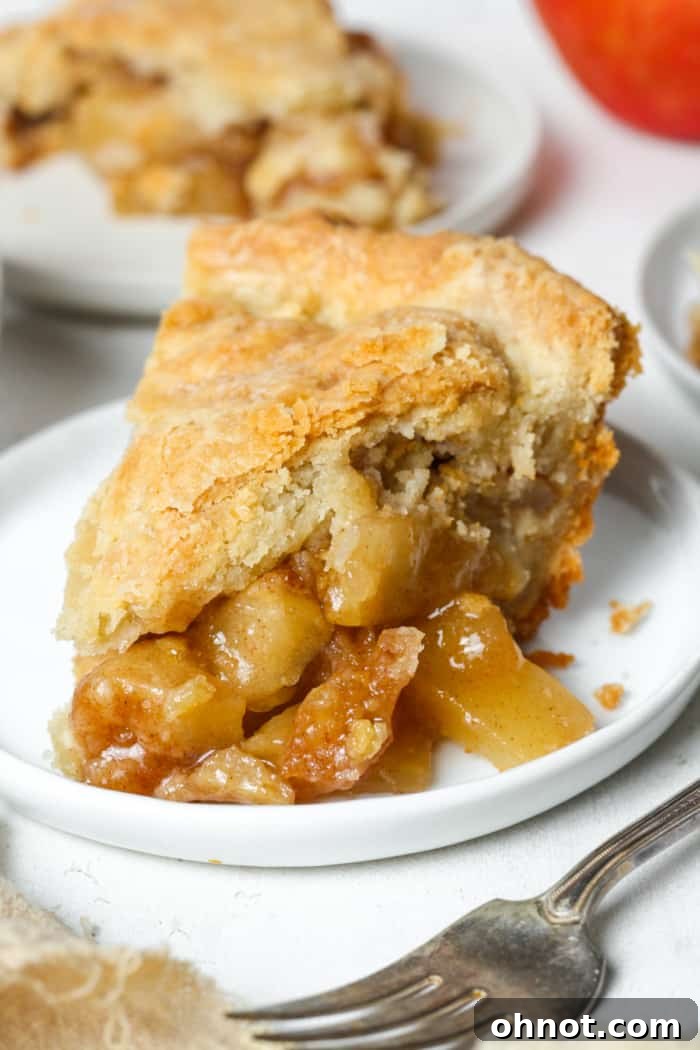
Why You’ll Adore This Gluten-Free Apple Pie Recipe
This gluten-free apple pie isn’t just a substitute; it’s a celebration of classic flavors and textures, made accessible for everyone. Here’s why this recipe will earn a permanent spot in your baking repertoire:
- Authentic Classic Flavor: Despite being entirely gluten-free, this pie delivers the rich, comforting taste of a traditional apple pie. The blend of sweet apples, warm spices, and a tender crust creates a truly nostalgic experience.
- Cherished Family Recipe: This isn’t just any recipe; it’s my grandmother’s beloved apple pie, a recipe perfected over decades and enjoyed at countless family gatherings during Thanksgiving and Christmas. It brings the warmth and tradition of generations to your table.
- Remarkably Flaky Homemade Crust: The secret to any great pie is its crust, and this gluten-free version is no exception. It’s incredibly buttery, wonderfully flaky, and surprisingly easy to make from scratch, debunking the myth that gluten-free crusts are difficult.
- Irresistibly Sweet and Gooey Filling: The filling is packed with tender apples suspended in a luscious, perfectly spiced sauce that’s sweet without being cloying. Each bite offers a delightful burst of cinnamon and brown sugar.
- Perfect for Any Occasion: Whether it’s the centerpiece of your holiday feast or a simple weeknight treat, this pie is versatile and always a crowd-pleaser. It caters to various dietary needs without compromising on flavor, making it perfect for gatherings where guests might have gluten sensitivities.
- Warm and Cozy Fall Flavors: The aroma of baked apples, cinnamon, and nutmeg will fill your home, creating an inviting and cozy atmosphere, especially during the autumn months.
- Dietary Friendly: This recipe is not only gluten-free but also naturally nut-free and egg-free, making it suitable for even more dietary restrictions.
- Flexible Crust Options: While we highly recommend the homemade crust for its superior taste and texture, you can also use a high-quality store-bought gluten-free pie crust to save time without sacrificing too much quality.
- Explore More Seasonal Delights: If you love this apple pie, be sure to try our Gluten-Free Apple Pie Cookies for a quick bite, or delve into other autumnal favorites like our Healthy Pumpkin Pie, Gluten-Free Pumpkin Pie, or Sweet Potato Pie.
Essential Ingredients & Smart Substitutions for Your Gluten-Free Apple Pie
Crafting the perfect gluten-free apple pie begins with selecting the right ingredients. Below are the key components and helpful substitutions to ensure your pie is a resounding success. For a complete list of measurements and detailed instructions, please refer to the recipe card below.
For the Flaky Pie Crust:
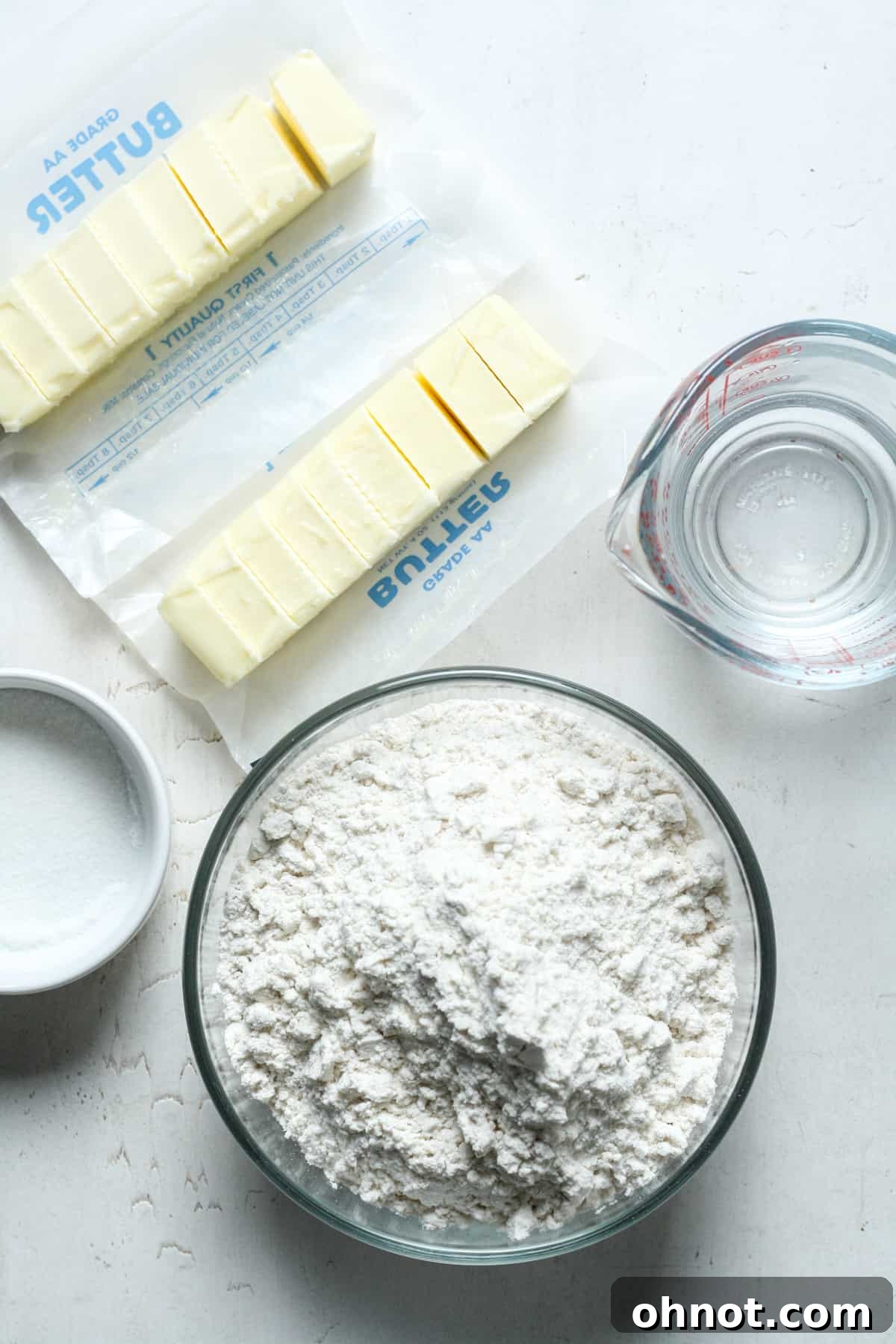
Gluten-Free 1-to-1 Flour: This is the foundation of our homemade gluten-free pie crust, providing structure and that desirable tender crumb. Brands like King Arthur Flour and Bob’s Red Mill offer excellent 1-to-1 gluten-free flour blends that work beautifully in this recipe. These blends are specifically designed to mimic traditional wheat flour and typically contain xanthan gum, which is crucial for gluten-free baking. For those following a Paleo diet, this recipe can also be adapted with two Paleo Pie Crusts, offering a slightly different but equally delicious result.
Sugar (Granulated): A small amount of granulated sugar in the crust contributes to its overall flavor and helps achieve that beautiful golden-brown color during baking. It provides a subtle sweetness that complements the rich apple filling.
Cold Unsalted Butter: This is arguably the most crucial ingredient for a flaky crust. Cut into 1-inch cubes and kept very cold, the butter creates steam pockets during baking, resulting in those coveted flaky layers. It’s imperative not to use softened or melted butter, as this will lead to a dense, tough crust. If you need a dairy-free option, a good quality plant-based butter substitute that is specifically designed for baking can work, but ensure it is kept very cold.
Cold Water: Just like the butter, the water needs to be ice cold. This helps prevent the butter from melting too quickly as you mix the dough, further contributing to the flaky texture. Add it gradually to achieve the right consistency without overhydrating the dough.
Sea Salt: A pinch of fine sea salt enhances the flavors in the crust, balancing the sweetness and richness of the butter. You can omit it if you’re using salted butter, but generally, unsalted butter with added salt gives you better control over the flavor profile.
For the Sweet Apple Filling:
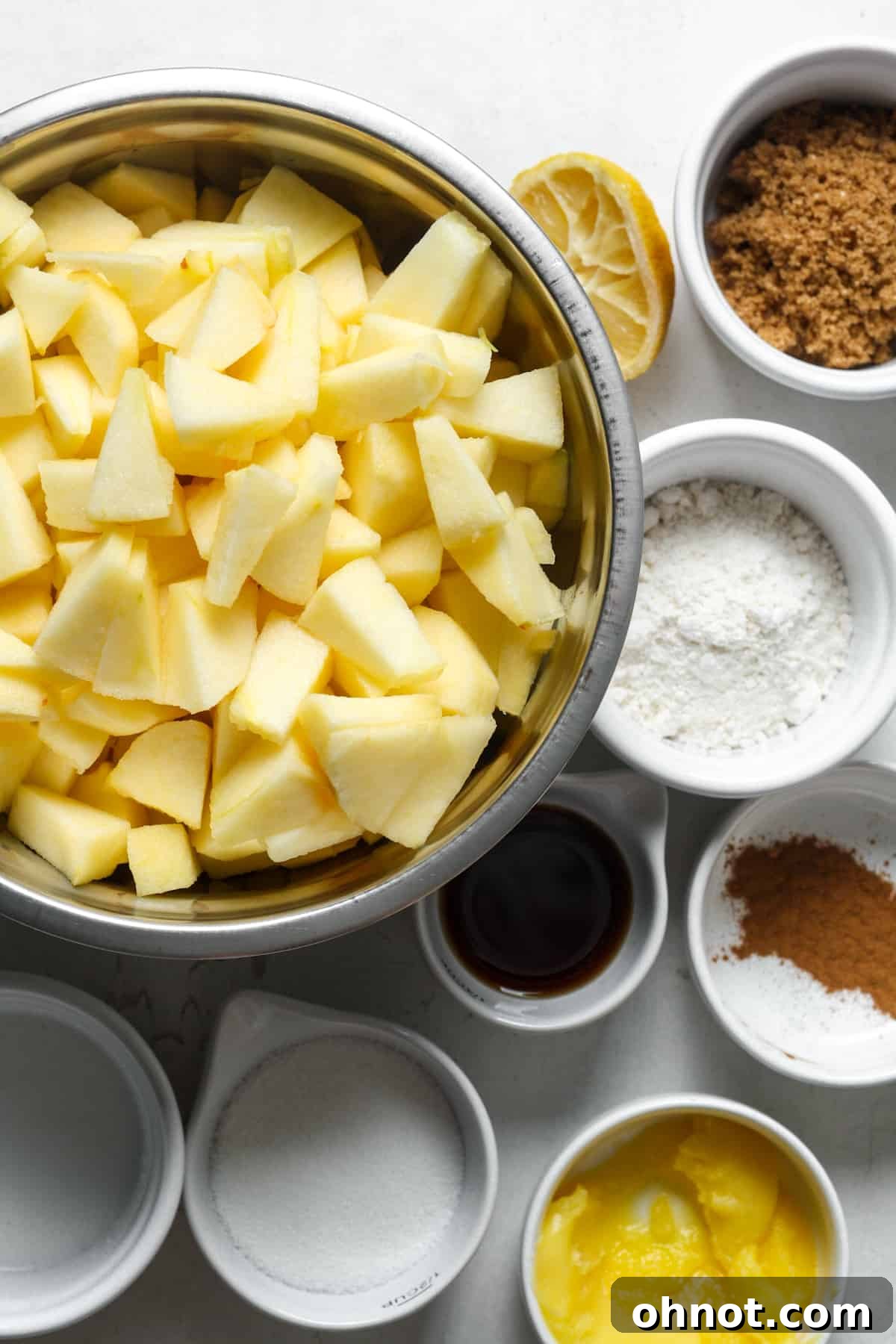
Apples (Variety is Key!): The heart of any apple pie is, of course, the apples. For the best flavor and texture, use a variety of apples. Granny Smith apples are excellent for their tartness and ability to hold their shape, providing a nice contrast to sweeter varieties. For softer, tender apples that break down beautifully, consider MacIntosh or Cortland. Honeycrisp apples also offer a fantastic balance of sweetness and crispness. Ensure you peel and slice them thinly (about ¼-inch thick) to guarantee they soften evenly during baking. Larger chunks of apples tend to remain firm, creating an undesirable texture.
Brown Sugar: This provides a deeper, caramel-like sweetness to the filling, complementing the apples and spices beautifully. For a refined sugar-free alternative, coconut sugar or maple sugar can be used. Adjust the amount to your taste preference, keeping in mind the sweetness of your chosen apples.
Gluten-Free 1-to-1 Flour: A small amount of gluten-free flour is used to thicken the apple filling, preventing it from becoming too watery. It creates that perfectly gooey, sauce-like consistency that clings to the apples. If you prefer, cornstarch or tapioca flour can be used as alternatives for thickening, especially if you want a filling that’s slightly more translucent.
Vanilla Extract: A touch of pure vanilla extract adds a wonderful depth and “homemade” warmth to the filling, subtly enhancing the overall flavor profile. It brings out the best in the apples and spices.
Lemon Juice: Fresh lemon juice serves a dual purpose: it brightens the flavor of the apples and, more importantly, prevents them from browning during preparation, keeping your filling visually appealing and fresh. It also adds a slight tang that cuts through the sweetness.
Cinnamon & Nutmeg: These are the quintessential fall spices that define the classic apple pie flavor. Their warm, aromatic notes are essential. Feel free to adjust the amounts to your personal preference; a little extra cinnamon never hurt anyone!
Cubed Butter for Filling: Placing small cubes of cold butter on top of the apple filling before adding the top crust is a grandmother-approved trick! As the butter melts, it bastes the apples, adding incredible moisture, richness, and flavor to the filling. This makes for an even more decadent and tender fruit center.
For Finishing Touches:
Milk (for brushing): A light brush of milk (dairy or non-dairy) on the top crust before baking helps it achieve a beautiful golden sheen and encourages a crispier texture. This step is purely aesthetic but highly recommended for that bakery-quality finish.
Granulated Sugar (for sprinkling): A final sprinkle of granulated sugar on the brushed top crust adds a lovely sparkle and creates a delicate, crunchy texture on the surface of the pie, contrasting wonderfully with the soft filling and flaky crust.
Unforgettable Taste & Texture of Our Gluten-Free Apple Pie
Prepare to be amazed! This gluten-free apple pie truly captures the essence of its traditional counterpart, making it virtually indistinguishable. The crust is a symphony of buttery richness, delivering an exquisite melt-in-your-mouth experience that is both tender and incredibly flaky. It crumbles delicately with each bite, providing the perfect counterpoint to the vibrant filling.
The heart of the pie, the apple filling, is a delightful blend of warm, comforting flavors. You’ll savor the sweet tang of perfectly cooked apples, enveloped in a luscious, gooey sauce infused with the cozy spices of brown sugar and cinnamon. The apples transform into a wonderfully soft and tender consistency, ensuring that every forkful is pure autumnal bliss. This pie proves that opting for gluten-free doesn’t mean sacrificing on the beloved taste and texture of a classic dessert.
Step-by-Step Guide to Baking the Perfect Gluten-Free Apple Pie
Crafting this exquisite gluten-free apple pie is a rewarding experience. Follow these detailed steps to achieve a perfectly flaky crust and a sumptuously sweet filling that will impress everyone.
Step 1: Prepare the Gluten-Free Pie Crust Dough
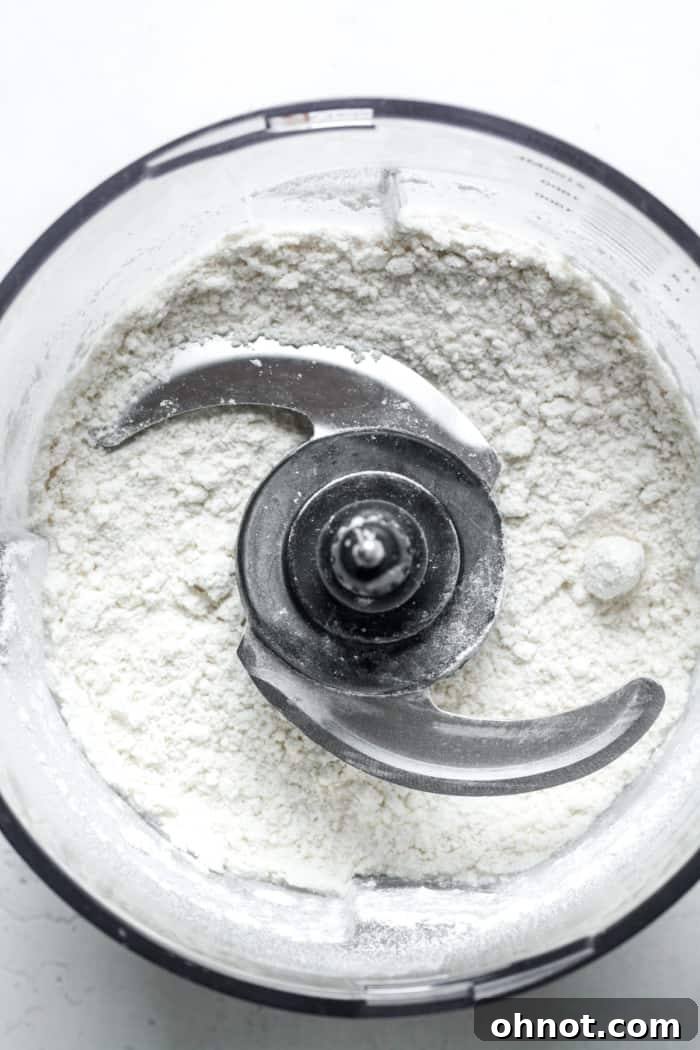
Begin by preparing your homemade gluten-free pie crusts. In the bowl of a food processor, combine the gluten-free 1-to-1 flour, granulated sugar, and a pinch of sea salt. Pulse these dry ingredients together just 2 times to ensure they are well combined.
Step 2: Incorporate Butter and Water for Flakiness
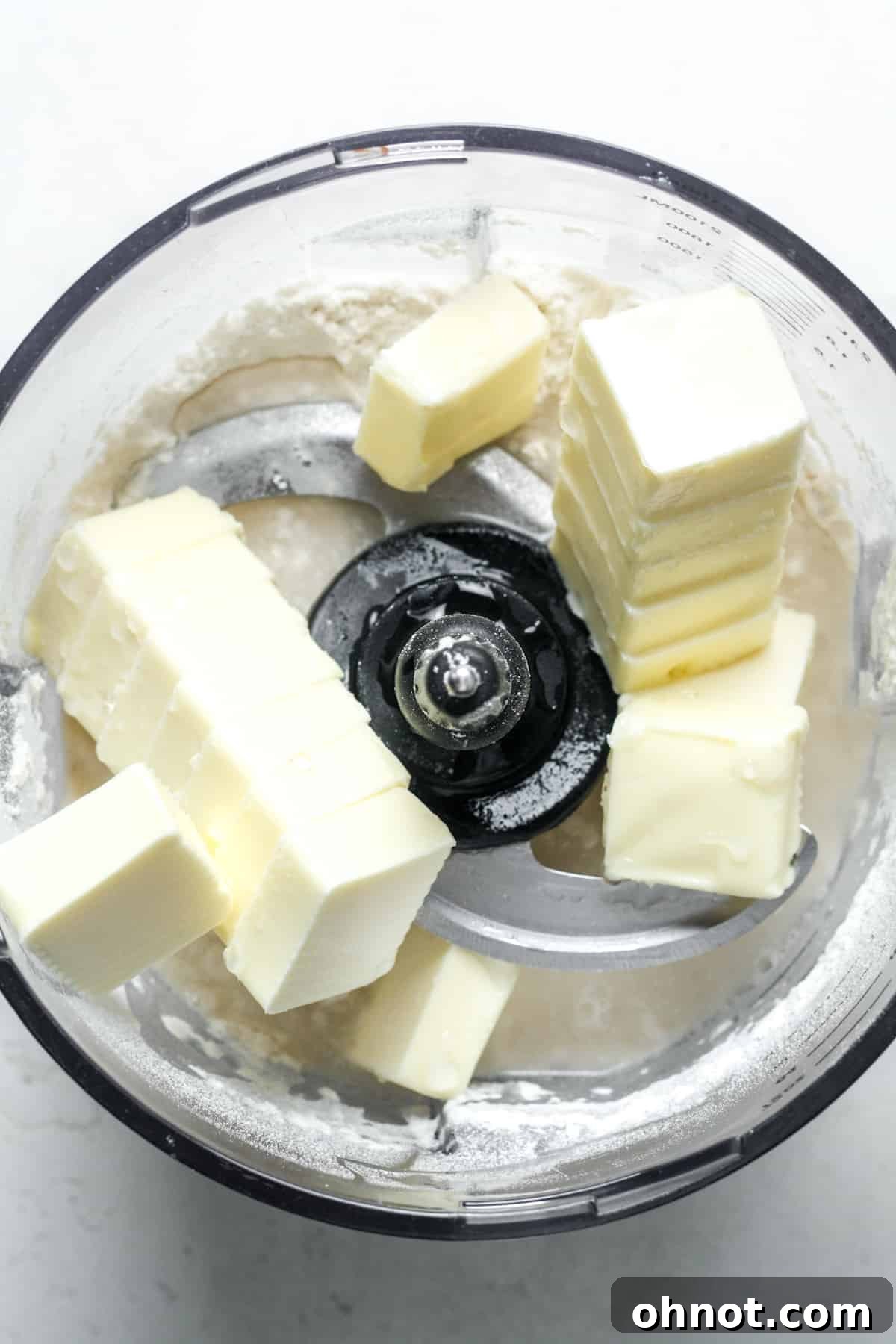
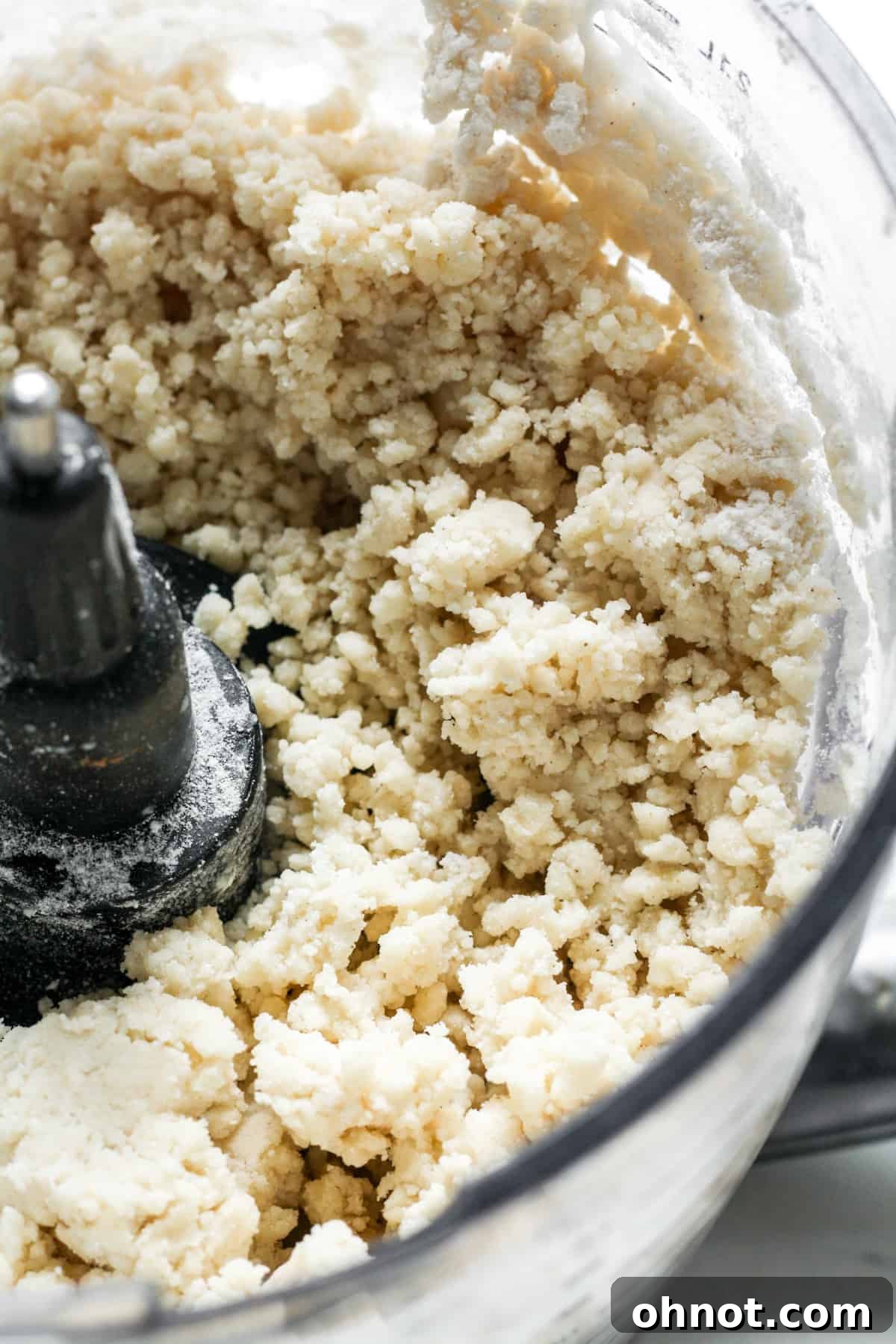
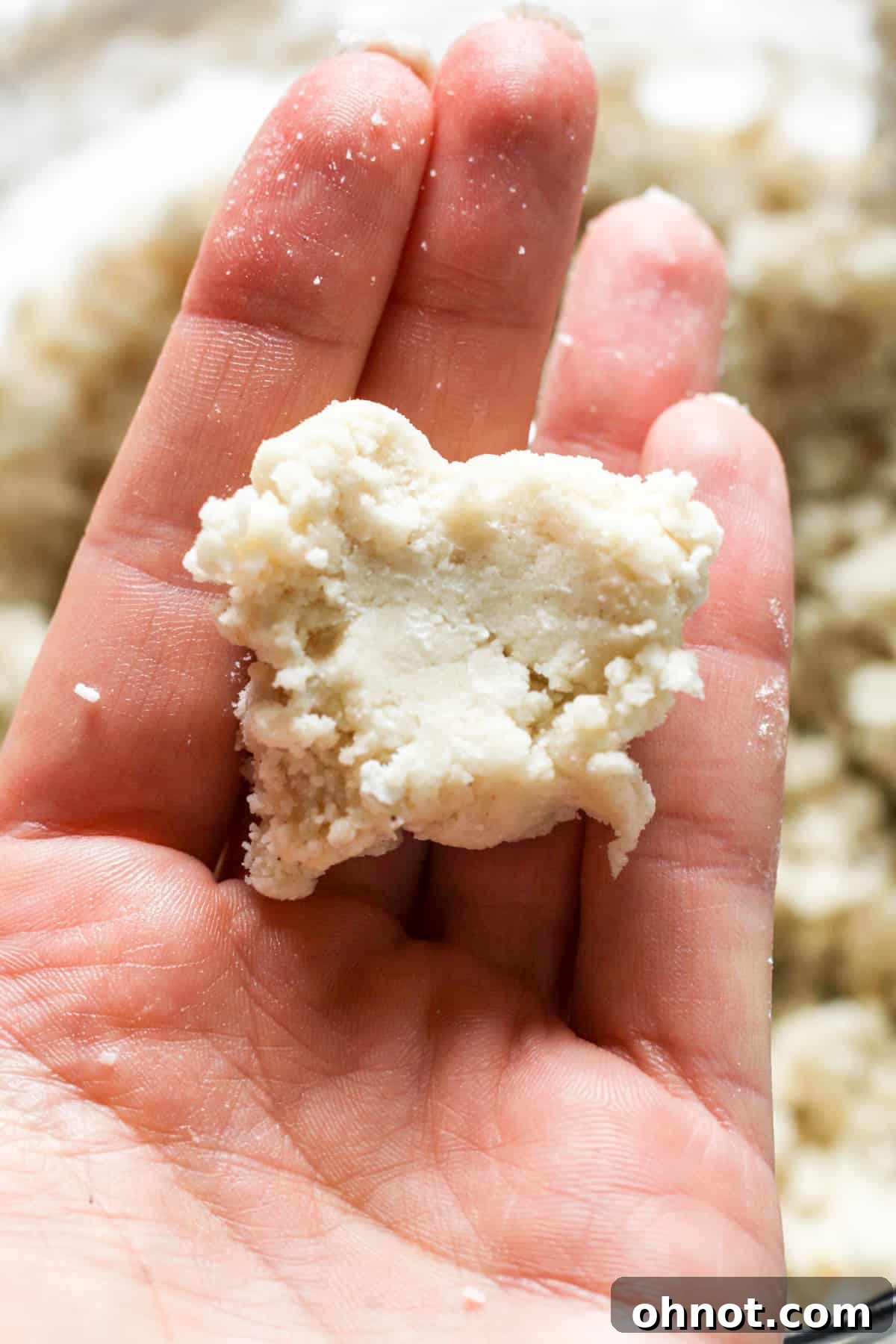
Next, add the cubed cold unsalted butter and the cold water to the food processor. Pulse the mixture until it forms a crumbly texture. The dough should be just moist enough that when you pinch a small amount between your fingers, it sticks together. Be careful not to over-process, as this can warm the butter too much, hindering the flakiness.
Step 3: Chill the Dough
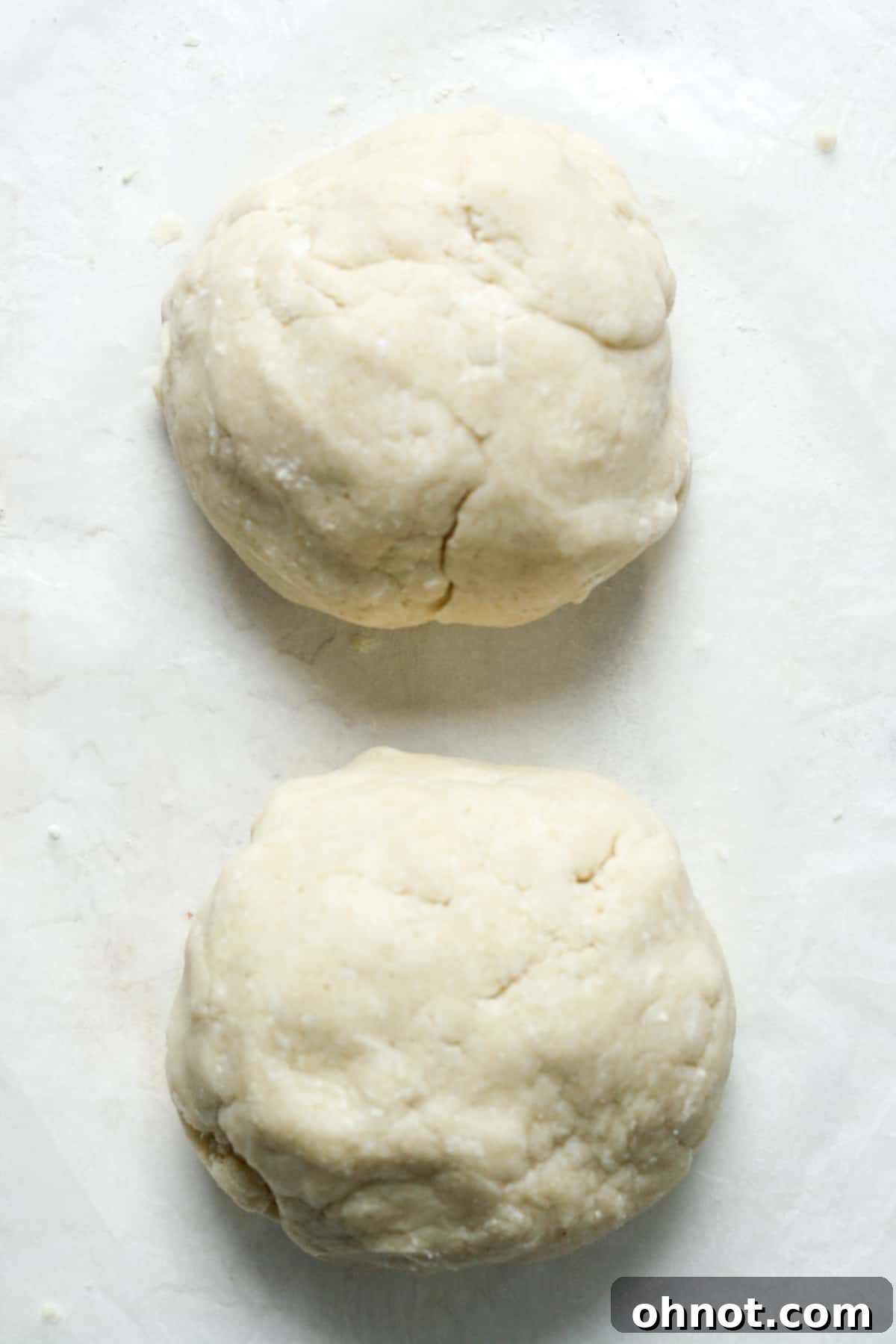
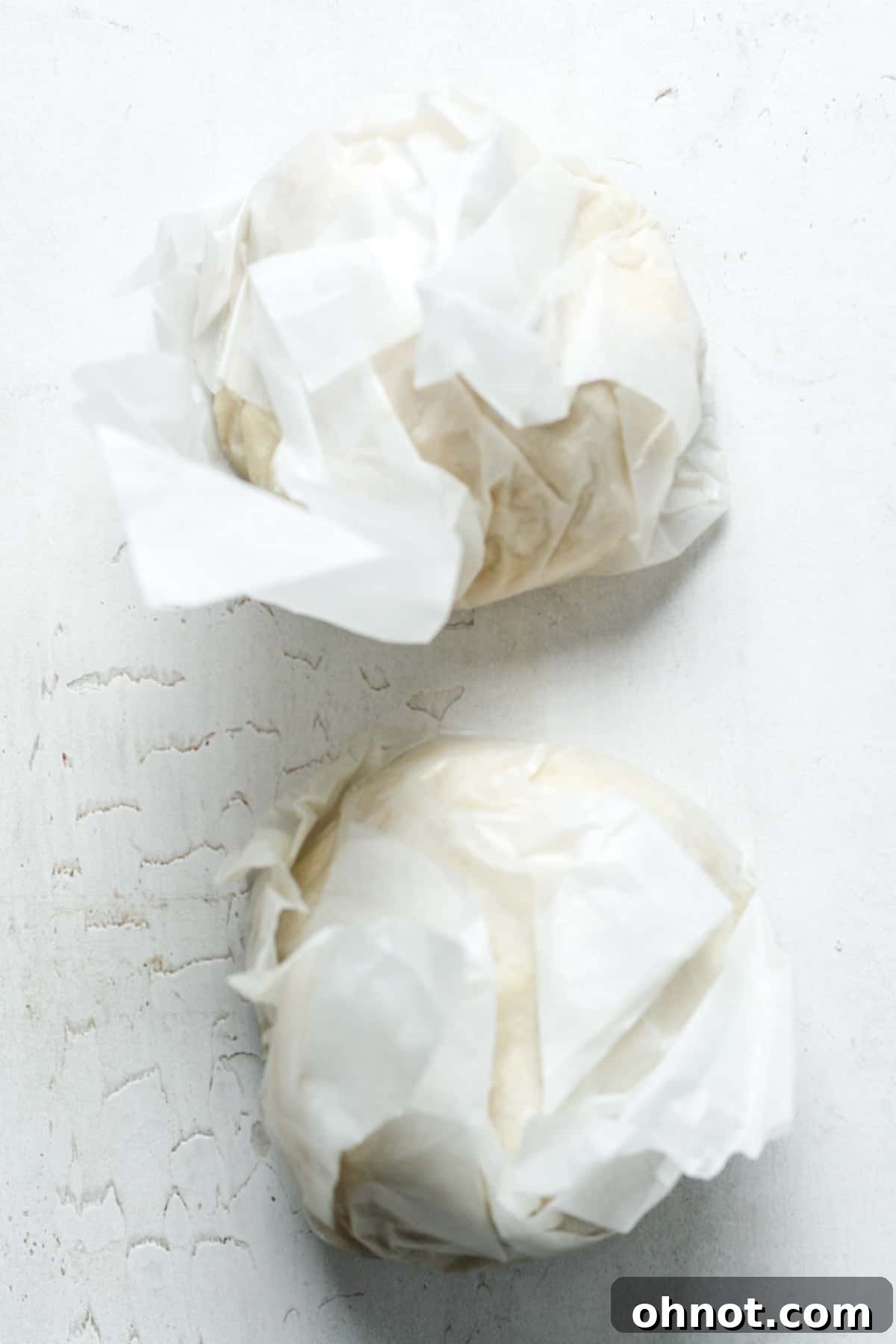
Remove the dough from the food processor and divide it into two equal-sized balls. Gently flatten each ball into a disc shape, then wrap each disc tightly in plastic wrap. Refrigerate the dough for at least 1 hour. Chilling is crucial as it allows the gluten-free flour to fully hydrate and the butter to firm up, making the dough easier to roll and ensuring a flaky crust.
Step 4: Prepare the Apple Filling
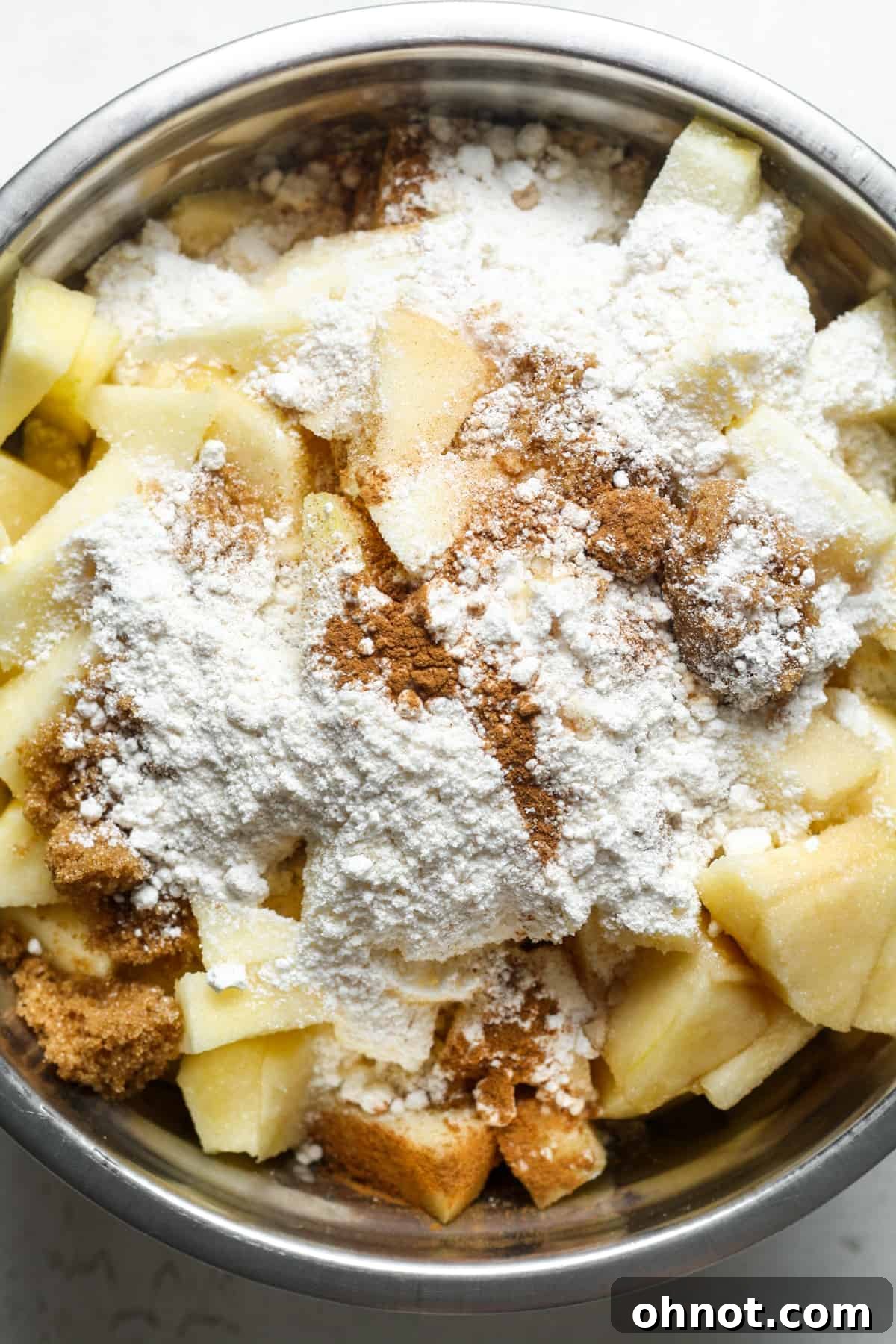
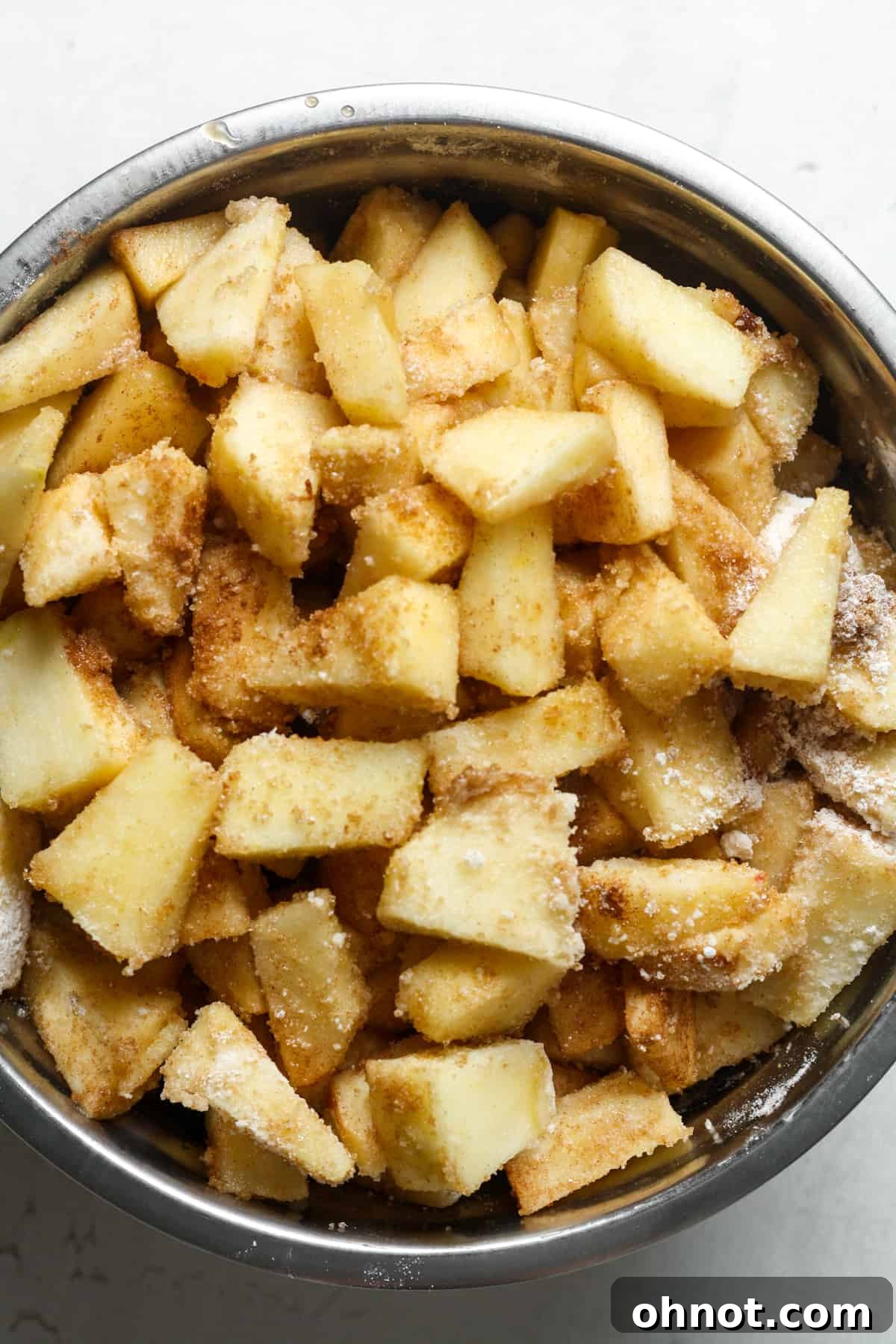
While the pie crust dough is chilling in the refrigerator, it’s the perfect time to prepare the luscious apple filling. In a large mixing bowl, combine the thinly sliced apples, vanilla extract, lemon juice, brown sugar, gluten-free 1-to-1 flour, cinnamon, nutmeg, and a pinch of sea salt. Gently toss all the ingredients together until the apple slices are thoroughly and evenly coated with the spice and sugar mixture. Set this bowl aside to allow the flavors to meld.
Step 5: Preheat Oven and Retrieve Dough
Once your dough has completed its 1-hour chilling period, remove it from the fridge. At this point, preheat your oven to 400 degrees Fahrenheit (200 degrees Celsius). A hot oven is essential for the initial bake to set the crust and begin the cooking process rapidly.
Step 6: Roll Out the Pie Crusts
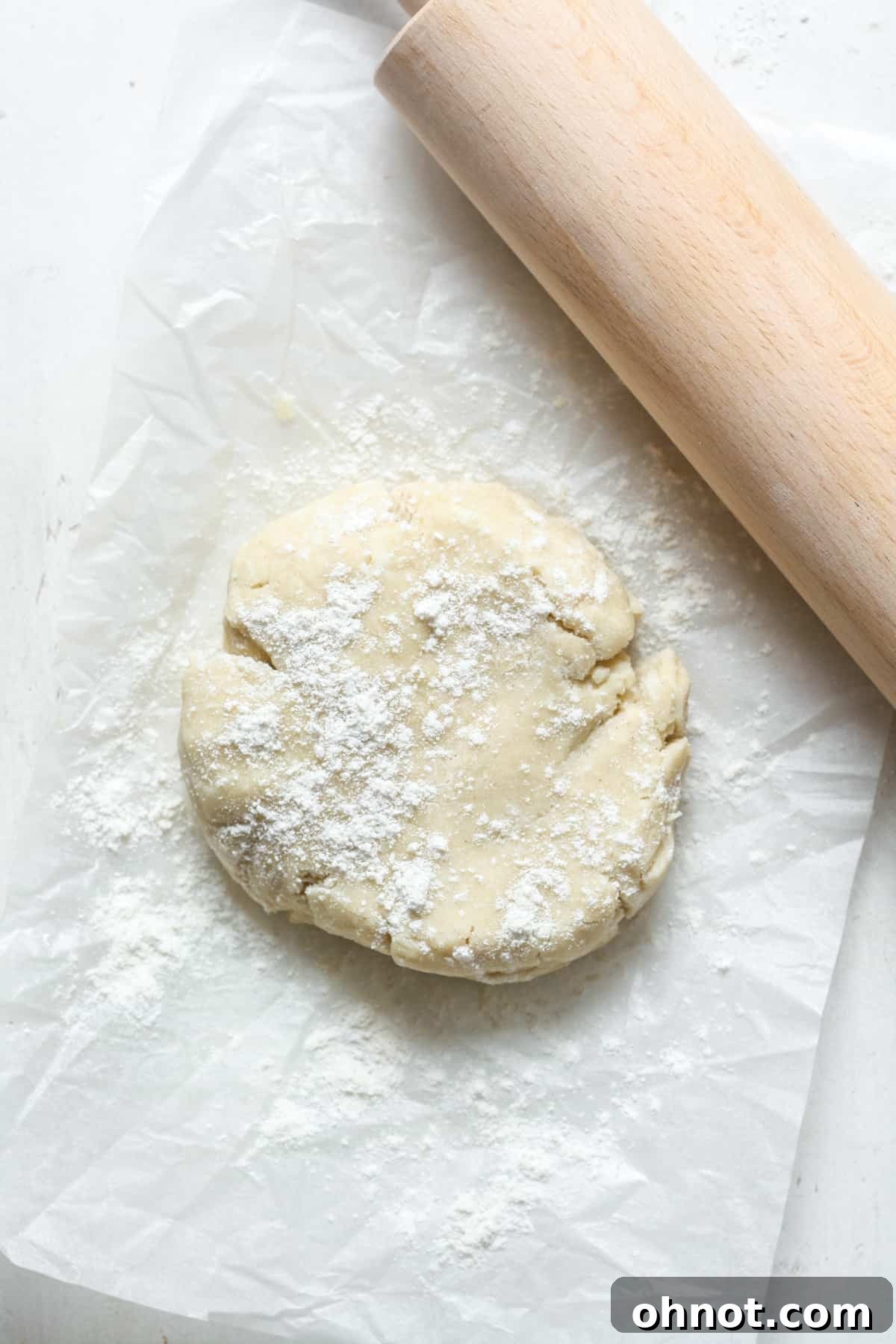
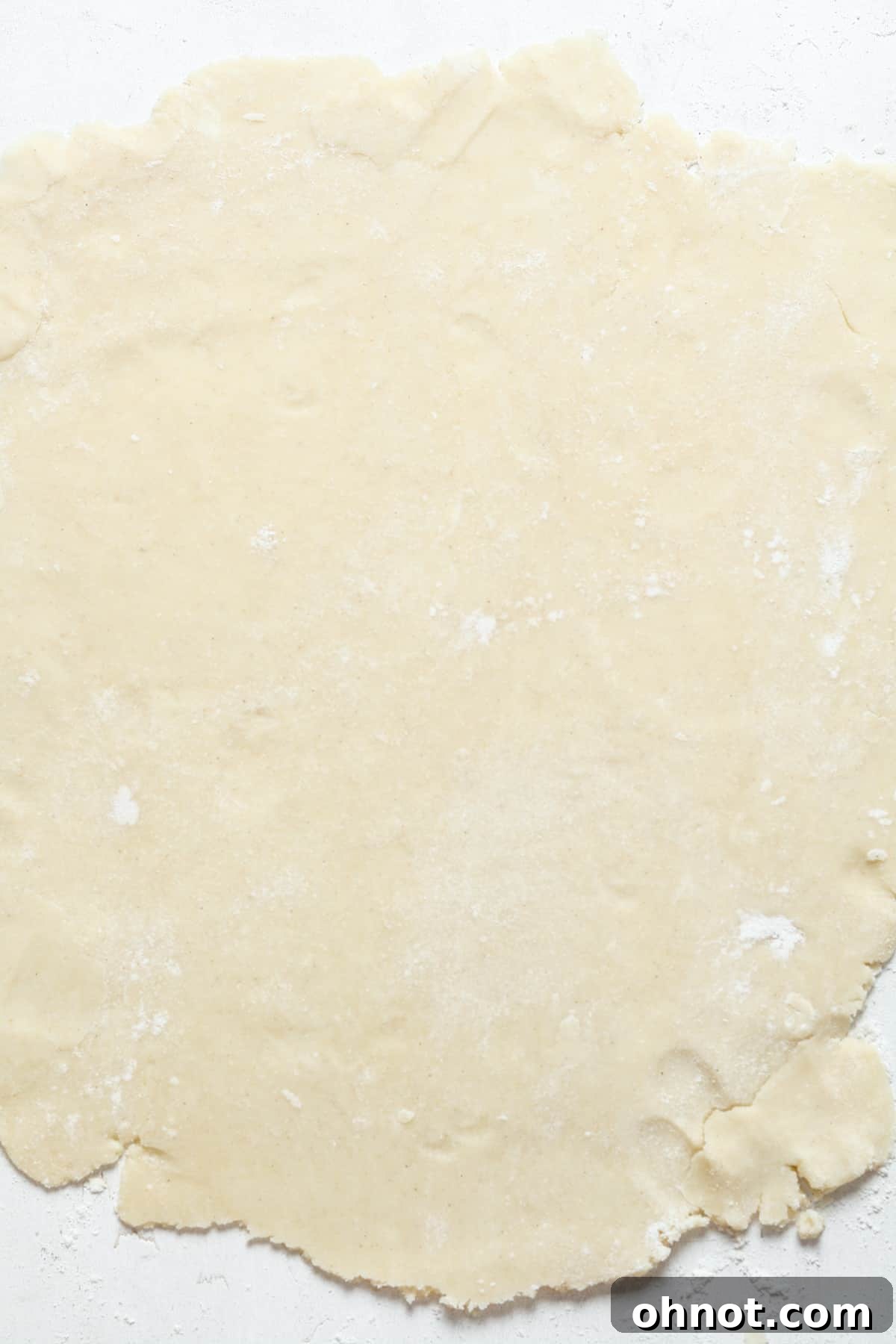
On a lightly floured surface (using gluten-free flour) or between two sheets of parchment paper, roll out one disc of pie dough at a time. Work gently but efficiently. Gluten-free dough can sometimes be more delicate than traditional dough, so take your time. If cracks appear, simply press them back together with your fingers. Continue rolling until each crust is about 12 inches in diameter and uniformly thin.
Step 7: Line the Pie Plate
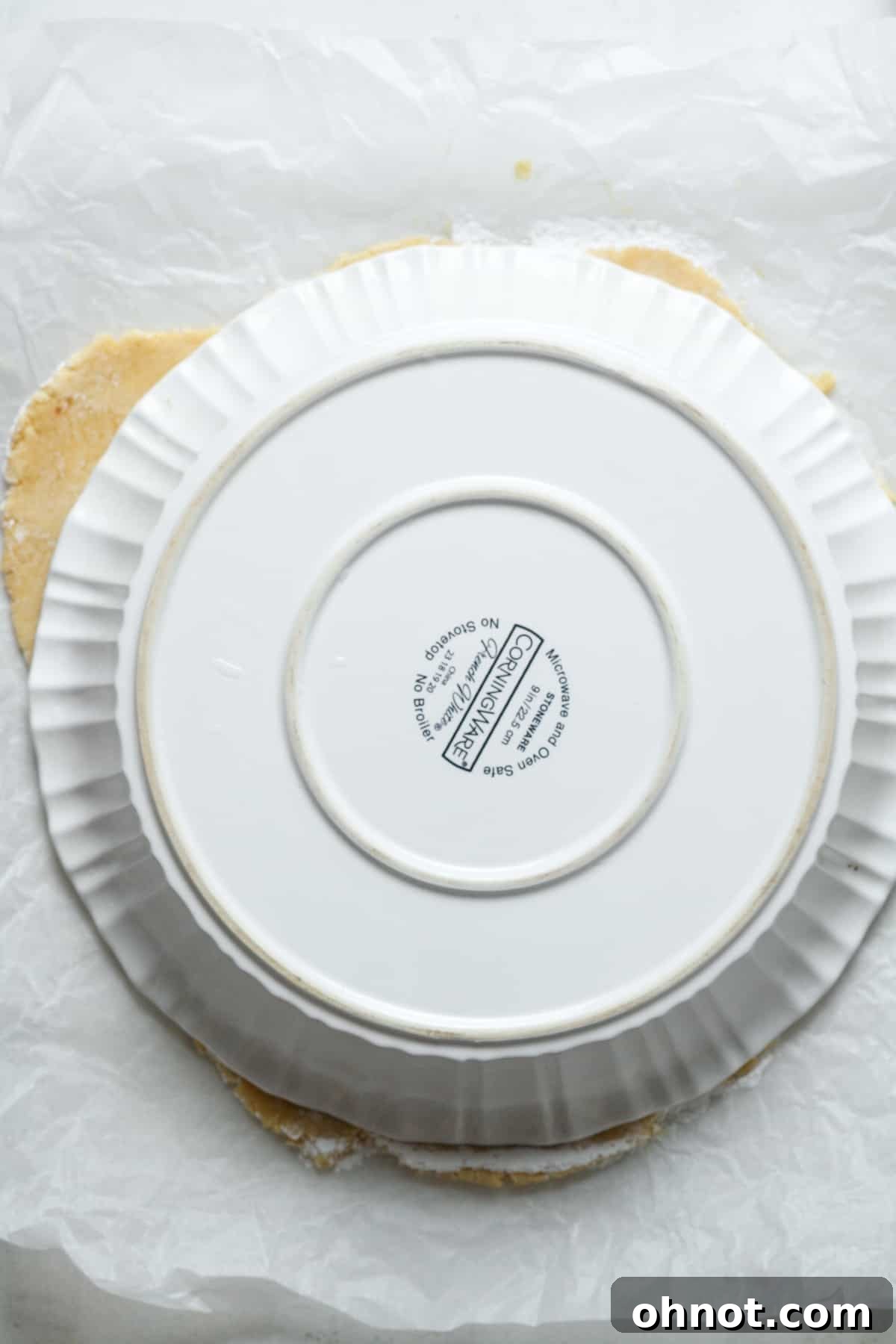
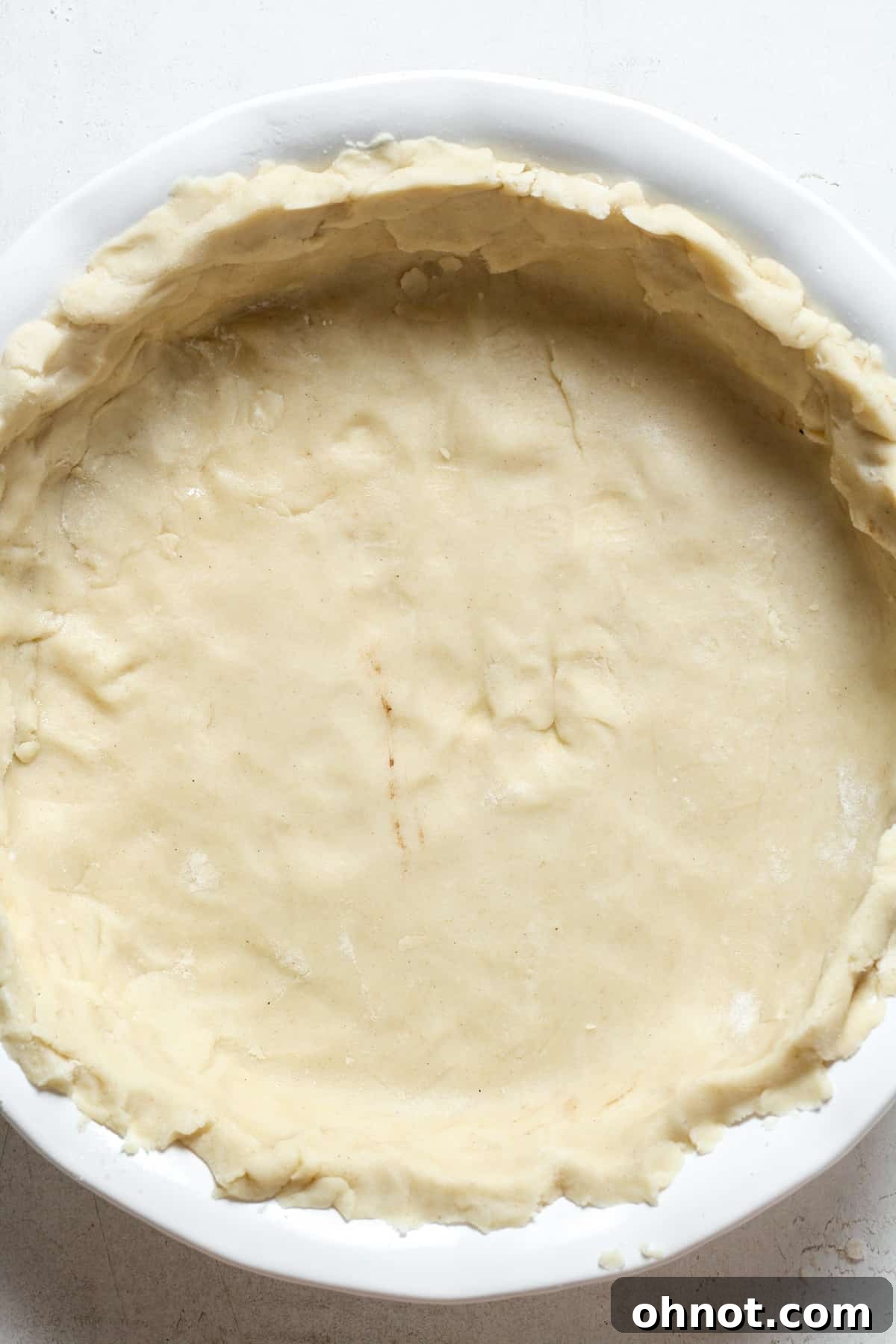
Carefully transfer one of the rolled-out pie crusts into a 9-inch pie plate. The easiest method is to gently roll the dough around your rolling pin and then unroll it over the pie plate. Alternatively, if using parchment paper, you can place the pie plate upside down on the dough, then gently invert both so the dough falls into the plate. Press it gently into the bottom and up the sides of the plate, being careful not to stretch the dough.
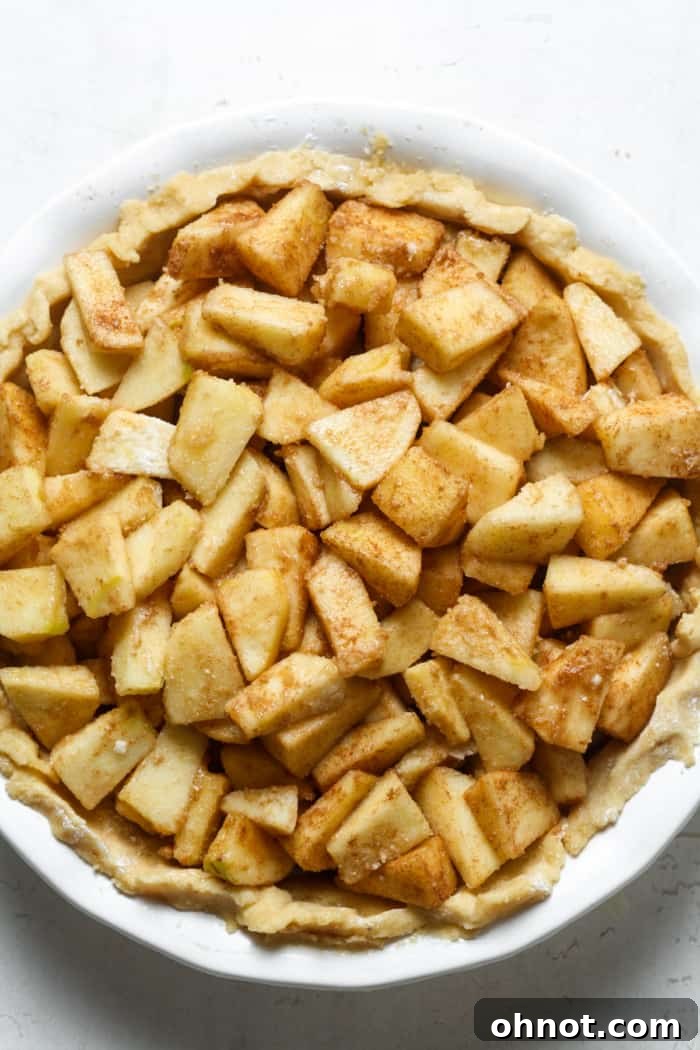
Step 8: Add the Apple Filling
Once your bottom crust is in place, gently spoon the prepared apple mixture over the unbaked pie crust. Distribute the apples evenly, ensuring a consistent layer across the entire pie.
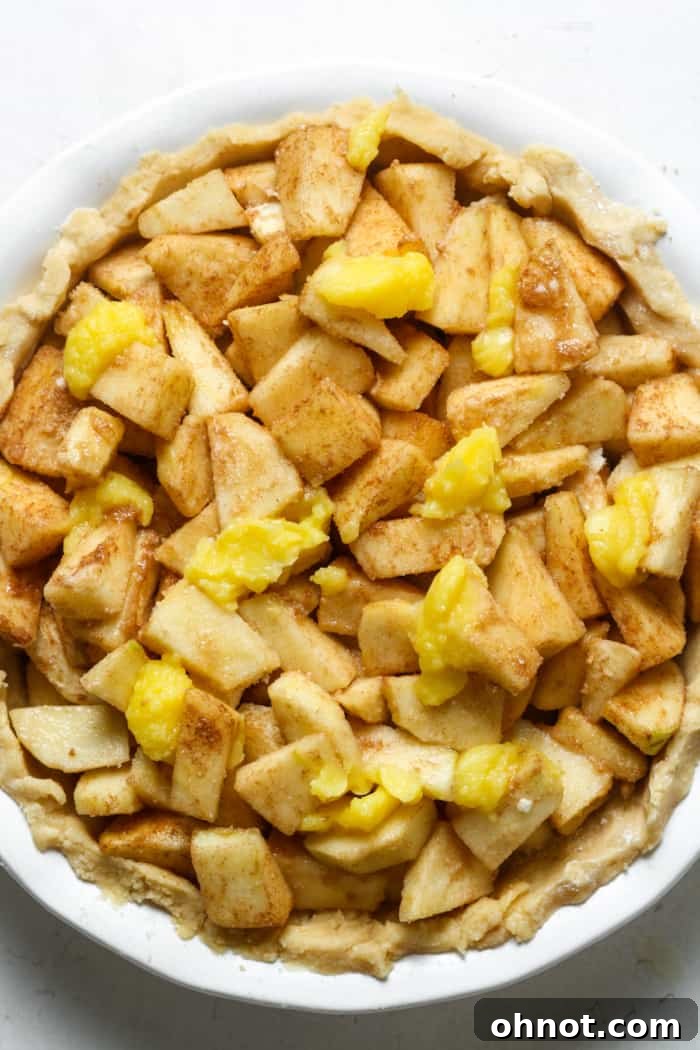
Step 9: Dot with Butter for Extra Moisture
Now, take the 6 tablespoons of cubed cold butter and strategically place them over the top of the apple filling. Spread them out somewhat evenly. This step, a secret from my grandmother, ensures maximum moisture and an incredibly rich, flavorful filling as the butter melts and infuses into the apples during baking.
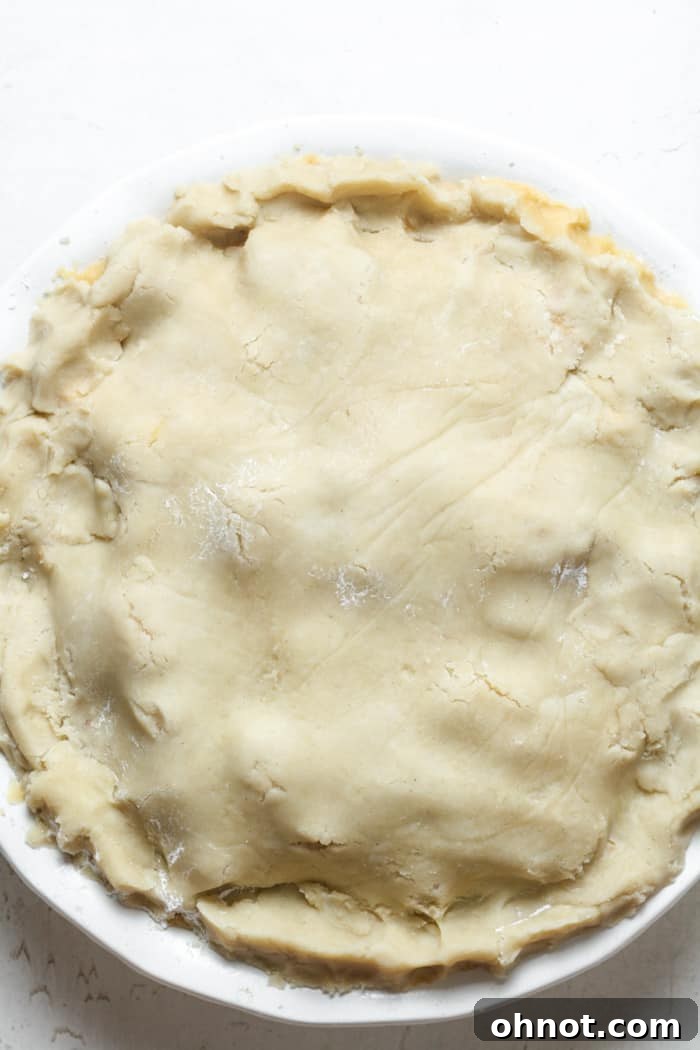
Step 10: Place the Top Crust
Very carefully, position the second rolled-out pie crust over the top of the apple filling. Take your time to align it well with the bottom crust.
Step 11: Seal and Vent the Pie
Crimp the edges of both pie crusts together using your fingers or a fork to create a decorative and secure seal. This prevents the filling from bubbling out excessively during baking. Next, make a small slit or several small slits in the center of the top crust. These vents allow steam to escape, preventing the crust from puffing up and ensuring even cooking of the filling.
Step 12: Add a Golden Finish
Gently brush the entire top pie crust with a little milk. Immediately after, sprinkle granulated sugar evenly over the milk-brushed surface. This step is key for achieving that beautiful golden-brown color and a subtle crunchy texture on the crust as it bakes.
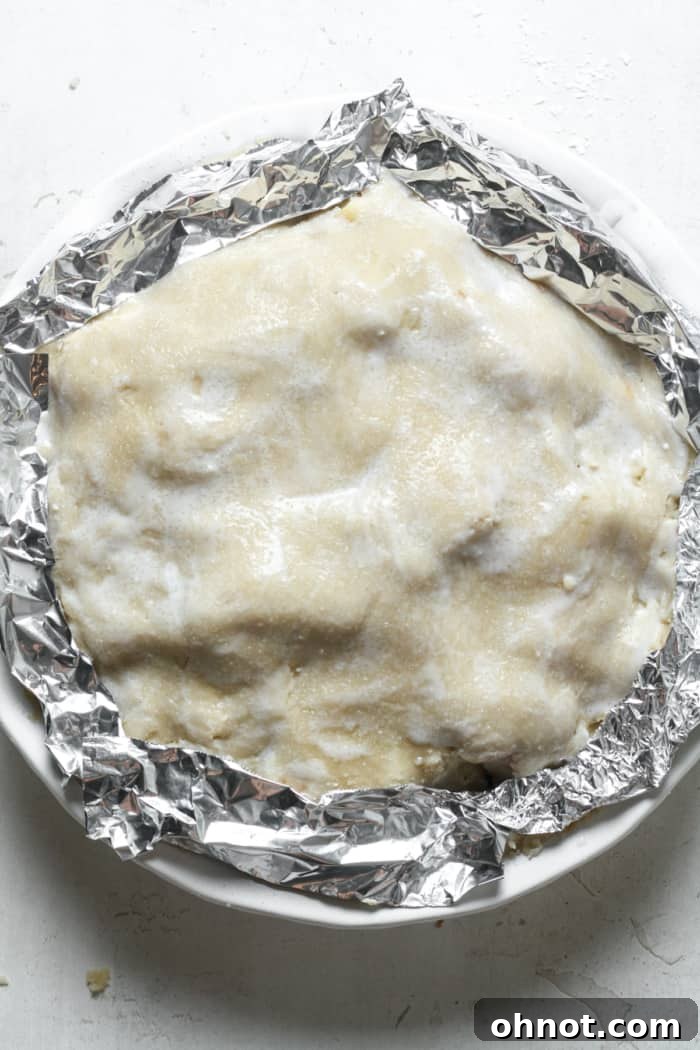
Step 13: Protect the Edges
To prevent the pie crust edges from burning, especially in a gluten-free pie which can brown quicker, place pastry shields or strips of aluminum foil along the crimped edges of the pie. You can remove these halfway through baking or keep them on for the entire duration if your crust tends to darken very quickly.
Step 14: Bake to Golden Perfection
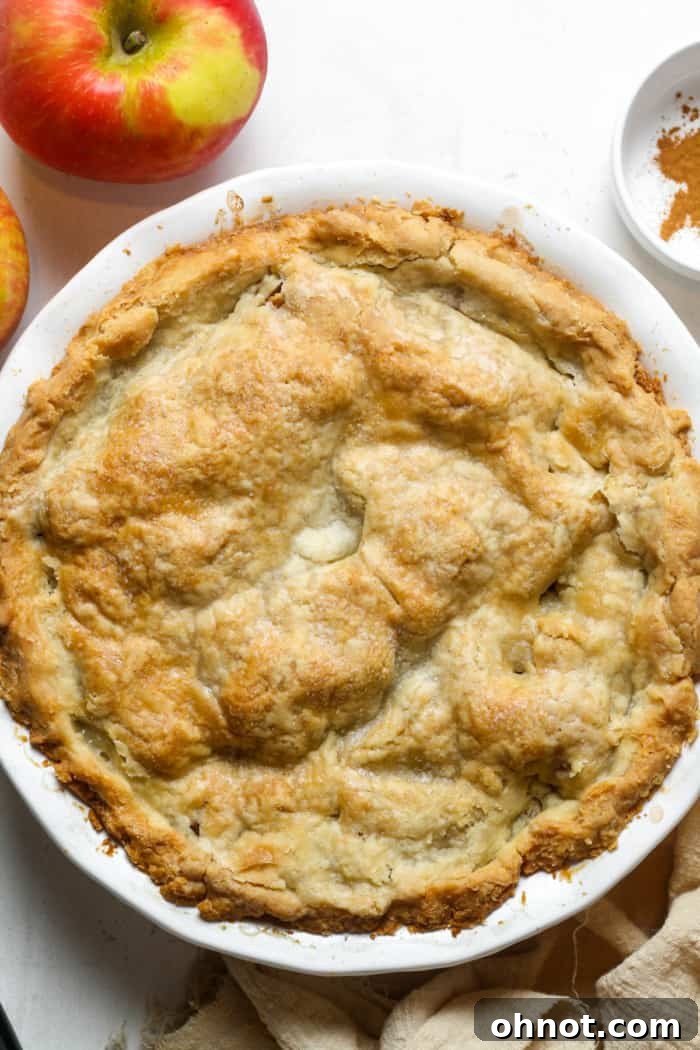
Place the prepared pie in your preheated oven. Bake at 400 degrees Fahrenheit (200 degrees Celsius) for the first 20 minutes. This initial high heat helps create a flaky crust. After 20 minutes, reduce the oven temperature to 350 degrees Fahrenheit (175 degrees Celsius) and continue baking for an additional 40 to 50 minutes. The pie is done when the top crust is a beautiful golden brown and the filling is visibly bubbly around the vents, indicating the apples are tender and the sauce has thickened.
Step 15: Cool Completely Before Slicing
Once baked, carefully remove the pie from the oven. If you used pastry shields or foil, remove them at this point. It’s crucial to allow the gluten-free apple pie to cool on a wire rack for at least a couple of hours, or even longer, before attempting to slice into it. This cooling period allows the filling to set properly, preventing a runny pie and ensuring clean, beautiful slices. Patience is key for the perfect pie presentation!
Expert Tips & Tricks for a Flawless Gluten-Free Apple Pie
Achieving a perfect gluten-free apple pie is simpler than you think with a few key strategies. Follow these expert tips for an utterly delicious and visually stunning dessert every time:
- Precision in Measuring: For gluten-free baking, accuracy is paramount. Always measure your ingredients carefully, especially the flour, to ensure the correct dough consistency and filling thickness. Using a kitchen scale for flour is highly recommended.
- Visual Guidance: Refer to the step-by-step photos provided throughout the blog post. They offer excellent visual cues for each stage of the process, particularly helpful for gluten-free dough which can behave differently from traditional dough.
- Master the Crust: If you’re new to making homemade gluten-free pie crusts, I highly recommend reading our dedicated Gluten-Free Pie Crust Recipe post. It’s packed with detailed step-by-step photos, along with more in-depth tips and tricks to guarantee a flaky, tender crust.
- Store-Bought Shortcut: Don’t have time to make a crust from scratch? No problem! High-quality store-bought gluten-free pie crusts are a fantastic option. Just be sure to follow the package directions for baking.
- Apple Variety Matters: For the most complex flavor and appealing texture, use a mix of apple types. Tart Granny Smith apples provide structure and brightness, while sweeter, softer varieties like MacIntosh or Cortland break down beautifully to create a smooth, rich filling. Always peel and slice your apples thinly (about 1/4 inch thick) to ensure they soften consistently during baking. Large chunks may remain firm.
- The Butter Secret: My grandmother’s favorite tip, and one I swear by, is to dot the top of the apple layer with small slices or cubes of cold butter before adding the top crust. This butter melts down, basting the apples as the pie bakes, infusing the filling with incredible moisture and a luxurious flavor.
- Prevent Burnt Edges: To protect the delicate edges of your pie crust from over-browning or burning, use pastry shields or carefully fashioned strips of aluminum foil. Apply them before baking and remove them about 15-20 minutes before the end of baking time to allow the edges to lightly brown.
- Golden Crust Finish: For that perfect golden, slightly crispy top crust, brush it lightly with milk (dairy or non-dairy) and then sprinkle generously with granulated sugar just before baking. This creates a beautiful, shiny caramelization and a pleasant textural contrast.
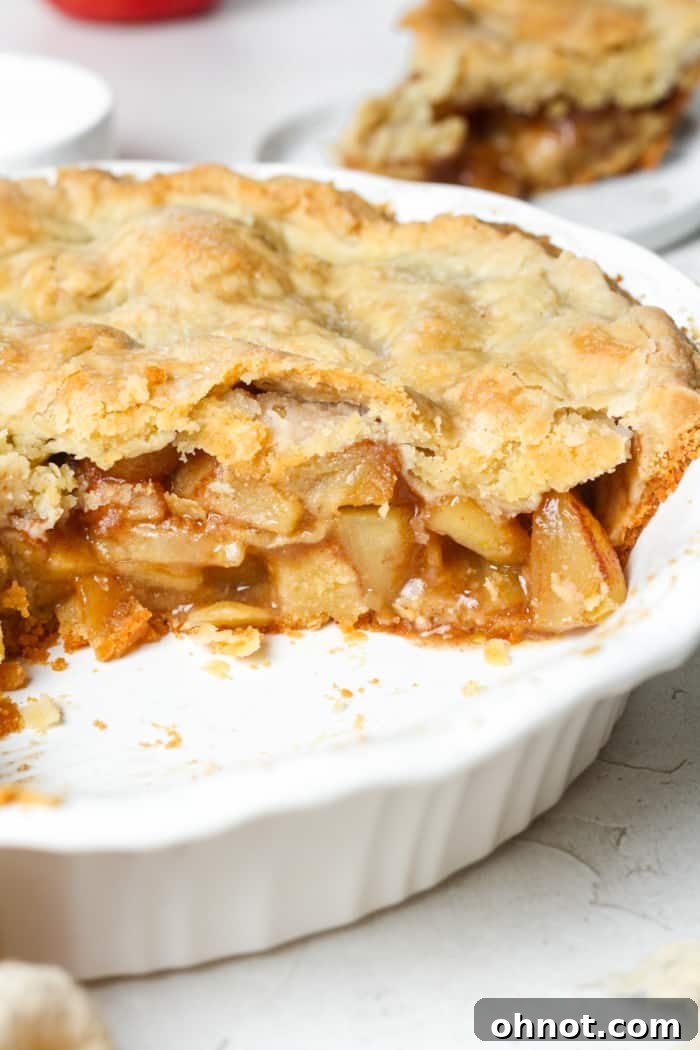
- Patience is Key for Setting: This is perhaps the most important tip: allow your homemade gluten-free apple pie to cool for at least 2 hours, preferably longer, before slicing. This extended cooling period allows the hot, bubbly filling to set and firm up, preventing it from spilling out and ensuring clean, picture-perfect slices.
How to Serve & Store Your Gluten-Free Apple Pie
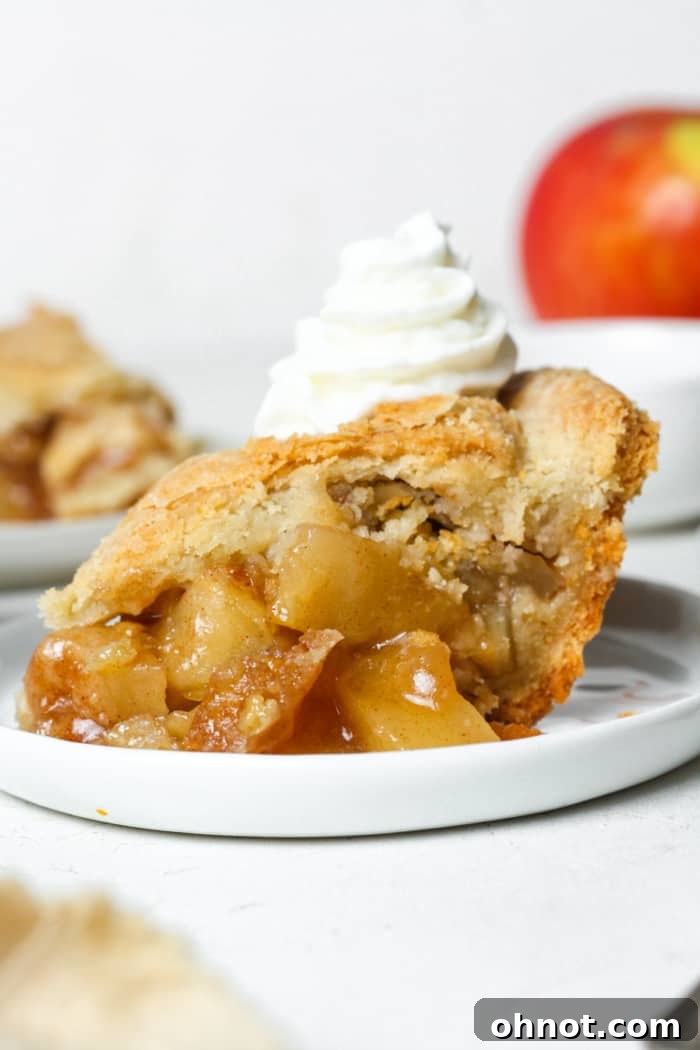
Once your incredible gluten-free apple pie has cooled sufficiently (at least two hours), it’s ready to be served and enjoyed! The cooling period is essential for the filling to set properly, ensuring each slice holds its shape beautifully.
This pie is absolutely divine on its own, allowing the pure flavors of apple and warm spices to shine. For an extra touch of indulgence, serve it warm with a scoop of creamy vanilla ice cream that melts enticingly into the warm filling, or a dollop of freshly whipped cream. It’s equally delicious served chilled, offering a different textural experience with a firmer filling. The choice is yours!
To store any leftover pie, cover it loosely with plastic wrap or foil. It can be kept at room temperature for up to 1 day. For longer storage, transfer the covered pie to the refrigerator, where it will stay fresh for up to 4 days. If reheating, a quick warm-up in the oven or microwave can bring back some of that freshly baked warmth and aroma.
Frequently Asked Questions About Gluten-Free Apple Pie
Traditional apple pie recipes typically use a crust made with wheat flour, which contains gluten. However, this particular recipe is specifically designed to be entirely gluten-free, using a gluten-free 1-to-1 flour blend for both the crust and a small amount in the filling.
If you prefer not to use gluten-free flour to thicken your apple pie filling, excellent alternatives include cornstarch or tapioca flour. Both will effectively thicken the filling, resulting in a luscious, gooey consistency. Typically, you’ll use half the amount of cornstarch or tapioca flour compared to what the recipe calls for in flour.
Yes, Trader Joe’s often sells a convenient frozen gluten-free pie crust, which can be a great time-saver. Many other grocery stores also offer various brands of premade gluten-free pie crusts. Feel free to use a store-bought crust or follow this recipe for a homemade gluten-free pie crust.
For the ideal apple pie, a blend of apple types is recommended. Tart varieties like Granny Smith are crucial for balancing sweetness and maintaining some structure. Softer apples like MacIntosh or Cortland contribute to the tender, melt-in-your-mouth texture of the filling. Honeycrisp is another popular choice, offering a nice balance of sweet and crisp. For more detailed information, check out this Types of Apples Guide.
Dutch apple pie is a delightful variation of traditional apple pie. Instead of a full top crust, it features a sweet, crumbly streusel topping, often made with flour, butter, sugar, and sometimes oats or nuts. This topping provides a wonderful textural contrast to the soft apple filling.
Yes, for the best and most traditional apple pie experience, it is highly recommended to peel the apples. The skins can become tough and chewy during baking, detracting from the smooth, tender texture of the filling.
Absolutely! You can freeze this gluten-free apple pie either before or after baking. If freezing unbaked, wrap it tightly in plastic wrap and then foil, then bake from frozen (adding extra baking time). If freezing after baking, let it cool completely, then wrap well and freeze. Thaw overnight in the fridge before reheating gently.
More Gluten-Free & Delicious Recipes You May Also Like
- Gluten Free Pumpkin Pie
- Paleo Pumpkin Pie
- Paleo Maple Pecan Cookies
- Paleo Pie Crust
- Vegan Snickerdoodles
If you try this incredible gluten-free apple pie recipe, I would absolutely love to hear your thoughts and see your creations! Please consider leaving a review below – your feedback is invaluable. You can also connect with me on Instagram, Facebook, and Pinterest. I love seeing what you’re baking! For more healthy and delicious ideas, explore my full collection of Gluten-Free Recipes.
- Prep Time:
- 30 mins
- Cook Time:
- 1 hr
- Chill Time:
- 1 hr
- Total Time:
- 2 hrs 30 mins
Get the Recipe:
Gluten Free Apple Pie
This gluten free apple pie has a buttery flaky crust and sweet gooey cinnamon apple filling! It tastes like a classic apple pie recipe. This gluten free version is great for family dinners, holidays, Thanksgiving and Christmas!
5 from 44 votes
Pin Recipe
Save Recipe
Ingredients
10 slices
Pie Crust
- 2 ½ cups gluten free 1 to 1 flour
- 1 ½ tbsp granulated sugar
- pinch sea salt
- 1 cup cold unsalted butter, cut into cubes
- ⅓ cup cold water
Apple Filling
- 6 cups apples, peeled and sliced thinly
- 1 tsp vanilla extract
- 1 tbsp lemon juice
- ¼ cup brown sugar
- ¼ cup gluten free 1 to 1 flour
- 1 tbsp cinnamon
- pinch nutmeg
- pinch sea salt, optional
- 6 tbsp cold butter, sliced into cubes
- milk, to brush pie crust with
- granulated sugar, to sprinkle
Instructions
- First, make the pie crusts. Add gluten-free flour, sugar, and salt to a food processor. Pulse 2 times.
- Then, add in cubed cold butter and cold water. Pulse until crumbly. Mixture should stick together when pinched between fingers.
- Remove dough from processor. Form into 2 equal-sized balls of dough. Wrap in plastic wrap and refrigerate for 1 hour.
- While the pie crust is chilling, make apple filling. Add sliced apples, vanilla, lemon juice, brown sugar, gluten-free flour, cinnamon, nutmeg, and sea salt to a large bowl. Toss until apples are fully coated. Set aside.
- Once dough has chilled for 1 hour, remove from fridge. Preheat oven to 400 degrees Fahrenheit.
- Roll out pie crusts one at a time, coating the parchment paper and rolling pin in gluten-free flour to prevent sticking. Repair any cracks with fingers.
- Once both pie crusts are rolled out, place pie plate on top of one of the pie crusts. Gently invert pie plate so that the pie crust falls down into the pie plate.
- Gently transfer apple mixture down on top of the pie crust. Arrange in an equal layer.
- Place the 6 tablespoons of cubed butter on top of the apples. Spread them out; this adds moisture.
- Then, very carefully add the top pie crust on top of the apples.
- Crimp the both pie crust edges together with your fingers. Make a small slit in the top of the top crust.
- Gently brush the top pie crust with milk. Then sprinkle sugar on top.
- Place pastry shields or tin foil along the edges of the pie crust to prevent burning.
- Bake at 400 degrees Fahrenheit for 20 minutes. Then, lower oven temperature to 350 degrees Fahrenheit. Bake for another 40 to 50 minutes. Pie is done when the top is golden and the filling is bubbly.
- Finally, remove from oven. Remove pastry shields. Allow pie to cool for at least a couple hours before slicing into.
Notes
- Follow step-by-step photos in the blog post above for reference.
- To save time, this recipe can be made using store-bought gluten-free pie crusts if desired.
- I recommend using a variety of apples. Granny Smith offer a tart flavor, while MacIntosh and Cortland become nice and soft in the oven.
- The slices of butter in the filling add moisture and flavor! This is my grandmother’s favorite tip for the best apple pie.
- Allow pie to cool for at least 2 hours.
- Store leftovers at room temperature for up to 24 hours. Or, store in the fridge for up to 4 days.
Nutrition Information
Calories: 454 kcal,
Carbohydrates: 54 g,
Protein: 3 g,
Fat: 26 g,
Saturated Fat: 16 g,
Polyunsaturated Fat: 1 g,
Monounsaturated Fat: 7 g,
Trans Fat: 1 g,
Cholesterol: 67 mg,
Sodium: 59 mg,
Potassium: 134 mg,
Fiber: 3 g,
Sugar: 15 g,
Vitamin A: 820 IU,
Vitamin C: 4 mg,
Calcium: 29 mg,
Iron: 0.4 mg
Author: Addison LaBonte
Course: Dessert
Cuisine: American
Love this gluten-free apple pie? You can sign up here to receive healthy meal plans, exclusive new recipes, and updates directly to your inbox!