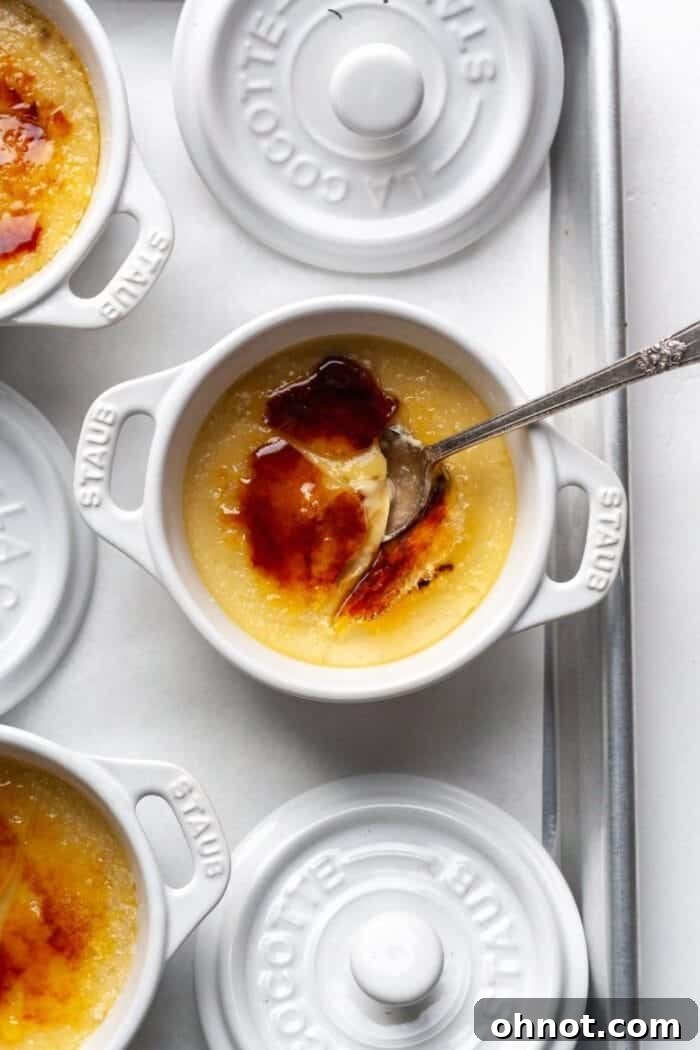
Irresistibly Creamy Gluten-Free Crème Brûlée (Paleo & Dairy-Free)
Prepare to be amazed by this incredible Gluten-Free Crème Brûlée, a dessert that redefines decadence without compromising on dietary needs. Featuring a sumptuously smooth and creamy custard base, perfectly complemented by a crisp, caramelized sugar topping, this recipe delivers all the luxury of the traditional French classic. What sets it apart? It’s completely gluten-free and dairy-free, meticulously crafted with a handful of simple, wholesome ingredients. This means everyone can indulge in its rich, satisfying flavors, making it the perfect show-stopping dessert for any occasion.
Why This Gluten-Free Crème Brûlée Recipe is a Must-Try
-
Unmatched Texture and Flavor
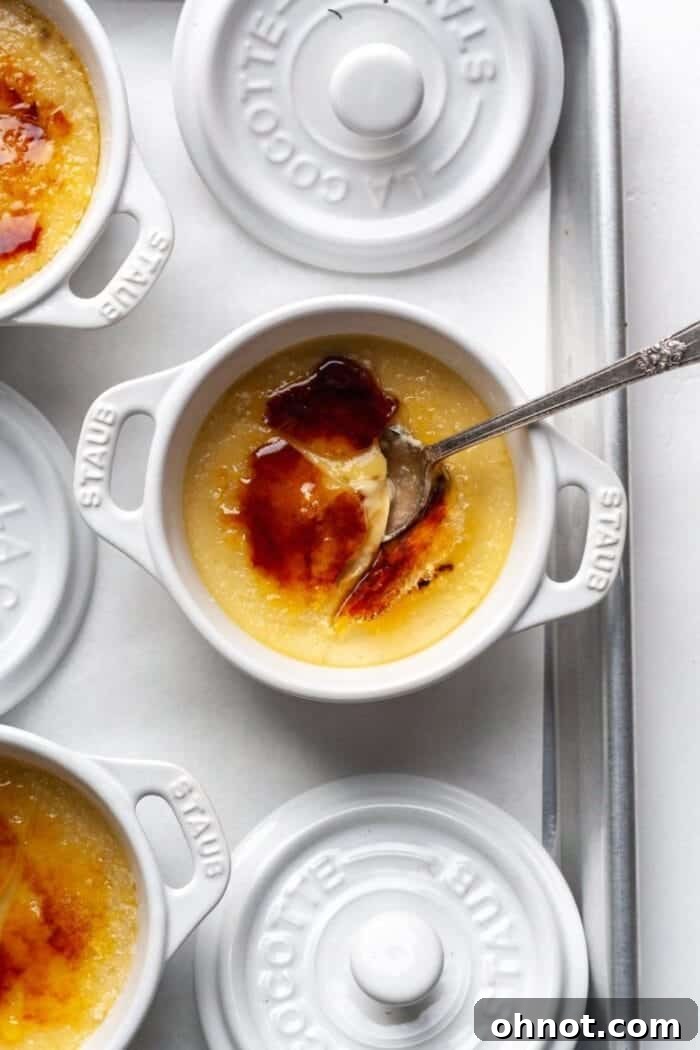
This recipe truly stands out. Our Gluten-Free Crème Brûlée offers an exquisite balance of a silky-smooth, vanilla-infused custard with the satisfying crunch and deep flavor of burnt caramel. Each spoonful is a harmonious blend of textures and tastes, creating an unforgettable dessert experience.
-
Dietary-Friendly Indulgence
Crafted to be naturally gluten-free, dairy-free, paleo, and grain-free, this crème brûlée caters to a wide range of dietary preferences without sacrificing flavor or quality. It’s made without heavy cream, refined white sugar, or alcohol, ensuring a wholesome treat for everyone.
-
Wholesome Ingredient Swaps
The clever use of coconut cream provides a rich, thick, and creamy base that perfectly mimics traditional heavy cream, delivering a lush mouthfeel that is remarkably dairy-free. Natural sweeteners like maple syrup and maple sugar ensure a delicious taste profile that aligns with paleo principles.
-
Simplicity Meets Elegance
Despite its sophisticated appearance and gourmet taste, this Crème Brûlée is surprisingly straightforward to prepare. With clear, easy-to-follow steps, you can create an elegant dessert that will impress your guests and satisfy your sweet cravings with minimal fuss.
Unveiling the Classic: What is Crème Brûlée?
Crème Brûlée, translating beautifully to “burnt cream” or “burned cream” in French, is a timeless dessert celebrated for its contrasting textures and sublime flavors. Traditionally, it features a creamy, vanilla-infused custard base, typically enriched with heavy cream, baked until set, and then chilled. The magic happens just before serving, when a thin layer of sugar is sprinkled on top and caramelized using a kitchen torch or broiler, forming a hard, brittle, and glistening crust. The heat from this caramelization process gently warms the very top of the custard, while the core remains cool and refreshing, creating a delightful interplay of temperatures and a light, delicate vanilla flavor. Our innovative recipe honors this classic structure and sensory experience, adapting it to be completely gluten-free and dairy-free, allowing more people to enjoy this beloved culinary masterpiece.
The Secret to Our Dairy-Free & Paleo Crème Brûlée: Key Ingredients
Crafting a truly exceptional gluten-free and dairy-free Crème Brûlée hinges on selecting the right ingredients. Each component plays a vital role in achieving that signature creamy texture and crisp, burnt sugar topping:
PURE MAPLE SYRUP
Maple syrup serves as our primary natural sweetener for the custard, aligning perfectly with Paleo baking principles. Unlike refined sugars, pure maple syrup offers a rich, nuanced flavor that enhances the overall depth of the dessert. It sweetens the custard subtly, providing a gentle sweetness that allows the vanilla and coconut notes to shine through without being overpowering. Ensure you use pure maple syrup for the best results, as artificial syrups won’t deliver the same flavor or quality.
COCONUT CREAM
This is the game-changer for our dairy-free rendition. Coconut cream is essentially the thick, rich, full-fat portion found at the top of a can of full-fat coconut milk (or sometimes sold separately). It boasts a luxurious, thick, and incredibly creamy consistency, making it an ideal, plant-based substitute for traditional heavy cream. When chilled, it becomes even denser, contributing to the exquisite texture of our custard without any dairy.
VANILLA EXTRACT
A touch of high-quality vanilla extract is indispensable for authentic Crème Brûlée flavor. It provides a warm, aromatic foundation that complements the sweetness and richness of the custard. Opt for pure vanilla extract for the most impactful and natural vanilla notes, as imitation vanilla can taste artificial and detract from the delicate balance of flavors.
EGG YOLKS
Only the egg yolks are required for this recipe, acting as the primary emulsifier and thickening agent for our custard. They impart a beautiful golden color and contribute significantly to the smooth, rich, and velvety texture that is characteristic of a perfect Crème Brûlée. Save your egg whites for another culinary creation, like meringues or an egg white omelet.
MAPLE SUGAR
For the iconic caramelized topping, maple sugar is our perfect Paleo-friendly choice. It’s made from evaporated maple syrup, resulting in fine granules that caramelize beautifully and evenly under heat. Its light color ensures a classic appearance, and its subtle maple flavor adds another layer of natural sweetness. If maple sugar is unavailable, coconut sugar makes an excellent substitute, offering a slightly darker, but equally delicious and crisp topping.
Master the Art: Step-by-Step Guide to Gluten-Free Crème Brûlée
Step 1: Prepare for Perfection
Begin by preheating your oven to 300°F (150°C). This gentle temperature is crucial for the slow, even cooking of the custard, which prevents it from curdling. Next, place a clean kitchen towel at the bottom of a rimmed baking sheet. This towel acts as insulation and prevents the ramekins from sliding during baking, ensuring they sit securely in the water bath we’ll create later. This careful preparation sets the stage for a flawless custard.
Step 2: Gentle Infusion
In a large skillet, combine the pure maple syrup, coconut cream, and vanilla extract. Place the skillet over medium heat. Stir the mixture continuously and gently until it just begins to show tiny bubbles around the edges, indicating it’s very lightly boiling. It’s critical *not* to let the mixture come to a full, rolling boil, as this can affect the delicate balance and texture. Continue to cook for approximately 5 minutes, stirring every 30 seconds or so to ensure even heating and prevent scorching. This process allows the flavors to meld beautifully and the coconut cream to become perfectly warm. After 5 minutes, remove the skillet from the heat.
Step 3: Whisk the Yolks
While your coconut cream mixture is warming, separate your eggs. Place the two egg yolks in a small, clean bowl. Using a fork or a small whisk, whisk the egg yolks until they are uniformly smooth and a pale yellow color. This step ensures they will incorporate smoothly into the warm cream mixture without clumping.
Step 4: Tempering Magic
Carefully transfer the warm coconut cream mixture into a KitchenAid or other large stand mixer bowl (or a large mixing bowl if using a hand mixer). Turn the mixer to a low speed, allowing the mixture to whisk gently. Now, the crucial step of tempering begins: VERY slowly, in a thin, steady stream, pour the whisked egg yolks into the warm coconut cream mixture while the mixer is still on low speed. This slow pouring process should take at least 1 full minute. Tempering prevents the egg yolks from cooking too quickly and scrambling, instead gently raising their temperature and allowing them to seamlessly integrate into the warm liquid, forming a smooth custard base. Patience here is key for a velvety end product.
Step 5: Strain for Silkiness
Once the egg yolks are fully incorporated into the coconut cream mixture, the custard should appear smooth and creamy. To achieve the absolute silkiest texture, pour the entire mixture through a fine-mesh strainer into a clean bowl or directly into a pouring pitcher. Straining removes any potential lumps, chalazae from the egg yolks, or small cooked bits, ensuring your Crème Brûlée is incredibly smooth and refined. This simple step makes a significant difference in the final mouthfeel.
Step 6: The Water Bath Method
Carefully divide the strained custard mixture equally among three greased ramekins. Greasing helps prevent sticking and makes serving easier. Place these filled ramekins on top of the kitchen towel in your rimmed baking sheet. Next, take 1 cup of hot water (it doesn’t need to be boiling, just hot from the tap) and gently pour it into the baking sheet, around the ramekins, until the water level reaches about halfway up the sides of the ramekins. This water bath, or bain-marie, creates a moist, even cooking environment, preventing the custards from cooking too quickly, cracking, or developing a rubbery texture. It ensures a consistently smooth and tender custard.
Step 7: Baking and Chilling
Carefully transfer the baking sheet with the ramekins and water bath to your preheated oven. Bake for 40 to 45 minutes, or until the edges of the custards are set, but the center still has a slight jiggle when gently shaken. This slight jiggle indicates perfect doneness, as the custard will continue to set as it cools. Once baked, carefully remove the baking sheet from the oven. Allow the ramekins to cool in the water bath for about 15-20 minutes, then carefully remove them from the water bath and let them cool completely on a wire rack at room temperature. Once cool enough to handle, transfer the ramekins to the fridge to chill overnight. This extended chilling period is crucial for the custard to fully set and for the flavors to deepen and mature, resulting in the best possible Crème Brûlée experience.
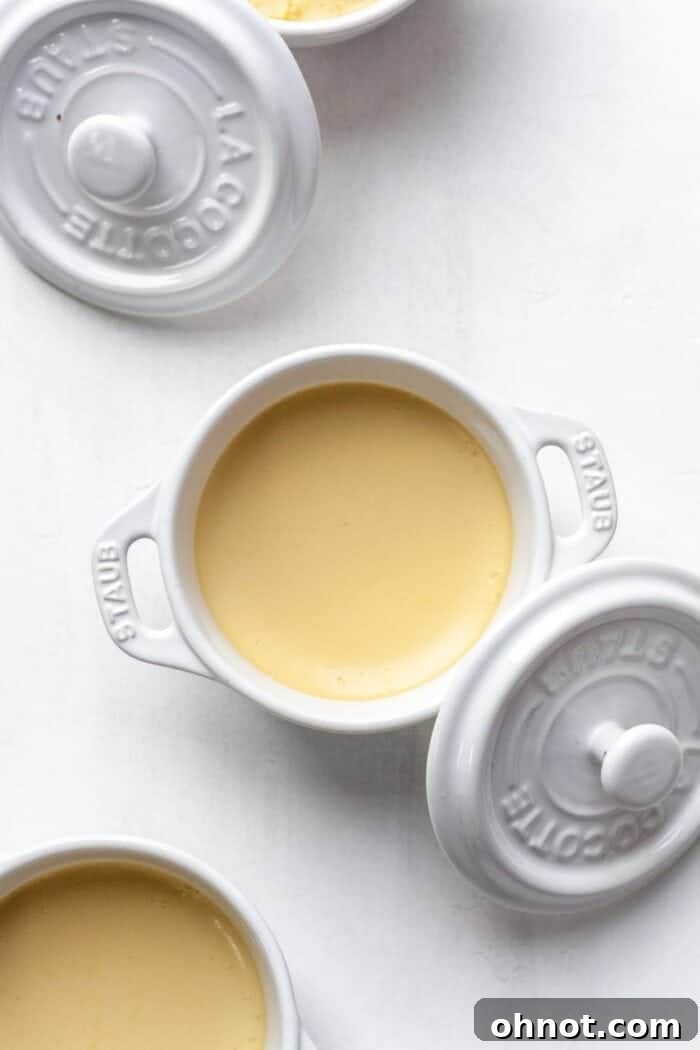
Step 8: The Iconic Sugar Crust
Once your custards are thoroughly chilled, it’s time for the grand finale: the irresistible caramelized sugar topping. Sprinkle approximately 2 tablespoons of maple sugar evenly over the surface of each custard. The goal is a thin, uniform layer that will melt and harden consistently.
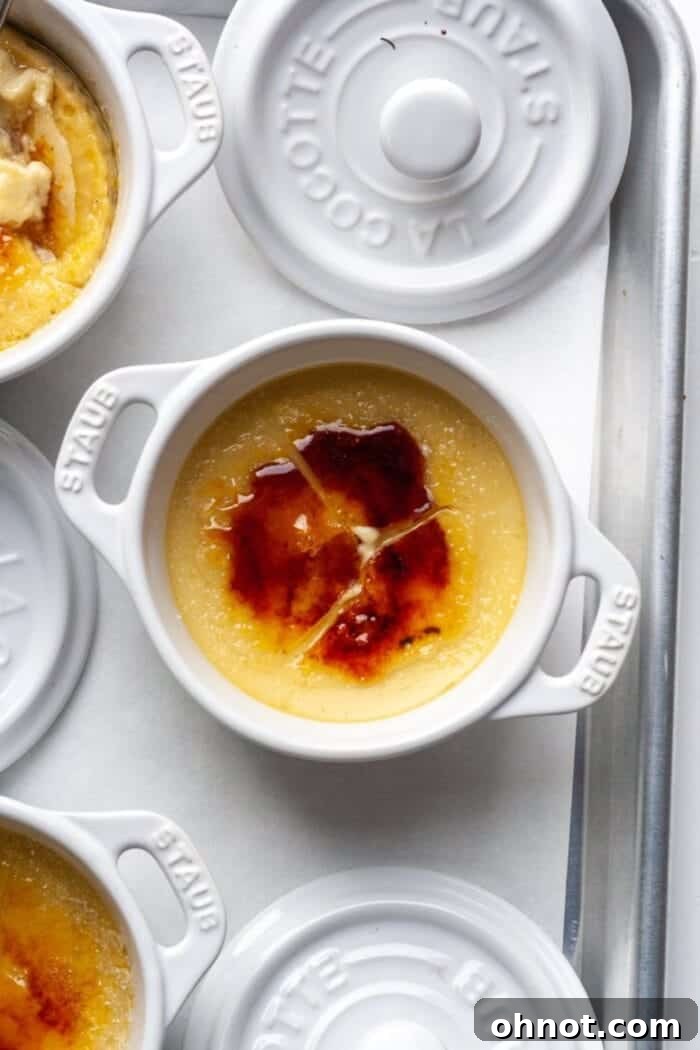
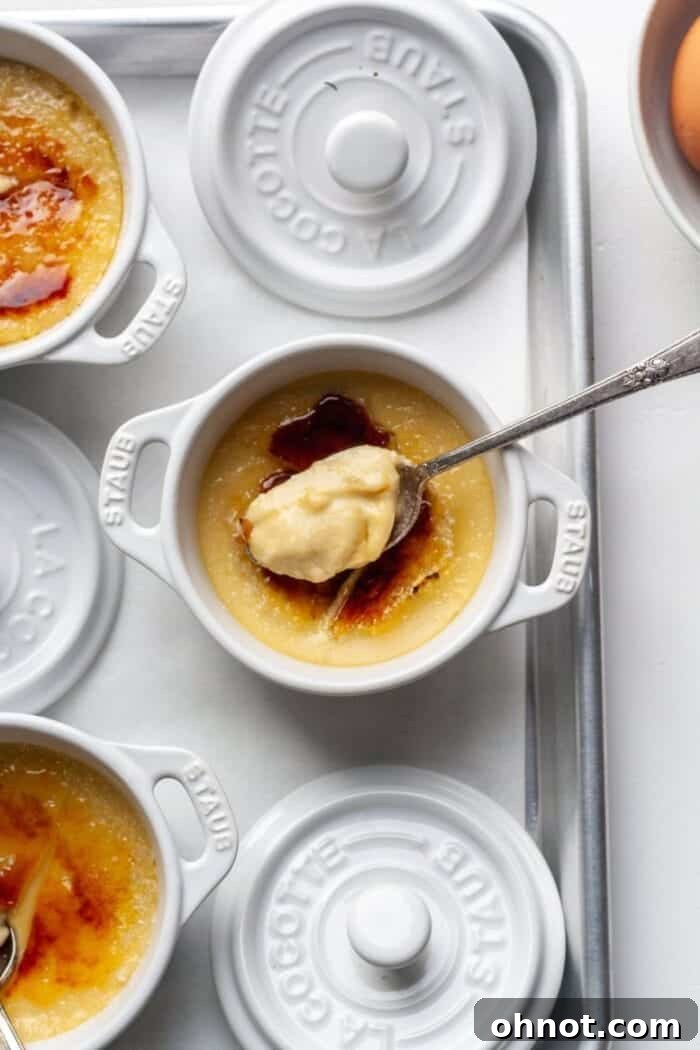
Using a kitchen torch, ignite the flame and move it steadily in a circular motion over the sugar. Watch closely as the sugar melts, bubbles, and transforms into a beautiful amber, brittle crust. This process usually takes 1 to 2 minutes per ramekin. Be patient and keep the torch moving to prevent burning, aiming for a deep golden-brown crisp, not black. The aroma of caramelizing sugar is part of the experience!
Alternatively, if you don’t have a kitchen torch, you can achieve a similar effect using your oven’s broiler. Place the sugar-topped custards on a baking sheet and position them on the top rack, several inches away from the broiler element. Broil for 2 to 3 minutes, or until the sugar has melted and caramelized into a crispy crust. It’s crucial to watch them continuously, as broilers can be very powerful, and sugar can burn quickly. Remove them as soon as the desired crispiness is achieved. Finally, allow the caramelized sugar to cool and harden for a few minutes before serving. The contrast of the warm, crisp topping and the cool, creamy custard is simply divine. Enjoy your perfectly crafted Gluten-Free Crème Brûlée!
Essential Tips for Crème Brûlée Success
Achieving the perfect Crème Brûlée, especially a dairy-free and paleo version, is simpler than you might think with these expert tips:
- Choose Your Ramekins Wisely: While traditional Crème Brûlée is often served in wide, shallow ramekins for maximum caramelized surface area, you can use any oven-safe shallow bowls or even mugs. Just ensure they are uniform in size for even cooking. For this recipe, 3-4 ounce ramekins are ideal.
- Achieving a Silky Custard: The key to a smooth custard lies in two steps: gentle heating of the coconut cream mixture (never a rolling boil!) and the slow tempering of the egg yolks. Pouring the eggs in very slowly while whisking continuously prevents them from scrambling, ensuring a homogenous, creamy base. Don’t skip straining the mixture – it’s crucial for removing any small imperfections and creating that restaurant-quality smoothness.
- The Power of the Water Bath: A water bath (bain-marie) is not optional for Crème Brûlée; it’s essential. It provides a consistent, moist, and gentle heat environment, preventing the custard from overcooking, cracking, or becoming rubbery. The water bath ensures your custards cook evenly and remain tender throughout.
- Mastering the Caramelized Topping: Whether using a kitchen torch or a broiler, watch the sugar intently. Maple sugar or coconut sugar caramelizes fairly quickly. Move the torch continuously to prevent hot spots and burning. If broiling, keep the oven door slightly ajar and stand by, removing the ramekins as soon as the sugar turns a deep amber color. A perfectly caramelized crust should be brittle and crack easily with a spoon.
- Chilling is Key: While it’s tempting to dive in, chilling the Crème Brûlée overnight is paramount. This allows the custard to fully set and the flavors to deepen, resulting in the best possible texture and taste. Don’t rush this step!
Frequently Asked Questions (FAQs)
Does Crème Brûlée contain dairy? Is it dairy-free?
Traditionally, Crème Brûlée is made with heavy cream, meaning it contains dairy. However, this specific Gluten-Free Crème Brûlée recipe is completely dairy-free! We use full-fat coconut cream as an excellent alternative to heavy cream. Canned coconut milk, specifically the thick, creamy portion known as coconut cream, provides the rich texture and flavor needed without any dairy products.
Is Crème Brûlée naturally gluten-free?
Yes, Crème Brûlée is inherently gluten-free, as its core ingredients (cream, egg yolks, sugar, vanilla) do not contain gluten. This recipe, specifically, is also gluten-free. Always double-check all ingredient labels for any hidden gluten, especially for extracts or other additives, to ensure complete safety.
How can I make Crème Brûlée without a torch?
While a kitchen torch offers the most precise and even caramelization, you can certainly achieve a crisp topping using your oven’s broiler. Simply place the sugar-dusted Crème Brûlée ramekins on a baking sheet under a preheated broiler for a few minutes. Watch them very closely – sugar can burn quickly under the broiler! Remove them as soon as the sugar is bubbly and deeply golden brown.
Is Crème Brûlée served cold?
Typically, Crème Brûlée is served chilled or slightly cool. The contrast between the warm, freshly caramelized sugar topping and the cool, creamy custard underneath is part of its delightful appeal. It’s best to caramelize the sugar just before serving.
Is this recipe easy to make?
Yes, this Gluten-Free Crème Brûlée recipe is surprisingly simple and straightforward. By carefully following the step-by-step instructions, even novice bakers can achieve a perfectly foolproof and impressive dessert. The key is gentle heating and slow tempering.
How do I make Crème Brûlée for two?
This recipe yields 3 servings, making it perfect for a small gathering. If you wish to make it for two, you can simply divide the custard batter between two ramekins. You might need to adjust the baking time slightly, cooking for an additional 5 to 10 minutes, or until the edges are set and the center is just slightly jiggly.
How do I store leftovers?
To store leftover Crème Brûlée, cover the ramekins tightly with aluminum foil or plastic wrap and keep them in the refrigerator for up to 3 days. It’s best to caramelize the sugar topping just before serving, so if you have leftovers with an already hardened crust, it might soften over time. You can re-caramelize with fresh sugar if desired.
Can I reheat leftovers?
Yes, you can gently reheat leftover Crème Brûlée. If the sugar topping has already been caramelized and you want to warm the custard, place the ramekins in an oven preheated to 300°F (150°C) for about 7 to 8 minutes, or until warmed through. For a fresh crispy topping, sprinkle with new maple sugar and broil for 1 to 2 minutes or torch until caramelized.
Can I make this without ramekins?
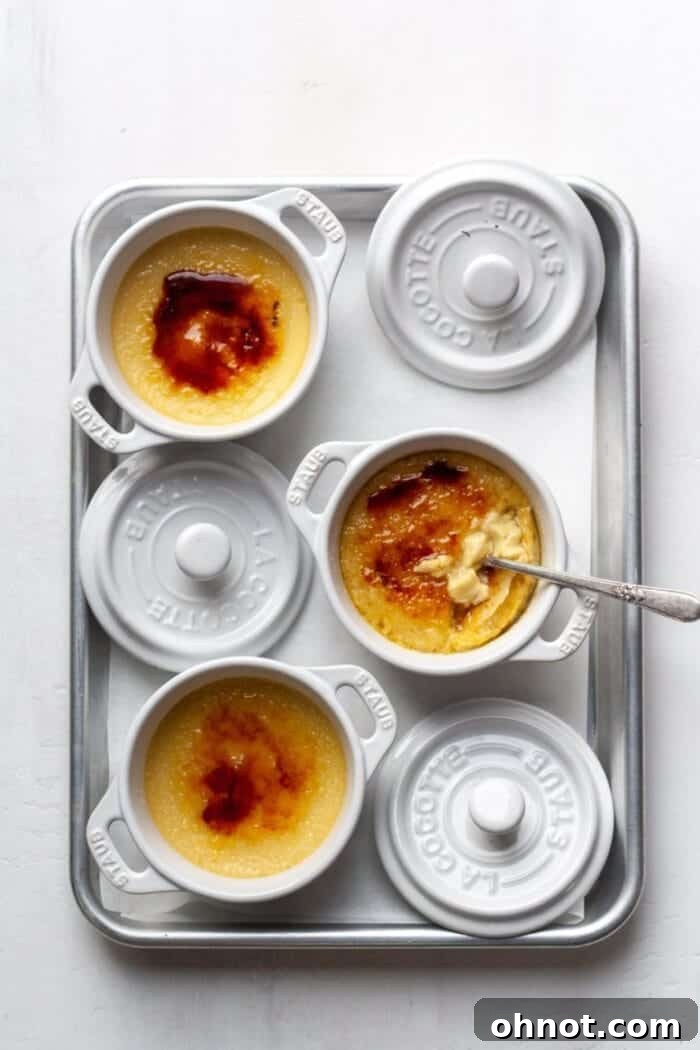
Absolutely! While ramekins are traditional, you can use any shallow, oven-safe bowl, mug, or even small oven-safe glass containers. Just ensure they can withstand the oven heat and the water bath. For a charming presentation, mini cocottes also work wonderfully.
Serving Suggestions & Flavor Variations
This Gluten-Free Crème Brûlée is a showstopper on its own, but you can elevate the experience even further with these ideas:
- Classic Presentation: Serve chilled with the freshly torched, still-warm caramelized crust. The contrast is key! A silver spoon perfectly complements its elegance.
- Berry Bliss: Garnish with fresh berries like raspberries, blueberries, or sliced strawberries for a burst of color and a touch of tartness that balances the richness of the custard.
- Chocolate Shavings: A sprinkle of dairy-free dark chocolate shavings or cacao nibs can add a sophisticated touch and a hint of bitter contrast.
- Coffee Infusion: For a delicious variation, steep a tablespoon of instant coffee granules or finely ground espresso in the warm coconut cream mixture in Step 2 for a coffee-flavored crème brûlée.
- Citrus Zest: Add a teaspoon of orange or lemon zest to the custard mixture for a bright, refreshing flavor profile.
Storage and Reheating Guidelines
To ensure your Gluten-Free Crème Brûlée remains delicious and fresh, proper storage is essential. Once the custards are fully chilled, it’s best to cover each ramekin individually with plastic wrap or aluminum foil. This prevents them from absorbing any refrigerator odors and helps maintain their creamy texture. Store them in the refrigerator for up to 3 days. It is highly recommended to caramelize the sugar topping just before serving for the best crispness and flavor contrast. If you have leftovers that have already been caramelized, the crust may soften over time due to moisture. You can refresh a softened crust by sprinkling a small amount of additional maple sugar and re-torching or broiling it briefly. If you wish to warm the custard, place uncovered ramekins in a preheated 300°F (150°C) oven for about 7-8 minutes. For a completely fresh experience, it’s always best to caramelize the sugar right before presentation.
More Dairy-Free & Gluten-Free Dessert Inspiration
If you loved this indulgent, yet healthy Crème Brûlée, be sure to explore more of our delicious gluten-free and dairy-free recipes:
- The Best Paleo Chocolate Chip Cookies
- Fudgy Paleo Brownies
- Peach Cobbler in a Jar (Vegan)
- Vegan Mug Brownie
- Gluten Free Fudge (Vegan)
We absolutely love seeing your culinary creations! If you make this recipe, please share it with us on Instagram, Facebook, and Pinterest. Follow along for more healthy and delicious recipes! You can find a wide array of Dairy-Free recipes here.

20 mins
40 mins
1 hr
Get the Recipe:
Gluten Free Crème Brûlée (Paleo)
Pin Recipe
Ingredients
- 2 tbsp pure maple syrup
- 1 can coconut cream
- 1 tsp vanilla extract
- 2 egg yolks
- 6 tbsp maple sugar, or coconut sugar
Instructions
-
First, preheat oven to 300 degrees and place a kitchen towel inside a rimmed baking sheet.
-
In a large skillet, add maple syrup, coconut cream and vanilla extract over medium heat. Stir mixture until very lightly boiling (do NOT let it fully boil). Cook for 5 minutes, stirring every 30 seconds or so. Remove from heat.
-
Then, add egg yolks to a small bowl and whisk.
-
Add coconut cream mixture to a KitchenAid or large stand mixer. Slowly whisk mixture. VERY slowly pour in whisked eggs while KitchenAid is still on low speed. The pouring of the eggs should take at least 1 full minute.
-
Once combined, mixture should be smooth and creamy. Then, pour mixture through a strainer.
-
Once strained, pour mixture equally into 3 greased ramekins.
-
Take 1 cup of hot water and pour over towel that’s placed in the baking sheet.
-
Then, place ramekins on top of towel.
-
Bake for 40 to 45 minutes, or until middle is slightly jiggly and edges are set. Then, remove from oven.
-
Once cool enough to handle, place in fridge to cool overnight.
-
Once chilled, add 2 tablespoons of maple sugar on top of each custard.
-
Using a kitchen torch, burn the sugar for 1 to 2 minutes, or until crispy but not burnt.
-
Alternatively, add sugar on top of custards then broil for 2 to 3 minutes, or until sugar is crispy.
-
Finally, serve and enjoy!
Notes
- I used a kitchen torch and butane gas for this recipe.
Have you signed up for my free newsletter? You can sign up here to receive healthy meal plans and new recipes directly in your inbox!