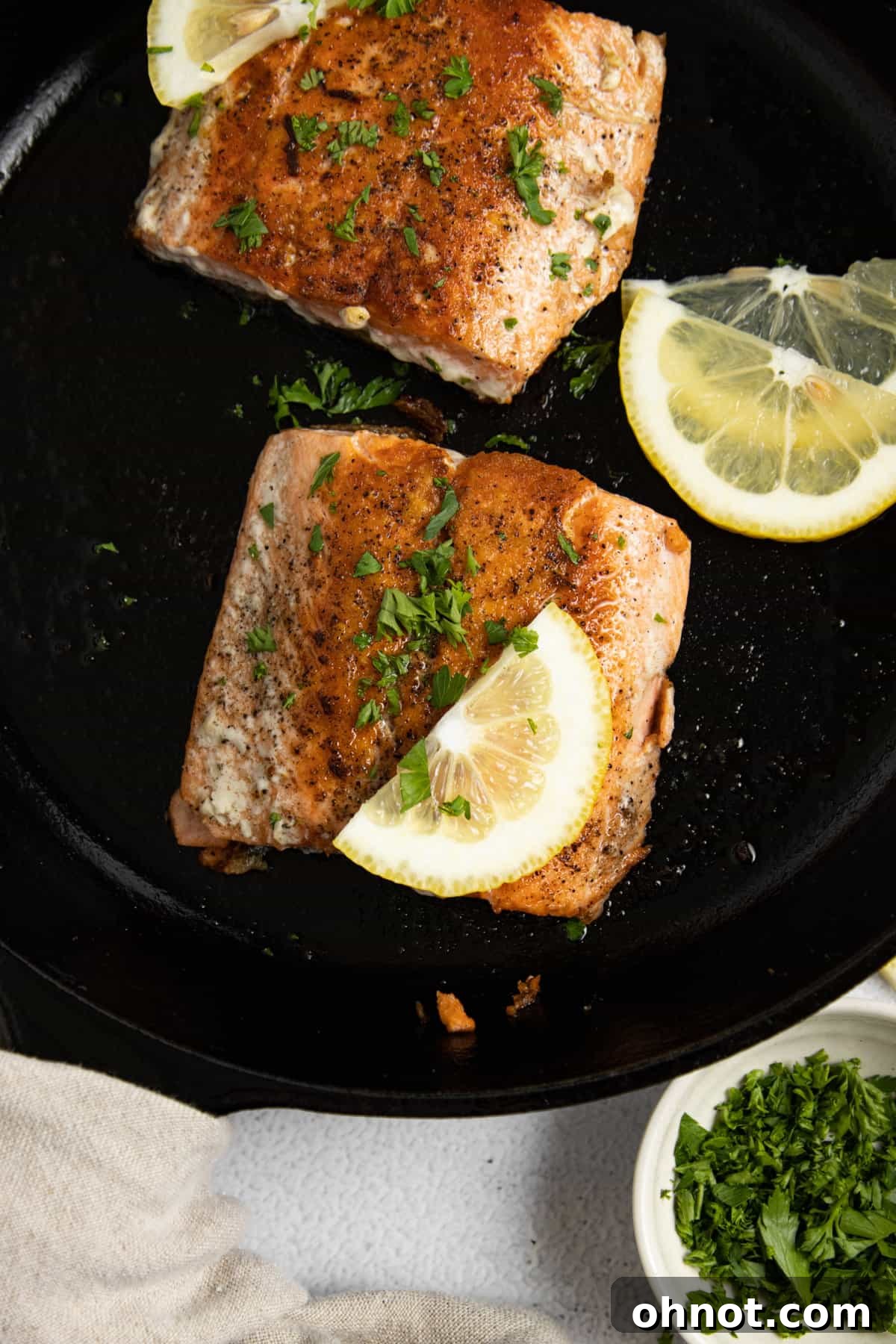
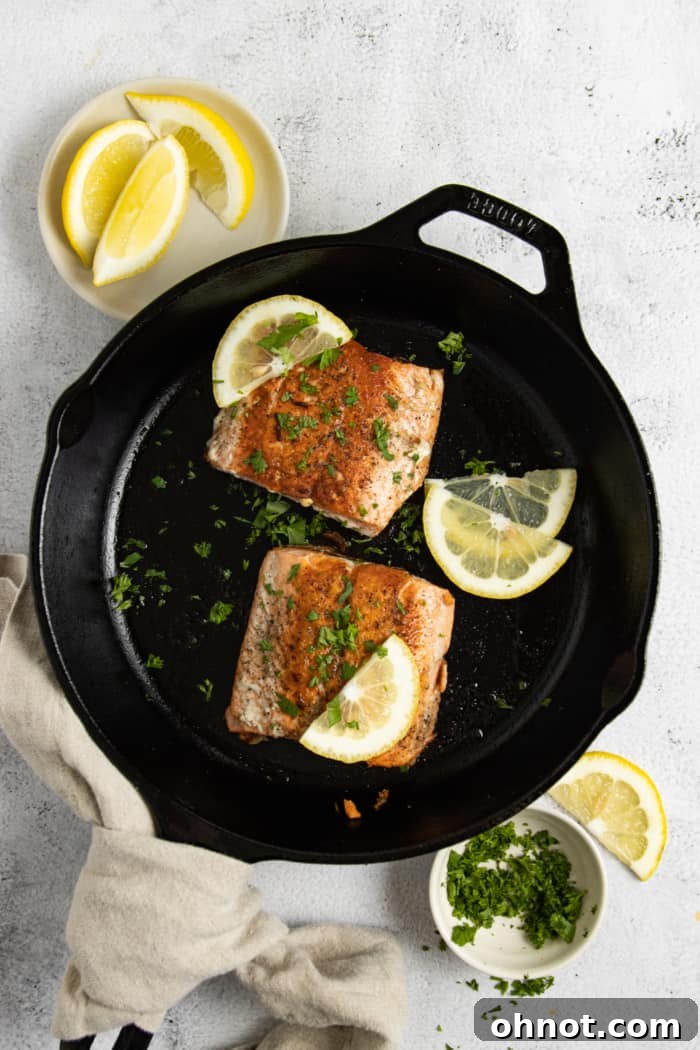
Discover the ultimate guide to creating perfectly seared, tender, and incredibly flavorful **cast iron salmon** right in your kitchen. This exceptional dish is not only a culinary delight but also a healthy choice, ideal for any meal occasion. Whether you’re a seasoned chef or a busy home cook, this quick weeknight recipe promises a gourmet experience in just minutes. Crafted entirely in a single skillet, you’ll achieve salmon fillets with an irresistible crispy crust and a melt-in-your-mouth tender interior. Its simplicity and elegance make it a versatile addition to your cooking repertoire, suitable for intimate family dinners, impressive holiday spreads, or simply a quick, nutritious meal after a long day.
Mastering the art of cooking salmon in a cast iron skillet unlocks a world of flavor and texture that’s hard to beat. The superior heat retention of cast iron delivers a professional-grade sear, locking in juices and creating that desirable restaurant-quality finish. From selecting the freshest fillets to understanding the optimal cooking temperatures, this comprehensive guide will walk you through every step, ensuring your cast iron salmon is consistently spectacular. Prepare to impress your taste buds and loved ones with a dish that combines speed, health, and gourmet appeal.
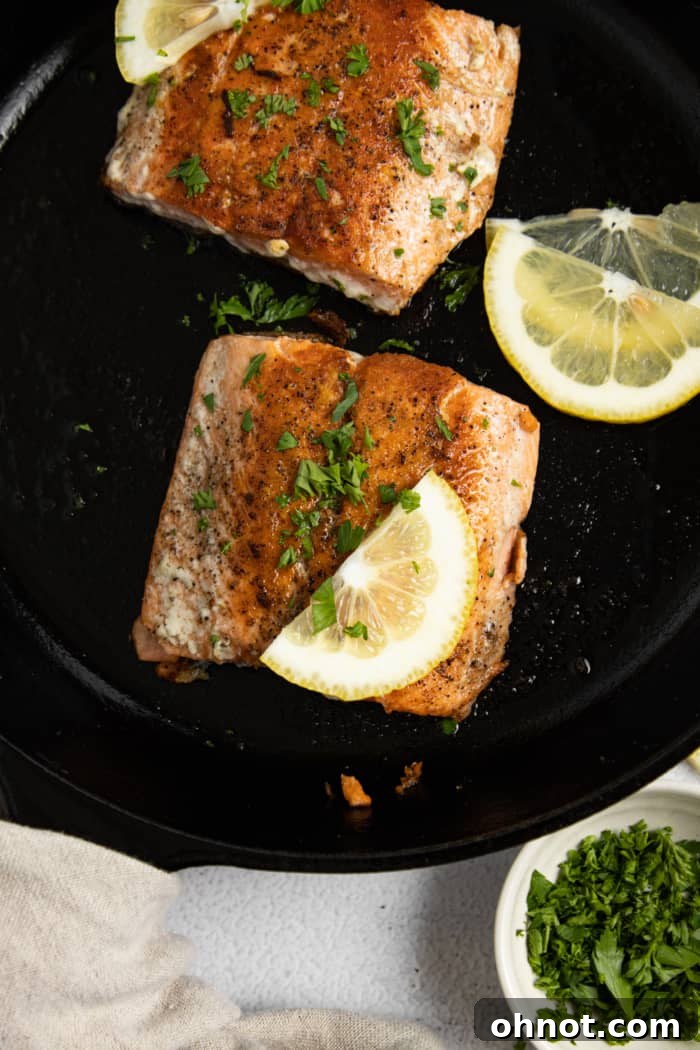
Why You’ll Love This Perfect Cast Iron Salmon Recipe
There are countless reasons why this cast iron salmon recipe will quickly become a cherished favorite in your kitchen:
- Minimal Ingredients, Maximum Flavor: This recipe calls for just four main ingredients, proving that simple doesn’t mean sacrificing taste. With quality salmon, a good fat, and basic seasonings, you can create an incredibly rich and satisfying dish.
- Achieve the Perfect Texture: Experience the exquisite contrast of perfectly crispy skin and moist, flaky flesh. The cast iron skillet creates an ideal environment for searing, ensuring a beautiful golden-brown crust every time. This method also delivers a similar delightful texture to this Halibut recipe!
- Lightning Fast Cooking: From start to finish, this dish comes together in approximately 10 minutes. This makes it an ideal choice for those hectic weeknights when you crave a homemade, healthy meal without spending hours in the kitchen.
- Nutrient-Rich and Wholesome: Salmon is a powerhouse of nutrition, packed with lean protein and an abundance of omega-3 fatty acids. These essential fats are renowned for their incredible benefits to heart health, brain function, and overall well-being. This recipe offers a delicious way to incorporate these vital nutrients into your diet.
- Effortless Cleanup: The beauty of a one-skillet meal extends beyond cooking. With everything prepared in a single cast iron pan, cleanup is a breeze, giving you more time to savor your culinary creation and less time at the sink.
- Versatile for Any Occasion: Whether you’re planning a casual family dinner, hosting a festive holiday gathering, or simply looking for an elevated weeknight meal, this cast iron salmon fits seamlessly into any menu. Pair it with simple roasted vegetables, creamy mashed potatoes, or a fresh side salad for a complete and balanced meal.
- Inspired by Freshness: This recipe draws inspiration from a recent trip to Alaska, known for its pristine waters and the freshest salmon imaginable. The focus is on highlighting the natural, exquisite flavor of high-quality salmon, reminiscent of a true Alaskan culinary experience.
- Restaurant-Quality at Home: Impress your guests and yourself with a dish that rivals those served in upscale restaurants. The cast iron method elevates the salmon, imparting a depth of flavor and texture that tastes sophisticated and professional.
- Diet-Friendly Indulgence: This recipe is remarkably inclusive, adhering to a variety of dietary needs. It is naturally Whole30 compliant, Paleo, Keto, low carb, gluten free, dairy free, egg free, nut free, and sugar free. It’s a fantastic option for virtually any diet or lifestyle without compromising on taste.
- Explore More Delicious Options: For another simple yet flavorful dinner idea, be sure to check out our Sockeye Salmon recipe!
Essential Ingredients & Smart Substitutions
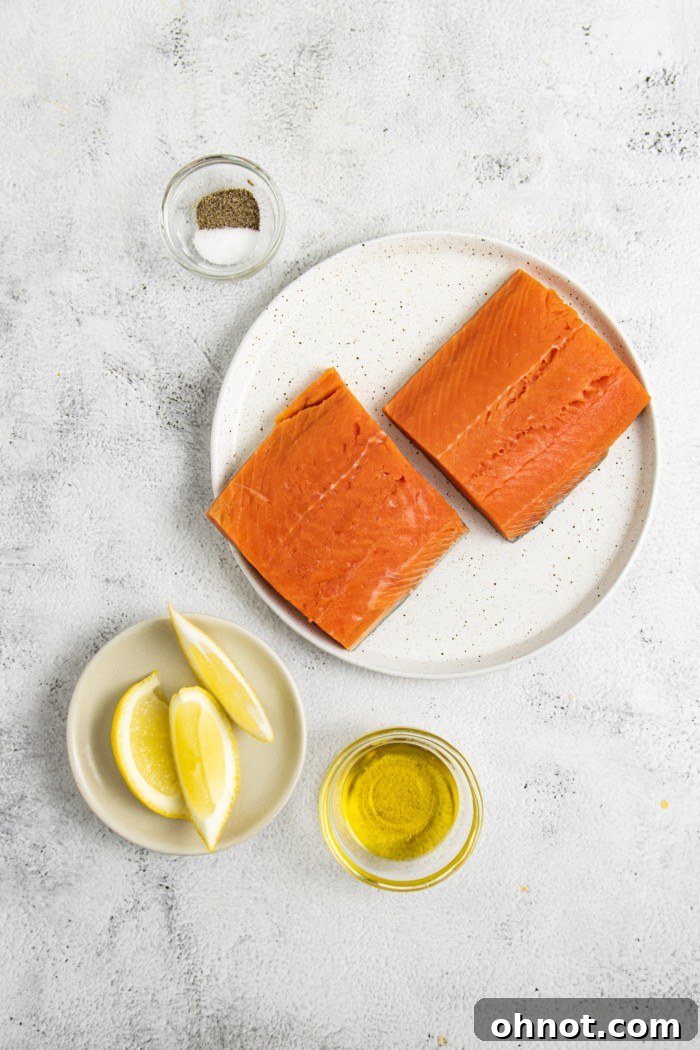
Crafting this homemade cast iron skillet salmon requires only a few quality ingredients. Below, you’ll find details on the main components and helpful substitutions. For the complete list with precise measurements and detailed instructions, please refer to the recipe card below.
Choosing Your Salmon
Salmon Fillets: Select high-quality salmon fillets, ideally around 6 ounces each. You can opt for either skin-on or skinless, depending on your preference. Skin-on fillets tend to provide a crispier texture and help protect the flesh from overcooking, while skinless offers a simpler eating experience. Look for vibrant, moist flesh without any browning or strong fishy odor. Wild-caught salmon (such as Sockeye, Coho, or King) is often preferred for its superior flavor and higher omega-3 content, though sustainably farmed Atlantic salmon is also a good choice.
The Perfect Cooking Fat
Olive Oil or Melted Butter: Both olive oil and melted butter work beautifully for searing salmon in a cast iron skillet. Extra virgin olive oil offers a slightly fruity note and a high smoke point suitable for searing. Unsalted butter adds a rich, nutty flavor that complements salmon wonderfully. For those following a dairy-free diet, avocado oil is an excellent alternative to olive oil, offering a neutral flavor and a very high smoke point, ensuring a perfect sear without burning.
Simple Seasoning for Optimal Taste
Sea Salt and Black Pepper: A good quality coarse sea salt and freshly ground black pepper are all you truly need to enhance the natural flavors of the salmon. The salt helps draw out moisture for a crispier skin and seasons the flesh, while pepper adds a subtle, aromatic kick. Feel free to adjust the amounts to your personal taste.
Optional Garnishes for a Fresh Finish
Lemon Wedges: Serving with fresh lemon wedges adds a bright, acidic counterpoint that cuts through the richness of the salmon and elevates its flavor. A squeeze of fresh lemon juice just before serving is highly recommended.
Fresh Herbs: A sprinkle of fresh herbs like chopped parsley, dill, or chives provides a beautiful pop of color and an aromatic freshness that completes the dish. These are entirely optional but add a sophisticated touch.
Unforgettable Taste & Texture Profile
Preparing salmon in a cast iron skillet results in a truly distinctive and delightful eating experience that combines the best of textures and flavors. This method is celebrated for its ability to transform simple salmon fillets into a gourmet meal.
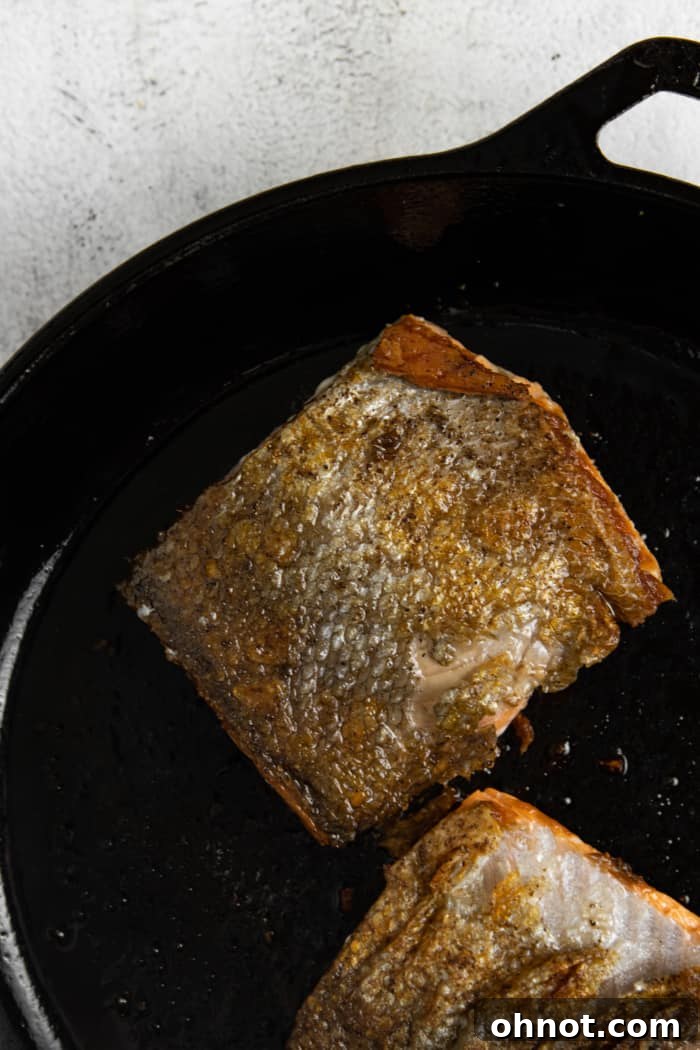
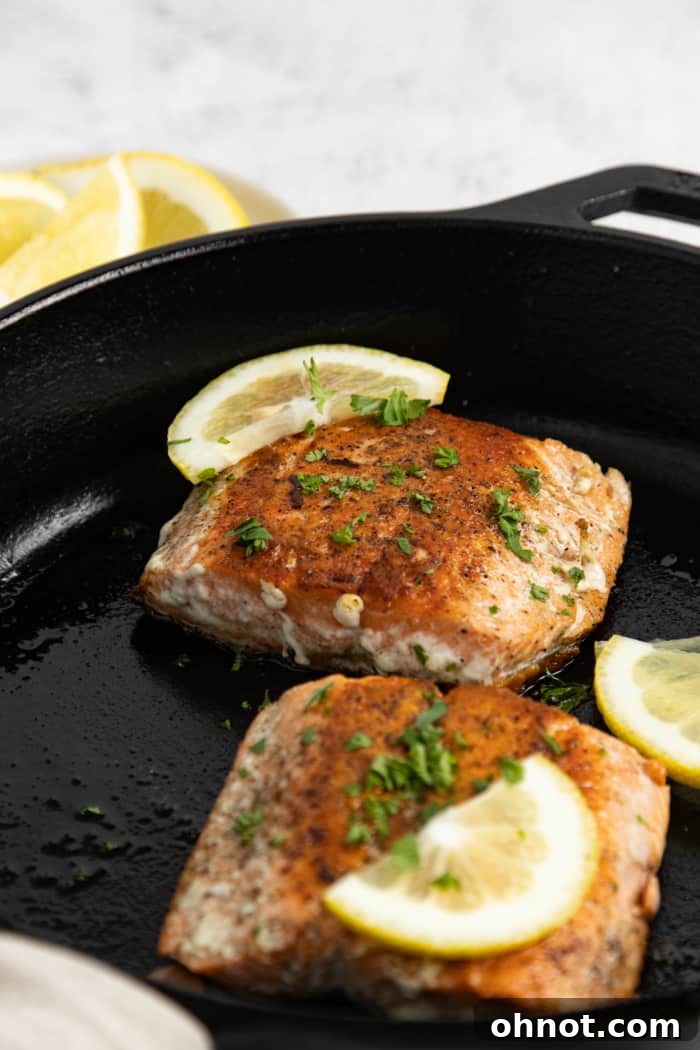
The hallmark of this cast iron salmon is its exquisite contrast: a wonderfully crispy skin on the exterior yields to a succulent, flaky flesh on the inside. The high, even heat of the cast iron pan allows the skin to render and crisp up beautifully, creating an almost chip-like texture that is incredibly satisfying. Beneath this golden crust, the salmon remains moist and tender, easily flaking apart with a fork, a testament to its perfect doneness.
Beyond texture, the cast iron skillet imparts a unique and delicious smoky flavor to the salmon. As the fish sears, the seasoned surface of the pan subtly enhances the natural richness of the salmon, adding a depth that cannot be achieved with other cooking methods. This subtle smokiness complements the inherent freshness of the fish, creating a complex and inviting aroma that fills your kitchen.
Overall, the taste is robust yet refined, embodying a hearty, fresh, and undeniably delicious profile. The simple seasoning allows the natural essence of the salmon to shine through, making every bite a celebration of pure, unadulterated flavor. It’s a hearty meal that feels light, fresh, and incredibly satisfying, proving that sometimes, the simplest methods yield the most profound culinary results.
Step-by-Step Guide: How to Make Cast Iron Salmon
Step 1: Preheat Your Oven
Begin by preheating your oven to 400°F (200°C). This dual-cooking method—starting on the stovetop and finishing in the oven—is key to achieving both a crispy skin and a perfectly cooked interior, ensuring your salmon doesn’t dry out.
Step 2: Prepare the Salmon Fillets
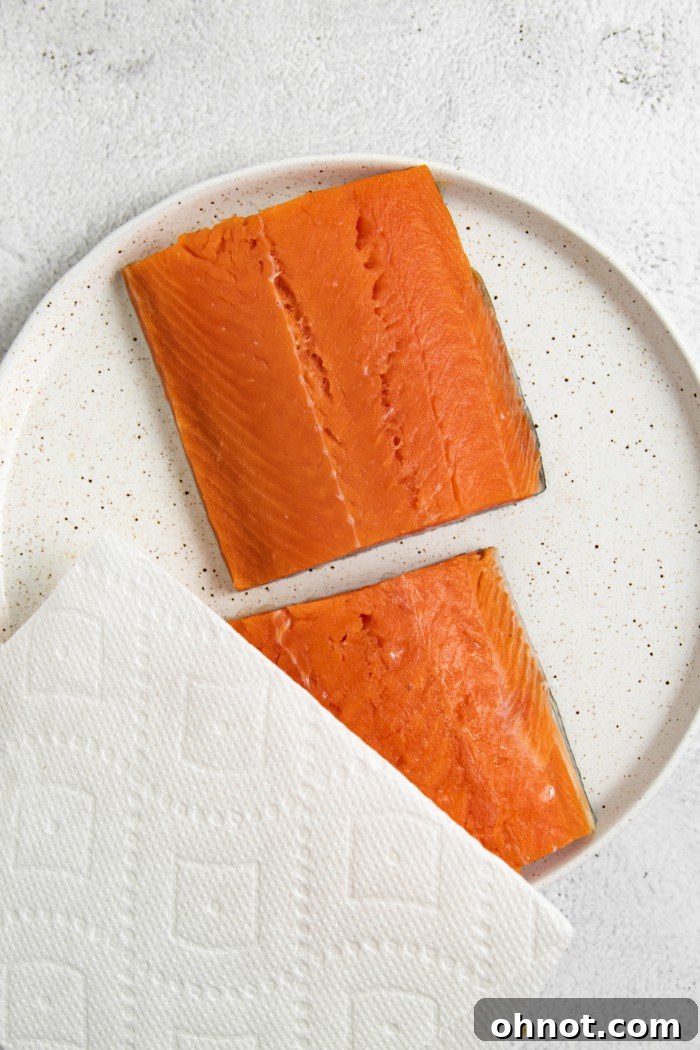
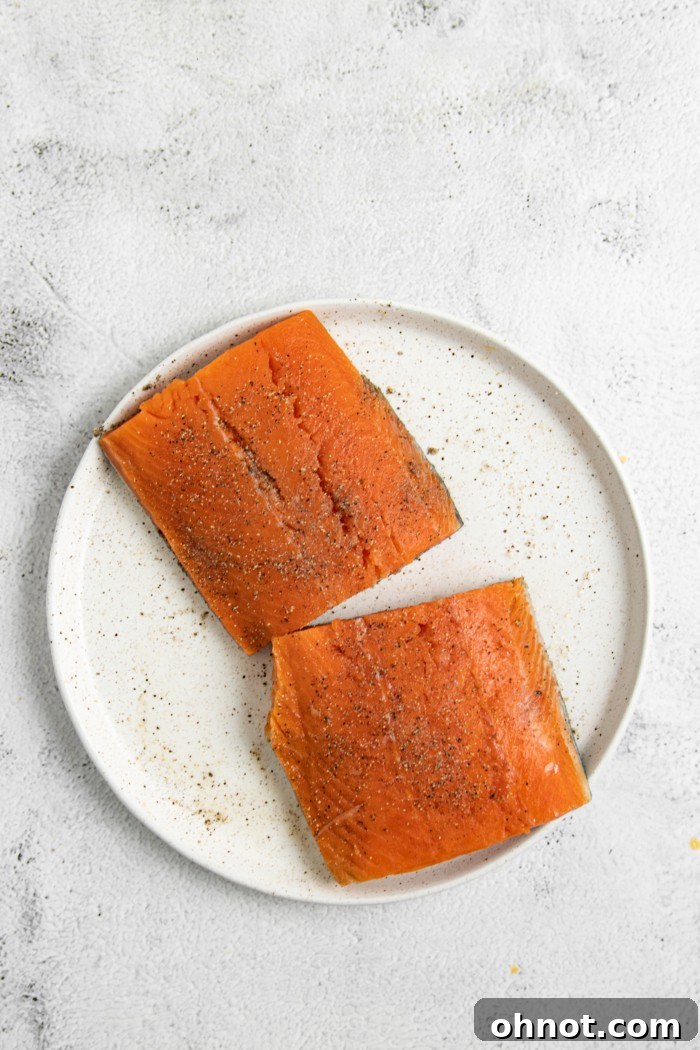
Pat the salmon fillets thoroughly dry with paper towels. This crucial step removes any excess surface moisture, which is essential for developing that coveted crispy sear on the skin. Moisture creates steam, preventing direct contact with the hot pan and inhibiting browning. Ensure both sides are as dry as possible.
Step 3: Season Generously
Generously season both sides of your dried salmon fillets with sea salt and freshly ground black pepper. Don’t be shy with the seasoning, as it adheres beautifully to the dry surface and enhances the fish’s natural flavors. For an extra touch, you might lightly rub a thin layer of olive oil or butter onto the flesh before seasoning to help it adhere even better.
Step 4: Heat the Cast Iron Skillet
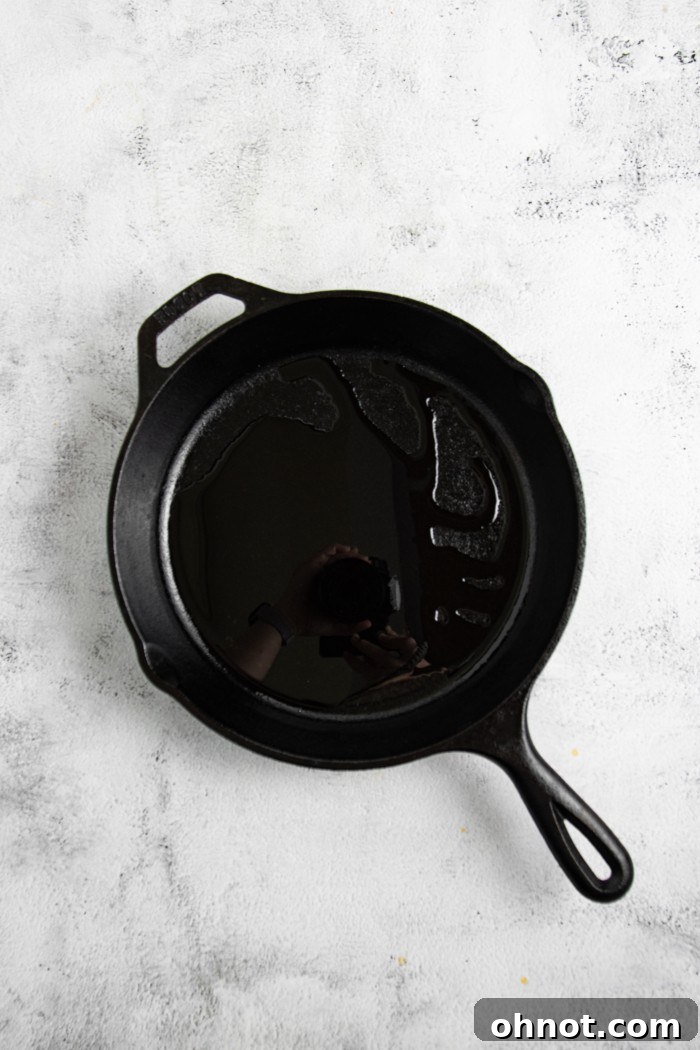
Place your cast iron skillet on the stovetop over medium-high heat. Allow the pan to heat for several minutes until it’s properly hot. Add the olive oil or melted butter to the skillet. Swirl the pan around to ensure the fat evenly coats the entire bottom surface. You’ll know it’s hot enough when the oil shimmers gently; if using butter, it should be melted and slightly foamy but not smoking.
Step 5: Sear the Salmon
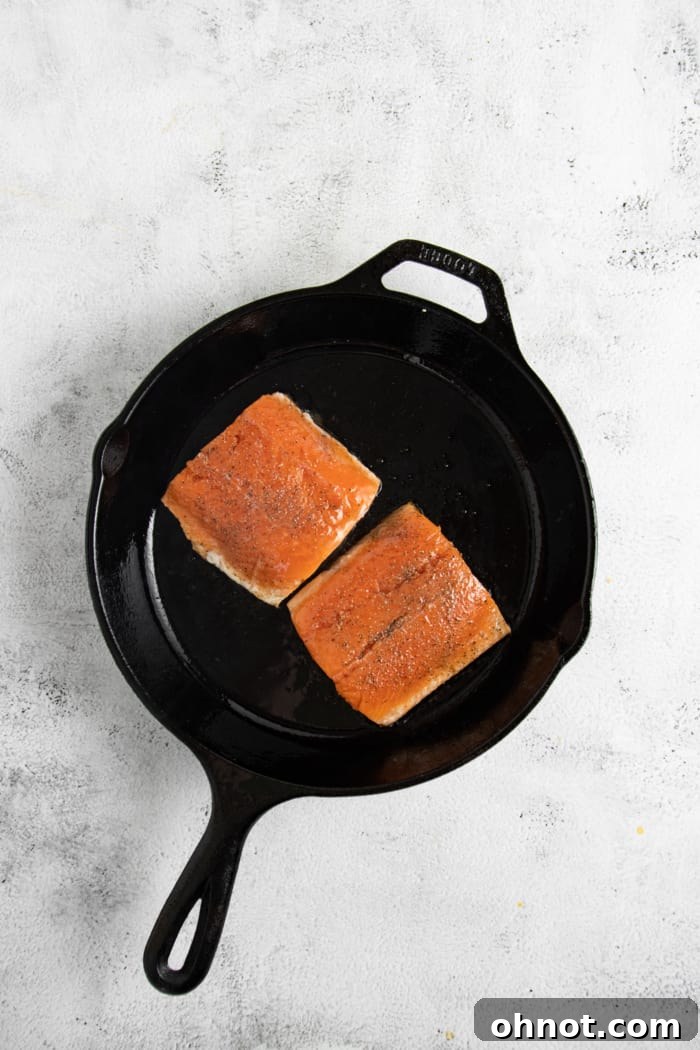
Once the skillet is hot and the oil is shimmering, carefully place the salmon fillets into the pan. If your fillets have skin, make sure to place them skin-side down first. This allows the skin to get incredibly crispy. Ensure not to overcrowd the pan; cook in batches if necessary to maintain consistent pan temperature and achieve a proper sear. Avoid moving the salmon once it’s in the pan.
Step 6: Develop the Crispy Sear
Allow the salmon to cook on the stovetop for about 2 to 3 minutes, undisturbed. This duration is critical for developing a beautiful, golden-brown, crispy sear on the bottom (or skin side). You’ll notice the color change, and the edges of the salmon will begin to look opaque and cooked.
Step 7: Flip and Transfer to Oven
Using a sturdy spatula, carefully flip the salmon fillets to the other side. Immediately after flipping, transfer the entire cast iron skillet to your preheated oven. This seamless transition ensures continuous cooking and helps the salmon cook through gently without over-searing the second side.
Step 8: Finish Cooking in the Oven
Allow the salmon to finish cooking in the oven for approximately 6 to 8 minutes. The exact cooking time will depend on the thickness of your fillets and your desired level of doneness. For perfectly cooked, moist salmon, the internal temperature should reach 135°F (57°C) when measured with a meat thermometer at the thickest part. The salmon will continue to cook slightly after removal from the oven.
Step 9: Rest Before Serving
Once the salmon reaches the desired internal temperature, carefully remove the skillet from the oven using oven mitts. Transfer the salmon to a plate or cutting board and let it rest for a minute or two before serving. Resting allows the juices to redistribute throughout the fillet, ensuring a more tender and flavorful result.
Step 10: Garnish and Serve
Finally, garnish your beautifully cooked cast iron salmon with fresh herbs, if desired, and serve immediately with lemon wedges. A squeeze of fresh lemon juice brightens the flavors and adds a zesty finish to this simple yet elegant dish. Enjoy!
Exploring Other Salmon Cooking Methods
While cast iron searing delivers an unparalleled crispy skin and tender interior, salmon is a versatile fish that adapts beautifully to a variety of cooking methods. Here are some other popular ways to prepare this delicious and healthy fish:
- Classic Pan-Frying (Non-Cast Iron): This method is similar to cast iron cooking but uses a standard non-stick or stainless steel skillet. Simply heat the skillet over medium-high heat with a small amount of oil. Season your salmon fillets with salt and pepper and cook for 3 to 4 minutes per side, or until cooked through and flaky. While it may not achieve the same intense sear as cast iron, it’s a quick and easy way to cook salmon.
- Grilling for Smoky Flavor: Grilling is an excellent choice for a healthier, smoky salmon. Preheat your grill to medium heat (around 375-400°F or 190-200°C). Lightly brush the salmon fillets with olive oil and season with salt and pepper. Place skin-side down on the grill grates if desired, or use a cedar plank for added flavor. Cook for 4 to 5 minutes per side, or until the internal temperature reaches 135°F. Grilling imparts a wonderful char and distinct outdoor flavor.
- Effortless Baking: Baking is a hands-off and convenient way to cook salmon, perfect for meal prepping or when you’re preparing multiple dishes. Preheat your oven to 400°F (200°C). Place the salmon fillets in a lightly greased baking dish or on a parchment-lined baking sheet. Season with salt, pepper, and any desired herbs or citrus slices. Bake for 15 to 20 minutes, or until the salmon is cooked through and flakes easily with a fork, reaching an internal temperature of 135°F.
- Poaching for a Delicate Touch: For a very delicate, moist salmon, poaching is an ideal method. Gently simmer salmon fillets in a flavorful liquid (such as water, white wine, or broth infused with herbs and lemon) just below boiling point. This method results in incredibly tender and succulent salmon, perfect for salads or light main courses.
- Slow Roasting for Even Cooking: A newer trend, slow roasting salmon at a lower temperature (e.g., 275°F or 135°C) for a longer period (20-30 minutes) yields incredibly tender and evenly cooked salmon without any risk of drying it out. This method doesn’t produce crispy skin but guarantees a silky, melt-in-your-mouth texture.
Expert Tips for Consistently Perfect Cast Iron Salmon
Achieving restaurant-quality cast iron salmon is simpler than you think with these expert tips and tricks:
- Invest in Quality Salmon: The foundation of a fantastic dish begins with the ingredients. Always prioritize high-quality salmon. If possible, opt for wild-caught varieties, which typically boast a richer flavor profile and higher nutritional value, especially in omega-3s. Look for firm flesh, bright color, and a fresh, oceanic scent.
- Master Your Cast Iron Skillet: A well-seasoned, good quality cast iron skillet is your best friend for this recipe. Its superior heat retention and even heat distribution are crucial for a consistent, crispy sear. Ensure your skillet is properly seasoned to prevent sticking and to enhance flavor. Preheat the skillet thoroughly before adding oil to ensure a uniformly hot surface.
- Dry Fillets are Key: Patting your salmon fillets completely dry with paper towels before seasoning is a non-negotiable step. Any residual moisture will create steam when it hits the hot pan, preventing the skin from crisping up and instead steaming the fish. Dry surfaces brown beautifully!
- Don’t Overcrowd the Pan: Give your salmon fillets space. If you’re cooking multiple pieces, do so in batches if your skillet isn’t large enough to accommodate them without touching. Overcrowding lowers the pan’s temperature, leading to steaming rather than searing.
- Resist the Urge to Move It: Once the salmon is placed in the hot skillet, resist the temptation to move it for the first few minutes. This undisturbed cooking time is essential for developing a strong, crispy crust that won’t stick to the pan when you go to flip it.
- Utilize a Meat Thermometer: The only way to guarantee perfectly cooked, juicy salmon without overcooking is by using a reliable meat thermometer. For optimal tenderness and safety, salmon should be cooked to an internal temperature of 135°F (57°C) at its thickest part. Remove it from the heat once it reaches this temperature, as it will continue to cook slightly while resting.
- The Importance of Resting: Just like with red meats, allowing the salmon to rest for a minute or two after cooking allows the internal juices to redistribute. This results in a more uniformly moist and tender fillet.
Exciting Flavor Variations & Creative Add-Ins
While classic salt and pepper cast iron salmon is a masterpiece on its own, don’t hesitate to experiment with these delicious variations to customize your meal and keep things exciting:
- Zesty Lemon Garlic Butter Salmon: Elevate your salmon with a vibrant lemon garlic butter sauce. In a small bowl, whisk together melted unsalted butter, freshly squeezed lemon juice, a pinch of garlic powder (or minced fresh garlic), and a dash of salt and pepper. Drizzle this aromatic sauce generously over the salmon fillets immediately after cooking, or baste the salmon with it during the last minute of oven cooking for an infused flavor.
- Aromatic Herbed Salmon: Infuse your salmon with the fragrant notes of fresh herbs. Before cooking, finely chop a mix of your favorite fresh herbs such as dill, parsley, thyme, and chives. Sprinkle them liberally over both sides of the seasoned salmon fillets, gently pressing them into the flesh. The herbs will release their essential oils as the salmon cooks, creating a beautifully aromatic and flavorful dish.
- Sweet & Savory Maple Dijon Salmon: For a delightful balance of sweet and tangy, try a maple Dijon glaze. In a small bowl, combine pure maple syrup with grainy or smooth Dijon mustard. Brush this mixture over the salmon fillets during the last few minutes of cooking in the oven, allowing it to caramelize slightly. For a more detailed recipe featuring this irresistible combination, check out our Candied Salmon recipe.
- Spicy Cajun-Style Salmon: For those who love a kick, generously rub the salmon fillets with a good quality Cajun seasoning blend before searing. This blend typically includes paprika, cayenne pepper, garlic powder, onion powder, and various dried herbs, offering a smoky, spicy, and incredibly flavorful crust.
- Asian-Inspired Glazed Salmon: Create an umami-rich experience by whisking together soy sauce (or tamari for gluten-free), a touch of honey or brown sugar, grated fresh ginger, minced garlic, and a splash of rice vinegar. Brush this glaze over the salmon during the last oven cooking stage, allowing it to thicken and coat the fish beautifully. Garnish with sesame seeds and chopped green onions.
Serving Suggestions & Storage Best Practices
Presenting your cast iron salmon perfectly and knowing how to store any leftovers ensures you maximize its deliciousness.
Serving Your Perfect Salmon
Cast iron salmon is truly at its best when served hot and fresh, straight from the oven or pan. Its crispy skin and tender flesh are most enjoyable immediately after cooking. The simple elegance of this dish makes it incredibly versatile for pairing.
- Classic Comfort: Serve alongside creamy mashed potatoes, which provide a soothing contrast to the salmon’s rich flavor and crispy texture.
- Healthy & Vibrant: Complement the salmon with a medley of roasted vegetables like asparagus, broccoli, or Brussels sprouts. Their earthy flavors and slight char pair wonderfully. A crisp, fresh side salad with a light vinaigrette also adds a refreshing element.
- Flavor Boost: For an extra burst of flavor, consider drizzling your cooked salmon with a savory sauce. Options include a tangy Korean BBQ sauce, a sweet and garlicky honey garlic sauce, or a bright lemon-dill cream sauce.
- Grain Bowls: For a complete and satisfying meal, flake the salmon over a bed of quinoa, brown rice, or farro, along with roasted vegetables and a vibrant dressing.
Storing & Reheating Leftovers
Leftover cast iron salmon, while still delicious, is best enjoyed within a few days to maintain its quality and freshness.
- Storage: Allow any cooked salmon to cool completely before transferring it to an airtight container. Store it in the refrigerator for up to 3 days. Freezing cooked salmon is generally not recommended as it can significantly alter the texture upon reheating.
- Reheating: To reheat, the best methods aim to preserve moisture and, if possible, some crispness.
- Stovetop: Gently reheat in a non-stick pan over medium-low heat with a tiny bit of oil or butter, covered, until just warmed through. This helps prevent drying out.
- Oven: For best results, place the salmon on a baking sheet, cover loosely with foil, and reheat in a preheated oven at 275°F (135°C) for 10-15 minutes, or until warmed through. The low temperature helps prevent further cooking and drying.
- Microwave: While convenient, the microwave is generally not ideal for reheating salmon as it can quickly dry out the fish and give it a rubbery texture. If you must use a microwave, reheat in short bursts (30 seconds) at a lower power setting, checking frequently.
- Cold Applications: Leftover salmon is also excellent flaked cold into salads, sandwiches, or mixed into a salmon dip.
Frequently Asked Questions (FAQs) About Cast Iron Salmon
You can use almost any type of salmon fillet for cast iron cooking, but wild-caught varieties like Sockeye, Coho, or King salmon are often the best options. They offer superior flavor, a firmer texture, and are typically higher in beneficial omega-3 fatty acids compared to farmed salmon. Look for fillets that are about 1 to 1.5 inches thick for optimal cooking time.
For a classic and delicious cast iron salmon, simple seasonings like coarse sea salt and freshly ground black pepper are often all you need to highlight the fish’s natural taste. However, you can certainly get creative! Popular additions include garlic powder, onion powder, smoked paprika, dill, parsley, or a squeeze of fresh lemon juice. Herb blends like Italian seasoning or a touch of cayenne pepper for a little heat also work wonderfully.
To boost flavor and ensure a non-stick experience, start by adding a generous layer of high-quality olive oil or melted butter to the bottom of your preheated cast iron skillet. You can also infuse this fat with aromatics by adding a crushed garlic clove, a sprig of fresh thyme, or a slice of lemon to the oil as it heats. Ensuring your skillet is properly seasoned and hot enough before adding the fish will naturally prevent sticking.
Absolutely, cooking salmon on a cast iron skillet is one of the most effective and preferred methods! The key is to sear it skin-side down (if applicable) over medium-high heat until the skin becomes incredibly crispy and golden. Then, flip the salmon and either continue cooking on the stovetop or transfer the skillet to a preheated oven to finish cooking, ensuring the flesh becomes opaque and flaky.
While nonstick pans are convenient for easy release, cast iron is generally considered superior for cooking salmon, especially when you desire a crispy skin and a deep, even sear. Cast iron’s exceptional heat retention and ability to reach very high temperatures create a much more robust and flavorful crust compared to most nonstick surfaces. Plus, properly seasoned cast iron offers a surprisingly good nonstick surface itself.
For cast iron salmon, you typically begin by searing the fillets over medium-high heat on the stovetop. This high initial heat is essential for developing a crispy crust. After the initial sear, the cooking temperature is often reduced by transferring the skillet to a preheated oven (around 400°F or 200°C) to allow the salmon to finish cooking through gently.
The most accurate way to determine if salmon is done is by using a meat thermometer. Insert the thermometer into the thickest part of the fillet. Salmon is safely cooked when it reaches an internal temperature of 135°F (57°C) for medium-rare to medium, which will yield moist and tender results. Visually, the flesh will appear opaque and flake easily with a fork, but a thermometer guarantees precision.
Yes, you can use frozen salmon fillets, but it’s crucial to thaw them completely before cooking. Pat them very dry, just like fresh fillets, to ensure a good sear. If cooking from frozen, the texture might be slightly different, and the cooking time will be significantly longer.
Several factors contribute to preventing sticking: ensure your cast iron skillet is well-seasoned, preheat it thoroughly before adding oil, use enough cooking fat (olive oil or butter), and most importantly, pat the salmon skin extremely dry before placing it in the hot pan. Also, resist the urge to move the salmon until a strong crust has formed, typically after 2-3 minutes.
Essential Equipment for Success
To ensure your cast iron salmon comes out perfectly every time, these are the key tools you’ll need:
- Cast Iron Skillet: A high-quality 12-inch cast iron skillet is indispensable for this recipe. Its even heat distribution and ability to reach and maintain high temperatures are crucial for achieving that signature crispy skin and even cook.
- Paper Towels: Essential for thoroughly patting the salmon fillets dry. This step is critical for a good sear and crispy skin.
- Sturdy Spatula: A fish spatula or a thin, sturdy metal spatula is ideal for flipping the salmon without damaging its delicate flesh or the crispy skin.
- Meat Thermometer: For precise cooking, a reliable instant-read meat thermometer is a must-have. It takes the guesswork out of knowing when your salmon has reached the perfect internal temperature.
- Oven Mitts: Always have a good pair of heat-resistant oven mitts on hand when working with a hot cast iron skillet, especially when transferring it to and from the oven.
Explore all of my kitchen favorites for more essential cooking tools that elevate your culinary experience!
YOU MAY ALSO LIKE: More Seafood Delights
- Baked Halibut Recipe
- Fried Lobster Tails
- Swordfish Recipe
- Cod Fish Recipe
- Blackened Mahi Mahi
If you fall in love with this crispy cast iron salmon recipe, we would be incredibly grateful for your review! Share your culinary creations and connect with us on Instagram, Facebook, and Pinterest. For exclusive behind-the-scenes content and community discussions, consider joining our private Facebook Group. We’d love for you to follow along on our journey to delicious, healthy eating! For more inspiring meal ideas, explore our collection of Lunch and Dinner Recipes.
Prep Time: 2 mins
Cook Time: 15 mins
Total Time: 17 mins
Get the Recipe:
Cast Iron Salmon
Crispy-skinned, juicy cast iron salmon is quick and easy to make! This recipe yields perfectly crispy salmon. It is great for busy weeknights, family dinners, holidays, and more!
Pin Recipe
Ingredients
2 servings
- 2 salmon fillets, about 6 ounces each, skin-on or skinless
- 1 tbsp olive oil, or melted butter
- sea salt, to taste
- black pepper, to taste
- lemon wedges, for serving
- fresh herbs, for garnish
Instructions
-
First, preheat your oven to 400°F (200°C).
-
Pat the salmon fillets dry with paper towels to remove any excess moisture. This will help the salmon sear better.
-
Season both sides of the salmon fillets with salt and pepper.
-
Place a cast iron skillet on the stovetop over medium high heat. Add the olive oil or melted butter to the skillet and swirl it around to coat the bottom evenly.
-
Once the skillet is hot (but not smoking), carefully place the salmon fillets in the pan, skin side down if using skin-on fillets. Be cautious of any oil splatters.
-
Cook the salmon on the stovetop for about 2 to 3 minutes to get a nice sear on the bottom. You should see a golden crust forming.
-
Flip the salmon fillets using a spatula and transfer the skillet to the preheated oven.
-
Let the salmon finish cooking in the oven for about 6 to 8 minutes, depending on the thickness of the fillets. The internal temperature of the salmon should reach 135°F for doneness.
-
Remove the skillet from the oven and let the salmon rest for a minute or two before serving.
-
Finally, garnish with fresh herbs. Serve with lemon wedges.
Notes
- For the best flavor, choose wild caught salmon. It is healthier and more flavorful.
- Use a good quality cast iron skillet. This helps evenly cook the salmon.
- To measure internal temperature, use a meat thermometer. Salmon should be cooked to 135 degrees Fahrenheit internally.
- Store leftovers in the fridge for up to 3 days.
Nutrition Information (per serving):
- Calories: 303 kcal
- Protein: 34 g
- Fat: 18 g
- Saturated Fat: 3 g
- Polyunsaturated Fat: 5 g
- Monounsaturated Fat: 9 g
- Cholesterol: 94 mg
- Sodium: 75 mg
- Potassium: 833 mg
- Vitamin A: 68 IU
- Calcium: 20 mg
- Iron: 1 mg