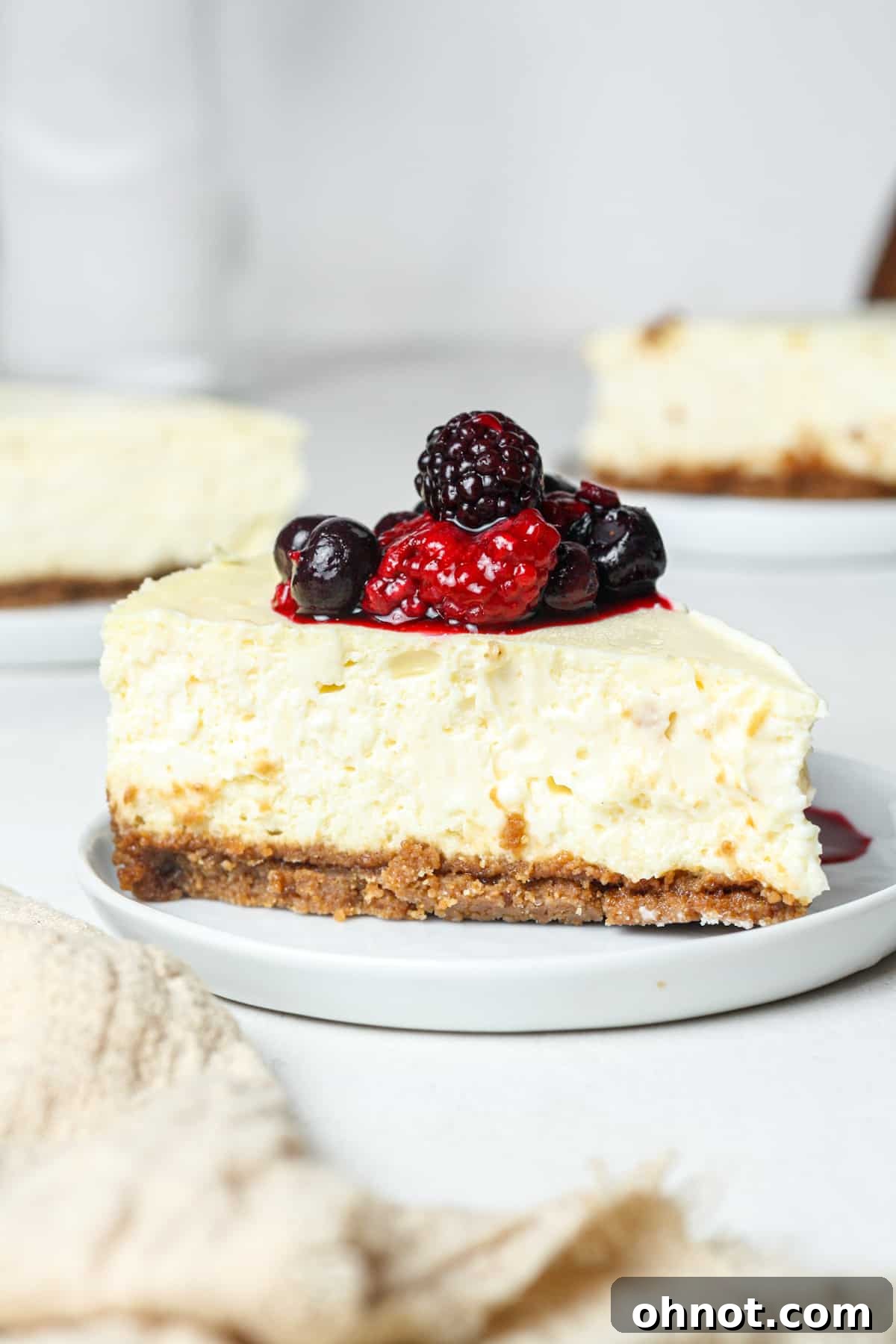
The Ultimate Gluten-Free Cheesecake: A Silky Smooth Delight
Prepare to indulge in the most exquisite gluten-free cheesecake you’ve ever tasted! This recipe delivers an unbelievably smooth and creamy texture that melts in your mouth, perfectly complemented by a crisp, buttery graham cracker crust. It’s the ultimate dessert for any occasion, from festive holiday gatherings and special birthday celebrations to a simple, elegant treat for yourself. Say goodbye to compromises and embrace a truly decadent cheesecake experience that everyone can enjoy.
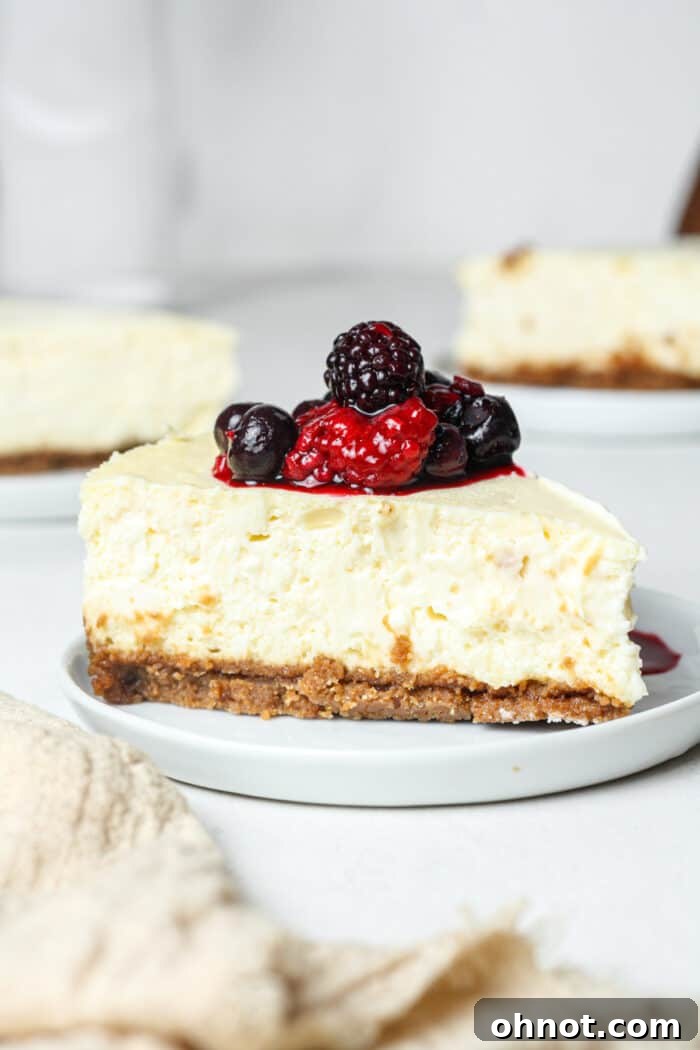
This delightful recipe is proudly sponsored by Pamela’s Products, helping us bring you the best in gluten-free baking. Your support allows us to continue sharing delicious recipes!
Why You’ll Fall in Love with This Gluten-Free Cheesecake Recipe
This isn’t just another cheesecake recipe; it’s a culinary revelation for anyone seeking a flawless gluten-free dessert. Here’s why this particular cheesecake will quickly become your go-to:
- **Unrivaled Creaminess:** The filling is incredibly smooth and velvety, a hallmark of a truly luxurious cheesecake. Every bite is a testament to its rich, decadent texture.
- **Effortless Elegance:** Despite its sophisticated taste and appearance, the luscious cheesecake filling requires only six simple ingredients, making it surprisingly straightforward to prepare.
- **Perfectly Crisp Crust:** Our gluten-free graham cracker crust is a masterpiece of buttery crunch, providing the ideal textural contrast to the creamy filling. It’s robust enough to hold up but delicate enough to complement.
- **Minimalist Crust Ingredients:** Achieving this amazing crust requires just three ingredients, simplifying the baking process without sacrificing flavor or texture.
- **Pure Decadence:** This cheesecake is the epitome of rich and decadent, designed to satisfy even the most discerning dessert connoisseur. Its classic vanilla flavor profile is universally loved.
- **Naturally Gluten-Free:** This recipe is meticulously crafted to be 100% gluten-free, ensuring a safe and delicious treat for those with dietary restrictions. No need to modify; it’s perfect as is!
- **Versatile Dessert:** Ideal for any event, from casual family dinners to elaborate holiday feasts. It’s a crowd-pleaser that fits every occasion.
- **Explore More Cheesecake Creations:** If you adore the classic, be sure to also try our Oreo Cheesecake for a cookie lover’s dream or our rich Peanut Butter Cheesecake for a nutty twist.
- **Master the Crust:** For those who want to perfect their technique, check out our dedicated guide on Gluten Free Graham Cracker Crust for advanced tips and tricks.
Essential Ingredients and Smart Substitutions
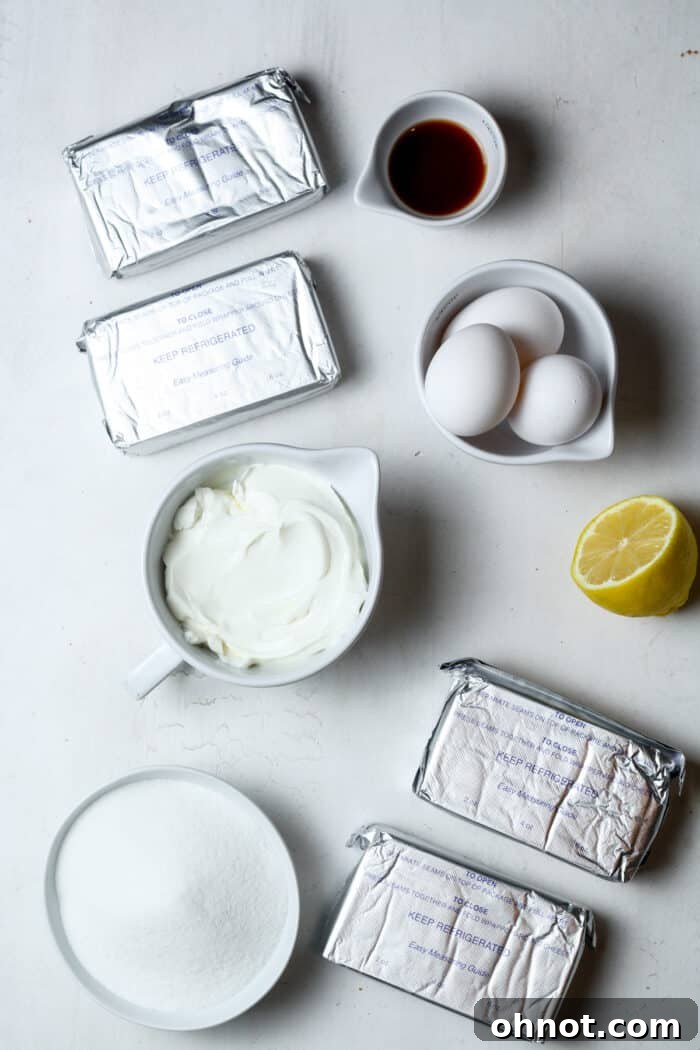
Crafting the perfect gluten-free cheesecake starts with understanding each ingredient’s role. Below are the key components and a few important notes on substitutions. For the complete list and detailed instructions, refer to the recipe card further down.
For the Irresistible Graham Cracker Crust:
- Gluten-Free Graham Crackers: These form the very foundation of our exquisite crust. For this recipe, we highly recommend Pamela’s grain-free honey grahams, which deliver exceptional flavor and texture. It’s crucial to process the graham crackers into fine, even crumbs before measuring out the specified 1 ¾ cups. Consistency in crumb size ensures a cohesive crust. Alternatively, for a truly homemade touch, consider preparing your own Homemade Gluten-Free Graham Crackers.
- Melted Butter: This acts as the binding agent for the crust, fusing the crumbs together into a firm, yet tender base. It also imparts that signature rich, buttery flavor that makes a graham cracker crust so delicious. Use unsalted butter for better control over the overall saltiness.
- Granulated Sugar: A small amount of granulated sugar is added to the crust to enhance its sweetness and complement the natural flavor of the graham crackers. This subtle sweetness provides a delightful contrast to the tangy cheesecake filling.
For the Velvety Cheesecake Filling:
- Room Temperature Cream Cheese: This is arguably the most critical ingredient for a crack-free, lump-free cheesecake. Cold cream cheese will inevitably lead to a lumpy batter, no matter how long you beat it. Ensure your cream cheese has softened thoroughly at room temperature for at least 1-2 hours (or longer, depending on your kitchen’s temperature) before you begin. We’ve tested this recipe with both light and full-fat cream cheese; while both work, full-fat cream cheese undeniably delivers a richer, more luxurious creaminess.
- Sour Cream: Beyond contributing to the filling’s incredible creaminess, sour cream introduces a subtle, slightly tart flavor. This tanginess is essential for balancing the sweetness and richness of the cream cheese, preventing the cheesecake from tasting overly heavy.
- Granulated Sugar: Provides the primary sweetness for the cheesecake filling. The amount is carefully balanced to achieve a perfectly sweet yet not cloying flavor.
- Vanilla Extract: A generous measure of vanilla extract infuses the filling with that classic, comforting vanilla aroma and taste, enhancing the overall depth of flavor. We recommend a good quality pure vanilla extract for the best results. You can find a recommended brand here.
- Lemon Juice: Just a touch of fresh lemon juice is added to provide a subtle bright acidity that lifts the flavors of the cheesecake. Don’t worry, the finished cheesecake won’t taste overtly lemony; the lemon flavor is barely detectable, instead acting as a silent enhancer, brightening the vanilla and cream cheese notes.
- Eggs: Eggs are indispensable in a cheesecake filling, providing structure, richness, and helping the cheesecake set properly. They are a binder and an emulsifier, ensuring a smooth and consistent texture. **It is vital not to substitute the eggs in this recipe**, as they are fundamental to the cheesecake’s structure and preventing a dense or crumbly result.
Mastering the Art of Preventing Cheesecake Cracks
Cheesecake cracks can be frustrating, but they are often preventable with a few simple techniques. Achieving that smooth, unblemished surface is easier than you think. Here are our top tips and tricks to ensure your gluten-free cheesecake comes out perfectly:
- **Embrace Room Temperature Ingredients:** This tip cannot be stressed enough. Cold cream cheese is the primary culprit behind lumpy batter and, subsequently, cracks. Ensure all your dairy ingredients – cream cheese, sour cream, and even eggs – are at true room temperature. This allows them to combine smoothly and evenly, creating a uniform batter free of air pockets that can expand and crack during baking.
- **Avoid Over-Mixing, Especially with Eggs:** Over-mixing introduces excessive air into the batter. As the cheesecake bakes, this trapped air expands, creating tension that can lead to cracks when the cheesecake cools and contracts. Once you add the eggs, mix only until they are just incorporated. A few gentle stirs are often all that’s needed to bring them into the batter.
- **Invest in a Quality Springform Pan:** A springform pan is essential for easy removal of your cheesecake without damaging its delicate structure. Its design allows the sides to be unlatched and removed, leaving your beautiful cheesecake intact on its base. This prevents the need to invert the cheesecake, which is a common cause of cracks.
- **The Magic of a Water Bath:** Baking your cheesecake in a water bath (bain-marie) is a game-changer. This method surrounds the cheesecake with a moist, consistent heat, allowing it to bake gently and evenly. The steam created by the water bath also prevents the cheesecake from drying out and rising too quickly, both of which are major contributors to cracking. We’ll detail how to set this up below.
- **Slow and Gentle Cooling is Key:** Rapid temperature changes are a cheesecake’s arch-nemesis. Once your cheesecake is baked, do not immediately remove it from the oven. Instead, turn off the oven heat, crack the oven door slightly, and let the cheesecake cool gradually inside for about an hour. This slow cooling process allows the cheesecake to set without experiencing a sudden contraction that causes cracks.
Despite your best efforts, sometimes a crack may still appear. Don’t despair! A cracked cheesecake is still absolutely delicious. Simply embrace it as a rustic charm and cover it with your favorite toppings like a generous dollop of whipped cream, a cascade of fresh berries, or a drizzle of rich chocolate sauce. No one will ever know!
Taste & Texture: A Symphony of Flavors
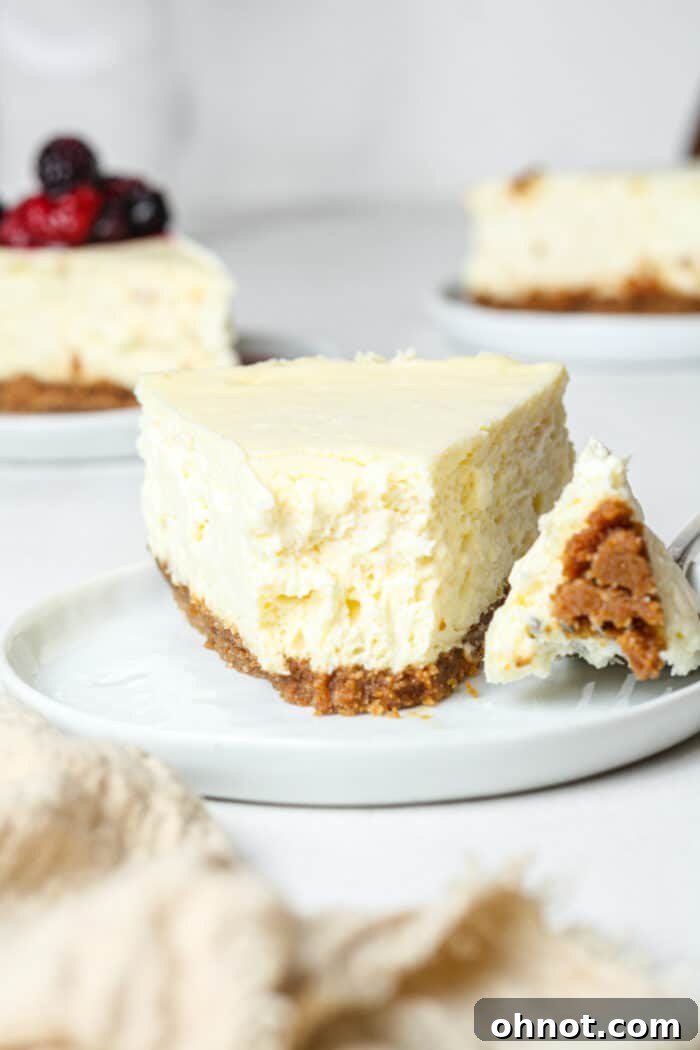
Prepare your senses for a truly classic experience. This gluten-free cheesecake embodies the pure, comforting taste of traditional vanilla cheesecake. It’s a flavor profile that is both familiar and utterly satisfying, with rich cream cheese notes balanced by subtle sweetness and a hint of vanilla.
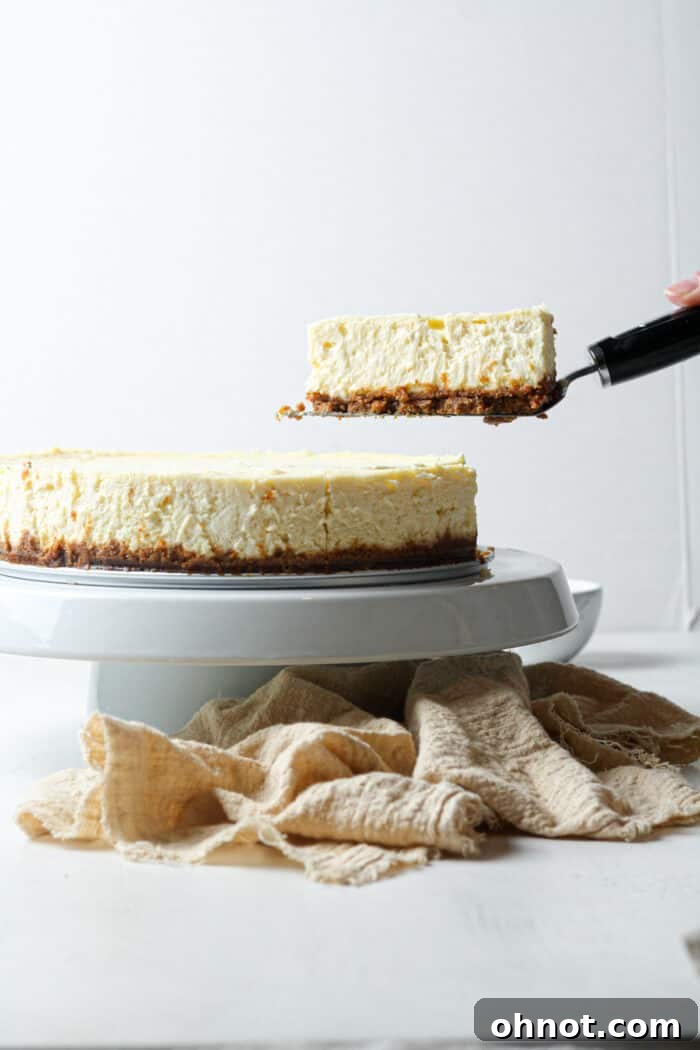
The texture is what truly sets this cheesecake apart. The filling boasts an incredible creaminess, so smooth it feels like velvet on your tongue. It’s delicate, yet firm enough to hold its shape beautifully. Contrasting this luxurious filling is the crust – wonderfully crunchy and crispy, delivering that satisfying texture and buttery graham cracker flavor with every bite.
Step-by-Step Guide: How to Make This Perfect Gluten-Free Cheesecake
Follow these detailed steps to create your own show-stopping gluten-free cheesecake. Precision is key for the best results!
Step 1: Prepare Your Graham Cracker Crumbs
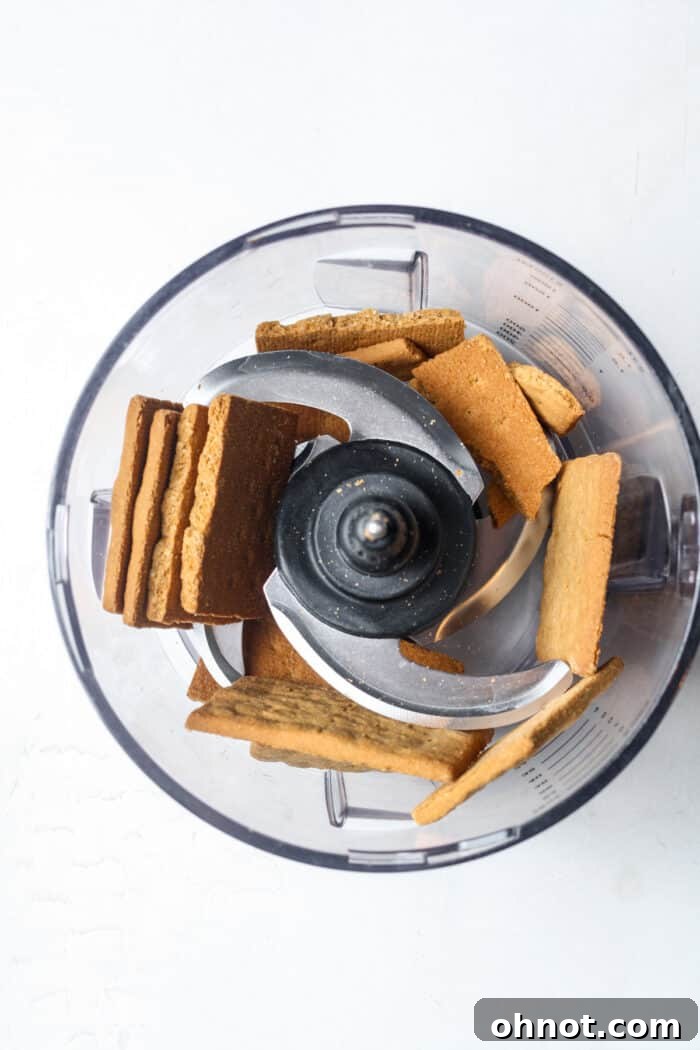
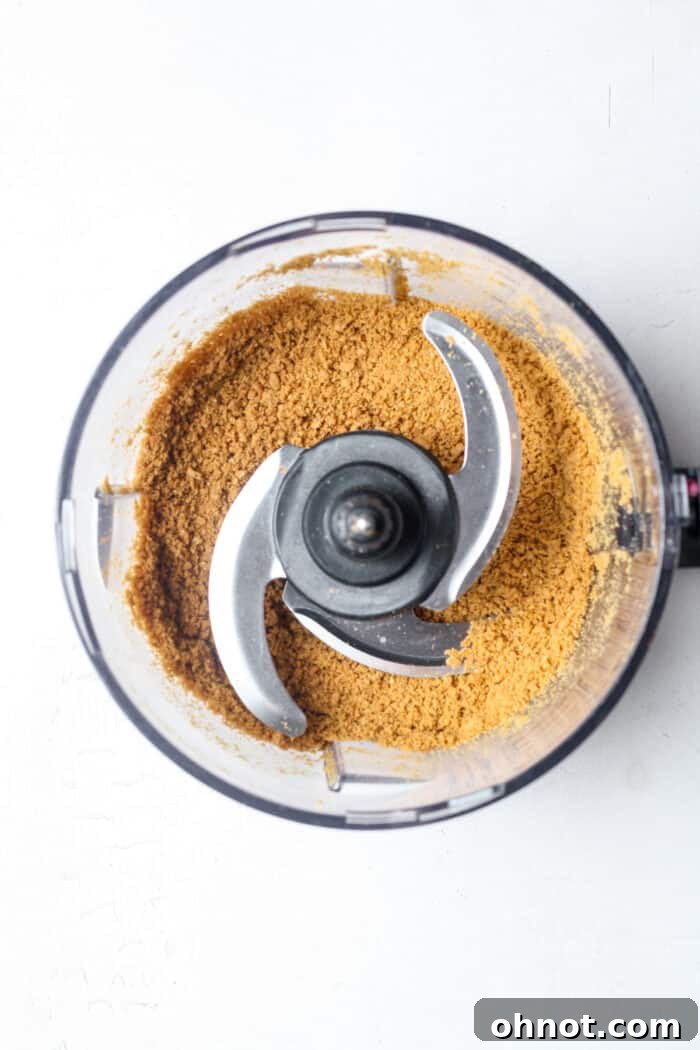
Begin by preheating your oven to 350 degrees Fahrenheit (175°C). Next, prepare the gluten-free graham cracker crust. Place your chosen gluten-free graham crackers into a food processor. Process them until they are uniformly fine crumbs. Once processed, measure out exactly 1 ¾ cups of these crumbs. This precise measurement is essential for the crust’s consistency.
Step 2: Combine Crust Ingredients
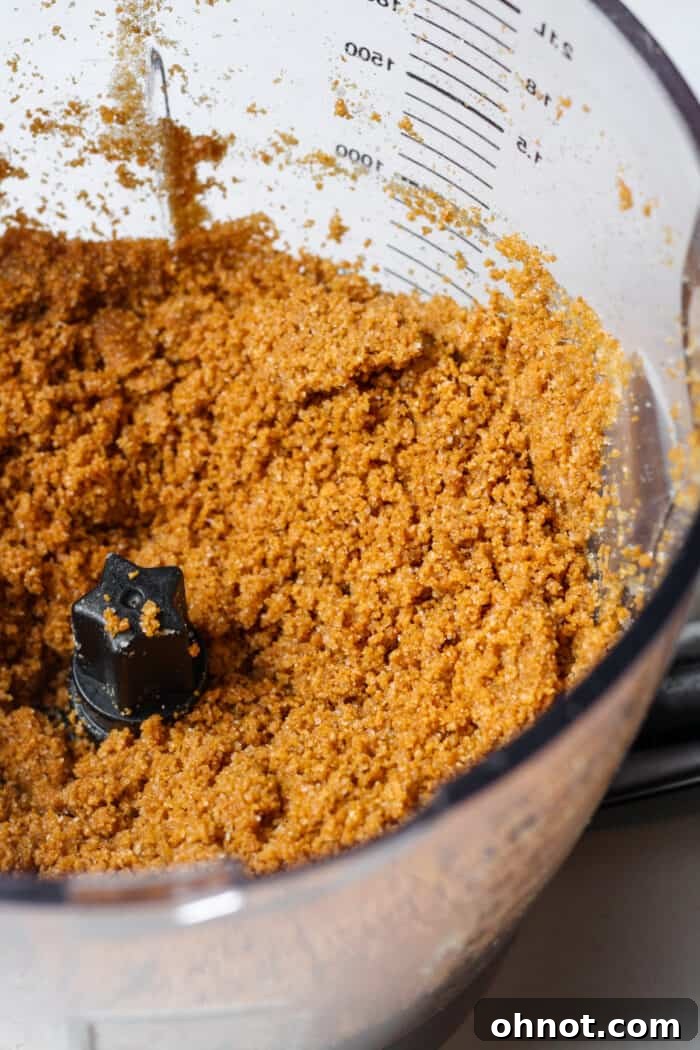
Return the measured graham cracker crumbs to the food processor bowl. Add the melted butter and granulated sugar. Process again until all ingredients are thoroughly combined. The mixture should appear moist and crumbly. To test for proper consistency, press a small amount of the crumbles between two fingers; it should lightly stick together, indicating it’s ready to form a cohesive crust.
Step 3: Form the Crust in the Pan
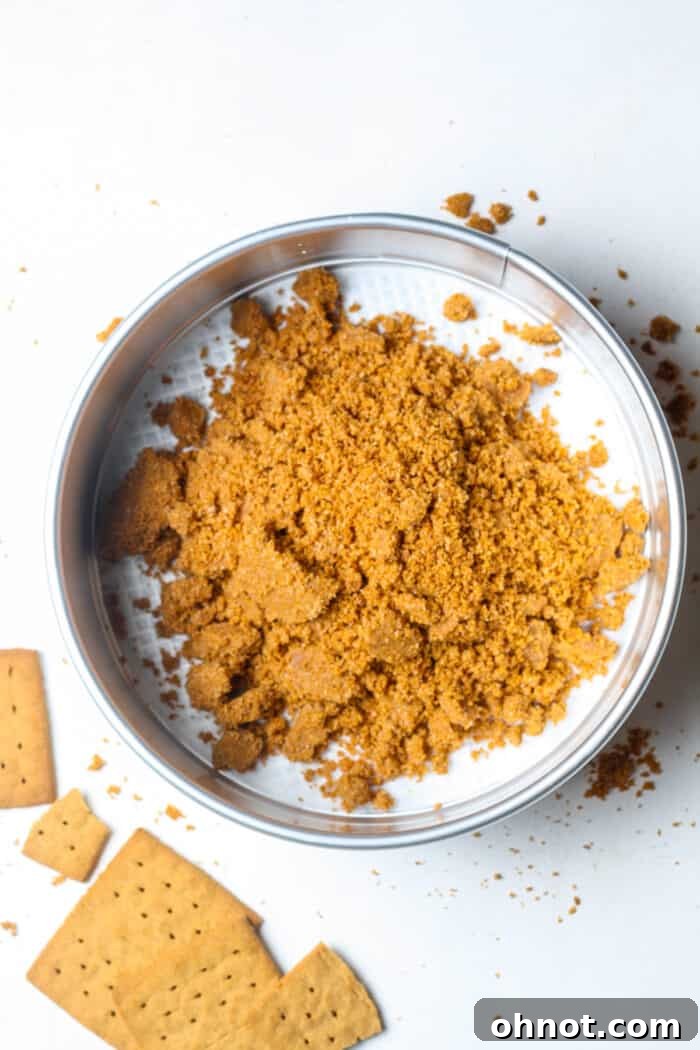
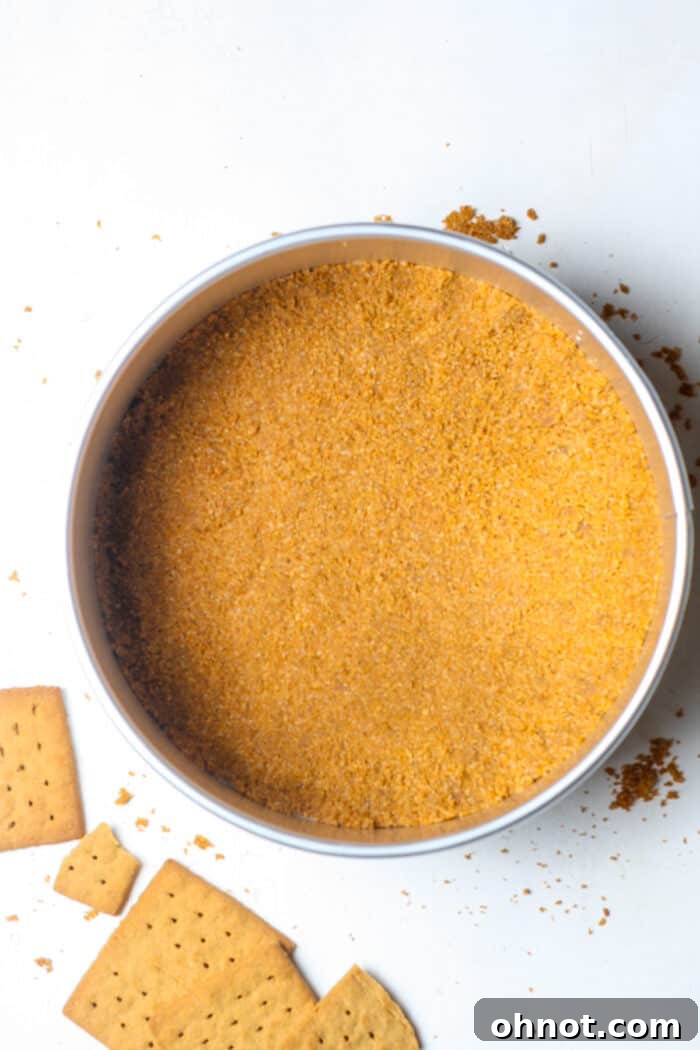
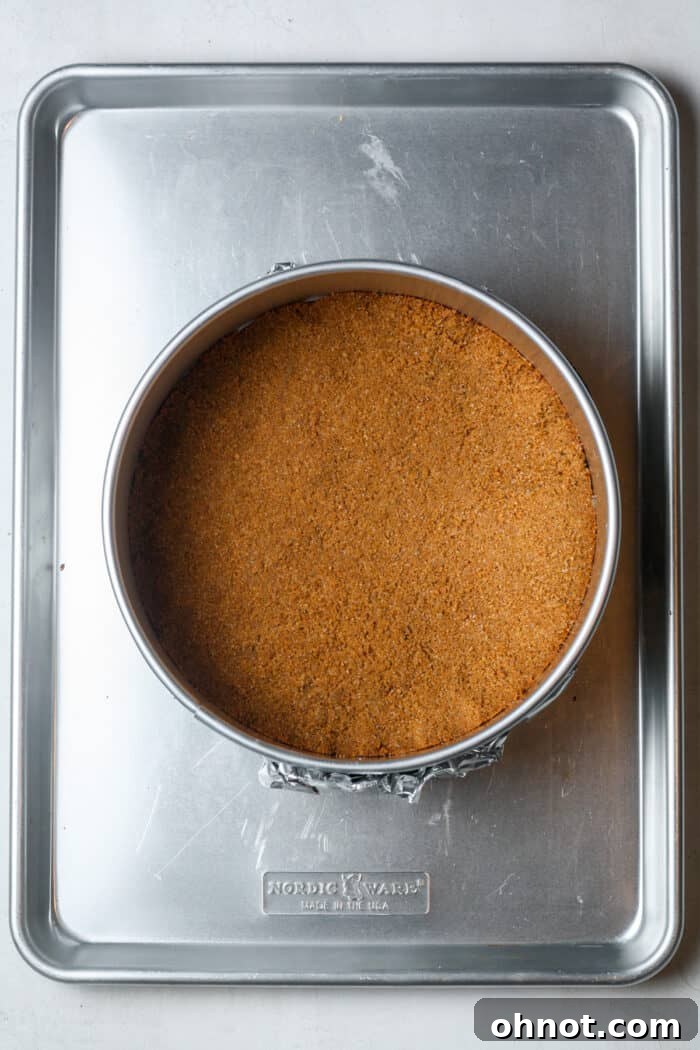
Take your springform pan and line the bottom with a circle of parchment paper. This simple step helps prevent sticking and makes removal much easier. Evenly spread the crumbly graham cracker mixture into the bottom of the pan. Using your fingers or the flat bottom of a cup, press the mixture down firmly and evenly to create a compact, uniform layer. A well-pressed crust will be crispier and less likely to crumble when sliced.
Step 4: Pre-Bake the Crust
Place the springform pan with the crust into your preheated oven and bake for 8 minutes. Pre-baking the crust helps to set it, making it firmer and preventing it from becoming soggy once the filling is added. After baking, remove the crust from the oven and set it aside to cool slightly while you prepare the cheesecake filling.
Step 5: Prepare Water for the Water Bath
To prepare for the water bath, add 2 cups of water to a small pot and bring it to a rolling boil on your stovetop. This boiling water will be crucial for creating the moist baking environment for your cheesecake.
Step 6: Cream the Cream Cheese
While the water comes to a boil, begin preparing the cheesecake filling. Add your room temperature cream cheese to the bowl of a stand mixer fitted with the paddle attachment. Beat on medium speed until the cream cheese is completely smooth and creamy, with no lumps remaining. This step is fundamental for a smooth filling.
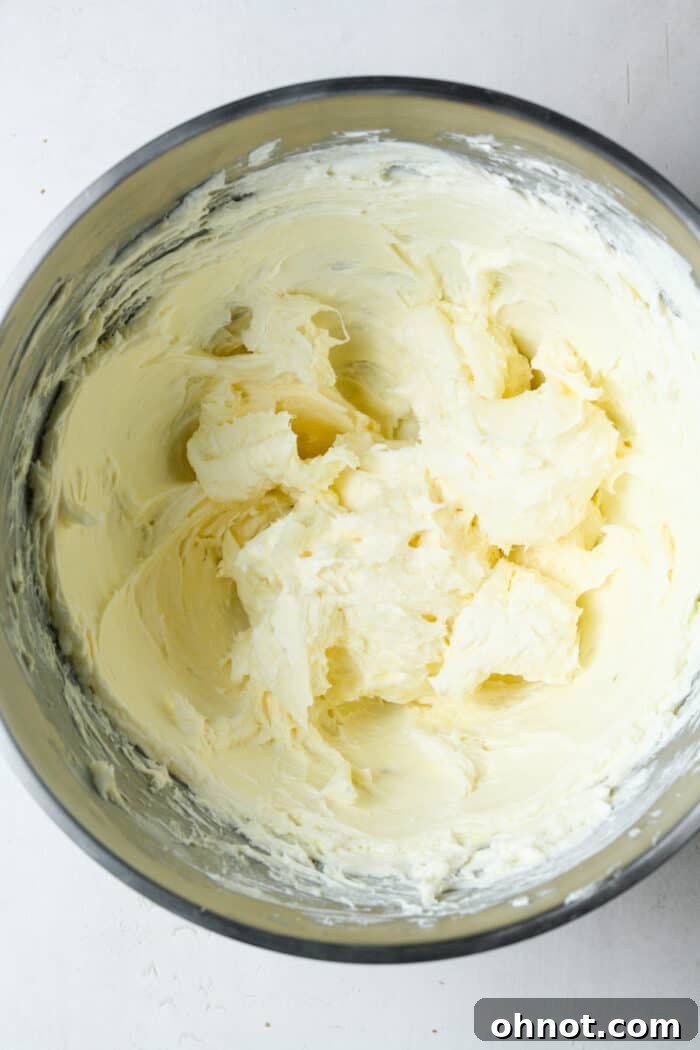
Step 7: Incorporate Additional Wet Ingredients
Next, add the sour cream, granulated sugar, vanilla extract, and lemon juice to the creamy cream cheese. Continue beating on medium-low speed until all ingredients are fully combined and the mixture is perfectly smooth. Scrape down the sides of the bowl as needed to ensure everything is incorporated and absolutely no clumps of cream cheese remain.
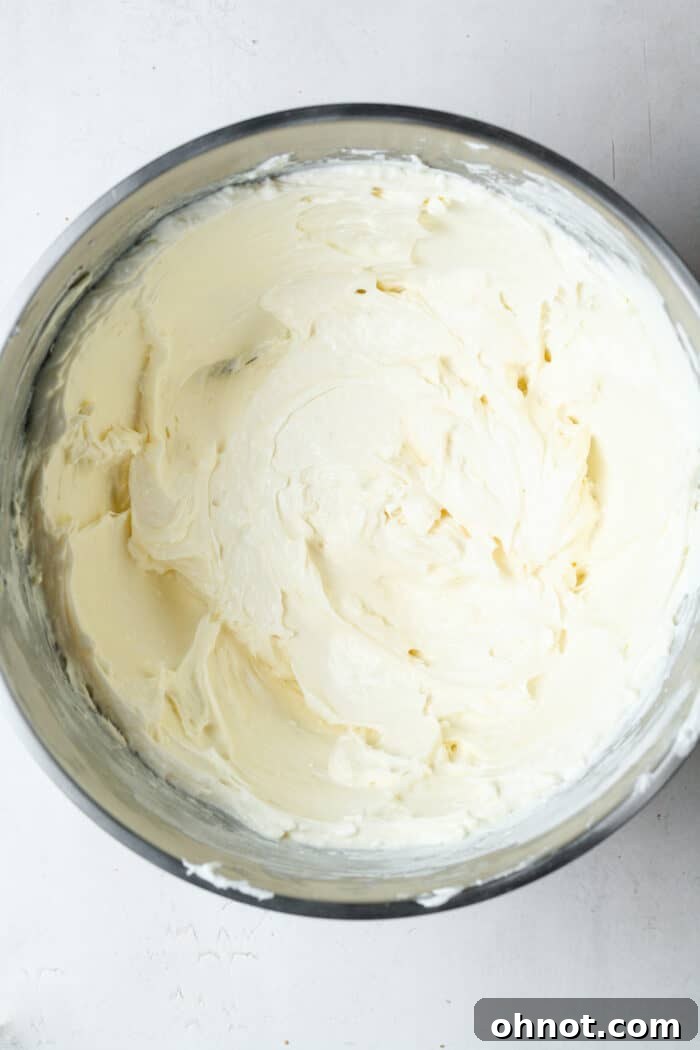
Step 8: Gently Mix in Eggs
Finally, add the eggs to the filling mixture. This is a critical step for preventing cracks. Stir only until the eggs are just combined with the rest of the batter. Do not overmix! Over-mixing at this stage incorporates too much air, which can cause the cheesecake to puff up and then crack during baking or cooling.
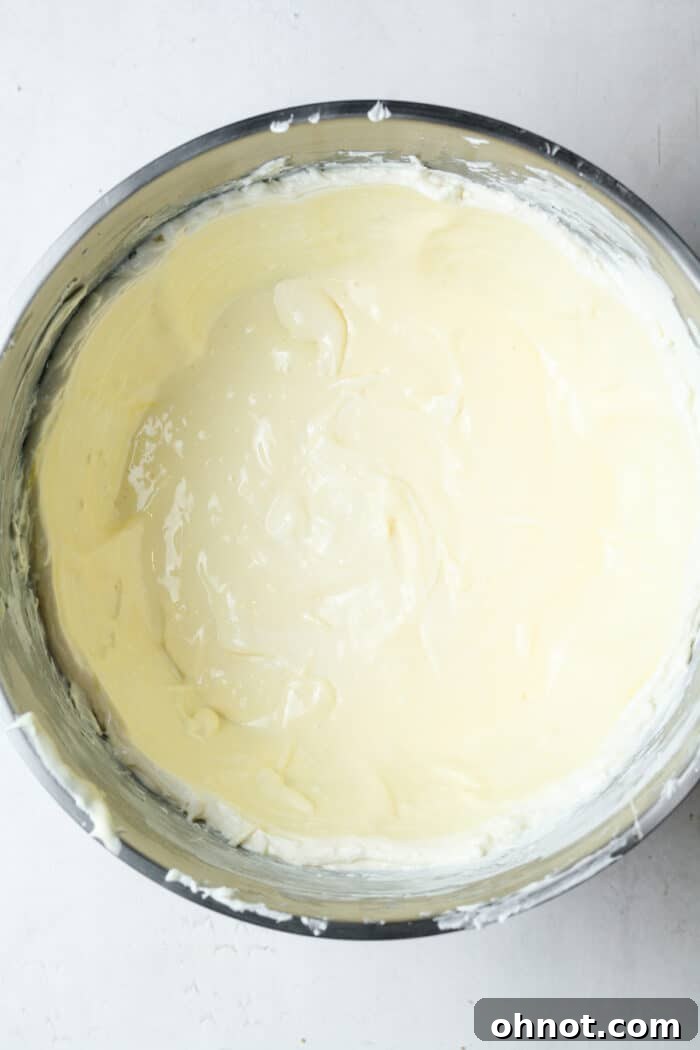
Step 9: Prepare Pan for Water Bath
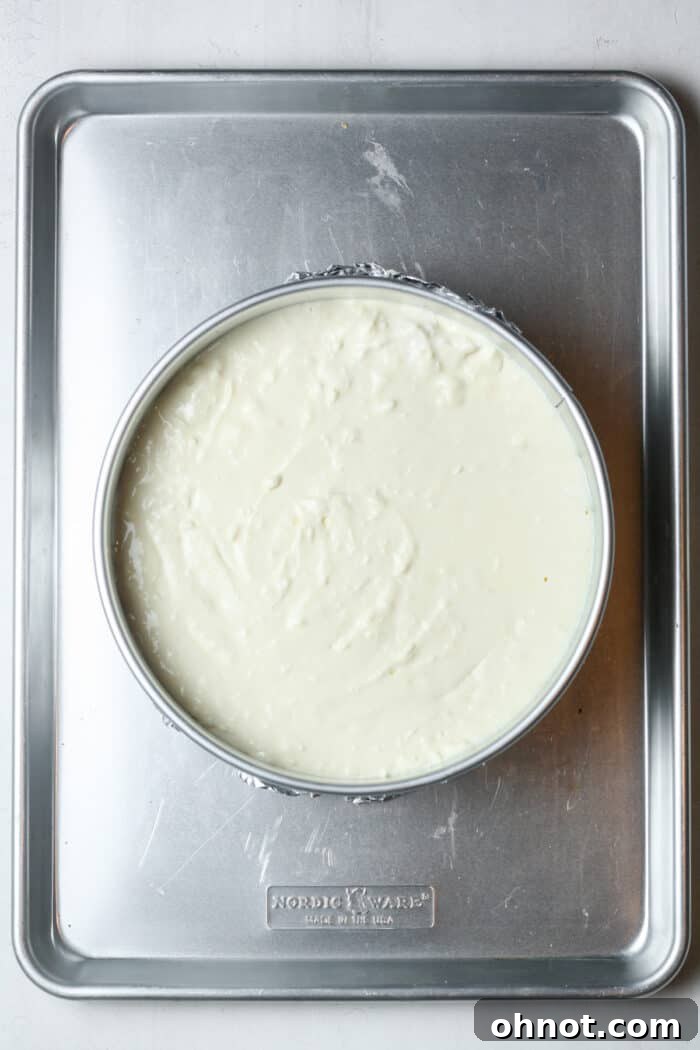
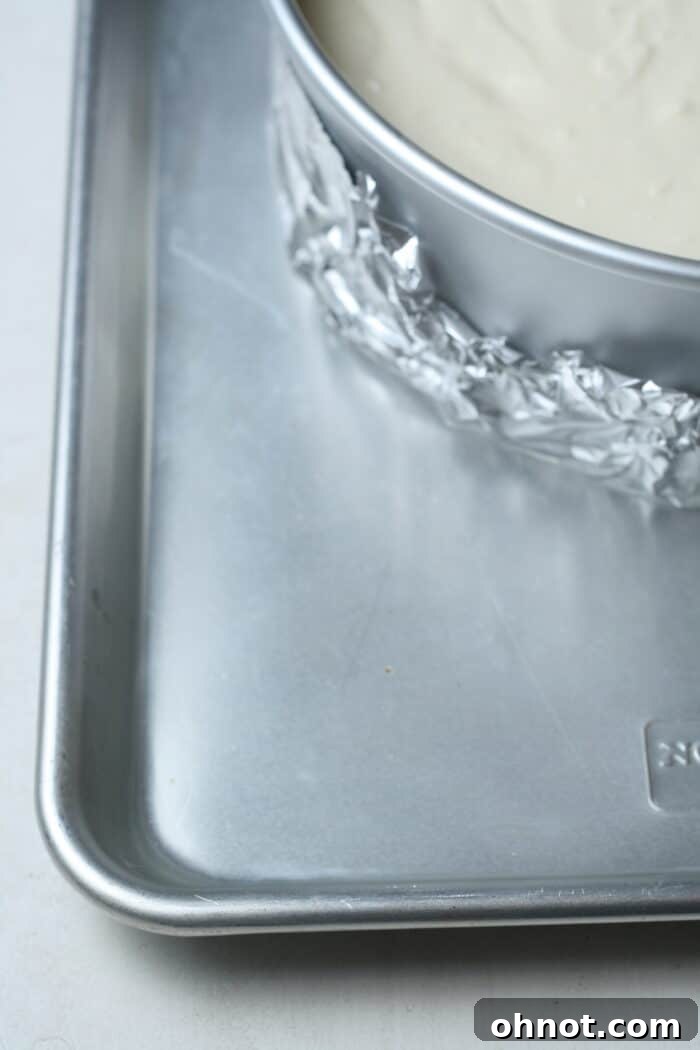
Tear off a large piece of heavy-duty aluminum foil. Carefully wrap it around the bottom and sides of your springform pan, extending up the sides. Ensure it’s sealed tightly to create a barrier. This crucial step prevents any water from the water bath from seeping into the crust and filling during baking, which could result in a soggy cheesecake.
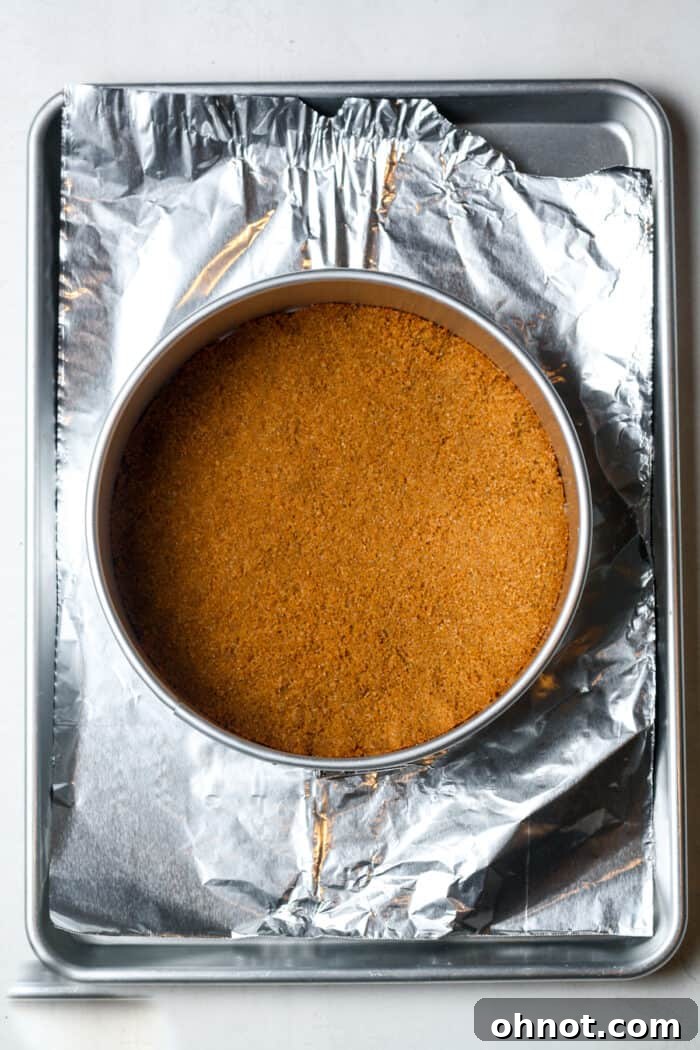
Step 10: Fill the Pan
Pour the prepared cheesecake filling evenly into the foil-wrapped springform pan, over the pre-baked crust. Use a spatula to gently smooth out the top surface of the filling, ensuring an even layer for beautiful presentation.
Step 11: Set Up the Water Bath
Carefully place the foil-wrapped springform pan into the center of a larger roasting pan with high edges. Then, very slowly and carefully pour the boiling water you prepared in Step 5 into the roasting pan. The water should come up along the sides of the springform pan by at least 1 to 1.5 inches. This creates the essential water bath for even baking. Refer to the photos above for visual guidance on setting up your water bath.
Step 12: Bake the Cheesecake
Carefully transfer the roasting pan with the cheesecake and water bath into the preheated oven. Bake for 1 hour at 350 degrees Fahrenheit (175°C). The cheesecake is ready when the edges are set, but the very center still has a slight jiggle when gently shaken. It will firm up considerably as it cools. If the middle appears raw or overly liquid, bake for another 5 minutes and check again. Avoid over-baking, as this can lead to a dry texture and cracks.
Step 13: Slow Cooling in the Oven
Once the cheesecake is baked, turn off the oven heat. Do not remove the cheesecake immediately! Instead, slightly crack open your oven door and allow the cheesecake to cool slowly inside the oven for 1 hour. This gradual decrease in temperature is vital for preventing cracks, as it allows the cheesecake to set without a sudden shock.
Step 14: Cool and Chill
After the hour of cooling in the oven, carefully remove the cheesecake from the water bath (be cautious with the hot water!). Let it cool completely at room temperature for another 2 hours. Once it has cooled, loosely cover the top of the pan with aluminum foil and transfer it to the refrigerator. Chill the cheesecake for a minimum of 4 hours, or ideally, overnight. Adequate chilling is crucial for the cheesecake to fully set and achieve its perfect firm yet creamy texture.
Step 15: Release and Prepare for Slicing
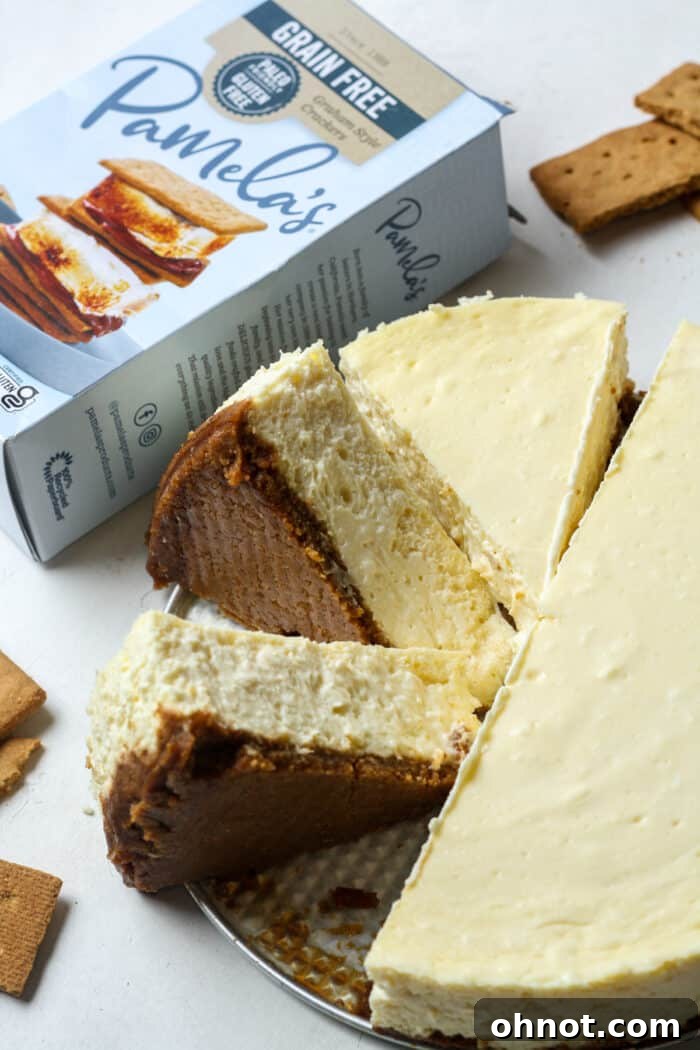
When the cheesecake is thoroughly chilled, run a large, thin knife carefully around the inner edge of the springform pan to loosen the cheesecake. Then, unlatch and open the springform pan, gently lifting the sides away from the cheesecake. You can leave the cheesecake on the pan’s base for serving or carefully transfer it to a serving plate.
Step 16: Slice and Serve
To achieve perfectly clean and precise slices, use a sharp, thin-bladed knife. For the cleanest cuts, dip your knife in warm water and wipe it clean before each slice. This technique ensures a smooth passage through the creamy filling and crisp crust. Serve chilled and enjoy!
Expert Tips & Tricks for Cheesecake Perfection
Baking a flawless cheesecake is an art, but these expert tips will guide you to success:
- **Adhere to the Recipe:** For the very best results, it’s highly recommended to follow this gluten-free cheesecake recipe precisely. Cheesecake baking is a delicate science, and minor alterations can sometimes lead to unexpected outcomes.
- **The Golden Rule of Room Temperature Cream Cheese:** This is the absolute key to a smooth, lump-free filling and helps prevent cracks. Ensure your cream cheese is completely soft to the touch before mixing. If there are any stubborn clumps in your filling batter, gently warm the bowl over a hot water bath (not directly on heat) and whisk until smooth.
- **The Danger of Over-Mixing:** Once the eggs are added to the batter, mix only until they are just incorporated. Over-mixing introduces too much air, which can cause the cheesecake to rise excessively during baking and then collapse and crack as it cools.
- **Foil Wrap for the Water Bath:** Don’t skip wrapping the bottom and sides of your springform pan with heavy-duty aluminum foil. This acts as a protective barrier, preventing any water from the water bath from seeping into your delicious crust and filling, which could result in a soggy base.
- **The Perfect Jiggle Test:** Bake the cheesecake until it’s mostly set but still has a slight wobble in the very center when gently shaken. This “jiggle” indicates that it’s cooked through but not overbaked. The residual heat will continue to cook it as it cools, leading to a perfectly set texture.
- **Slow and Steady Cooling:** After baking, turn off your oven and leave the cheesecake inside with the door slightly ajar for at least an hour. This slow, gradual cooling process is crucial for preventing cracks caused by sudden temperature changes.
- **Achieve Clean Slices:** For presentation-worthy slices, always use a sharp, thin knife. For even cleaner cuts, run the knife under warm water and wipe it clean between each slice. This keeps the blade smooth and prevents it from dragging through the creamy filling.
The Essential Water Bath: Unveiling Its Secrets
The water bath, or bain-marie, is a non-negotiable technique for baking cheesecake, and understanding its benefits will make you a believer. It’s the secret weapon for achieving that signature velvety smooth, crack-free texture.
Why is a Water Bath So Important?
- Even Heat Distribution: Cheesecake filling is delicate and requires gentle, consistent heat to bake properly. A water bath acts as an insulator, distributing heat evenly around the springform pan. This prevents the edges from baking and setting too quickly while the center remains undercooked, which often leads to uneven texture and cracking.
- Moist Environment: The steam created by the boiling water inside the oven significantly increases the humidity around the cheesecake. This moist environment prevents the cheesecake’s surface from drying out and rising too rapidly, which are common causes of cracks. Instead, the cheesecake bakes slowly and gracefully, resulting in a beautifully smooth top.
- Creamier Texture: By ensuring slow, even baking and preventing dryness, the water bath promotes a custard-like consistency throughout the filling. The result is an incredibly creamy, almost custardy texture that is far superior to cheesecakes baked without this method, which can sometimes turn out dense or rubbery.
How to Construct a Perfect Water Bath:
- **Boil Water:** Begin by bringing at least 2 cups of water to a full boil in a small pot.
- **Prepare Your Pan:** Ensure your springform pan containing the cheesecake filling is securely wrapped in heavy-duty aluminum foil, covering both the bottom and sides to prevent any water seepage.
- **Placement:** Place the foil-wrapped springform pan into the center of a larger roasting pan with high sides.
- **Pour Hot Water:** Carefully and slowly pour the boiling water into the roasting pan, around the springform pan. Be gentle to avoid splashing water onto the cheesecake itself.
- **Water Level:** The water level in the roasting pan should come up at least 1 to 1.5 inches along the outside of the springform pan. This ensures adequate steam and insulation for even baking.
Embracing the water bath technique is a simple step that yields dramatically better results, transforming your cheesecake from good to absolutely phenomenal.
Delectable Toppings to Elevate Your Cheesecake
While this gluten-free cheesecake is divine on its own, it also serves as a fantastic “blank slate” for a variety of delicious toppings. Get creative and customize each slice to your liking!
- Fresh Berries: A vibrant mix of fresh strawberries, blueberries, raspberries, or blackberries adds a burst of tartness and freshness that beautifully contrasts the rich creaminess of the cheesecake.
- Whipped Cream: A dollop of homemade whipped cream provides a light, airy complement, adding an extra layer of sweetness and a delicate texture.
- Caramel Sauce: A drizzle of warm, gooey caramel sauce offers a buttery, rich, and sweet indulgence that pairs perfectly with the vanilla notes.
- Melted Chocolate: A generous drizzle of melted dark, milk, or white chocolate can transform your cheesecake into a truly decadent dessert. Consider a chocolate ganache for an extra luxurious touch.
- Pecan Halves: Toasted pecan halves add a delightful crunch and nutty flavor, providing an excellent textural contrast to the smooth filling.
- Gluten-Free Oreo Crumbles: For a fun and familiar twist, sprinkle some crushed gluten-free Oreo cookies on top for added chocolatey flavor and crunch.
- Fruit Compote or Coulis: A homemade fruit compote (like cherry, apple, or peach) or a smooth fruit coulis can add intense fruity flavor and a beautiful glaze.
Feeling adventurous? You might also love our Chocolate Chip Cheesecake for a different flavor experience!
Serving & Storing Your Gluten-Free Masterpiece
Ensuring your cheesecake is served at its best and stored properly will maximize its deliciousness and longevity.
How to Serve:
This gluten-free cheesecake is best served once it’s thoroughly chilled and cleanly sliced. The cold temperature enhances its firm yet creamy texture and allows the flavors to fully meld. While it’s delightful on its own, it truly shines when paired with any of the delectable toppings mentioned above. Consider offering a selection of toppings so guests can customize their slices!
How to Store:
Any leftover cheesecake should be stored in an airtight container in the refrigerator. When properly stored, it will maintain its freshness and incredible flavor for up to 3 days. To prevent the cheesecake from absorbing other fridge odors, ensure it’s well-covered.
Can You Freeze Cheesecake?
Absolutely! This cheesecake freezes exceptionally well, making it perfect for preparing ahead or saving portions for later. To freeze, we recommend wrapping individual slices tightly in plastic wrap, then placing them in an airtight freezer-safe container or freezer bag. This prevents freezer burn and makes it easy to thaw just one slice at a time. Frozen cheesecake will keep beautifully for up to 2 months. To enjoy, simply transfer a slice to the refrigerator and allow it to defrost for several hours or overnight.
Frequently Asked Questions About Gluten-Free Cheesecakes
No, traditional cheesecake is usually not gluten-free. The crust almost always contains gluten, typically made from wheat-based graham crackers. Additionally, some cheesecake fillings might use flour or other gluten-containing thickeners.
Not always. While many cheesecake fillings are naturally gluten-free (relying on eggs and cream cheese for thickening), some recipes might include a small amount of flour or starch that contains gluten to help stabilize the filling. Always check the recipe or ingredient list if you have gluten sensitivities.
Yes, absolutely! This cheesecake freezes wonderfully. For best results, wrap individual slices tightly in plastic wrap, then place them in an airtight container or freezer bag. You can freeze it for up to 2 months. Thaw in the refrigerator before serving.
For clean, precise cuts, use a sharp, thin-bladed knife. For even smoother slices, dip the knife in warm water and wipe it clean between each cut. This technique prevents the creamy filling from sticking to the blade and creates beautiful presentation.
While technically you could bake cheesecake in a regular cake pan, a springform pan is highly recommended. Its removable sides allow for easy and damage-free removal of the delicate cheesecake, ensuring a beautiful presentation without needing to invert the cake.
For the best possible results – a creamy, crack-free, and evenly baked cheesecake – a water bath is indeed highly recommended. It provides gentle, moist heat that prevents the cheesecake from drying out or baking too quickly, which are common causes of cracks and a rubbery texture.
For optimal texture and to allow the cheesecake to fully set and firm up, we recommend chilling it for at least 4 hours. Ideally, chilling it overnight yields the best results, ensuring a perfectly firm yet creamy slice.
You May Also Love These Delightful Desserts
If you enjoyed this gluten-free cheesecake, be sure to explore more of our tempting dessert recipes:
- Mini Oreo Cheesecakes
- Paleo Vegan Blueberry Cheesecake
- Vegan Mango Cheesecake (No Bake & Raw)
- Strawberry Cheesecake Cookies
- Paleo Brownies
If you try this incredible gluten-free cheesecake recipe, we would absolutely love to hear your feedback! Please leave a review and share your creations. You can find us and connect on Instagram, Facebook, and Pinterest. We love seeing what you bake! For even more dessert inspiration, explore our wide range of Dessert Recipes.
Get the Recipe: Gluten Free Cheesecake
This gluten free cheesecake is rich, creamy and so smooth! The gluten free graham cracker crust is crispy and buttery. The filling is so creamy. This homemade cheesecake is perfect for any occasion!
Pin Recipe
Ingredients
Graham Cracker Crust
- 1 ¾ cups gluten free graham cracker crumbs
- 6 tbsp melted butter
- 3 tbsp granulated sugar
Cheesecake
- 32 ounces room temperature cream cheese
- 1 cup sour cream
- ¾ cup granulated sugar
- 2 tsp vanilla extract
- 1 tsp lemon juice
- 3 eggs
Instructions
- First, preheat oven to 350 degrees Fahrenheit. Make graham cracker crust. Add graham crackers to a food processor. Process until they become crumbs. Then measure out 1 ¾ cups.
- Add graham cracker crumbs, melted butter and sugar back to food processor. Process until combined. If you press some of the crumbles between two fingers, it should lightly stick together.
- Line bottom of springform pan with parchment paper. Spread the crumbly mixture down into pan. Use fingers or bottom of cup to press into one even layer.
- Bake for 8 minutes. Remove from oven and set aside while you make the cheesecake filling.
- Add 2 cups of water to a pot and bring to a boil.
- While the water boils, make cheesecake filling. Add room temperature cream cheese to stand mixer. Beat until creamy.
- Then, add in sour cream, sugar, vanilla extract and lemon juice. Beat until combined and no clumps of cream cheese remain.
- Add in eggs. Stir until just combined. Do not over mix.
- Take a large piece of aluminum foil and wrap it around the bottom and edges of springform pan. This prevents the water from seeping into the cheesecake while baking.
- Pour cheesecake filling into springform pan. Smooth out the top with a spatula.
- Prepare water bath. Place springform pan in the middle of a large roasting pan with edges. Carefully and slowly pour the boiling water in the roasting pan so that it comes up along the edges of the springform pan. See photos above for reference.
- Place pan in oven and bake for 1 hour at 350 degrees Fahrenheit. Cheesecake is done when it is slightly jiggly when shaken. It will firm up slightly as it cools. If the middle is still raw, bake for another 5 minutes and check again.
- Once cheesecake is done, turn oven heat off. Crack open your oven slightly and allow the cheesecake to cool done for 1 hour in the oven.
- Carefully remove cheesecake from water bath in the oven. Allow it cool for 2 hours at room temperature. Then, loosely top with tin foil and refrigerate for at least 4 hours up to overnight.
- When completely chilled, use a large knife to loosen the cheesecake from the edges of the pan. Open up springform pan.
- Use a sharp knife to slice and serve. I like to dip my knife in warm water before each slice to get precise cuts.
Notes
- See blog post above for helpful tips, tricks and photos.
- Cheesecake is not a forgiving dessert, therefore I do not recommend any changes to this recipe.
- Store cheesecake in the fridge for up to 3 days.
- This cheesecake freezes well! Wrap individual slices and freeze for up to 2 months. Defrost before eating.
Nutrition Facts (per slice, estimated)
Calories: 500kcal,
Carbohydrates: 56g,
Protein: 18g,
Fat: 23g,
Saturated Fat: 13g,
Polyunsaturated Fat: 1g,
Monounsaturated Fat: 4g,
Trans Fat: 1g,
Cholesterol: 113mg,
Sodium: 872mg,
Potassium: 307mg,
Fiber: 1g,
Sugar: 35g,
Vitamin A: 473IU,
Vitamin C: 1mg,
Calcium: 376mg,
Iron: 1mg
Love this gluten-free cheesecake? Don’t miss out on more delicious and healthy recipes! You can sign up here to receive exclusive new recipes, healthy meal plans, and all our latest updates directly to your inbox!