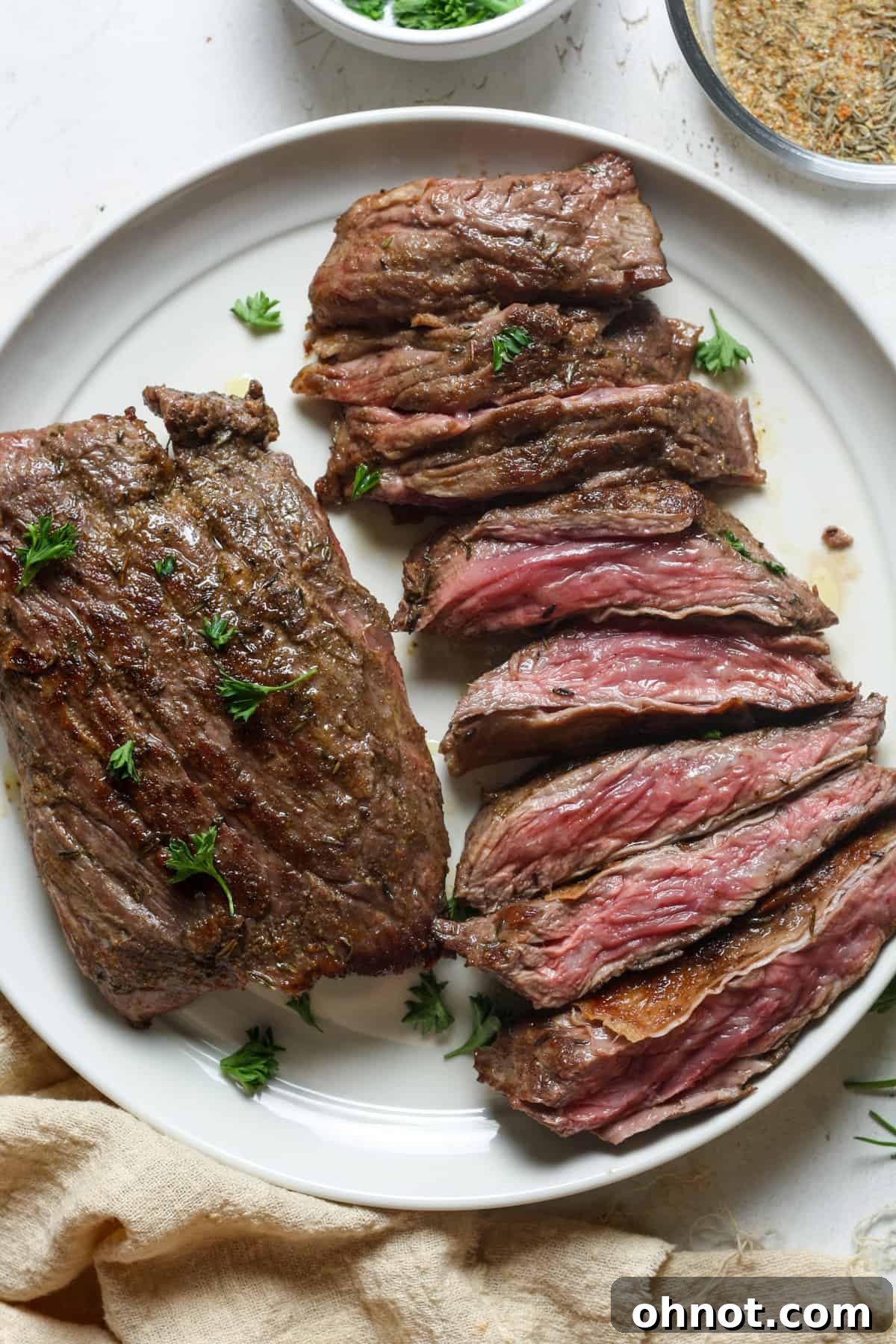
Embark on a culinary journey with this exceptional skirt steak recipe, designed to deliver unparalleled tenderness and robust flavor in under 15 minutes. This isn’t just a meal; it’s a gourmet experience made accessible for any weeknight dinner. Imagine sinking your teeth into succulent, juicy, and savory steak that practically melts in your mouth – that’s precisely what awaits you with this foolproof method. Skirt steak, a powerhouse of protein and a lean choice for health-conscious diners, transforms into an incredibly versatile component for a myriad of dishes. Whether you envision it nestled in vibrant salads, layered in hearty sandwiches, tucked into flavorful tacos, rolled into delicious burritos, or simply enjoyed as the star of your plate, this recipe ensures a delightful and satisfying foundation for your culinary creations.
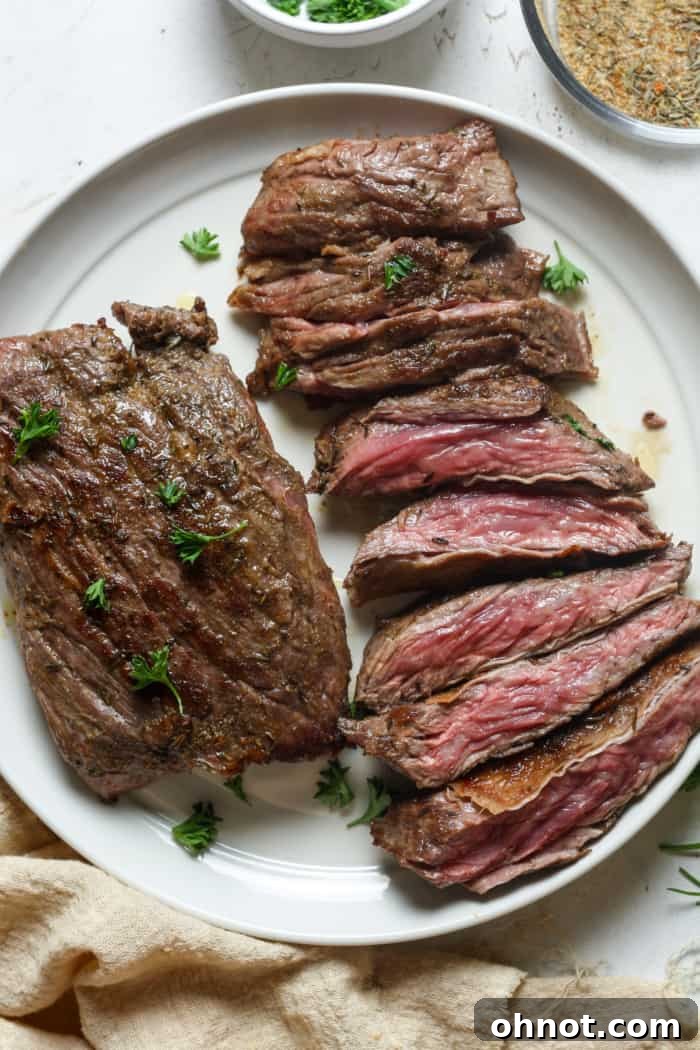
Why This Skirt Steak Recipe Will Become Your Weeknight Go-To
This skirt steak recipe is poised to become an indispensable addition to your weekly meal rotation, offering a blend of convenience, health benefits, and exquisite taste that’s hard to beat. Here’s a closer look at why you’ll absolutely adore making (and devouring!) this dish:
- Unmatched Speed and Simplicity: In today’s fast-paced world, finding a recipe that is both quick and easy is a true gem. This skirt steak recipe excels in both, requiring minimal effort and time in the kitchen. From the moment you start preparation to the minute it hits your plate, you’re looking at a total time investment of approximately 15 minutes, making it perfect for busy evenings when you crave a delicious homemade meal without the fuss.
- Minimal Ingredients, Maximum Flavor: Forget about complex ingredient lists. This recipe shines with its elegant simplicity, calling for just 5 essential ingredients. This streamlined approach ensures that the natural, rich flavor of the skirt steak is not overshadowed but perfectly complemented, allowing its inherent deliciousness to truly shine through.
- Guaranteed Tenderness and Juiciness: Say goodbye to dry, tough steak. Our method ensures that your skirt steak emerges from the pan incredibly tender and bursting with savory juices. The secret lies in high-heat searing and proper resting, techniques that lock in moisture and create a melt-in-your-mouth texture that rivals restaurant quality.
- Versatile Culinary Canvas: Skirt steak is renowned for its adaptability, and this recipe highlights its incredible versatility. It’s not just a steak; it’s a foundation for countless culinary creations. Whether you’re planning tacos, fajitas, stir-fries, omelets, frittatas, elegant salads, or hearty sandwiches, this steak effortlessly integrates into a wide array of dishes, offering endless possibilities for creative meals.
- Budget-Friendly Choice: Enjoying high-quality beef doesn’t have to break the bank. Skirt steak is an affordable cut of meat that delivers exceptional flavor and tenderness when prepared correctly, offering a delicious and economical alternative to more expensive prime cuts.
- Nutrient-Rich and Diet-Friendly: For those following specific dietary guidelines, this recipe is a dream come true. It’s naturally high in protein and remarkably low in carbohydrates, aligning perfectly with Whole30, Keto, Paleo, gluten-free, dairy-free, sugar-free, nut-free, and low-carb lifestyles. It’s a healthy choice that doesn’t compromise on taste.
- Multiple Cooking Methods: While our primary recipe focuses on a quick pan sear, skirt steak is incredibly forgiving and adaptable to various cooking techniques. Feel free to grill it for a smoky char, sous vide for ultimate precision, or incorporate it into a quick stir-fry. This flexibility means you can achieve perfect results regardless of your preferred cooking equipment.
- Explore More Delicious Options: If you love quick and satisfying beef dishes, don’t forget to check out our Cube Steak recipe for another fantastic family dinner idea that delivers on taste and ease.
Essential Ingredients & Smart Substitutions for Skirt Steak Perfection
Crafting the perfect skirt steak begins with selecting quality ingredients and knowing how to make smart substitutions. Below are the key components for this recipe, alongside tips for ensuring the best outcome. For a comprehensive list and detailed instructions, please refer to the full recipe card.
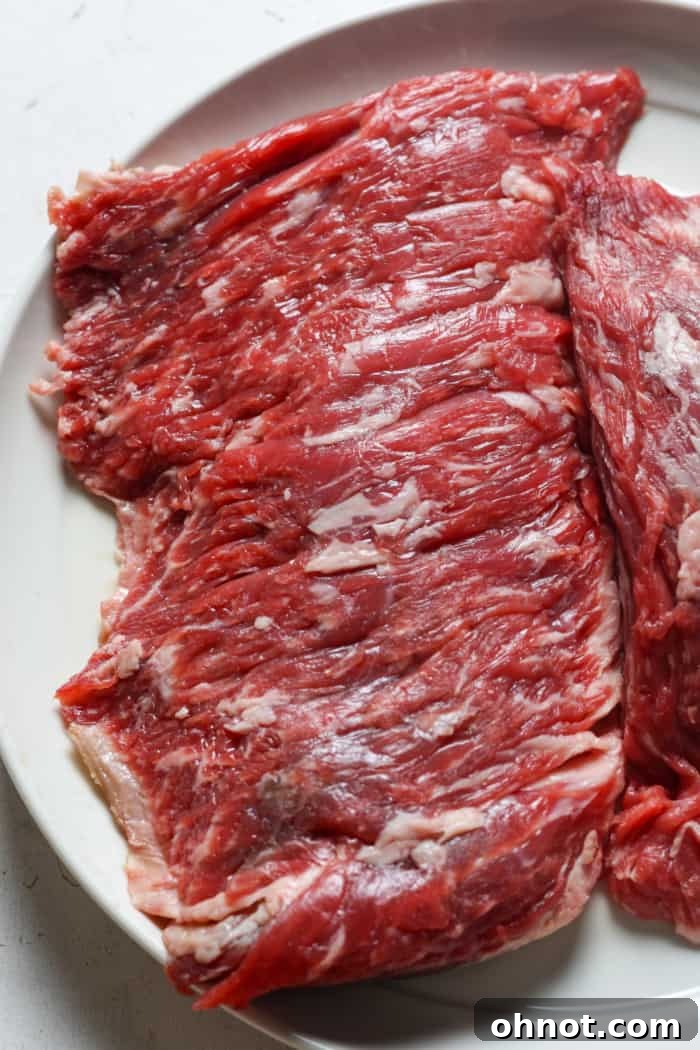
Skirt Steak: The Star of the Show. Whenever possible, opt for fresh skirt steak to achieve the most vibrant flavor and texture. If fresh isn’t an option, frozen skirt steak works perfectly well, but ensure it is completely thawed before you begin cooking. Properly thawing helps the steak cook evenly and prevents it from steaming rather than searing. Skirt steak is a long, thin cut; depending on the size of your skillet or cooking surface, you might need to slice the steak in half width-wise to allow it to fit comfortably and ensure consistent searing. This also makes handling easier during cooking.
Olive Oil: The Searing Agent. High-quality olive oil is crucial for achieving that beautiful, golden-brown sear that locks in the steak’s natural juices and adds a layer of rich flavor. It’s essential to allow the oil to become shimmering hot in your skillet before introducing the meat. This high heat is key to forming a crust rapidly. If you prefer, avocado oil is an excellent alternative. It boasts a higher smoke point than olive oil, making it ideal for very high-heat searing without burning, and offers a neutral flavor that won’t overpower the steak.
Simple Seasoning Blend: Salt, Black Pepper, and Garlic Powder. The beauty of this recipe lies in its minimalist approach to seasoning, allowing the robust, beefy flavor of the skirt steak to take center stage. A classic blend of sea salt, freshly ground black pepper, and granulated garlic powder provides a foundational flavor profile that enhances without overwhelming. This trio works synergistically to draw out moisture for better searing, add a peppery kick, and infuse a savory aromatic depth. For those who enjoy a bit more complexity, consider adding a pinch of onion powder, smoked paprika for a hint of smokiness, or a dash of chili powder for a subtle warmth. A pre-made steak seasoning blend can also be used for convenience, but always check its salt content to adjust accordingly.
Optional Toppings and Condiments: Elevate Your Experience. While the steak is phenomenal on its own, a well-chosen condiment can elevate the dining experience. A zesty chimichurri sauce can add a bright, herbaceous contrast. Classic steak sauce offers a familiar tangy and savory complement. For a quick and universally loved option, ketchup can be surprisingly satisfying. Don’t hesitate to experiment with other favorites like a spicy sriracha mayo, a creamy horseradish sauce, or even a fresh pico de gallo to add a burst of freshness and texture. These additions can transform your simple skirt steak into a gourmet meal with minimal effort.
Understanding Skirt Steak: A Culinary Deep Dive
Skirt steak, often celebrated for its rich flavor and suitability for quick cooking methods, is a fascinating cut of beef with distinct characteristics. Originating from the diaphragm muscle of the cow, it’s a long, flat, and relatively thin piece of meat, known for its visibly coarse, prominent grain. This unique fibrous structure is actually a blessing, as it allows marinades and seasonings to penetrate deeply, infusing the meat with incredible flavor.
There are primarily two types of skirt steak: the inside skirt and the outside skirt. Both are long and flat, yet they differ slightly in texture and common availability. The outside skirt steak, often considered superior due to its more uniform shape and slightly more tender texture, is typically sold to restaurants and specialty butchers. It comes with an outer membrane (or “silverskin”) that must be removed before cooking to prevent toughness. This membrane is usually easier to remove after the meat has been dry-aged or can be expertly peeled off by a butcher. The inside skirt steak is generally wider and thinner, with a less uniform shape, and is more commonly found in grocery stores for home cooks. Butcher shops usually sell this cut pre-trimmed and ready for preparation, with the membrane already removed.
After trimming, a typical skirt steak can measure anywhere from 12 to 24 inches in length and several inches wide, making it an impressive cut that can feed multiple people. Its elongated shape and pronounced grain are key identifiers.
It’s common to confuse skirt steak with flank steak, as they share similar culinary applications, but they are indeed distinct cuts from different parts of the animal. Skirt steak comes from the diaphragm muscle, located just below the ribs. Flank steak, on the other hand, is cut from the abdominal muscles, further back towards the rear of the cow. While both are lean and best cooked quickly at high heat, skirt steak tends to be thinner, more intensely beefy in flavor, and generally more tender if sliced against its prominent grain. Flank steak is thicker, wider, and has a less coarse but still visible grain, often benefiting more from marinating to ensure tenderness. Recognizing these differences is crucial for selecting the right cut for your recipe and understanding how to best prepare it.
The Exquisite Taste & Texture of Perfectly Cooked Skirt Steak
The appeal of skirt steak extends far beyond its quick cooking time and versatility; its inherent taste and texture profile are truly what make it a beloved cut among chefs and home cooks alike. This cut, sourced from the diaphragm muscle, is characterized by its long, thin structure and a coarse, visible grain that is remarkably effective at absorbing marinades and spice rubs, setting the stage for an incredibly flavorful experience.
When prepared correctly, skirt steak delivers an intensely beefy flavor, far more robust and concentrated than many other cuts. This deep, savory taste is one of its most defining attributes, making it a favorite for dishes where a strong beef presence is desired. The flavor is primal and satisfying, a testament to the hard-working muscle from which it originates.
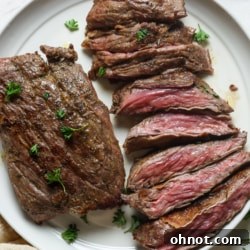
Achieving the perfect texture is paramount for skirt steak. When cooked to a medium-rare to medium doneness, it offers a delightful combination of succulence and tenderness. The key to unlocking this texture lies in the high-heat, quick-cooking method, which creates a beautifully caramelized crust on the exterior while preserving a juicy, tender interior. This contrast between the slightly crisp exterior and the yielding, moist inside is a hallmark of well-prepared skirt steak.
Furthermore, the intricate marbling within the skirt steak—those delicate streaks of fat—play a crucial role in enhancing its richness and ensuring a succulent eating experience. As the steak cooks, this intramuscular fat renders, basting the meat from within, contributing to its juiciness and deepening its savory profile. This natural fat content also helps to prevent the steak from drying out during the rapid cooking process.
Ultimately, this skirt steak recipe promises a hearty, savory, and incredibly flavorful meal. The coarse grain, when properly sliced against it after cooking, breaks down beautifully, transforming into tender strands that are easy to chew and utterly delicious. It’s a cut that truly rewards careful preparation, delivering a gourmet feel with every bite.
Effortless Skirt Steak: A Step-by-Step Guide
Achieving a perfectly seared and tender skirt steak is surprisingly simple, especially when you follow these clear, easy-to-understand steps. This method focuses on maximizing flavor and texture with minimal fuss.
Step 1: Prepare Your Skillet for Searing
Begin by placing a large, heavy-bottomed skillet – ideally cast iron for superior heat retention and even cooking – over medium-high heat on your stovetop. Add the olive oil to the cold pan. Allow the skillet and oil to heat up thoroughly for 3-5 minutes. You’ll know it’s ready when the oil begins to shimmer lightly and, if you flick a tiny drop of water into it, it sizzles immediately. This high initial heat is crucial for developing a beautiful, savory crust on your steak.
Step 2: Season the Steak to Perfection
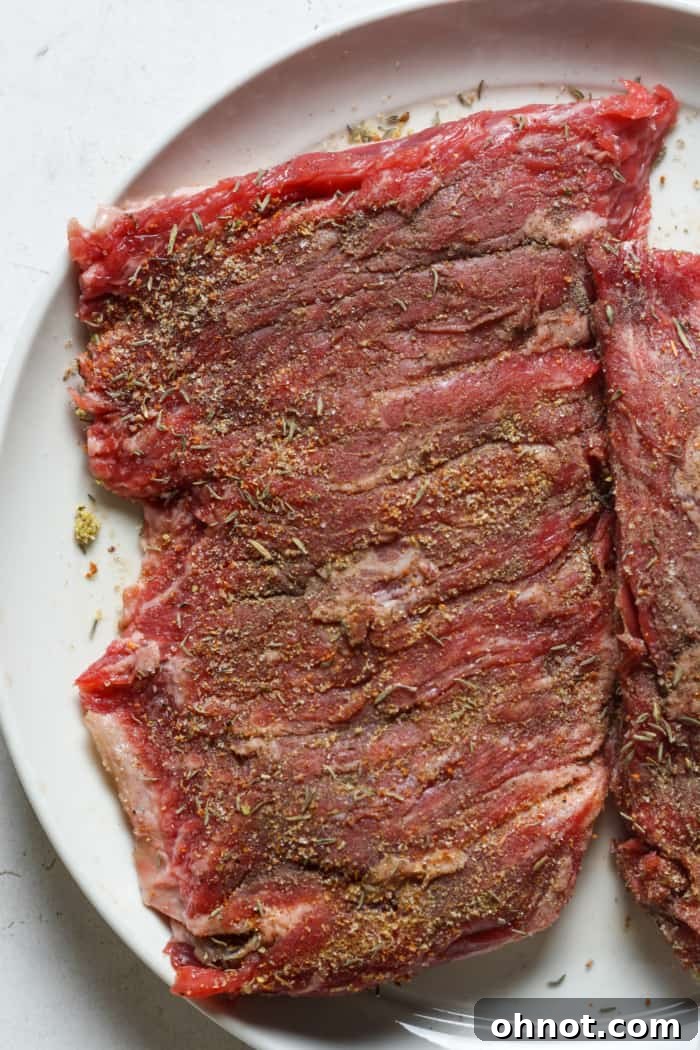
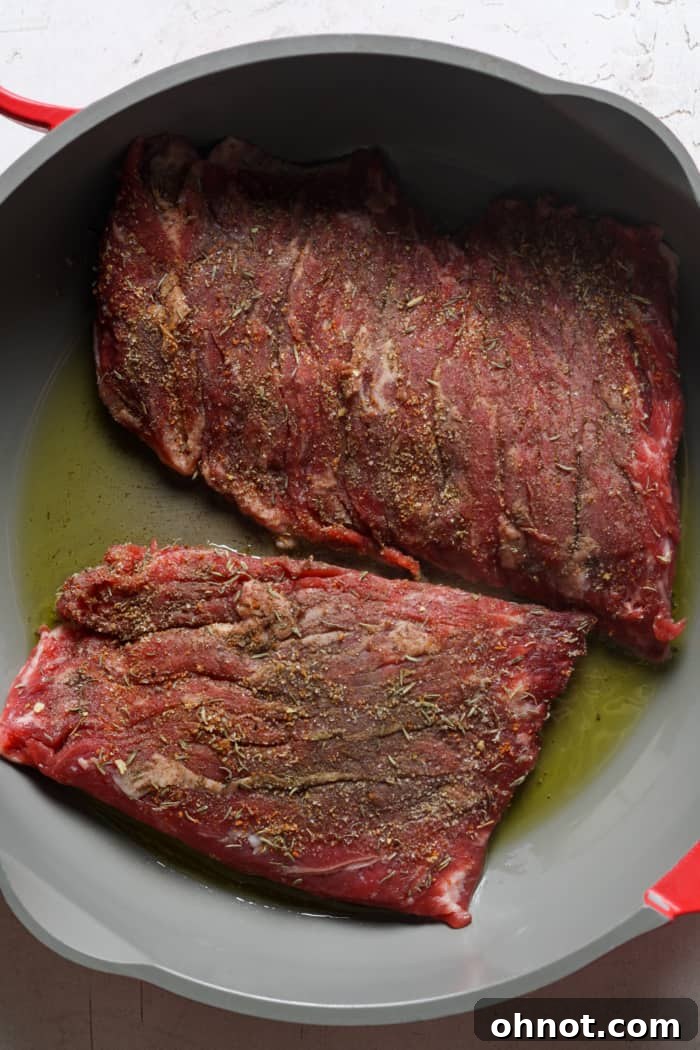
While your skillet is heating, take your skirt steak and pat it thoroughly dry on both sides using paper towels. This step is vital; removing excess moisture allows the steak to sear and caramelize beautifully, rather than steam in its own juices. Once dry, generously season both sides of the steak with sea salt, freshly ground black pepper, and garlic powder. Distribute the seasonings evenly across the entire surface of the meat, pressing them gently to ensure they adhere well. Don’t be shy with the seasoning; skirt steak can handle a good amount of flavor.
Step 3: Sear the First Side
Carefully place the seasoned skirt steak into the hot oil in the skillet. If your steak is particularly long, you may need to cut it into 2 or 3 pieces to ensure it fits without overcrowding the pan. Overcrowding can lower the pan temperature and lead to steaming instead of searing. Cook the steak undisturbed for 3 to 4 minutes. Resist the urge to move or flip it during this time, as a steady sear is essential for forming that desirable crust.
Step 4: Flip and Finish Cooking
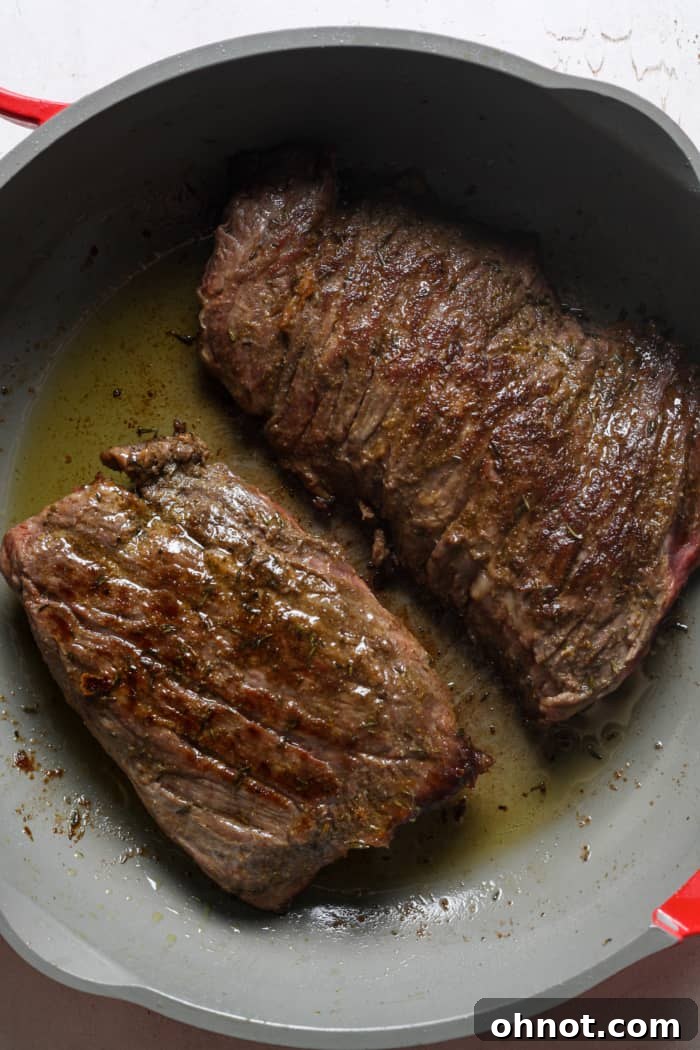
Using a pair of long-handled tongs, carefully flip the steaks to the other side. Be mindful of potential oil splatters. Cook for an additional 3 minutes, or until the internal temperature reaches your desired doneness. For a perfect medium-rare, aim for 130-135 degrees Fahrenheit. Because skirt steak is thin, it cooks very quickly, so keep a close eye on it. A meat thermometer is your best friend here to ensure precision and prevent overcooking.
Step 5: Rest, Slice, and Serve
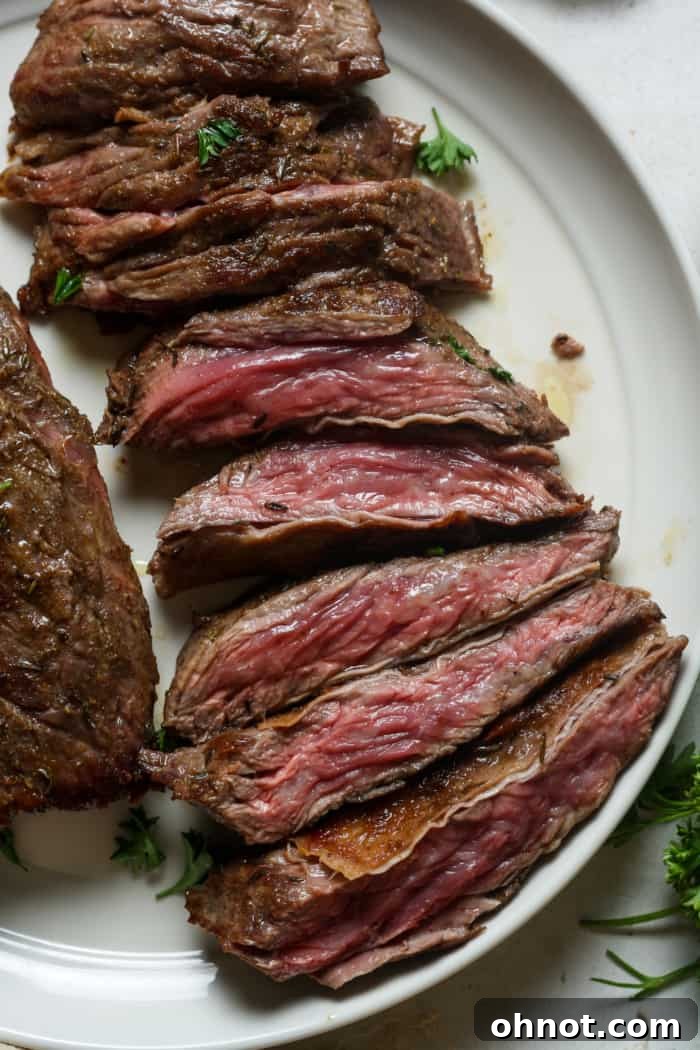
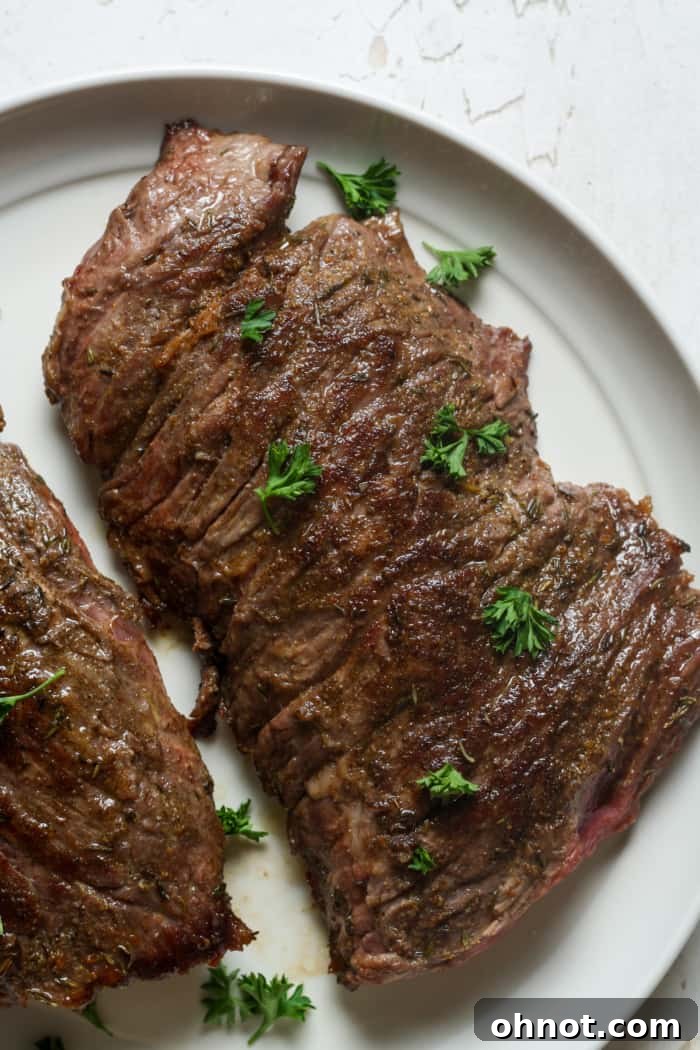
Once the steak has reached your desired internal temperature, immediately remove it from the pan and transfer it to a clean cutting board. This is a critical step: allow the steak to rest for 7 to 10 minutes. Resting permits the muscle fibers to relax and redistribute the internal juices throughout the meat, resulting in a significantly juicier and more tender final product. Skipping this step can lead to a dry steak. Finally, and perhaps most importantly, slice the steak against the grain. The grain of skirt steak is very pronounced, running parallel to the longer fibers. Slicing perpendicular to these fibers shortens them, making each bite incredibly tender. Serve immediately and enjoy your perfectly cooked skirt steak!
Expert Tips & Tricks for the Ultimate Skirt Steak
Achieving consistently perfect skirt steak is easy with a few expert insights. Follow these tips and tricks to elevate your cooking and ensure a tender, juicy, and flavorful result every time.
Cut Skirt Steak to Fit: Skirt steak often comes in long, thin pieces. If your cut is too large for your skillet, don’t hesitate to slice it in half or even into thirds crosswise. This ensures that each piece has ample space in the pan, allowing for proper searing without overcrowding, which can lead to steaming rather than browning.
Heat Your Oil Until It’s Sizzling: The key to a restaurant-quality crust is a properly preheated pan and hot oil. Always allow your skillet to heat thoroughly over medium-high heat until the oil is shimmering and just beginning to smoke lightly. This high initial temperature rapidly caramelizes the exterior of the steak, creating a delectable crust and sealing in the precious juices, ensuring a tender interior. A cool pan will only result in a gray, unappetizing steak.
Safety First: When working with hot oil and high heat, always prioritize safety. Use long-handled tongs to place and flip the steaks to keep your hands a safe distance from splatters. An oven mitt can also provide additional protection against heat and splashes, especially if your skillet has a short handle.
Monitor Closely – Skirt Steak Cooks Fast: Due to its thin nature, skirt steak cooks incredibly quickly, often in just a few minutes per side. It’s crucial not to leave it unattended. Stay by the stove and be ready to flip and remove the steak as soon as it reaches your desired doneness. Overcooking even by a minute can lead to a tough, dry result.
Utilize a Meat Thermometer: For absolute precision and to avoid guesswork, a reliable meat thermometer is indispensable. Insert the thermometer into the thickest part of the steak horizontally. Skirt steak is best enjoyed medium-rare to medium (130-140°F / 54-60°C). Remember that the steak will continue to cook slightly after it’s removed from the heat (carryover cooking), so pull it off a few degrees below your target temperature.
Consider Marinating for Extra Tenderness and Flavor: While this recipe is designed to be quick and delicious without marinating, for an even more tender and intensely flavorful steak, consider a marinade. The acids and enzymes in marinades help to break down tough muscle fibers. Marinate for at least 30 minutes to an hour, or for up to 12 hours in the refrigerator for maximum effect. Simple marinades using citrus juices, vinegar, soy sauce, or even plain yogurt can work wonders. Alternatively, try our flavorful Homemade Steak Seasoning for a dry rub that adds depth without needing wet ingredients.
Rest the Steak Adequately: This step is non-negotiable for juicy steak. After searing, transfer the steak to a cutting board and allow it to rest, uncovered, for 7 to 10 minutes. During cooking, the muscle fibers contract, pushing juices to the center. Resting allows these juices to redistribute evenly throughout the meat, resulting in a uniformly juicy and tender steak. Cutting too soon will cause all those precious juices to run out onto your board.
Always Slice Against the Grain: The direction you slice skirt steak is perhaps the most critical factor in its tenderness. The grain—the visible direction of the muscle fibers—runs very distinctly along the length of the skirt steak. Always slice perpendicular to this grain. This technique shortens the muscle fibers, making the steak much easier to chew and dramatically improving its tenderness. A sharp knife is essential for clean, effortless slices.
Beyond the Skillet: Diverse Cooking Methods for Skirt Steak
Skirt steak is remarkably versatile, lending itself beautifully to a variety of cooking techniques, each imparting a unique flavor and texture profile. While pan-searing is a fantastic quick method, exploring other options can open up a world of culinary possibilities.
- Grilling for a Smoky Char: Fire up your grill to high heat. Place the skirt steak directly over the hottest part of the grill for 2-4 minutes per side, depending on thickness and desired doneness. Grilling infuses the steak with an irresistible smoky flavor and creates those iconic, appealing grill marks. The intense heat cooks the steak rapidly, ensuring a tender interior and a beautifully charred exterior that enhances its robust beefy taste. It’s perfect for backyard barbecues and summer entertaining.
- Classic Pan Searing for a Golden Crust: As detailed in our primary recipe, pan searing in a heavy-bottomed skillet (cast iron is ideal) over high heat is an excellent method. Sear the skirt steak for 3-4 minutes per side until a deep, golden-brown crust forms. This technique is unmatched for achieving a perfectly caramelized exterior while maintaining a juicy and tender core. It’s a reliable method for those who prefer indoor cooking and want maximum flavor development.
- Broiling for Intense Direct Heat: Preheat your oven broiler to its highest setting. Place the skirt steak on a broiler pan or a wire rack set over a baking sheet, positioning it about 4-6 inches from the heating element. Broil for 3-5 minutes per side, keeping a vigilant eye to prevent burning. Broiling delivers a slightly charred and succulent result, akin to grilling but achievable indoors. It’s a quick and efficient method for when you crave that intense heat.
- Stir-Frying for Asian-Inspired Delights: Skirt steak’s thinness and robust flavor make it exceptional for stir-frying. Slice the steak into thin strips against the grain before cooking. Quickly cook them in a screaming hot wok or large skillet with your choice of colorful vegetables, aromatic spices, and a flavorful sauce. This method is incredibly fast and creates tender, bite-sized pieces of beef that soak up all the delicious flavors of your stir-fry sauce. Don’t forget our incredible Sugar-Free Stir-Fry Sauce for a healthy and tasty option.
- Sous Vide for Precision and Unbeatable Tenderness: For the ultimate in precision and consistent tenderness, the sous vide method is unparalleled. Vacuum-seal the skirt steak with your preferred marinade or seasoning blend. Cook it in a temperature-controlled water bath, typically at 129-135°F (54-57°C) for medium-rare, for 1-4 hours. After the sous vide bath, quickly sear the steak in a hot pan or on the grill for just 1-2 minutes per side to develop a delicious crust. This two-step process guarantees perfectly cooked steak from edge to edge with unparalleled succulence.
- Transform into Tacos or Fajitas: Skirt steak is the quintessential choice for flavor-packed tacos and fajitas. After cooking, slice the steak into thin strips against the grain. Sauté vibrant onions and bell peppers until tender and slightly caramelized. Assemble these flavorful components in warm tortillas with your favorite toppings like fresh salsa, creamy guacamole, shredded cheese, and a squeeze of lime for a festive and satisfying meal.
- Elevate Your Salads: Sliced grilled or seared skirt steak adds a substantial, protein-rich element to any salad. Its robust flavor pairs wonderfully with a variety of greens, fresh vegetables, and dressings. A warm steak salad makes for a satisfying and healthy lunch or light dinner, offering a delightful contrast of textures and temperatures.
Understanding Internal Temperature for Perfect Steak Doneness
Achieving your desired steak doneness is a matter of precise temperature control. Using a reliable meat thermometer is the most accurate way to ensure your skirt steak is cooked exactly how you like it. Remember that temperatures listed are internal and will continue to rise slightly (about 5 degrees Fahrenheit) after the steak is removed from the heat due to carryover cooking. Always insert the thermometer into the thickest part of the steak, avoiding bone.
Rare: For a steak that is cool red in the center, remove it from the heat when its internal temperature is between 120 degrees Fahrenheit (49°C) and 130 degrees Fahrenheit (54°C). This results in a very tender texture with a deep, rich beef flavor.
Medium Rare: This is often considered the ideal doneness for skirt steak, offering a warm red center. Remove the steak when it reaches an internal temperature between 130 degrees Fahrenheit (54°C) and 135 degrees Fahrenheit (57°C). This yields a tender, juicy, and incredibly flavorful result.
Medium: If you prefer a warmer, pinker center, cook your steak until it reaches between 135 degrees Fahrenheit (57°C) and 145 degrees Fahrenheit (63°C). The steak will still be juicy but with a firmer texture.
Medium Well: For a steak with a slightly pink center, aim for an internal temperature between 145 degrees Fahrenheit (63°C) and 155 degrees Fahrenheit (68°C). The meat will be firmer and less juicy at this stage.
Well Done: A well-done steak will have very little to no pink in the center. This is achieved at an internal temperature over 155 degrees Fahrenheit (68°C). Be aware that cooking skirt steak to well done can result in a tougher, drier texture due to its lean nature. It’s generally not recommended for this cut if you want to maximize tenderness.
Serving & Storing Your Delicious Skirt Steak
Once your skirt steak is perfectly cooked and rested, the possibilities for serving are as vast as they are delicious. And thanks to its robust flavor, it also makes for fantastic leftovers!
Creative Serving Suggestions: Serve your skirt steak hot, ideally immediately after slicing against the grain. It pairs beautifully with a wide array of sides. Classic choices include crispy French fries, creamy dairy-free mashed potatoes, or a fresh, vibrant side salad. For a lighter, nutrient-packed option, serve it alongside a medley of crispy roasted veggies like asparagus, broccoli, or bell peppers. Think beyond dinner: thin slices of skirt steak are fantastic for breakfast alongside scrambled eggs or incorporated into a savory omelet. It also makes for a gourmet topping on grain bowls or loaded baked potatoes.
Enhance with Sauces and Condiments: Elevate the flavor profile with your favorite sauces. A sweet and savory Korean BBQ sauce, a pungent and aromatic Chinese garlic sauce, or a simple drizzle of a tangy vinaigrette can add an extra dimension. Don’t limit yourself – consider a fresh pico de gallo, a dollop of sour cream or Greek yogurt, or even a spicy chili oil to customize each bite.
Versatile Meal Applications: Beyond a standalone main course, skirt steak meat is exceptionally versatile. Use it to fill warm tortillas for epic tacos or burritos, layer it into sandwiches or wraps, or toss it into a fresh green salad for a hearty meal. It’s also an excellent addition to scrambled eggs, fried rice, or even as a topping for homemade pizzas.
Storing Leftovers: Any leftover skirt steak should be stored promptly in an airtight container in the refrigerator. It will remain fresh and delicious for up to 4 days, making it an ideal candidate for meal prep. Its robust flavor holds up well, and the meat reheats beautifully without losing too much of its tenderness. To reheat, gently warm slices in a skillet over medium-low heat with a splash of broth or water, or briefly microwave until just heated through to prevent overcooking.
Freezing for Longer Storage: If you have a larger quantity of cooked skirt steak or want to prepare it ahead for future meals, it freezes exceptionally well. Allow the cooked steak to cool completely, then wrap individual portions tightly in plastic wrap and place them in a freezer-safe bag or container. It can be stored in the freezer for up to 2-3 months. Thaw overnight in the refrigerator before reheating.
Frequently Asked Questions About Skirt Steak
Absolutely, skirt steak is widely regarded as an excellent cut of steak, particularly when prepared correctly. It’s celebrated for its intensely beefy flavor, its ability to absorb marinades exceptionally well, and its remarkable tenderness when cooked quickly over high heat and sliced against the grain. It offers a gourmet experience without the premium price tag of some other cuts.
While “skirt steak” is its most common name, it is often confused with or used interchangeably with flank steak due to similar culinary applications and appearance. However, as noted, they are distinct cuts. In some contexts, particularly outside the US, it might also be referred to as ‘arroz’ steak, or simply by its anatomical names like ‘diaphragm muscle’ or specific butcher names for inside or outside skirt.
Skirt steak’s robust flavor and tender texture (when sliced correctly) make it incredibly versatile. It’s fantastic in many ways! Popular methods include adding thin slices to tacos, burritos, and fajitas, layering it in salads or sandwiches, serving it as a main course alongside your favorite sides, or incorporating it into stir-fries. Its rich flavor truly shines in dishes where it’s thinly sliced and combined with other vibrant ingredients.
The absolute best way to slice skirt steak for maximum tenderness is to cut it against the grain. The “grain” refers to the visible direction of the long muscle fibers in the meat. Using a sharp knife, you should slice perpendicularly across these fibers. This shortens the fibers, making each bite much easier to chew and dramatically more tender. This step is crucial and cannot be overlooked for an optimal eating experience.
While marinating skirt steak can certainly enhance its flavor and further tenderize the meat, it is not strictly mandatory, especially for a quick and easy recipe like this one. Its natural tenderness (when cooked and sliced correctly) combined with high-heat searing ensures a delicious result even without a marinade. However, if you have the time and desire to add extra flavor or ensure maximum tenderness, marinating for at least 30 minutes to a few hours is highly recommended.
Skirt steak performs exceptionally well with high-heat, quick-cooking methods. The “best” way often comes down to personal preference and available equipment, but top methods include pan-searing in a hot skillet, grilling over direct heat, or broiling in the oven. It’s also fantastic when thinly sliced for stir-fries or cooked precisely using the sous vide method followed by a quick sear for crust development. The key is fast cooking to a medium-rare or medium doneness to prevent toughness.
Look for a skirt steak that has good marbling—small flecks of fat distributed throughout the muscle. This marbling contributes to flavor and juiciness. The color should be a bright red, indicating freshness. If possible, choose an outside skirt steak for slightly better tenderness, although inside skirt steak is also excellent. Ensure it’s trimmed of any thick, silverskin-like membrane if you don’t want to do it yourself.
While it’s generally best to thaw skirt steak completely before cooking for optimal searing and even doneness, it is possible to cook it from frozen, especially using methods like Instant Pot cooking or sous vide. However, for pan-searing or grilling, thawing is highly recommended. Cooking from frozen will significantly increase your cooking time and may result in a less even cook and a less pronounced crust.
Skirt steak’s coarse grain makes it a marinade champion! Popular marinades often include acidic components like lime juice, orange juice, or vinegar (red wine, apple cider) to tenderize, along with flavorful additions such as soy sauce, Worcestershire sauce, garlic, onion, cumin, chili powder, and fresh herbs like cilantro or oregano. Oil (olive or avocado) is also essential to help distribute flavors and keep the meat moist. For classic Latin American flavors, a simple blend of lime juice, olive oil, garlic, and cilantro works wonderfully.
Essential Equipment for Skirt Steak Success
Having the right tools can make all the difference in achieving a perfectly cooked skirt steak. Here’s a list of recommended equipment that will simplify your cooking process and enhance your results:
Our Place Always Pan: This versatile nonstick pan is excellent for searing skirt steak evenly and ensures easy cleanup afterward. Its thoughtful design makes it a favorite for many home cooks.
Sharp Knives: A high-quality, sharp chef’s knife or carving knife is crucial for cleanly slicing the cooked skirt steak against the grain, which is essential for maximizing its tenderness. A dull knife can tear the meat and make the slicing process difficult.
Meat Thermometer: To guarantee your skirt steak is cooked to your desired level of doneness (from rare to medium-well) without overcooking, an accurate meat thermometer is an indispensable tool. It takes the guesswork out of cooking and ensures perfect results every time.
Explore More Delicious Steak Recipes
If you enjoyed this skirt steak recipe and are looking for more ways to incorporate flavorful beef into your diet, be sure to check out these other fantastic steak recipes. Each offers a unique approach to preparing this beloved protein:
- Instant Pot Steak: For incredibly tender steak cooked quickly under pressure.
- Top Sirloin Steak: A lean and flavorful cut, perfect for grilling or searing.
- Air Fryer Ribeye Steak: Achieve a perfect crust and juicy interior with the convenience of your air fryer.
- Sous Vide Flank Steak: Master the art of precision cooking for ultimate tenderness.
- Denver Steak: Discover this lesser-known but surprisingly tender and flavorful cut.
We hope this skirt steak recipe becomes a staple in your kitchen, offering a quick, healthy, and incredibly satisfying meal. If you try this recipe, we would be delighted to hear your thoughts! Please leave a review and share your experience. You can also connect with us on Instagram, Facebook, and Pinterest for more healthy recipes and culinary inspiration. Join our exclusive Facebook Group for behind-the-scenes content and a vibrant community. For even more meal ideas, explore our extensive collection of Lunch and Dinner Recipes.
Get the Recipe:
Skirt Steak
Pin Recipe
Ingredients
- 1 pound skirt steak
- 2 tbsp olive oil
- 1 tsp sea salt
- ½ tsp black pepper
- ½ tsp garlic powder
Instructions
-
First, add olive oil to a large skillet over medium heat and allow it to shimmer.
-
While oil is heating up, pat steak dry with paper towels. Season generously on both sides with salt, pepper, and garlic powder.
-
Carefully place steaks in the hot oil in the skillet. Use tongs and an oven mitt for protection from splattering oil. Cook for 3 to 4 minutes without moving.
-
Then, flip steaks carefully. Cook for another 3 minutes or until the internal temperature has reached 135 degrees Fahrenheit for medium-rare.
-
Finally, remove steak from pan. Place on a cutting board for 7 to 10 minutes to rest. Then, slice against the grain and serve immediately.
Notes
- If the skirt steak is very large, cut it in half crosswise to ensure it fits comfortably in the skillet and cooks evenly.
- Always allow the oil to become shimmering hot before adding in the steak; this creates a beautiful crust and locks in juices.
- Use tongs and an oven mitt for protection when handling the steak in the hot pan to avoid splashes.
- Most skirt steak is relatively thin and cooks quickly, so stay attentive and avoid overcooking.
- Use a meat thermometer to measure the internal temperature accurately. For medium-rare, aim for 135 degrees Fahrenheit, keeping in mind carryover cooking.
- Allow the steak to rest for 7-10 minutes after cooking; this crucial step redistributes the juices, ensuring a more tender and juicy result.
- Store any leftovers in an airtight container in the fridge for up to 4 days.
Love this homemade steak recipe? You can sign up here to receive healthy meal plans, exclusive new recipes and updates!